TLP:CLEAR · Disclosure is not limited.
Europe Hybrid Threats: New Sabotage Reports, Attribution Still Unsettled
Time window: Last 1 day · Audience: General analyst · Type: Situation report · DTG: 2026-10-30 14:42Z · Overall confidence: HIGH
BLUF
Reporting adds a 30 October fire at a Rheinmetall construction site in Calden, further reported attacks on Polish infrastructure and a Polish counterintelligence case involving a 55-year-old Russian national. The incidents support a continuing risk to defence, transport and communications sites, but do not establish that one Russian-directed campaign connects them.
Executive summary
German police suspect arson and a possible political motive after a fire damaged three construction vehicles at Rheinmetall’s Calden site, where a logistics and unmanned-systems facility valued at more than EUR 260 million is under construction. Reports also describe fires at Polish defence-related sites, a September fire at a Starlink communications station near Warsaw and a Leipzig/Halle drone carrying explosives. The Leipzig incident is dated early August in one account and September in another; German officials blamed Russia, which denied responsibility. In Poland, police and prosecutors are pursuing a case involving a Russian national photographed taking pictures of railway infrastructure, although reports differ on his formal legal status. Separately, reporting says Pentagon officials urged Lithuania, Latvia and Estonia to moderate public statements on Russia. Donald Tusk described Russian drones, sabotage and online disinformation as part of a hybrid war against Poland, but the supplied reporting does not identify a specific online operation.
Change from previous assessment
Since the 29 October brief, reporting has added the 30 October Rheinmetall site fire in Calden, fires at Polish defence-related facilities, the September Starlink station fire near Warsaw and a Polish case involving a Russian national photographing railway infrastructure. The threat picture now includes a wider set of named sites in Germany and Poland, but confidence that these incidents form one Russian-directed campaign remains low. The earlier assessment that the supplied reporting does not establish a coordinated Russian disinformation campaign remains unchanged.
Key judgments
- It is likely that defence, transport and communications sites in Germany and Poland will remain exposed to attempted sabotage over the next 1-3 months. Recent reporting includes the 30 October fire at Rheinmetall’s Calden construction site, where police suspect arson and a possible political motive, fires at Polish drone-components and aircraft-parts facilities, and a September fire at a Starlink station near Warsaw. These reports support a continuing security concern, not proof that the incidents share a perpetrator. (Confidence: medium · ASSESSED)
- I&W: German police publicly confirm deliberate ignition at the Calden site, or report another arson case at a named defence, transport or communications facility in Germany or Poland. (0-3 months)
- I&W: German police classify the Calden fire as accidental and Polish authorities report that the named facility fires were accidental or unrelated. (0-3 months)
- It is unlikely that the supplied reporting establishes a single Russian-directed campaign linking the Leipzig/Halle drone, the Calden fire, the Polish facility fires and the Warsaw Starlink fire. German officials attributed the Leipzig incident to Russia, while Vladimir Putin denied Moscow’s responsibility; German police cite only a possible political motive in the Calden case, and the reported perpetrators of the Polish and Warsaw fires remain unidentified. The Leipzig discovery is dated early August in one account and September in another, further limiting confidence in the incident timeline. (Confidence: low · ASSESSED)
- I&W: German or Polish investigators publicly link two or more of the named incidents to the same Russian service, handler or operational network. (0-3 months)
- I&W: Investigators publish findings that assign the incidents to unrelated perpetrators or causes, including an accidental cause for the Calden fire. (1-6 months)
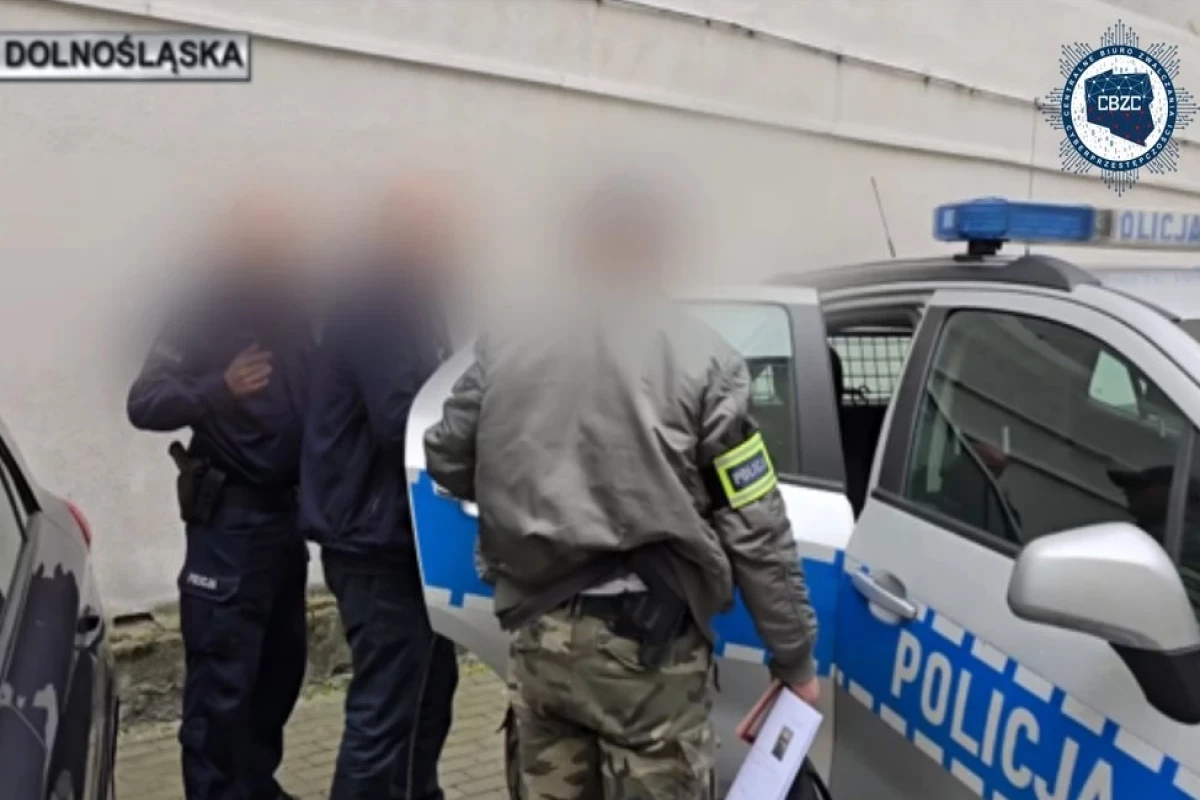
- Polish authorities are pursuing a counterintelligence case involving a 55-year-old Russian national found photographing railway infrastructure in Świdnica. Police say the material included photographs of communication facilities and other strategic locations; reports differ on whether he has been formally charged or remains under investigation. (Confidence: medium · REPORTED)
- I&W: Polish prosecutors or a court publish the formal charge and specify whether the photographs or other evidence support an espionage allegation. (0-14 days)
- I&W: Polish prosecutors state that the man was not charged with espionage or that the photographs did not concern protected infrastructure. (0-1 month)
- It is unlikely that this reporting establishes a specific Russian online disinformation operation against Poland. Donald Tusk said Russia was using internet disinformation alongside drones and sabotage, but the supplied reporting identifies no accounts, content or operational evidence. A separate report gives a different attribution for Tusk’s comments after a November 2025 rail attack, saying he accused Ukrainian nationals of cooperating with Russian services. (Confidence: low · ASSESSED)
- I&W: Polish authorities or a platform publish evidence identifying coordinated accounts, content or infrastructure tied to a Russian-directed operation. (0-3 months)
- I&W: Polish authorities clarify Tusk’s attribution and publish findings that distinguish the 2025 rail attack from Russian direction. (0-3 months)
Outlook & scenarios
A Russian link emerges in one or more investigations (45%)
German or Polish investigators publish evidence linking at least two reported incidents to a Russian state actor or shared network. Public attribution strengthens, while the incidents remain geographically contained and do not produce a wider disruption.
Cases remain separate or inconclusive (45%)
Investigations produce no public evidence connecting the Calden fire, Leipzig/Halle drone, Polish facility fires and Warsaw Starlink fire. Officials continue to describe individual cases, and responsibility remains contested or unknown.
High-impact attack prompts a broader response (10%)
A deliberate attack on a named defence, railway or communications site causes deaths or prolonged service disruption. A public attribution dispute and urgent security measures follow, increasing pressure on NATO allies to coordinate their response and messaging.
Recommendations
- Maintain a case-by-case incident timeline for Calden, Leipzig/Halle, the Skarżysko-Kamienna and Lublin fires, the Warsaw Starlink station and the Świdnica railway photography case. Record incident date, confirmed damage, investigative status and attribution separately.
- Do not treat the Leipzig/Halle incident as a settled date or use it as proof of Russian responsibility for other cases. Track German police updates and retain the early August versus September date discrepancy in analytic notes.
- Verify the Polish suspect’s formal legal status through prosecutor or court reporting before describing him as charged. Distinguish the reported act of photographing infrastructure from the allegation of foreign-intelligence activity.
- For claims of online disinformation, seek identifiable accounts, content, coordination evidence and a documented link to an operator before assessing a campaign. Keep Tusk’s public statement separate from confirmed operational findings.
- Monitor reporting on Pentagon requests to Lithuania, Latvia and Estonia for restraint, and compare it with public statements from those governments. Assess whether the requests affect shared threat messaging rather than inferring a change in the underlying threat.
Confidence & uncertainty
Overall confidence is high for the occurrence of the reported incidents and official responses, which are described across major-media reporting and police or government statements. Confidence is lower on responsibility, links between cases and the Leipzig/Halle timeline. The Calden fire’s political motive remains a police suspicion, and most other newly reported incidents have no publicly established Russian attribution in the supplied reporting.
Alternative analysis (red cell)
The reporting does not establish a single Russian-directed campaign, but it remains compatible with one. The Leipzig attribution in b9e2cf11-bcf3-4674-8878-4b159351d03d, the broader intelligence assessment in 68999c7c-27e7-45fe-af5c-3f424e4a5b89, and the European officials' assessment in 27c1d833-7a80-44ff-b3ee-6a456af9e78e provide a plausible common context for otherwise unresolved incidents. The evidence is too incomplete to confirm coordination, while the conflicting Leipzig chronology and Russian denial limit the strength of the alternative reading.
Intelligence gaps
- [EEI 1.2 · UNCOVERED] Observed reconnaissance activity around critical sites indicative of attack planning (unauthorised drone flights, repeated surveillance visits, loitering vehicles, mapping/photography of assets). Recommended collection: open-source/media
- [EEI 1.3 · PARTIAL] Law-enforcement or customs seizures, arrests or interdictions of persons or shipments carrying explosives, sabotage tools, specialty cutting/electrical equipment, or covert comms gear destined for/near critical infrastructure. Recommended collection: law enforcement
- [EEI 2.1 · UNCOVERED] Emergence or amplification of coordinated social-media networks (sets of accounts, pages, channels) pushing identical narratives or hashtags across multiple platforms, including bot-like activity metrics and origin IP/common management indicators. Recommended collection: social-media/OSINT
- [EEI 2.2 · UNCOVERED] Publication or internal guidance from state-run media, proxy outlets, or identified influence platforms distributing talking points, pre-scripted messaging, or translated content targeted at specific EU countries/communities. Recommended collection: open-source/media
- [EEI 2.3 · UNCOVERED] Distribution of manipulated multimedia (deepfakes), targeted phishing/whaling campaigns, or localized false narratives timed to political events (elections, protests, court rulings) with tracked reach and engagement metrics. Recommended collection: cyber/forensic
- [EEI 3.1 · UNCOVERED] Unusual financial transactions: wire transfers, crypto conversions, or payments to shell companies, NGOs or individuals exceeding typical baselines that link to known proxies or front organisations. Recommended collection: financial
- [EEI 3.2 · UNCOVERED] Travel and movement indicators for suspected operatives: repeated border crossings, chartered/irregular flights, booking patterns or mobile/location data placing identified individuals in staging areas shortly before incidents. Recommended collection: border/immigration
- [EEI 3.3 · UNCOVERED] Cargo, freight or maritime movements with discrepancies (concealed/dual-use equipment, false manifests, unusual routing) detected at ports, rail hubs or via AIS that correspond to deliveries of material used in sabotage or influence operations. Recommended collection: customs/ports
- [EEI 3.4 · UNCOVERED] Intercepted or otherwise-obtained communications showing tasking, coordination, or payment instructions between Russian agencies/handlers and proxy groups, including identified command-and-control servers or encrypted group identifiers. Recommended collection: signals-intel/SIGINT
Red cell review: PARTIAL DISSENT
TLP:CLEAR