TLP:CLEAR · Disclosure is not limited.
Europe hybrid threats: Polish airspace breach and new Russia-linked allegations
Time window: Last 1 day · Audience: General analyst · Type: Situation report · DTG: 2026-11-20 17:40Z · Overall confidence: HIGH
BLUF
On 20 November, Poland reported three flight objects entering its airspace during a major Russian attack on Ukraine; Denmark and Estonia also reported security cases they link to Russian services. These events raise the risk of wider European security friction, but the available evidence does not establish a single, centrally directed Russian campaign across Europe.
Executive summary
Russia launched more than 400 attack drones and over 110 missiles against Ukraine, according to President Volodymyr Zelenskyy. Polish authorities reported that three flight objects entered Polish airspace during the attack, while Moldova reported a drone briefly crossing its airspace. Later reporting put the death toll in Ukraine at nine, with at least 28 injured. Denmark’s PET said Russian intelligence planned an attempted assassination of US-Ukrainian rapper Kyivstoner; suspects deny wrongdoing. Estonia will close all road crossings with Russia from 1 December, citing security concerns. Poland and Estonia have also reported suspected plots against drone factories. The European Commission cyberattack remains unattributed, and the reports do not establish a coordinated Russia-directed campaign across Europe.
Change from previous assessment
Since the 19 November brief, reporting has added the 20 November Polish airspace incident, Denmark’s public allegation of a Russian intelligence plot against Kyivstoner, Estonia’s announced 1 December border closure, and more specific reporting on suspected drone-factory plots in Poland and Estonia. Confidence has increased in the occurrence of these reported events because they are described by named officials and covered by wire and major-media sources. The assessment still does not establish a coordinated Russia-directed campaign, and attribution in the cyber cases remains unresolved.
Key judgments
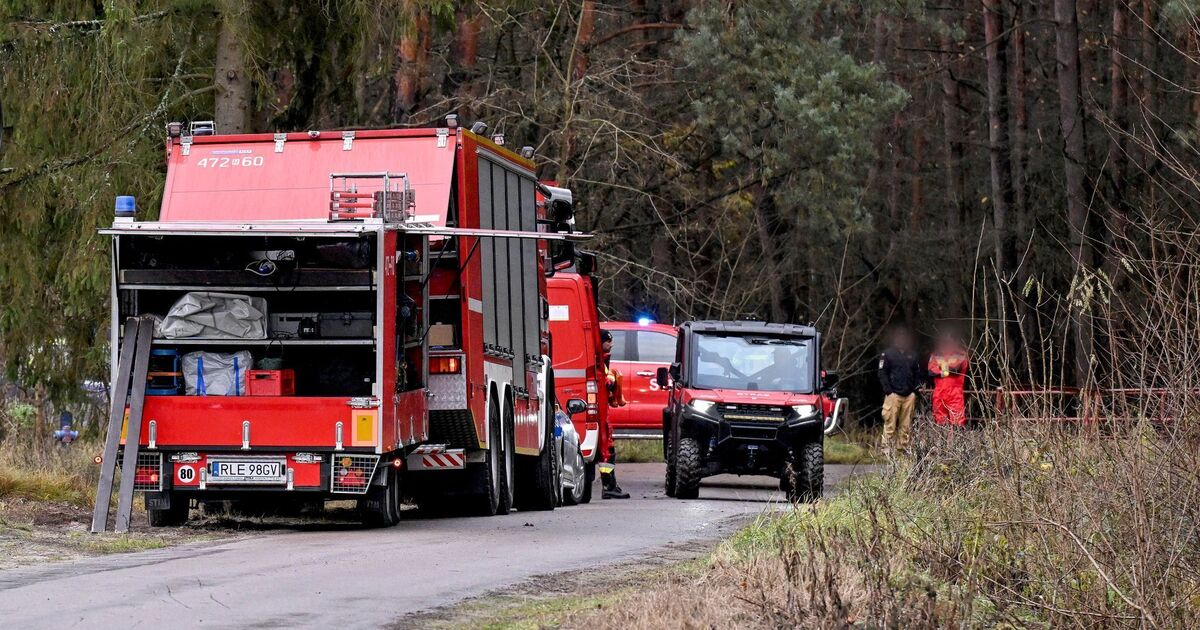
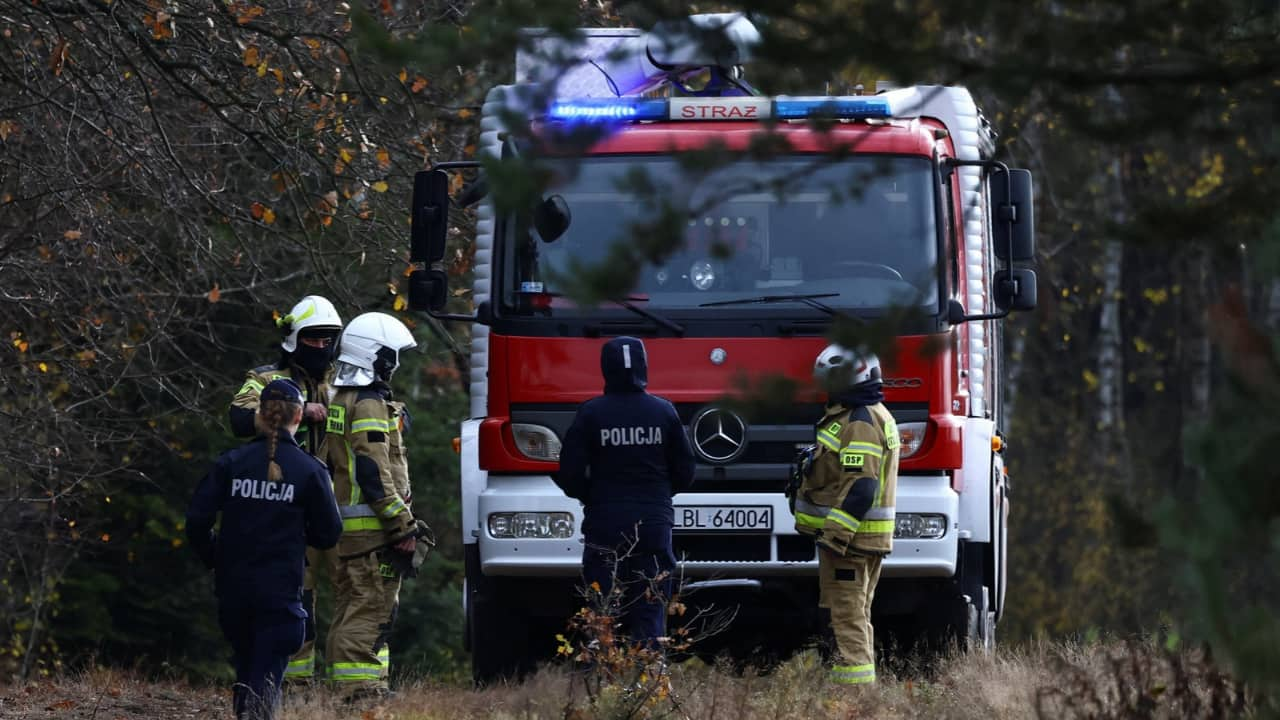
- Polish and NATO readiness is likely to remain elevated over the next 14 days after Polish authorities reported three flight objects entering Polish airspace during Russia’s 20 November attack on western Ukraine. Polish officials said 11 objects threatened Polish airspace and three entered it. The Defence Minister said the objects were probably two cruise missiles and a drone; reports identify missile debris at Nowy Lipowiec as Kh-101 or CH-101, and investigations were reported at Molodycz and Rudnik nad Sanem. Polish reporting differs on the missile designation and its distance from the Ukrainian border. Polish F-16s and Swedish Gripens were airborne, and NATO scrambled aircraft. Warsaw called the incident an intentional provocation, but the reporting provided does not independently establish intent. (Confidence: medium · ASSESSED)
- I&W: Confirm: Polish or NATO authorities announce continued elevated air patrols or a new airspace alert following a Russian strike. (0-14 days)
- I&W: Break: Polish or NATO investigators revise the reported entry count or identify the recovered missile debris as non-Russian. (0-14 days)
- Danish authorities have publicly attributed the attempted killing of US-Ukrainian rapper Kyivstoner to Russian intelligence, but the allegation has not been established in court. Danish police arrested suspects north of Copenhagen on 25 September, shortly before the concert; prosecutors charged suspects under Section 108 of Denmark’s Criminal Code and with attempted murder. PET chief Rasmus Kieffer-Kristensen said Russian intelligence planned the attempt. The suspects denied wrongdoing. (Confidence: medium · REPORTED)
- I&W: Confirm: Danish court filings or prosecutors disclose evidence linking the suspects to Russian intelligence, such as communications or payment records. (1-3 months)
- I&W: Break: Danish prosecutors or PET withdraw the Russian-intelligence attribution, or court proceedings establish that the suspects had no such link. (1-3 months)
- Estonia will close all road crossings with Russia from 1 December 2026 and suspend vehicle traffic. Interior Minister Igor Taro said residents should not expect an early return to the previous crossing rules; the government can reassess the situation after six months. Foreign Minister Margus Tsahkna said the closure would reduce opportunities to use cross-border movement for recruitment, influence operations, sabotage and sanctions evasion. (Confidence: high · REPORTED)
- I&W: Confirm: Estonian authorities close the road crossings and stop vehicle traffic on 1 December as announced. (0-14 days)
- I&W: Break: The Estonian government cancels or postpones the closure before 1 December. (0-14 days)
- The Poland and Estonia drone-factory cases provide concrete but allegation-level reporting of suspected Russian-linked sabotage activity. Polish prosecutors opened an investigation on 23 October into a suspected arson plot against a factory producing military drones for Ukraine; a Russia-linked recruiter allegedly offered $30,000 for the attack. Estonia said it thwarted a sabotage attempt ordered by Russian military intelligence against a drone factory. The reporting does not establish a completed attack or an operational link between the two cases. (Confidence: medium · REPORTED)
- I&W: Confirm: Polish or Estonian investigators disclose evidence of shared handlers, communications or funding between the factory cases. (1-3 months)
- I&W: Break: Investigators identify unrelated domestic actors or publicly retract the reported Russian links in either case. (1-3 months)
- It is unlikely that current reporting establishes a coordinated Russian-directed campaign across Europe. PET attributed the Denmark plot to Russian intelligence, and Estonia linked a thwarted factory plot to Russian military intelligence, but the Polish case remains under investigation and no operational link between the cases is reported. The European Commission cyberattack remains officially unattributed; CERT-EU’s reported identification of the ARTEX tool does not identify Russia. The perpetrators of the reported attacks on refrigeration units in six European countries also remain unidentified. (Confidence: medium · ASSESSED)
- I&W: Confirm: Authorities publicly link at least two named cases through shared Russian handlers, tasking or funding channels. (1-6 months)
- I&W: Break: Investigations establish that the cases have unrelated perpetrators and no Russian direction. (1-6 months)
Outlook & scenarios
Contained but recurrent spillover (55%)
Likely: Russian strikes on Ukraine continue, and Polish and NATO authorities maintain airspace monitoring while investigating the 20 November crossings. Estonia implements its announced border closure, and Denmark’s case proceeds through the courts without a wider public attribution of related incidents.
More European cases draw Russian attribution (25%)
Unlikely: Investigations or new public disclosures link additional sabotage or recruitment cases to Russian services. Estonia and Poland tighten security around defence-related sites, while other governments review border and counter-intelligence measures.
Incidents remain separate and contained (15%)
Unlikely: Polish investigators do not establish deliberate targeting, no further airspace crossings are reported, and the Poland and Estonia factory cases remain unconnected. Estonia’s closure takes effect, while Denmark’s allegation remains a court matter rather than evidence of a broader campaign.
High-impact escalation involving NATO territory (5%)
Very unlikely, but high impact: A further Russian missile or drone crossing causes deaths or serious damage in Poland, prompting a faster and more consequential NATO response. The 20 November incident caused no reported injuries in Poland, and the reporting provided does not establish deliberate targeting.
Recommendations
- Maintain separate incident records for the Polish airspace crossings, the Denmark plot, the Poland and Estonia factory cases, and the unattributed cyber incidents. Record the reported source, official attribution, evidence status and unresolved discrepancies for each.
- Track Polish investigative updates on the sites at Nowy Lipowiec, Molodycz and Rudnik nad Sanem. Give priority to forensic identification of recovered debris and any Polish or NATO account of flight paths and intent.
- Monitor NATO’s planned Warsaw visit and Poland’s request for additional eastern-flank support. Distinguish new force-posture decisions from statements of solidarity.
- Review Danish court filings and PET disclosures for evidence supporting or weakening the Russian-intelligence attribution. Continue to describe the suspects’ role as alleged while proceedings are pending.
- Verify whether Estonia closes all road crossings on 1 December and whether vehicle traffic stops as announced. Do not treat the policy decision itself as independent proof of Russian sabotage.
- Keep the European Commission cyberattack and refrigeration-system intrusions out of a Russia-directed campaign assessment unless investigators or technical evidence establish attribution or a link to the other cases.
Confidence & uncertainty
Overall confidence is high in the reported occurrence of the main security incidents and announced policy actions. The assessment draws on named government and security officials, wire reporting and multiple major-media accounts. Some accounts repeat the same official briefings, however, and the evidence for Russian direction, deliberate intent in the Polish airspace incident, and links between separate cases remains uneven or unresolved. High confidence applies to the central event picture, not to a coordinated campaign attribution.
Alternative analysis (red cell)
The available reporting may be better read as early, distributed indications of a Russian-directed campaign rather than as evidence insufficient to support that possibility. PET and Estonian authorities independently attributed two plots to Russian intelligence, while the Polish investigation describes a Russia-linked recruiter and a concrete payment offer. The absence of a reported operational link may reflect incomplete disclosure or investigation rather than evidence that coordination is unlikely.
Intelligence gaps
- [EEI 1.2 · UNCOVERED] Observed reconnaissance activity around critical sites indicative of attack planning (unauthorised drone flights, repeated surveillance visits, loitering vehicles, mapping/photography of assets). Recommended collection: open-source/media
- [EEI 1.3 · UNCOVERED] Law-enforcement or customs seizures, arrests or interdictions of persons or shipments carrying explosives, sabotage tools, specialty cutting/electrical equipment, or covert comms gear destined for/near critical infrastructure. Recommended collection: law enforcement
- [EEI 2.1 · UNCOVERED] Emergence or amplification of coordinated social-media networks (sets of accounts, pages, channels) pushing identical narratives or hashtags across multiple platforms, including bot-like activity metrics and origin IP/common management indicators. Recommended collection: social-media/OSINT
- [EEI 2.2 · UNCOVERED] Publication or internal guidance from state-run media, proxy outlets, or identified influence platforms distributing talking points, pre-scripted messaging, or translated content targeted at specific EU countries/communities. Recommended collection: open-source/media
- [EEI 2.3 · UNCOVERED] Distribution of manipulated multimedia (deepfakes), targeted phishing/whaling campaigns, or localized false narratives timed to political events (elections, protests, court rulings) with tracked reach and engagement metrics. Recommended collection: cyber/forensic
- [EEI 3.1 · UNCOVERED] Unusual financial transactions: wire transfers, crypto conversions, or payments to shell companies, NGOs or individuals exceeding typical baselines that link to known proxies or front organisations. Recommended collection: financial
- [EEI 3.2 · UNCOVERED] Travel and movement indicators for suspected operatives: repeated border crossings, chartered/irregular flights, booking patterns or mobile/location data placing identified individuals in staging areas shortly before incidents. Recommended collection: border/immigration
- [EEI 3.3 · UNCOVERED] Cargo, freight or maritime movements with discrepancies (concealed/dual-use equipment, false manifests, unusual routing) detected at ports, rail hubs or via AIS that correspond to deliveries of material used in sabotage or influence operations. Recommended collection: customs/ports
- [EEI 3.4 · UNCOVERED] Intercepted or otherwise-obtained communications showing tasking, coordination, or payment instructions between Russian agencies/handlers and proxy groups, including identified command-and-control servers or encrypted group identifiers. Recommended collection: signals-intel/SIGINT
Red cell review: PARTIAL DISSENT
TLP:CLEAR