TLP:CLEAR · Disclosure is not limited.
Europe Hybrid Threats: Warning Signals and Attribution Gaps
Time window: Last 1 day · Audience: General analyst · Type: Situation report · DTG: 2026-10-23 15:40Z · Overall confidence: HIGH
BLUF
Reporting on 23 October raises concern about Russian-linked sabotage and influence activity, including Ukraine’s warning of false-flag operations and the explosive drone found at Leipzig airport. German authorities confirmed the device, but public reporting does not establish who placed it or resolve the reported link to Russian military intelligence.
Executive summary
Ukraine’s Main Intelligence Directorate warns that Russia is preparing false-flag operations in Central and Eastern Europe, particularly in the Baltic states, and might blame Ukraine. The warning is an intelligence assessment reported through local media, not confirmation of an active plot. German authorities confirmed that an explosive mechanism found on a drone at Leipzig airport was defused and opened an investigation; a separate report says US intelligence services linked the incident to Russian military intelligence, while Germany has not publicly named a perpetrator and Russia denies involvement. Other reporting alleges Russian social-media manipulation in Poland and Russian trawlers tracking UK undersea cable routes. These claims reinforce the need to distinguish reported activity from verified Russian direction.
Change from previous assessment
Since the 22 October brief, the assessment now includes Ukraine’s GUR warning of Russian false-flag operations in Central and Eastern Europe, new reporting of a US intelligence link between Russian military intelligence and the Leipzig drone operation, and claims of Russian trawler activity near UK undersea cables and social-media manipulation in Poland. The Leipzig report raises concern but does not resolve attribution; the GUR warning adds a new collection priority. The prior brief’s concerns about Wunstorf and the Bundeswehr threat rating are unchanged by the reporting provided here.
Key judgments
- Russian-linked influence activity targeting support for Kyiv in Poland is likely to continue through 23 January 2027. A think-tank report says coordinated Russian social-media manipulation is amplifying anti-Ukrainian narratives in Poland; Ukraine’s GUR describes weakening support for Kyiv as a Russian objective. Public reporting does not establish the campaign’s scale or independently verify its direction. (Confidence: low · ASSESSED)
- I&W: Polish authorities or a major platform publish forensic findings that identify a coordinated network amplifying anti-Ukrainian narratives and link it to Russian direction. (0-3 months)
- I&W: A Polish or platform investigation finds that the cited accounts were not centrally coordinated or were not linked to Russia. (1-3 months)
- There is a roughly even chance that Russian military intelligence directed the Leipzig airport drone operation. German authorities confirmed that an explosive mechanism was found and defused, but did not publicly name a perpetrator; a separate report attributes a link to Russian military intelligence to US intelligence services, while the Russian embassy denies a Moscow connection. The attribution rests on thin public reporting and remains contested. (Confidence: low · ASSESSED)
- I&W: German investigators publish forensic or investigative evidence linking a suspect in the Leipzig operation to Russian military intelligence. (0-3 months)
- I&W: German investigators identify a non-Russian suspect or publicly report evidence that rules out Russian direction. (0-3 months)
- There is a roughly even chance that Russia will attempt a false-flag sabotage operation in Central or Eastern Europe within the next three months. Ukraine’s GUR identifies the Baltic states, critical infrastructure, the Suwałki Corridor and Russian Orthodox Church institutions among potential locations, but the warning is uncorroborated public reporting and does not confirm an active plot. (Confidence: low · ASSESSED)
- I&W: Estonian, Latvian or Lithuanian authorities announce the disruption of a plot and identify Russian service tasking against a named target in the GUR warning. (0-30 days)
- I&W: GUR withdraws or narrows its warning, and Baltic authorities report no corroborated operational plot by 23 January 2027. (0-3 months)
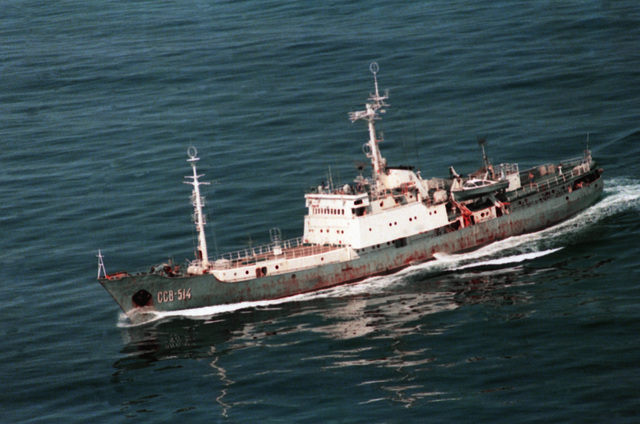
- There is a roughly even chance that some reported Russian trawler activity around UK undersea cables reflects route reconnaissance. Trade reporting describes more than 500 incidents involving Russian trawlers and assesses that they were mapping cable routes, but public reporting does not establish a plan to damage the cables. (Confidence: low · ASSESSED)
- I&W: UK authorities or the Royal Navy publish vessel tracks that corroborate repeated loitering or route-following by identified Russian trawlers over named cable corridors. (1-3 months)
- I&W: UK authorities publish an assessment finding that the reported tracks do not show cable-route mapping or related preparation for interference. (1-3 months)
Outlook & scenarios
Persistent influence activity, limited new attribution (55%)
The most likely course is continued Russian-linked messaging that exploits divisions over Ukraine, including the reported narratives in Poland. European authorities publish no conclusive evidence tying a new sabotage incident to Moscow, leaving attribution disputed.
A disruptive incident prompts an attribution dispute (35%)
A further incident affecting critical infrastructure in the Baltic states or a reported UK cable corridor prompts investigation and renewed warnings. Governments and media debate Russian responsibility before investigators release enough evidence to settle attribution.
False-flag operation blamed on Ukraine (10%)
Low-probability, high-impact wildcard: a sabotage incident in Central or Eastern Europe is presented as a Ukrainian operation, followed by Russian messaging that seeks to weaken support for Kyiv. The GUR warning identifies this as a Russian objective, but does not confirm an active plot.
Recommendations
- Prioritise liaison with German investigators for forensic findings on the Leipzig drone, including device components, placement and any identified suspect. Keep protective measures separate from public attribution.
- Treat the GUR warning as a collection lead. Seek specific operational indicators and target details from Ukrainian and Baltic counterparts before treating the listed locations as evidence of a plot.
- Ask UK counterparts to review the reported trawler activity against vessel identities, track data and named cable corridors. Record separately what is observed and what is assessed about intent.
- Monitor anti-Ukrainian narratives in Poland by preserving examples, account links and amplification patterns. Seek platform or government findings before assessing the campaign’s scale or Russian direction.
Confidence & uncertainty
Overall confidence is high for the broad situation picture because reporting includes German authorities’ confirmation of the Leipzig explosive mechanism and statements attributed to named government bodies, alongside reporting from major media, wire services and specialist outlets. Confidence is lower in the analytic judgments about Russian direction and future intent: the Leipzig attribution is disputed, the GUR warning is not independent confirmation of a plot, and the cable-reconnaissance assessment rests on trade reporting.
Alternative analysis (red cell)
The available evidence establishes reported influence activity, a suspicious Leipzig device, and alleged trawler behavior, but it does not support the forecasted timelines or a 50-percent attribution estimate for the Leipzig incident. The GUR material describes possible Russian intentions and scenarios rather than an active plot, while the Leipzig evidence remains unresolved and contested. The cable reporting is more consistent with a cautiously stated reconnaissance possibility than with a demonstrated sabotage campaign.
Intelligence gaps
- [EEI 1.1 · UNCOVERED] Reports, operator notifications, CCTV or satellite imagery showing unexplained physical damage or operational outages at critical infrastructure sites (power substations, gas pipelines/compressor stations, water treatment plants, railway signaling centers, major telecom exchanges). Recommended collection: satellite/imagery
- [EEI 1.2 · UNCOVERED] Observed reconnaissance activity around critical sites indicative of attack planning (unauthorised drone flights, repeated surveillance visits, loitering vehicles, mapping/photography of assets). Recommended collection: open-source/media
- [EEI 1.3 · UNCOVERED] Law-enforcement or customs seizures, arrests or interdictions of persons or shipments carrying explosives, sabotage tools, specialty cutting/electrical equipment, or covert comms gear destined for/near critical infrastructure. Recommended collection: law enforcement
- [EEI 2.1 · UNCOVERED] Emergence or amplification of coordinated social-media networks (sets of accounts, pages, channels) pushing identical narratives or hashtags across multiple platforms, including bot-like activity metrics and origin IP/common management indicators. Recommended collection: social-media/OSINT
- [EEI 2.2 · PARTIAL] Publication or internal guidance from state-run media, proxy outlets, or identified influence platforms distributing talking points, pre-scripted messaging, or translated content targeted at specific EU countries/communities. Recommended collection: open-source/media
- [EEI 2.3 · PARTIAL] Distribution of manipulated multimedia (deepfakes), targeted phishing/whaling campaigns, or localized false narratives timed to political events (elections, protests, court rulings) with tracked reach and engagement metrics. Recommended collection: cyber/forensic
- [EEI 3.1 · UNCOVERED] Unusual financial transactions: wire transfers, crypto conversions, or payments to shell companies, NGOs or individuals exceeding typical baselines that link to known proxies or front organisations. Recommended collection: financial
- [EEI 3.2 · UNCOVERED] Travel and movement indicators for suspected operatives: repeated border crossings, chartered/irregular flights, booking patterns or mobile/location data placing identified individuals in staging areas shortly before incidents. Recommended collection: border/immigration
- [EEI 3.3 · UNCOVERED] Cargo, freight or maritime movements with discrepancies (concealed/dual-use equipment, false manifests, unusual routing) detected at ports, rail hubs or via AIS that correspond to deliveries of material used in sabotage or influence operations. Recommended collection: customs/ports
- [EEI 3.4 · PARTIAL] Intercepted or otherwise-obtained communications showing tasking, coordination, or payment instructions between Russian agencies/handlers and proxy groups, including identified command-and-control servers or encrypted group identifiers. Recommended collection: signals-intel/SIGINT
Red cell review: PARTIAL DISSENT
TLP:CLEAR