TLP:CLEAR · Disclosure is not limited.
Europe: Multi-country Cyber Disruption and Unresolved Attribution
Time window: Last 1 day · Audience: General analyst · Type: Situation report · DTG: 2026-11-02 15:41Z · Overall confidence: HIGH
BLUF
Retailers and authorities reported cyber intrusions affecting supermarket refrigeration systems in several European countries on 2 November, alongside false alerts from emergency apps in Ukraine and Russia. The incidents are reported by multiple sources, but the available evidence does not establish a shared operator or Russian state direction.
Executive summary
The latest reporting adds cross-border disruption to the hybrid-threat picture. Supermarket refrigeration incidents were reported in France, Belgium, Luxembourg, Sweden, Estonia, Ireland and the Netherlands, with reported effects ranging from altered temperatures to spoiled food. Ukraine and Russia also reported unauthorised activity affecting emergency alert apps on 1 and 2 November. Ukraine blamed Russia for its false alerts, but the responsibility for the app incidents remains unclear; no supplied reporting attributes the supermarket intrusions to Russia. Country lists and some store totals differ between reports.
Change from previous assessment
Since the 1 November prior brief, the assessment now includes reported multi-country cyber intrusions against supermarket refrigeration systems and reported compromises of emergency alert apps in Ukraine and Russia. These developments shift the immediate focus from drone disruption and Starlink-related allegations to cyber incidents affecting retail systems and public warnings. The new reporting does not resolve Russian attribution or establish a single campaign.
Key judgments
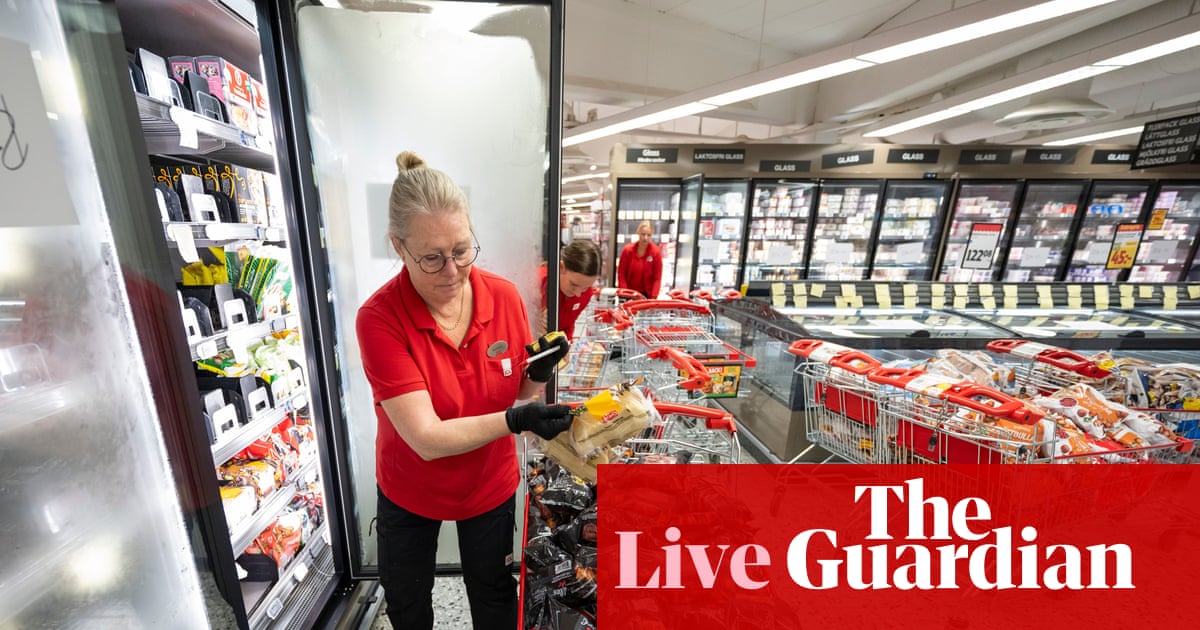
- Multiple supermarket refrigeration intrusions were reported across Europe on 2 November, but the supplied reporting does not establish a common operator. Reported cases include hundreds of affected supermarkets in France; around 40 Delhaize stores in Belgium and Luxembourg; 15 Carrefour stores and five Spar shops in Belgium; six Coop stores and other affected retailers in Sweden; at least 17 businesses in the Netherlands; one Selver store in Estonia; and 13 SuperValu stores in Ireland. Reports differ on whether SuperValu had 223 or 233 stores in total. (Confidence: high · REPORTED)
- I&W: Confirm a shared method if a national cyber centre or affected retailer publishes matching technical indicators from incidents in at least two countries. (0-14 days)
- I&W: Break the common-operation hypothesis if forensic findings identify distinct access paths and unrelated technical indicators across the national cases. (0-30 days)
- The 1 and 2 November incidents affecting emergency alert apps in Ukraine and Russia involved reported false warnings, including nuclear and chemical threat messages in Ukraine and a false alert across 33 Russian regions. Ukrainian and Russian authorities reported app compromises, but the evidence is based on official accounts and does not identify the responsible actor. (Confidence: medium · REPORTED)
- I&W: Confirm the reported compromises if Ukrainian or Russian authorities publish forensic findings showing unauthorised access to the respective app systems. (0-14 days)
- I&W: Revise the assessment if either app operator publishes a final finding that the false alerts did not result from unauthorised access. (0-30 days)
- It is unlikely that the available reporting establishes Russian state responsibility for either the emergency-app incidents or the supermarket intrusions. Ukraine's attribution rests partly on the use of Russian language in a fake message, while another account describes the alerts as written in English with errors and in a mix of Russian and Ukrainian. A Russian Telegram channel's report that Hitcore claimed responsibility for the Ukrainian breach is unverified. Supermarket reports identify unknown attackers. (Confidence: low · ASSESSED)
- I&W: Confirm a Russian state link if investigators publish verifiable technical attribution or judicial evidence connecting Russian state actors to either incident set. (0-3 months)
- I&W: Break the current attribution assessment if investigators identify a different responsible actor and publish supporting technical evidence. (0-3 months)
- Further cyber attempts against supermarket refrigeration controls in Europe are likely over the next 1-3 months. The reported incidents span several countries, and similar large-scale refrigeration attacks were reported in France in October. This forecast does not imply that the incidents share an operator or state sponsor. (Confidence: medium · ASSESSED)
- I&W: Confirm recurrence if another European retailer or national cyber centre reports unauthorised changes to refrigeration controls. (0-3 months)
- I&W: Weaken the forecast if affected retailers report stable systems and national cyber centres record no further refrigeration-control intrusions during the period. (0-3 months)
Outlook & scenarios
Further refrigeration incidents, contained at retailer level (55%)
The likely course is additional reports of refrigeration-control intrusions, with affected retailers isolating units and discarding spoiled food. National cyber centres continue investigating, but public reporting does not establish a shared operator.
App incidents remain contested (30%)
Ukraine and Russia continue to report false alerts and trade accusations, while no public forensic finding identifies the actor behind either breach. The unverified Hitcore claim remains insufficient to resolve attribution.
Low-probability, high-impact: wider disruption through shared control access (10%)
A shared route into refrigeration controls produces simultaneous disruptions at multiple retailers or distribution sites, increasing food losses beyond individual stores. This outcome would be confirmed by matching technical indicators and a documented impact on distribution operations.
Recommendations
- Maintain separate incident records for each retailer and each emergency-app operator. Capture the affected location, number of units or stores, reported temperatures, system supplier, timing and any published access method.
- Reconcile the conflicting country lists and SuperValu store totals before using aggregate figures. Distinguish confirmed retailer statements from broader estimates of the affected footprint.
- Prioritise collection of forensic findings from national cyber centres, refrigeration suppliers and affected retailers. Compare access paths and technical indicators before assessing whether the incidents form one operation.
- Keep Russian attribution to the emergency-app incidents and supermarket intrusions separate from the confirmed reporting of the incidents themselves. Track the Ukrainian allegation, the unverified Hitcore claim and any subsequent forensic or judicial findings independently.
- Monitor app restoration notices and retailer system status over the next 14 days, then review incident reporting weekly for three months. Flag new false alerts, additional affected stores and evidence of disruption to distribution operations.
Confidence & uncertainty
Overall confidence is high that the reported incidents occurred: multiple established media outlets carried accounts from retailers, refrigeration suppliers and the Swedish National Cybersecurity Centre, while Ukrainian and Russian authorities separately reported false emergency alerts. Confidence is lower on the full geographic scope, some store totals and the technical relationship between incidents. Attribution to a common operator or Russian state direction remains unestablished.
Intelligence gaps
- [EEI 1.1 · UNCOVERED] Reports, operator notifications, CCTV or satellite imagery showing unexplained physical damage or operational outages at critical infrastructure sites (power substations, gas pipelines/compressor stations, water treatment plants, railway signaling centers, major telecom exchanges). Recommended collection: satellite/imagery
- [EEI 1.2 · UNCOVERED] Observed reconnaissance activity around critical sites indicative of attack planning (unauthorised drone flights, repeated surveillance visits, loitering vehicles, mapping/photography of assets). Recommended collection: open-source/media
- [EEI 1.3 · UNCOVERED] Law-enforcement or customs seizures, arrests or interdictions of persons or shipments carrying explosives, sabotage tools, specialty cutting/electrical equipment, or covert comms gear destined for/near critical infrastructure. Recommended collection: law enforcement
- [EEI 2.1 · UNCOVERED] Emergence or amplification of coordinated social-media networks (sets of accounts, pages, channels) pushing identical narratives or hashtags across multiple platforms, including bot-like activity metrics and origin IP/common management indicators. Recommended collection: social-media/OSINT
- [EEI 2.2 · UNCOVERED] Publication or internal guidance from state-run media, proxy outlets, or identified influence platforms distributing talking points, pre-scripted messaging, or translated content targeted at specific EU countries/communities. Recommended collection: open-source/media
- [EEI 2.3 · PARTIAL] Distribution of manipulated multimedia (deepfakes), targeted phishing/whaling campaigns, or localized false narratives timed to political events (elections, protests, court rulings) with tracked reach and engagement metrics. Recommended collection: cyber/forensic
- [EEI 3.1 · UNCOVERED] Unusual financial transactions: wire transfers, crypto conversions, or payments to shell companies, NGOs or individuals exceeding typical baselines that link to known proxies or front organisations. Recommended collection: financial
- [EEI 3.2 · UNCOVERED] Travel and movement indicators for suspected operatives: repeated border crossings, chartered/irregular flights, booking patterns or mobile/location data placing identified individuals in staging areas shortly before incidents. Recommended collection: border/immigration
- [EEI 3.3 · UNCOVERED] Cargo, freight or maritime movements with discrepancies (concealed/dual-use equipment, false manifests, unusual routing) detected at ports, rail hubs or via AIS that correspond to deliveries of material used in sabotage or influence operations. Recommended collection: customs/ports
- [EEI 3.4 · UNCOVERED] Intercepted or otherwise-obtained communications showing tasking, coordination, or payment instructions between Russian agencies/handlers and proxy groups, including identified command-and-control servers or encrypted group identifiers. Recommended collection: signals-intel/SIGINT
Red cell review: CONCUR WITH COMMENT
TLP:CLEAR