TLP:CLEAR · Disclosure is not limited.
Europe: New Russian-Linked Sabotage and Espionage Reporting
Time window: Last 1 day · Audience: General analyst · Type: Situation report · DTG: 2026-10-31 14:41Z · Overall confidence: HIGH
BLUF
Reporting from 26 to 31 October adds a Romanian intelligence claim of a network coordinated from Russia, suspected arson preparations near Nuremberg, and a Russian national detained while photographing rail infrastructure in Świdnica. These cases raise concern about further sabotage and reconnaissance, but the available reporting does not establish that they form one Russia-directed campaign across Europe.
Executive summary
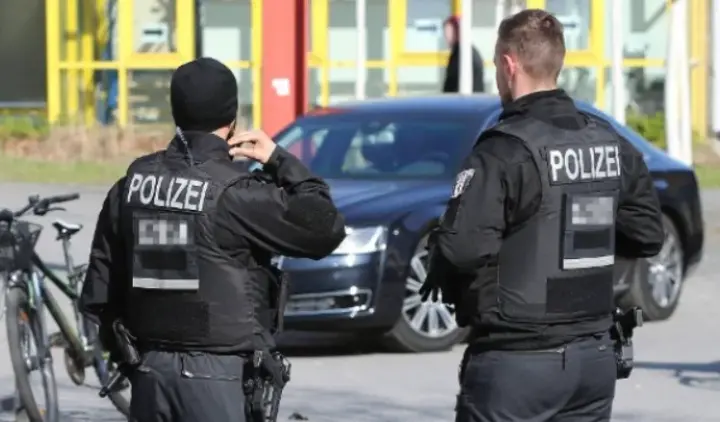
The main developments are reported investigations and detentions, rather than confirmed successful sabotage in the cases newly described. Romania's intelligence service said it had uncovered a network coordinated from Russia and targeting arms manufacturers. German prosecutors confirmed the detention of two Belarusian nationals suspected of preparing arson near railway and power infrastructure in the Nuremberg area; reporting links the case to Russia, but the prosecutors' reported attribution is to a foreign state or organisation. In Poland, police detained a 55-year-old Russian citizen in Świdnica after finding photographs of trains and transport infrastructure on his devices. Separate reporting from Norway describes Russian espionage activity and GPS interference around Kirkenes, but those claims lack independent corroboration in the supplied material. Reporting on AI-assisted Russian-linked activity is also thin and does not establish operational use of autonomous agents in a coordinated campaign.
Change from previous assessment
Since the 30 October brief, reporting adds Romania's 26 October intelligence statement about a network coordinated from Russia, German arrests of two Belarusian nationals suspected of preparing arson near Nuremberg infrastructure, further detail on the Świdnica detention, and claims of espionage and GPS interference around Kirkenes. These developments strengthen the assessment of continuing exposure to sabotage and reconnaissance, but do not establish a single campaign linking the cases. The earlier judgement that a specific Russian online disinformation operation is not established remains unchanged; this reporting identifies no specific accounts, content or operation.
Key judgments
- It is likely that European defence and transport sites will face further attempted sabotage or reconnaissance over the next 1-3 months. Romania's intelligence service said on 26 October that it had uncovered a network coordinated from Russia and targeting state-owned and private arms manufacturers in Romania and beyond. German prosecutors confirmed the detention of two Belarusian nationals, aged 39 and 50, suspected of preparing arson near a railway line and a power transmission line in the Nuremberg area. In Poland, police detained a 55-year-old Russian citizen in Świdnica while he photographed trains and railway infrastructure; investigators found photographs of transport sites in Poland and other countries on his devices. The reporting supports concern about these specific targets, not a confirmed connection among the cases. (Confidence: medium · ASSESSED)
- I&W: Confirm if Romanian, German or Polish investigators announce new arrests or charges tied to attempted attacks on arms production, railway or power infrastructure. (0-3 months)
- I&W: Break if final charging decisions in these cases rule out sabotage or intelligence tasking and identify no further attempts against the named sites. (1-6 months)
- It is unlikely that the available reporting establishes one Russia-directed network connecting the Romanian investigation, the Nuremberg arrests and the Świdnica case. Romania's intelligence service attributed its network to coordination from Russia, and Poland's special services coordinator described the Świdnica detention as evidence of Russian hybrid sabotage. By contrast, German prosecutors reportedly described the Nuremberg suspects as acting for a foreign state or organisation; the Russia link comes from separate reporting. The supplied claims identify no shared handler, communications or other evidence tying all three cases together. (Confidence: medium · ASSESSED)
- I&W: Confirm linkage if court filings or official investigative statements identify the same handler, communications channel or financing across the Romanian, German and Polish cases. (1-6 months)
- I&W: Break if final investigative or court records identify separate tasking and no shared operational links among the cases. (1-6 months)
- Reporting describes Russian espionage and GPS interference around Kirkenes, Norway, but the attribution remains weakly corroborated. Al Jazeera reported that Russian operatives had been caught posing as tourists and fishermen while attempting espionage, and that GPS jamming or spoofing affected aircraft navigation and devices used by reindeer herders. The supplied material contains no independent official confirmation or technical records for these claims, so confidence is low. (Confidence: low · REPORTED)
- I&W: Confirm if Norwegian police or security authorities publicly detail espionage arrests in Kirkenes, or aviation authorities publish incident records linking navigation disruption to GPS interference. (0-3 months)
- I&W: Break if Norwegian authorities attribute the reported navigation disruptions to a non-interference cause or publicly dispute the espionage account. (0-3 months)
- It is unlikely that the supplied reporting establishes Russian operational use of autonomous agents in a coordinated campaign against European targets. Anthropic's September 2026 report described a Russian-linked actor using Claude in intrusions against Ukrainian and European government, diplomatic and defence targets, while separate low-confidence reporting attributed autonomous drone-swarm software development to Russia-based actors. RUSI's assessment addresses a narrower question, stating that there is no evidence of autonomous agents managing a coordinated campaign to manipulate NATO response thresholds. These reports concern different activities, and the AI-related claims are not independently corroborated in the supplied material. (Confidence: low · ASSESSED)
- I&W: Confirm if an independent technical investigation publishes verifiable indicators linking AI-assisted intrusion tools or drone-swarm software to an operational Russian-linked incident against a named European target. (1-6 months)
- I&W: Break if follow-up reporting establishes that the cited AI work remained development or testing and was not deployed against European targets. (1-6 months)
Outlook & scenarios
Separate investigations, persistent proxy threat (60%)
The most likely course is that Romania, Germany and Poland continue their investigations as separate cases. Further arrests, charges or attempted reconnaissance against arms, rail or power sites would sustain concern, while public evidence still falls short of showing shared Russian tasking. Reporting on Kirkenes remains a separate, unconfirmed warning.
Evidence links cases to a wider Russian-directed network (30%)
If investigators identify common handlers, financing or communications across the Romanian, German and Polish cases, the assessment would shift towards a connected Russian-directed proxy campaign. Such evidence would raise concern that defence production and transport infrastructure are being selected across borders, rather than targeted in isolated operations.
AI-enabled activity expands beyond development (10%)
Low-probability, high-impact wildcard: independently verified evidence shows Russian-linked actors using AI-assisted intrusion tools against named European government or defence targets, or deploying autonomous drone-swarm software operationally. That finding would widen the assessed threat beyond the reported human-proxy and reconnaissance cases.
Recommendations
- Maintain a case-by-case comparison of the Romanian investigation, the Nuremberg arrests and the Świdnica detention. Track suspect identities, devices, communications, financing and target overlap, and distinguish confirmed investigative steps from allegations of Russian tasking.
- Prioritise updates from Romanian, German and Polish prosecutors on charging decisions, evidence and any shared operational links. Do not describe the cases as one campaign unless investigators disclose corroborating links.
- For Kirkenes, seek Norwegian official statements and checkable aviation or GPS-interference records before treating Russian attribution as established.
- Keep the AI-related claims at low confidence until technical indicators or independent incident reporting corroborate them. Separate software development, cyber intrusion and operational deployment in future assessments.
- Continue tracking whether any reporting identifies specific Russian-linked disinformation accounts, content or coordination. Do not infer an online influence operation from sabotage or espionage reporting alone.
Confidence & uncertainty
Overall confidence is high for the core reported events and official statements, which are covered by major-media reporting, government or prosecutorial statements, and specialist reporting. Confidence is lower for Russian attribution in some cases, for a connection among the investigations, and for the Kirkenes and AI-related claims. Those uncertainties limit campaign-level conclusions but do not materially weaken confidence that the reported detentions and investigations occurred.
Alternative analysis (red cell)
The available reporting does not establish that Russia is conducting a coordinated autonomous-agent campaign, but it also does not justify assessing such operational use as unlikely. Anthropic's low-confidence reporting describes Russian-linked activity involving adaptive malware and autonomous drone-swarm functions in, and fa31ab19-82bb-48e2-805d-051aaa838e84. RUSI's narrower finding in 6ecc1174-135f-46b9-8d7f-ec6ce9736030 weakens the claim of a NATO-threshold manipulation campaign, but does not resolve whether autonomous tools are being used operationally in other contexts.
Intelligence gaps
- [EEI 1.2 · UNCOVERED] Observed reconnaissance activity around critical sites indicative of attack planning (unauthorised drone flights, repeated surveillance visits, loitering vehicles, mapping/photography of assets). Recommended collection: open-source/media
- [EEI 1.3 · PARTIAL] Law-enforcement or customs seizures, arrests or interdictions of persons or shipments carrying explosives, sabotage tools, specialty cutting/electrical equipment, or covert comms gear destined for/near critical infrastructure. Recommended collection: law enforcement
- [EEI 2.1 · UNCOVERED] Emergence or amplification of coordinated social-media networks (sets of accounts, pages, channels) pushing identical narratives or hashtags across multiple platforms, including bot-like activity metrics and origin IP/common management indicators. Recommended collection: social-media/OSINT
- [EEI 2.2 · UNCOVERED] Publication or internal guidance from state-run media, proxy outlets, or identified influence platforms distributing talking points, pre-scripted messaging, or translated content targeted at specific EU countries/communities. Recommended collection: open-source/media
- [EEI 2.3 · UNCOVERED] Distribution of manipulated multimedia (deepfakes), targeted phishing/whaling campaigns, or localized false narratives timed to political events (elections, protests, court rulings) with tracked reach and engagement metrics. Recommended collection: cyber/forensic
- [EEI 3.1 · UNCOVERED] Unusual financial transactions: wire transfers, crypto conversions, or payments to shell companies, NGOs or individuals exceeding typical baselines that link to known proxies or front organisations. Recommended collection: financial
- [EEI 3.2 · UNCOVERED] Travel and movement indicators for suspected operatives: repeated border crossings, chartered/irregular flights, booking patterns or mobile/location data placing identified individuals in staging areas shortly before incidents. Recommended collection: border/immigration
- [EEI 3.3 · UNCOVERED] Cargo, freight or maritime movements with discrepancies (concealed/dual-use equipment, false manifests, unusual routing) detected at ports, rail hubs or via AIS that correspond to deliveries of material used in sabotage or influence operations. Recommended collection: customs/ports
- [EEI 3.4 · PARTIAL] Intercepted or otherwise-obtained communications showing tasking, coordination, or payment instructions between Russian agencies/handlers and proxy groups, including identified command-and-control servers or encrypted group identifiers. Recommended collection: signals-intel/SIGINT
Red cell review: PARTIAL DISSENT
TLP:CLEAR