TLP:CLEAR · Disclosure is not limited.
Europe Protest Watch: Tirana Clashes, No Evidence of a Continental Strike
Time window: Last 1 day · Audience: General analyst · Type: Situation report · DTG: 2026-11-28 19:37Z · Overall confidence: HIGH
BLUF
The supplied reporting does not establish a coordinated general strike across France, Italy, Portugal and Albania. It does confirm a large, violent anti-government protest in Tirana on 28 November, while French protest turnout fell sharply from the previous week; no supplied claims substantiate more than 1,200 arrests in Paris or hundreds injured there.
Executive summary
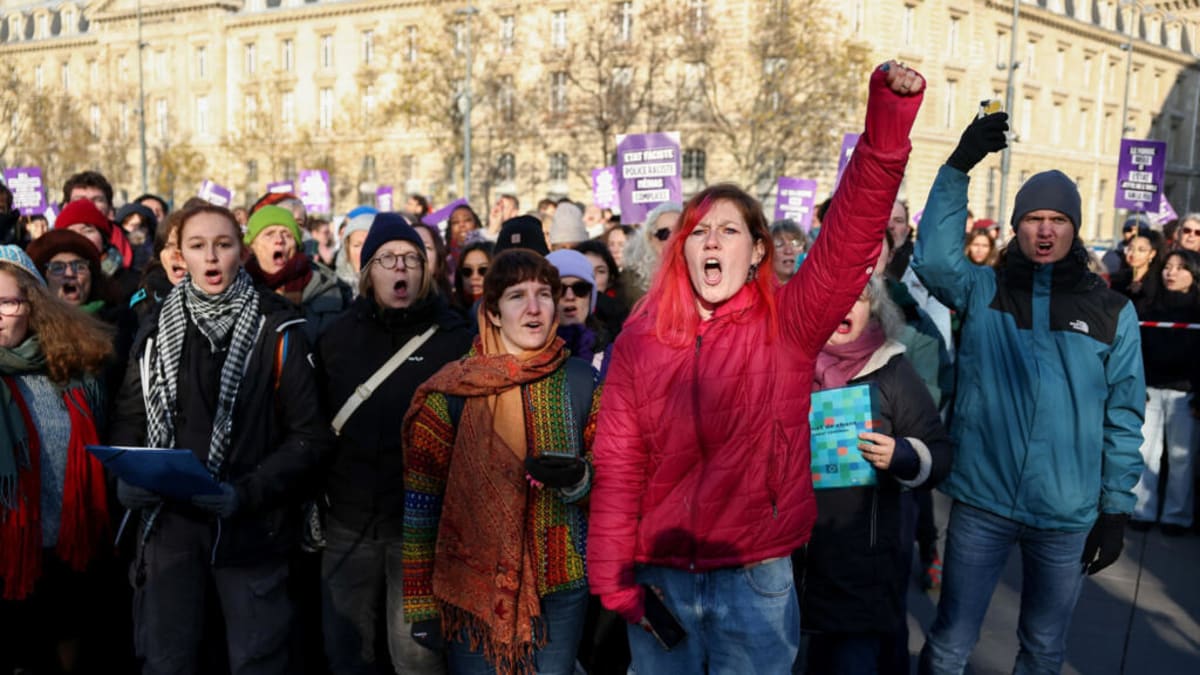
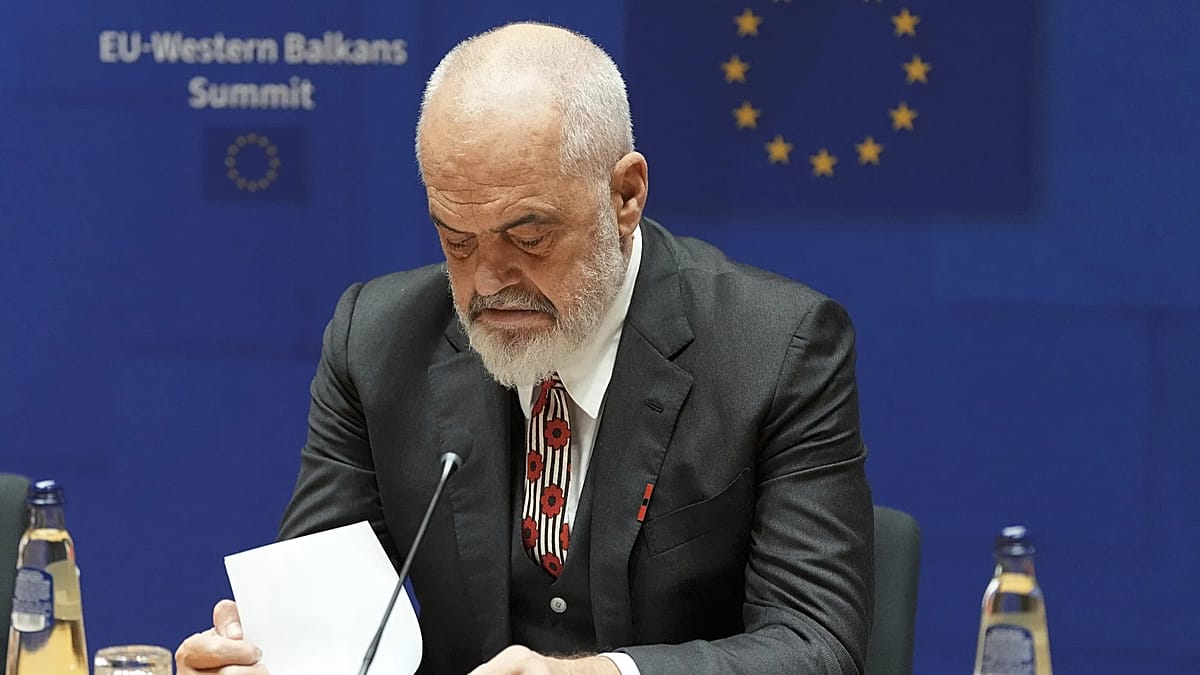
Thousands of protesters gathered in Tirana on Albania’s Independence Day, demanding Prime Minister Edi Rama’s resignation. Reports describe clashes, police use of tear gas and water cannon, and attacks on government buildings; reported injury totals conflict, ranging from 8 to 35. In France, police put turnout at 44,500 nationwide on 28 November, down from 82,500 a week earlier. The French demonstrations addressed violence against women, cost of living and student rights. The supplied reporting contains no evidence of matching mobilisations in Italy or Portugal or a joint strike call spanning the four countries.
Change from previous assessment
Since the 27 November brief, new reporting confirms a mass anti-government rally and clashes in Tirana, and reports sharply lower French turnout on 28 November than on 21 November. The assessment that a four-country general strike is not established remains unchanged; the added reporting does not identify a joint strike call or mobilisation in Italy or Portugal. Reports of Tirana injuries are conflicting, so the count remains unresolved. The prior 14-day forecast window for a coordinated strike has not elapsed, so no outcome-based recalibration is warranted.
Key judgments
- Albanian police and protesters clashed in Tirana on 28 November during a rally attended by thousands calling for Edi Rama’s resignation. Multiple reports describe police using tear gas and water cannon; reports also describe masked demonstrators damaging government property, including windows at the transport ministry and central bank. Details of some alleged actions, including rubber-bullet use, are not consistently corroborated. (Confidence: high · REPORTED)
- I&W: Confirms: independent footage or a police operational record corroborates tear-gas and water-cannon use during the Tirana rally. (0-14 days)
- I&W: Breaks: an official correction supported by contemporaneous footage establishes that police did not use tear gas or water cannon at the rally. (0-14 days)
- A coordinated general strike across France, Italy, Portugal and Albania is unlikely within the next 14 days on the supplied evidence. The reporting describes separate protests in France and Albania, but identifies no joint strike call or corresponding mobilisation in Italy or Portugal. This is an assessment from an incomplete reporting set, not evidence that no such call exists. (Confidence: low · ASSESSED)
- I&W: Confirms: a dated joint notice names trade union confederations in all four countries and specifies a common strike date and scope. (0-14 days)
- I&W: Breaks: union or government calendars in all four countries show no coordinated stoppage and no shared call by the end of the period. (0-14 days)
- Further anti-government demonstrations in Tirana are likely within the next 14 days, given the months-long protest movement and the large 28 November rally. The reporting does not establish that another demonstration will involve violence. (Confidence: medium · ASSESSED)
- I&W: Confirms: students or opposition figures announce another nationwide protest or a Tirana gathering on public channels. (0-14 days)
- I&W: Breaks: student and opposition organisers publicly cancel planned mobilisation and announce no replacement action. (0-14 days)
- French protest mobilisation is likely to remain below its mid-October level over the next 14 days. Police reported 44,500 participants nationwide on 28 November, compared with 82,500 on 21 November and 565,000 on 17 October. The rallies addressed overlapping but not identical issues, so these figures do not establish the trajectory of a single unified movement. (Confidence: medium · ASSESSED)
- I&W: Confirms: the next reported nationwide French protest count remains below 82,500. (0-14 days)
- I&W: Breaks: the next reported nationwide French protest count exceeds 82,500. (0-14 days)
- The number injured in the 28 November Tirana protest remains unresolved. Reports citing Albania’s health authorities give totals of 8, 30 and 35, and the supplied reporting does not reconcile whether the differences reflect timing or counting criteria. (Confidence: medium · REPORTED)
- I&W: Breaks: Albania’s health ministry issues a dated final tally and explains the reporting cut-off or revisions. (0-14 days)
- I&W: Confirms: a further official statement gives a different total without reconciling the earlier figures. (0-14 days)
Outlook & scenarios
Separate protests, no continental strike (60%)
Over the next 14 days, Albania sees further anti-government mobilisation while French turnout remains below its October peak. No joint strike notice emerges for France, Italy, Portugal and Albania.
Tirana mobilisation renews and clashes recur (30%)
Students or opposition figures call another Tirana protest, and renewed confrontation follows. French demonstrations remain separate from the Albanian movement, with no evidence of coordinated action across the four countries.
Cross-border strike call emerges (10%)
A joint notice from trade union confederations in France, Italy, Portugal and Albania names a common strike date. This low-probability, high-impact development would overturn the current assessment that the supplied reporting does not establish continental coordination.
Recommendations
- Keep country-level protest reporting separate. Do not describe the activity as a coordinated European austerity wave unless a joint call or operational coordination is documented.
- Monitor public statements and calendars from trade union confederations in France, Italy, Portugal and Albania for a dated, shared strike notice. Record the named organisers, demands and planned action in each country.
- For Albania, track student and opposition calls for further rallies, police deployments in Tirana, and any official review of police conduct. Seek a dated health-ministry statement that reconciles the injury totals before using a single figure.
- Track French Interior Ministry turnout estimates at the next nationwide demonstrations and distinguish rallies over student rights and purchasing power from those focused on violence against women.
Confidence & uncertainty
Overall confidence is high for the core event picture: wire-service and major-media reporting converges on the large Tirana rally, clashes and police use of tear gas and water cannon, while French reporting provides comparable turnout figures. Confidence is lower on the precise number injured in Tirana, which varies substantially across reports. The absence of evidence for a coordinated strike or mobilisation in Italy and Portugal reflects the limits of the supplied reporting, not proof that none exists.
Intelligence gaps
- [EEI 1.1 · PARTIAL] Confirmed dates, locations and participating unions or student organizations for planned general-strike actions in each country. Recommended collection: open-source/social media
- [EEI 1.2 · UNCOVERED] Strike participation rates, public-transport cancellations, school or university closures, and interruptions to ports, airports, energy facilities or other critical services. Recommended collection: government/transport reporting
- [EEI 1.4 · UNCOVERED] Evidence that protest organizers are coordinating common demands, slogans, dates, funding or operational guidance across national borders. Recommended collection: open-source/social media
- [EEI 2.1 · UNCOVERED] Announced or implemented policy concessions involving austerity measures, education funding, pensions, wages or youth employment. Recommended collection: government statements
- [EEI 2.4 · UNCOVERED] Negotiation schedules, mediation efforts or breakdowns between governments and trade-union or student representatives. Recommended collection: labor/government reporting
- [EEI 3.1 · PARTIAL] Named organizations issuing mobilization calls, with verified membership, geographic reach and turnout at prior actions. Recommended collection: open-source/organizational websites
- [EEI 3.2 · PARTIAL] Trade-union confederation decisions on strike mandates, rolling strikes, sector-wide action or cross-border coordination. Recommended collection: trade-union statements
- [EEI 3.3 · PARTIAL] Student movement communications identifying coordinating committees, protest logistics, fundraising or links to established political parties. Recommended collection: social media/student networks
- [EEI 3.4 · PARTIAL] Participation by violent fringe groups, organized football ultras or extremist networks, including evidence of weapons, incendiary devices or coordinated attacks. Recommended collection: law-enforcement reporting
- [EEI 4.1 · UNCOVERED] Changes in retail activity, industrial output, freight movement, tourism bookings or financial-market indicators attributed to strike disruption. Recommended collection: economic/financial reporting
- [EEI 4.2 · UNCOVERED] War-risk or political-risk insurance premium changes, transport rerouting and business continuity warnings linked to protest activity. Recommended collection: commercial risk reporting
- [EEI 4.3 · UNCOVERED] Polling or verified public-opinion data showing support for the protests, governments or specific austerity demands. Recommended collection: polling/media reporting
- [EEI 4.4 · PARTIAL] Resignations, coalition disputes, parliamentary no-confidence actions or electoral announcements triggered by the protest wave. Recommended collection: parliamentary/political reporting
Red cell review: CONCUR WITH COMMENT
TLP:CLEAR