TLP:CLEAR · Disclosure is not limited.
Europe protest wave: French mobilisation continues, continental strike unverified
Time window: Last 1 day · Audience: General analyst · Type: Situation report · DTG: 2026-10-27 15:37Z · Overall confidence: HIGH
BLUF
The reporting supports continued protest activity in France and separate labour or protest actions elsewhere, but does not substantiate a coordinated general strike across France, Italy, Portugal and Albania. France’s 5 November strike call and planned actions on 30 and 31 October are the clearest near-term watchpoints.
Executive summary
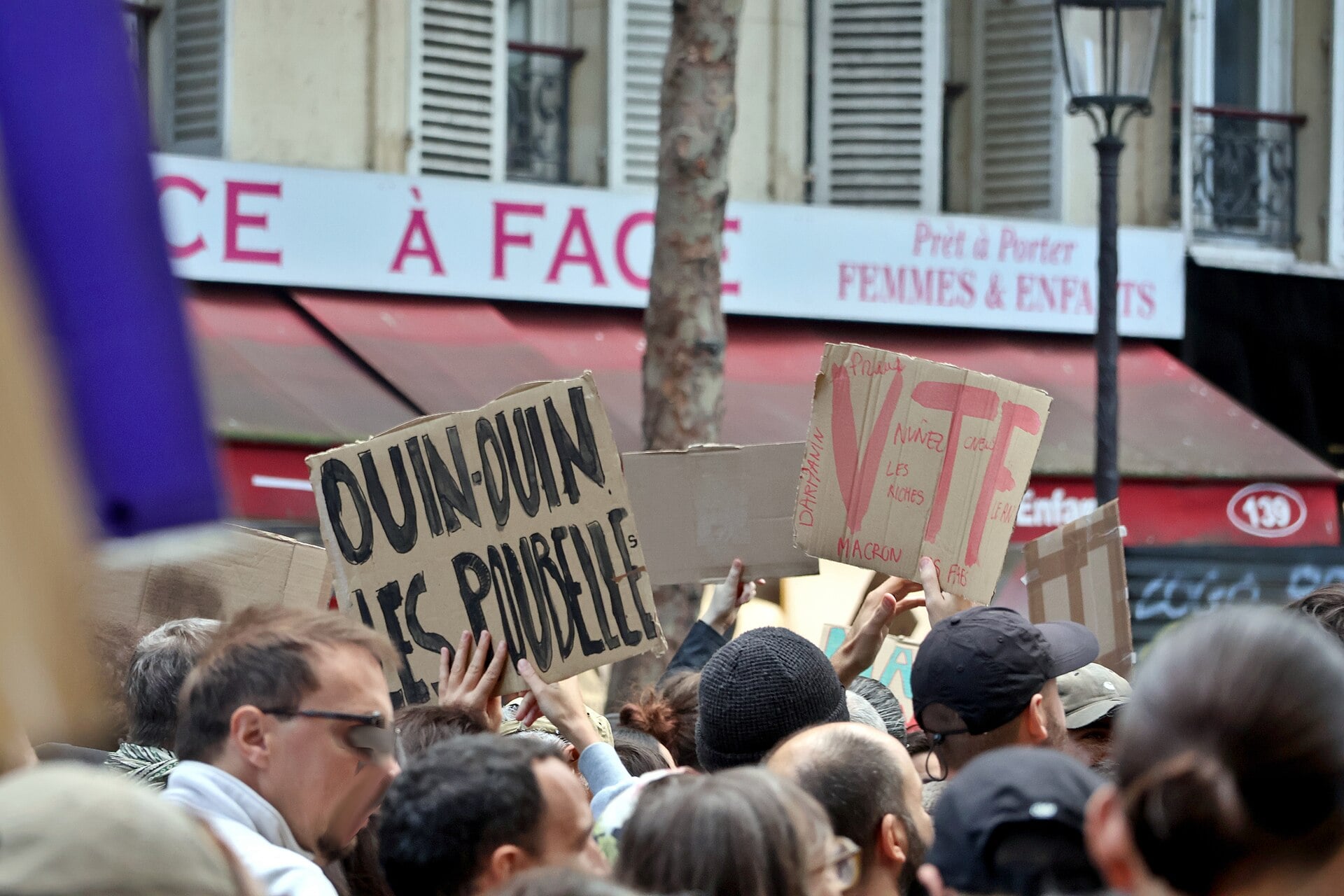
France remains the centre of the reported protest wave. For 24 October, the Interior Ministry counted 410,000 participants nationwide, while the CGT estimated about 800,000; the ministry also reported 1,314 arrests and 53 injured security officers. The French government announced education measures on 26 October, while student organisers urged continued mobilisation and five union confederations called a nationwide strike for 5 November. In Italy, reporting describes an investigation into the Milan riots and the arrest of Youssef Siher, but the allegations remain under investigation. Reports of actions in Italy, Spain and Belgium do not establish a single coordinated strike spanning the four countries named in the topic; the claims provided contain no corresponding strike call from Portugal or Albania.
Change from previous assessment
Since the 26 October brief, the French strike call for 5 November is now attributed to five named confederations, and Yellow Vest actions are reported for 30 and 31 October. New reporting also describes the French education package and a Milan investigation involving Youssef Siher. These developments strengthen the assessment that French mobilisation will continue and add an Italy security and legal watchpoint. The assessment that a coordinated strike across France, Italy, Portugal and Albania is not established remains unchanged.
Key judgments
- A coordinated general strike across France, Italy, Portugal and Albania by 5 November is unlikely on the reporting available. CFDT, CGT, FO, Unsa and FSU have called a nationwide French strike for 5 November. The reporting also describes protests in Rome, a Spanish strike call for 11 November and a Belgian strike call for 23 November, but these separate events do not establish coordination across the four countries in the topic. The evidence for Portugal and Albania is absent from the claims provided, so this judgement rests on incomplete coverage. (Confidence: low · ASSESSED)
- I&W: Public strike notices from union confederations in France, Italy, Portugal and Albania explicitly coordinating dates or action appear by 3 November. (0-7 days)
- I&W: Union bodies in Italy, Portugal or Albania confirm that no nationwide strike call has been issued, or publish separate dates and demands. (0-14 days)
- France’s 24 October mobilisation was very large, but its exact turnout remains disputed. The Interior Ministry counted 410,000 people nationwide, including 110,000 in Paris, while the CGT estimated about 800,000 nationwide. In Paris, an authorised march departing from Porte d’Italie was reported at 250,000 participants. The Interior Ministry’s provisional figures recorded 1,314 arrests and 53 injured security officers across France. These are reported figures, not a reconciled final count. (Confidence: medium · REPORTED)
- I&W: The Interior Ministry or CGT publishes a revised nationwide or Paris turnout count that narrows or widens the gap between their estimates. (0-14 days)
- I&W: A further official tally revises the reported 1,314 arrests or 53 injured security officers for 24 October. (0-14 days)
- Further organised protest activity in France through 5 November is likely. Yellow Vest organisers have called gatherings for 30 October and rallies for 31 October; CFDT, CGT, FO, Unsa and FSU have called a nationwide strike for 5 November. Les Lycéens urged pupils to continue school barricades and mobilisation after the government announced an education package on 26 October. These calls establish planned activity, not eventual turnout or disruption. (Confidence: medium · ASSESSED)
- I&W: Reports from French prefectures, schools or unions record rallies, school blockades or demonstrator turnout on 30 or 31 October. (0-5 days)
- I&W: French unions publish strike participation figures or report disruption to public services following the 5 November action. (6-14 days)
- Italian investigators are pursuing allegations linked to the Milan riots of 17 and 18 October, but the reporting does not establish an operational violent network beyond the alleged chat discussions. The account describes a WhatsApp group with more than 230 members, around 150 searches across Italian provinces and the arrest of Youssef Siher on suspicion of inciting crimes with terrorist intent and organised violence. This rests on one local-media account; the allegations are not findings of guilt. (Confidence: low · REPORTED)
- I&W: The Milan judge issues the expected decision on Siher’s arrest and pre-trial detention by 28 October. (0-2 days)
- I&W: A second independent news account or an official prosecutor statement confirms additional arrests, charges or evidence linking suspects to planned attacks. (0-14 days)
Outlook & scenarios
French mobilisation continues; actions remain nationally separate (60%)
The 30 and 31 October actions and the 5 November French strike proceed as separate events. Protests and strike calls elsewhere remain nationally distinct, with no confirmed four-country coordination by 5 November.
Protest and strike coordination widens (12%)
Unions or student groups in Italy, Portugal or Albania issue public calls aligned with the French action. A cross-border coordination claim then becomes more plausible, although the current reporting does not establish it.
French government measures and restrictions reduce mobilisation (20%)
The education package, police restrictions and public-order measures reduce school blockades or turnout at the next French actions. The 5 November strike call remains in place, but participation or disruption is lower than organisers seek.
Wildcard: France declares a state of emergency (8%)
This is a low-probability, high-impact outcome. Macron has stated that he would resort to a state of emergency if the movement continued to grow; a prediction market priced the chance at 9 per cent before 1 January 2027. A formal declaration would mark a sharp escalation in the government’s response.
Recommendations
- Describe the 5 November action as a French nationwide strike call, not a pan-European general strike. Verify any claimed coordination against public notices from union confederations in each named country.
- For the 30 and 31 October French actions, check prefecture notices and reports from schools and unions. Record turnout, arrests and injuries separately by city and date.
- When reporting 24 October turnout, retain the distinction between the Interior Ministry’s 410,000 nationwide count and the CGT’s estimate of about 800,000. Do not present either figure as a reconciled total.
- Track the Milan judge’s decision on Youssef Siher by 28 October and seek an official prosecutor statement or independent reporting before treating allegations in chat messages as evidence of a wider network.
- Monitor official French government announcements for any formal emergency measure. Keep Macron’s conditional statement and the prediction-market estimate separate from evidence that such a measure has been declared.
Confidence & uncertainty
Confidence is high in the core picture of large French protests, official public-order measures, the announced education package and the French unions’ strike call. Multiple major-media reports carry official or union-attributed figures, although the turnout estimates conflict. Confidence is lower for the scope of cross-border coordination and the Milan allegations, which rest on incomplete country coverage or a single local-media account. The forward outlook is consequently less certain than the reported events.
Alternative analysis (red cell)
Available claims show substantial protest and strike activity in France and Italy, alongside general-strike calls in Spain and Belgium, but they provide no direct evidence about Portugal or Albania. The four-country proposition therefore cannot be assessed as unlikely from this ledger; a materially different reading is that it remains indeterminate because coverage of two countries is absent.
Intelligence gaps
- [EEI 1.2 · PARTIAL] Strike participation rates, public-transport cancellations, school or university closures, and interruptions to ports, airports, energy facilities or other critical services. Recommended collection: government/transport reporting
- [EEI 1.4 · UNCOVERED] Evidence that protest organizers are coordinating common demands, slogans, dates, funding or operational guidance across national borders. Recommended collection: open-source/social media
- [EEI 2.1 · PARTIAL] Announced or implemented policy concessions involving austerity measures, education funding, pensions, wages or youth employment. Recommended collection: government statements
- [EEI 2.4 · PARTIAL] Negotiation schedules, mediation efforts or breakdowns between governments and trade-union or student representatives. Recommended collection: labor/government reporting
- [EEI 3.1 · PARTIAL] Named organizations issuing mobilization calls, with verified membership, geographic reach and turnout at prior actions. Recommended collection: open-source/organizational websites
- [EEI 3.3 · PARTIAL] Student movement communications identifying coordinating committees, protest logistics, fundraising or links to established political parties. Recommended collection: social media/student networks
- [EEI 4.1 · PARTIAL] Changes in retail activity, industrial output, freight movement, tourism bookings or financial-market indicators attributed to strike disruption. Recommended collection: economic/financial reporting
- [EEI 4.2 · UNCOVERED] War-risk or political-risk insurance premium changes, transport rerouting and business continuity warnings linked to protest activity. Recommended collection: commercial risk reporting
- [EEI 4.3 · UNCOVERED] Polling or verified public-opinion data showing support for the protests, governments or specific austerity demands. Recommended collection: polling/media reporting
- [EEI 4.4 · UNCOVERED] Resignations, coalition disputes, parliamentary no-confidence actions or electoral announcements triggered by the protest wave. Recommended collection: parliamentary/political reporting
Red cell review: PARTIAL DISSENT
TLP:CLEAR