TLP:CLEAR · Disclosure is not limited.
Europe: Russia-linked hybrid activity intensifies, with Poland, the Baltics and the Baltic Sea at elevated risk
Time window: Last 1 day · Audience: General analyst · Type: Situation report · DTG: 2026-06-30 08:13Z · Overall confidence: MEDIUM
BLUF
Russia-linked hybrid operations across Europe have intensified since 2023 and are likely to remain elevated, with Poland and the Baltic states at particular risk in the near term. Belarus remains an active enabler, and visible militarisation of Russian energy shipping in the Baltic adds a maritime vector to the threat.
Executive summary
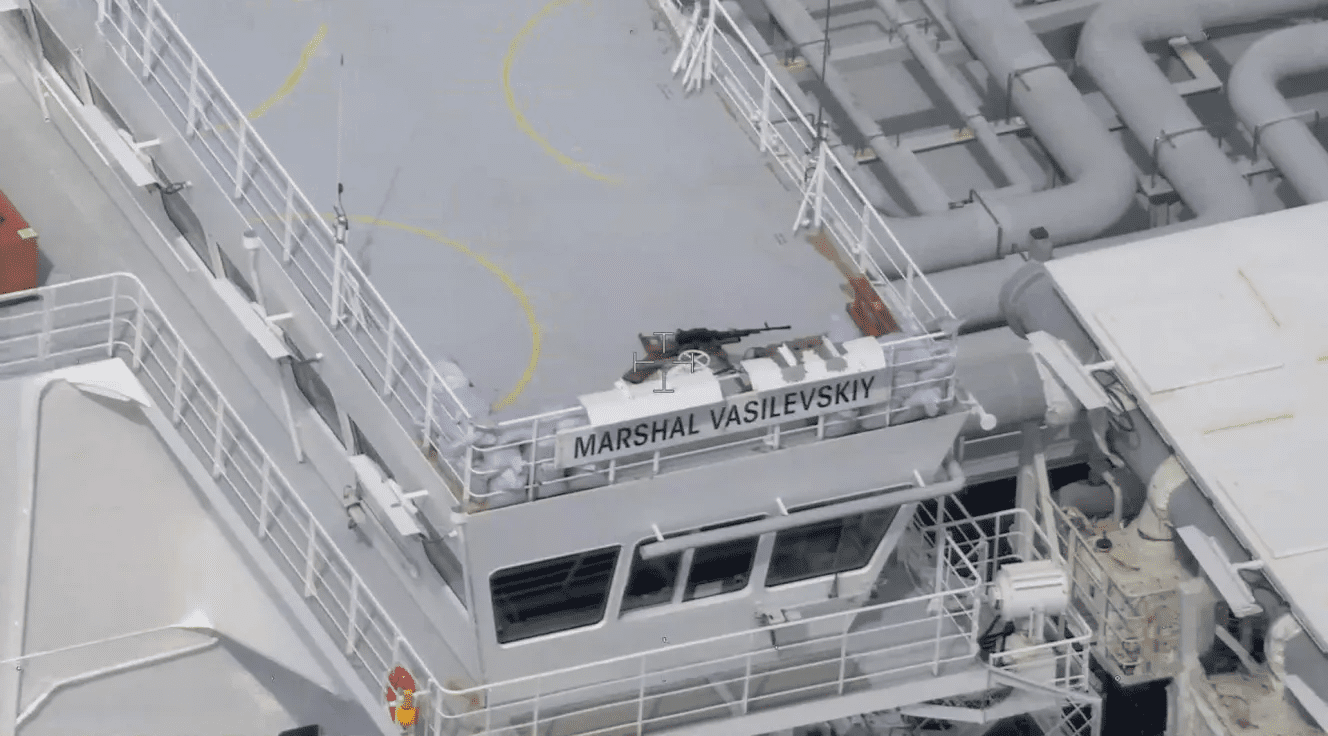
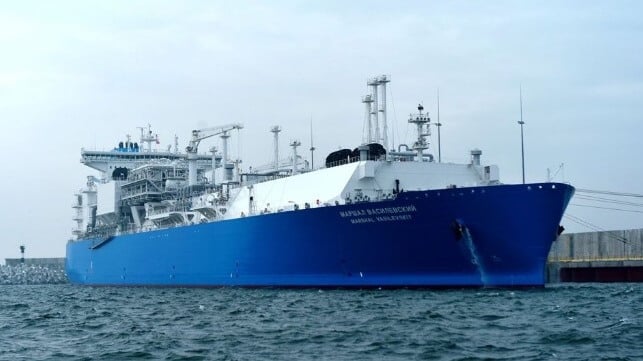
European officials and NATO report a surge in suspected Russia-linked sabotage since 2023 and a record-high sabotage threat level in 2025, with incidents spanning rail fibre cuts in Germany, arson in London and a major mall fire in Warsaw, alongside spy-ring arrests in Poland. Poland’s services flag unprecedented espionage and sabotage spikes since 2024 to 2025, and Warsaw cites prior hybrid attacks from the 2021 border migration crisis to drone incidents. Belarus remains a conduit and facilitator: Kyiv publicly compelled Minsk to switch off Russian targeting relays, yet Minsk still signals alignment with Moscow while Latvia reports migration pressure and attempted recruitment by Belarusian security organs. At sea, Russia appears to have mounted heavy machine guns on an LNG carrier that regularly supplies Kaliningrad, signalling energy shipping as a strategic asset. Concurrently, Ukraine’s long-range drone campaign has hit most of Russia’s largest refineries, with Moscow acknowledging air defence surging and fuel strains. Expect continued elevated hybrid risks, particularly on NATO’s eastern flank and into the Ankara summit window.
Key judgments
- Russia-linked sabotage and other deniable activity in Europe has intensified since 2023 and is very likely to persist at a high tempo, with transport and energy infrastructure recurring targets. (Confidence: high · ASSESSED)
- I&W: National prosecutors in Germany, Poland or the UK publicly attribute a new rail or energy-site attack to Russian services, naming operatives or units. (0-14 days)
- I&W: Disruption of an attempted sabotage cell targeting logistics hubs in Central Europe, with seized tasking linking to Russian military or intelligence entities. (1-3 months)
- Belarus is likely to remain an active enabler of Russian hybrid operations against NATO neighbours despite tactical concessions, sustaining pressure on Latvia, Lithuania and Poland. (Confidence: medium · ASSESSED)
- I&W: Latvia or Lithuania reports fresh expulsions or arrests tied to Belarusian KGB recruitment or direction at border crossings. (0-14 days)
- I&W: Verified resumption of Russia-linked cross-border drone or targeting activity from Belarusian territory against Ukraine. (1-3 months)
- Russia is very likely militarising energy logistics in the Baltic to secure Kaliningrad-bound supplies, raising the risk of coercive signalling or incidents at sea. (Confidence: medium · ASSESSED)
- I&W: Additional imagery from Baltic authorities shows mounted weapons on Russian commercial vessels transiting the Gulf of Finland. (0-14 days)
- I&W: Russian notices or escort patterns that create de facto restricted zones around Kaliningrad-bound energy carriers. (1-3 months)
- Ukraine’s sustained long-range strikes on Russian oil infrastructure are very likely degrading Russia’s fuel distribution, and Moscow will likely respond with heightened air defence and asymmetric pressure, including hybrid activity in Europe. (Confidence: medium · ASSESSED)
- I&W: Within days of a high-profile refinery strike, an EU member publicly attributes a new arson or rail sabotage attempt to Russian tasking. (0-14 days)
- I&W: Russian regional decrees expand fuel rationing while public messaging links European states to Ukraine’s strikes. (1-3 months)
- Poland and the Baltic states are likely priority targets for Russian hybrid operations through the NATO Ankara summit window, reflecting their role in supporting Ukraine and recent warnings from Polish intelligence. (Confidence: medium · ASSESSED)
- I&W: Spike in Polish- and Baltic-language disinformation themes targeting NATO decisions and logistics ahead of Ankara. (0-14 days)
- I&W: Public reporting of attempted drone incursions or rail sabotage in Poland or the Baltics attributed to Russian direction. (0-14 days)
Outlook & scenarios
Sustained elevated hybrid pressure without overt escalation (60%)
Deniable sabotage, arson and low-level cyber activity continue across multiple EU states, with periodic hits on transport and energy-adjacent targets. Belarus maintains low-grade pressure on borders and recruitment attempts. Russian energy shipping to Kaliningrad continues with visible defensive fit-outs but avoids direct confrontation. Arrests and exposures occur, but the tempo stays high.
Summit-timed spike on NATO’s eastern flank (35%)
In the run-up to and during the Ankara summit, coordinated incidents target Polish and Baltic rail, warehouses and defence-linked firms, paired with cyber disruptions and disinformation. Border frictions increase, testing response thresholds. Activity remains deniable but shows cross-border tasking patterns.
Partial de-escalation driven by tactical cost calculus (20%)
Belarus keeps Russian targeting relays offline and moderates border pressure. Russian operators reduce the visibility of weapons on commercial energy vessels following scrutiny. EU law enforcement degrades several networks, producing a temporary lull in incidents. The threat endures but the pace dips for a quarter.
Low-probability shock: covert insertion in a Baltic state (10%)
A small, unattributed armed group surfaces on Baltic territory to test state response, creating acute political pressure for NATO consultations. Rapid containment prevents major violence, but the episode triggers emergency security measures around ports, rail hubs and energy sites across the region.
Recommendations
- Prioritise an eastern-flank watch focused on Poland, Lithuania, Latvia and Estonia, mapping rail, logistics and defence-adjacent facilities previously targeted, and set up a 24/7 alert pathway with national services for new incidents.
- Integrate NASA thermal anomaly feeds into your daily OSINT picture to flag suspected arson or industrial fires near rail yards, substations and fuel depots, and cue ground reporting to discriminate wildfire from sabotage.
- Task maritime domain awareness on the Gulf of Finland and approaches to Kaliningrad: collect imagery of Russian commercial energy vessels, correlate with AIS and coastal patrol reporting, and maintain a running log of any visible armaments.
- Stand up a Belarus vector cell to track border pressure, recruitment approaches and any resumption of Russian targeting activity from Belarusian territory, and pre-brief stakeholders on likely spillover into Latvia and Lithuania.
- Prepare a cross-mission attribution pack template for rapid use when incidents occur, capturing TTPs seen in 2022-2025 European cases so that deniable activity can be more quickly linked to Russian services when evidence allows.
- Set a short-term surge posture for the NATO Ankara summit window: increase monitoring of Polish- and Baltic-language disinformation narratives targeting NATO decisions and European support to Ukraine.
- Coordinate with host nations to implement low-cost hardening at priority nodes on rail and power distribution lines, including camera coverage, rapid incident reporting protocols and access controls.
- Maintain a running correlation between Ukrainian deep strikes inside Russia and subsequent European hybrid incidents to refine warning indicators and brief leadership on likely retaliatory patterns.
Confidence & uncertainty
Multiple independent and generally reliable sources, including national authorities, NATO reporting and major media, corroborate a Europe-wide rise in sabotage and related hybrid activity, as well as Polish security concerns and Belarus’s enabling role. The maritime militarisation reporting around a Kaliningrad-linked LNG carrier is based on photographic evidence but remains medium-confidence. Attribution in several cases relies on government and think-tank assessments rather than court verdicts, and some quantitative figures are single-source. These factors, and the inherent opacity of deniable operations, justify an overall medium confidence rating.
Alternative analysis (red cell)
The source set documents heightened incidents and credible warnings, but many key judgments rest on allegations, single-source or medium-admiralty items and do not reconcile contradictory reporting (tradecraft_lint_findings: contradiction_unaddressed). Alternative, defensible readings exist: Belarus may be hedging or making tactical concessions rather than consistently enabling operations, Russian ship armaments could be force-protection rather than a doctrinal militarisation campaign, and Ukrainian strikes may be locally disruptive without proven systemic degradation of Russia’s fuel distribution or an imminent pivot to widescale hybrid retaliation in Europe.
Intelligence gaps
- [EEI 1.1 · PARTIAL] Reports, operator notifications, CCTV or satellite imagery showing unexplained physical damage or operational outages at critical infrastructure sites (power substations, gas pipelines/compressor stations, water treatment plants, railway signaling centers, major telecom exchanges). Recommended collection: satellite/imagery
- [EEI 1.2 · UNCOVERED] Observed reconnaissance activity around critical sites indicative of attack planning (unauthorised drone flights, repeated surveillance visits, loitering vehicles, mapping/photography of assets). Recommended collection: open-source/media
- [EEI 1.3 · PARTIAL] Law-enforcement or customs seizures, arrests or interdictions of persons or shipments carrying explosives, sabotage tools, specialty cutting/electrical equipment, or covert comms gear destined for/near critical infrastructure. Recommended collection: law enforcement
- [EEI 2.1 · UNCOVERED] Emergence or amplification of coordinated social-media networks (sets of accounts, pages, channels) pushing identical narratives or hashtags across multiple platforms, including bot-like activity metrics and origin IP/common management indicators. Recommended collection: social-media/OSINT
- [EEI 2.2 · UNCOVERED] Publication or internal guidance from state-run media, proxy outlets, or identified influence platforms distributing talking points, pre-scripted messaging, or translated content targeted at specific EU countries/communities. Recommended collection: open-source/media
- [EEI 2.3 · UNCOVERED] Distribution of manipulated multimedia (deepfakes), targeted phishing/whaling campaigns, or localized false narratives timed to political events (elections, protests, court rulings) with tracked reach and engagement metrics. Recommended collection: cyber/forensic
- [EEI 3.1 · UNCOVERED] Unusual financial transactions: wire transfers, crypto conversions, or payments to shell companies, NGOs or individuals exceeding typical baselines that link to known proxies or front organisations. Recommended collection: financial
- [EEI 3.2 · UNCOVERED] Travel and movement indicators for suspected operatives: repeated border crossings, chartered/irregular flights, booking patterns or mobile/location data placing identified individuals in staging areas shortly before incidents. Recommended collection: border/immigration
- [EEI 3.3 · UNCOVERED] Cargo, freight or maritime movements with discrepancies (concealed/dual-use equipment, false manifests, unusual routing) detected at ports, rail hubs or via AIS that correspond to deliveries of material used in sabotage or influence operations. Recommended collection: customs/ports
- [EEI 3.4 · UNCOVERED] Intercepted or otherwise-obtained communications showing tasking, coordination, or payment instructions between Russian agencies/handlers and proxy groups, including identified command-and-control servers or encrypted group identifiers. Recommended collection: signals-intel/SIGINT
Cited sources
[1] Wikipedia · Russian sabotage operations in Europe (B) · sha256:baaba0fdc941 [2] Atlantic Council · Russia intensifies shadow war to undermine support for Ukraine (C) · sha256:799a54affef1 [3] Chayka.lv · Белорусский фактор безопасности: почему режим Лукашенко остаётся угрозой для Европы и Латвии - Chayka.lv (B) · sha256:4080ba550e7f [4] kavkazcenter.com · В Польше бьют тревогу: Россия готовит эскалацию, а НАТО рискует проспать тест на прочность (B) · sha256:6d19ec7a3532 [5] Al Jazeera · ‘A concession to Zelenskyy’s ultimatum’: Ukraine’s triumph over Belarus (A) · sha256:043a7b40d81c [6] maritime-executive.com · Estonian Surveillance Spots Machine Guns on Russian LNG Vessel (B) · sha256:c789e8035f50 [7] gcaptain.com · Russia Appears to Arm LNG Tanker in Baltic as Maritime Tensions With NATO Deepen (B) · sha256:e242644ab72e [8] united24media.com · Russian Elites Contemplate Exit Strategies Over Economic Strain and War Escalation (B) · sha256:aa83c6013a83 [9] meduza.io · Ukrainian drones have struck nearly every major Russian refinery. Which facilities have yet to be hit? (B) · sha256:24069c347221 [10] Al Jazeera · Russia-Ukraine war: Why has Putin rejected limits on long-range strikes? (A) · sha256:3e6da9a60d76 [11] BBC · Putin makes rare admission of fuel shortages caused by Ukrainian strikes (A) · sha256:8727d923002b [12] cnn.com · Russia is burning, but don’t expect Putin to blink | CNN (A) · sha256:1bba1aaaa0dc [13] Atlantic Council · European allies can boost NATO unity at the Ankara summit by accelerating eastern flank deterrence (C) · sha256:543db80c03ca [14] Atlantic Council · Secretary General Mark Rutte on Trump, Europe, and the future of NATO (C) · sha256:8f5c2f886d5e
Source content hashes were computed at collection time; the cited text is preserved unmodified for the life of this product.
Red cell review: PARTIAL DISSENT
TLP:CLEAR