TLP:CLEAR · Disclosure is not limited.
Europe: Russia-linked hybrid activity stays elevated as EU debates curbs and Baltics harden defences
Time window: Last 1 day · Audience: General analyst · Type: Situation report · DTG: 2026-07-01 08:12Z · Overall confidence: MEDIUM
BLUF
Russia-linked hybrid activity against European states remains elevated and is very likely to persist in the near term. The UK is facing around four nationally significant cyber incidents a week and a sharp rise in drone incidents near critical sites, the EU is debating a visa ban on Russian military personnel, and Latvia is moving fast on border counter-drone measures.
Executive summary
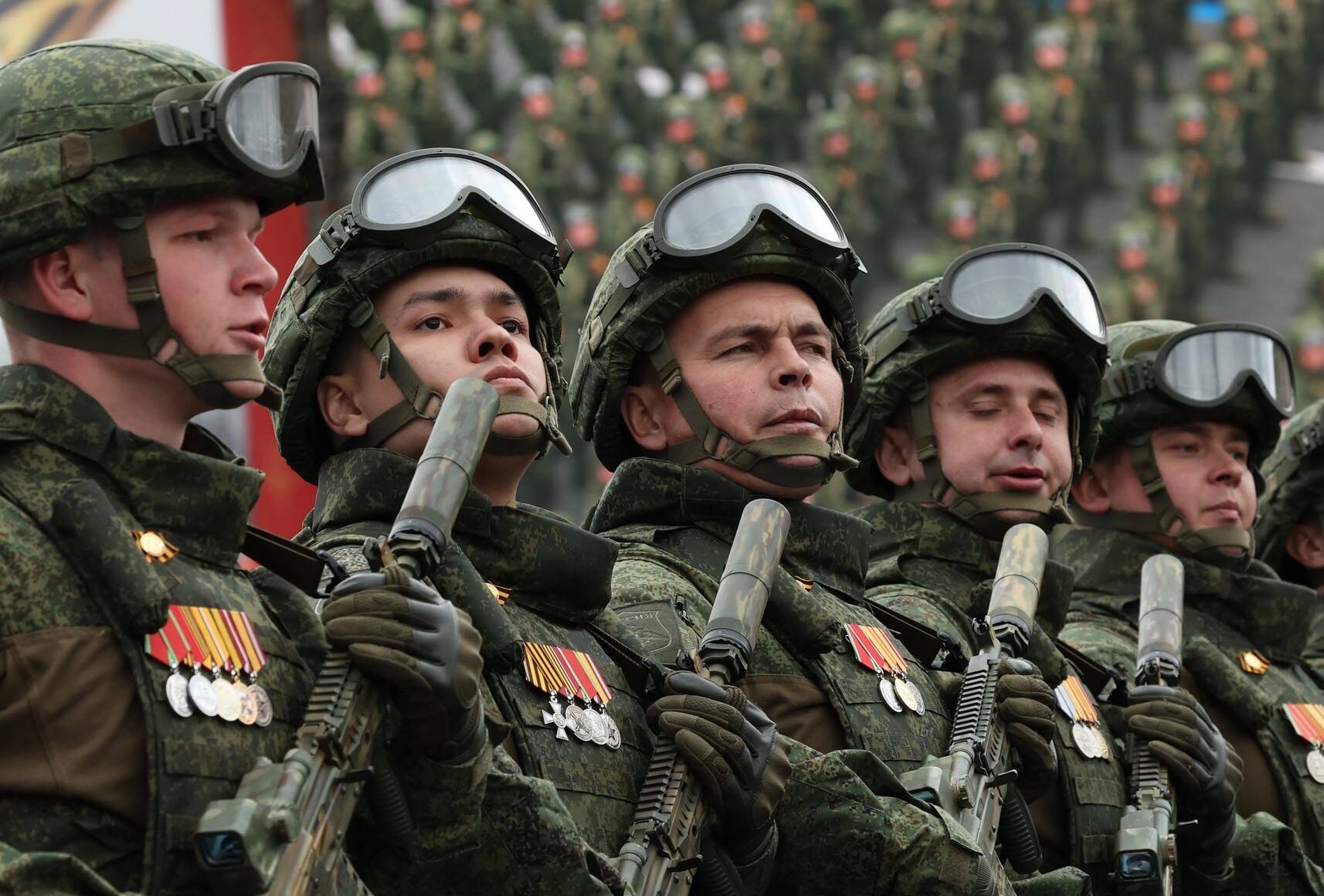
Open-source reporting indicates Russia is already conducting hybrid operations against the UK and other supporters of Ukraine, including sabotage, while the UK records roughly four nationally significant cyber incidents each week and a more than twofold rise in drone incidents near critical infrastructure. The EU is debating an entry ban on Russian military personnel, though Paris and Rome are resisting, and Estonia’s foreign minister has flagged the risk of admitting Russian combatants. On NATO’s north-eastern flank, Latvia plans to deploy counter-drone systems along its borders with Russia and Belarus in July, August and to build a joint drone factory with Ukraine in Latgale, close to those borders. These developments point to a threat picture that is very likely to remain acute over the next one to three months.
Change from previous assessment
Since the prior brief, we incorporate fresh reporting that the UK is experiencing roughly four nationally significant cyber incidents a week and a more than twofold rise in drone incidents near critical infrastructure, sharpening the picture of current tempo. The EU debate on a visa ban for Russian military personnel has come into clearer view, including stated resistance from France and Italy. On the Baltic flank, Latvia has announced near‑term counter‑drone deployments along the Russia and Belarus borders and set plans for a joint drone factory with Ukraine in Latgale. Our core assessment that Russia‑linked hybrid activity will remain elevated is unchanged; confidence remains medium due to contested EU policy trajectories and inference in some forward‑looking judgments.
Key judgments
- Russia is waging a sustained hybrid campaign against the UK and other European backers of Kyiv, featuring sabotage, cyber operations and drone activity against critical infrastructure, and it is very likely to persist at a high tempo over the next 1-3 months. (Confidence: high · ASSESSED)
- I&W: The UK NCSC reports continue to show roughly four or more nationally significant cyber incidents per week. (1-3 months)
- I&W: A sustained drop to below two nationally significant cyber incidents per week is reported by the UK NCSC for at least four consecutive weeks. (1-3 months)
- The UK is likely to remain a priority target for Russia-linked hybrid activity given London’s sizeable military support to Ukraine and parallel increases in cyber and drone pressures at home. (Confidence: medium · ASSESSED)
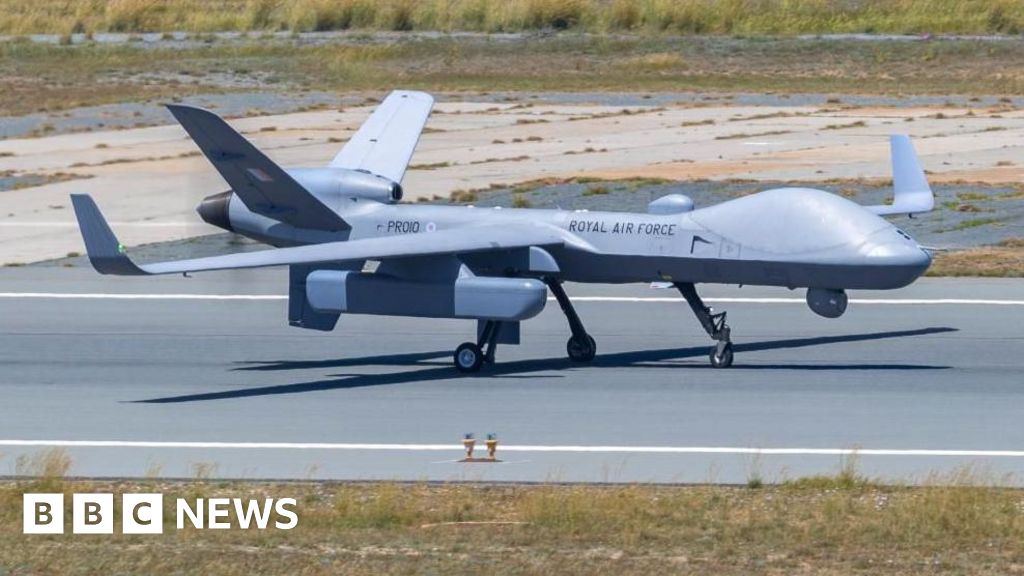
- I&W: Further UK reporting of drone incidents near energy, transport or defence-industrial sites. (0-14 days)
- I&W: Public reporting indicates a marked lull in both nationally significant cyber incidents and drone incidents near UK critical infrastructure. (1-3 months)
- Latvia is at elevated risk of cross-border drone and related hybrid incidents over the next 1-3 months as it deploys counter-drone systems along its borders with Russia and Belarus and advances a joint drone factory with Ukraine in Latgale near those borders. (Confidence: medium · ASSESSED)
- I&W: Latvia publicly announces activation results from new counter-drone systems along the Russia and Belarus borders. (0-2 months)
- I&W: The planned Latvia, Ukraine drone factory is delayed or relocated away from the Latgale border area. (1-3 months)
- An EU-wide visa ban on Russian military personnel is likely to face continued resistance and be delayed or diluted, sustaining uneven policy cover against Russian hybrid operatives’ travel within Europe. (Confidence: medium · ASSESSED)
- I&W: EU institutions postpone or water down visa-ban language following objections from France and Italy. (1-3 months)
- I&W: The European Council adopts robust, bloc-wide visa-ban provisions covering Russian military personnel. (1-3 months)
- Russia is likely to increase asymmetric pressure in Europe, including hybrid operations, in response to Ukrainian long-range strikes that have degraded Russian fuel distribution and signs of strain inside Russia, but this rests on inference from battlefield and domestic stress indicators. (Confidence: low · ASSESSED)
- I&W: European authorities publicly attribute new arson or explosive attacks on Ukraine-linked logistics to Russia-affiliated networks. (1-3 months)
- I&W: Reported sabotage and cyber incidents targeting European Ukraine-support nodes show a sustained decline. (1-3 months)
Outlook & scenarios
High-tempo hybrid campaign persists through summer (70%)
Russia-linked hybrid activity continues at pace against European states, with the UK remaining a focal point amid roughly four weekly nationally significant cyber incidents and a more than twofold rise in drone incidents near critical infrastructure. Sabotage and deniable acts recur across Europe. EU policy movement lags operational realities.
Patchwork EU response amid intra‑EU resistance (60%)
Debate over an EU visa ban on Russian military personnel drags on, with Paris and Rome resisting. The result is partial or delayed measures that leave uneven controls across Schengen, complicating efforts to limit movements of suspected hybrid operatives.
Baltic flashpoint prompts NATO consultations (20%)
A cross‑border drone incident near Latvia’s border during rollout of counter‑drone systems or early works on the Latgale drone factory triggers domestic political turbulence and urgent allied consultations. Even without clear attribution, the episode heightens alert postures across the Baltic region.
Recommendations
- Prioritise collection on UK NCSC weekly reporting and link analysis of nationally significant cyber incidents with open‑source logs of drone sightings near energy, transport and defence‑industrial sites.
- Build and maintain an OSINT indicator deck for Latvia’s July, August counter‑drone rollout along the Russia and Belarus borders, including official announcements of deployments and intercept statistics.
- Track the Latvia, Ukraine drone factory project milestones in Latgale for early signs of schedule acceleration, delays or relocation that could alter local threat dynamics.
- Monitor the EU visa‑ban file: catalogue public positions from France and Italy, committee agendas, and draft language changes that would confirm delay or dilution.
- Map Ukraine‑support logistics nodes in the UK and Baltics and flag facilities with prior arson or sabotage attempts for heightened monitoring and liaison with local authorities.
- Prepare narrative monitoring and rapid fact‑check workflows around cross‑border drone incidents in the Baltics to detect and counter disinformation spikes exploiting attribution ambiguity.
- Exploit travel and social‑media OSINT to identify potential facilitation networks consistent with sabotage and arson TTPs referenced in reporting, and share leads with liaison partners.
Confidence & uncertainty
Multiple high‑reliability sources report Russia’s ongoing hybrid activity against the UK and other European supporters of Ukraine, a UK baseline of around four nationally significant cyber incidents per week, and a sharp increase in drone incidents near UK critical infrastructure. EU debate over a visa ban on Russian military personnel and Latvian counter‑drone and industrial steps are also well sourced. However, some assessments extend beyond direct reporting, including expectations of future tempo and the impact of Russian domestic strain on European hybrid activity, and EU policy outcomes remain contested. These factors support an overall medium confidence rating.
Alternative analysis (red cell)
The ledger documents an uptick in incidents (cyber, drone, sabotage) and political friction over countermeasures, but it lacks attribution‑quality linkage to Russian state direction and sufficient comparative or procedural data to support high or medium probabilistic claims about sustained, prioritized escalation. Alternative interpretations — episodic/unattributed activity, localized risk tied to single incidents, or domestic constraints limiting external operations — are plausible given the available evidence. Targeted collection (forensic attribution, SIGINT of Russian tasking, EU decision records) is needed to resolve these uncertainties.
Intelligence gaps
- [EEI 1.2 · UNCOVERED] Observed reconnaissance activity around critical sites indicative of attack planning (unauthorised drone flights, repeated surveillance visits, loitering vehicles, mapping/photography of assets). Recommended collection: open-source/media
- [EEI 1.3 · UNCOVERED] Law-enforcement or customs seizures, arrests or interdictions of persons or shipments carrying explosives, sabotage tools, specialty cutting/electrical equipment, or covert comms gear destined for/near critical infrastructure. Recommended collection: law enforcement
- [EEI 2.1 · PARTIAL] Emergence or amplification of coordinated social-media networks (sets of accounts, pages, channels) pushing identical narratives or hashtags across multiple platforms, including bot-like activity metrics and origin IP/common management indicators. Recommended collection: social-media/OSINT
- [EEI 2.2 · PARTIAL] Publication or internal guidance from state-run media, proxy outlets, or identified influence platforms distributing talking points, pre-scripted messaging, or translated content targeted at specific EU countries/communities. Recommended collection: open-source/media
- [EEI 2.3 · UNCOVERED] Distribution of manipulated multimedia (deepfakes), targeted phishing/whaling campaigns, or localized false narratives timed to political events (elections, protests, court rulings) with tracked reach and engagement metrics. Recommended collection: cyber/forensic
- [EEI 3.1 · UNCOVERED] Unusual financial transactions: wire transfers, crypto conversions, or payments to shell companies, NGOs or individuals exceeding typical baselines that link to known proxies or front organisations. Recommended collection: financial
- [EEI 3.2 · PARTIAL] Travel and movement indicators for suspected operatives: repeated border crossings, chartered/irregular flights, booking patterns or mobile/location data placing identified individuals in staging areas shortly before incidents. Recommended collection: border/immigration
- [EEI 3.3 · PARTIAL] Cargo, freight or maritime movements with discrepancies (concealed/dual-use equipment, false manifests, unusual routing) detected at ports, rail hubs or via AIS that correspond to deliveries of material used in sabotage or influence operations. Recommended collection: customs/ports
- [EEI 3.4 · UNCOVERED] Intercepted or otherwise-obtained communications showing tasking, coordination, or payment instructions between Russian agencies/handlers and proxy groups, including identified command-and-control servers or encrypted group identifiers. Recommended collection: signals-intel/SIGINT
Cited sources
[1] The Independent · Putin knows he’s in trouble. It’s time to kick him while he’s down (B) · sha256:329ba7ba8f40 [2] ru-bezh.ru · Гибридные угрозы — новая реальность для объектов КИИ (C) · sha256:1935ebec9202 [3] BBC · Frank Gardner: Key points from the Defence Investment Plan (A) · sha256:a22557354786 [4] BBC · Starmer trims investment budgets to fund extra £15bn for defence (A) · sha256:543034cf30c1 [5] defensenews.com · Latvia and Ukraine to open drone factory right on Baltic nation’s border with Russia (A) · sha256:391e9ef60eb7 [6] Atlantic Council · Banning Russian soldiers from the EU is a common sense security measure (C) · sha256:3999fd48708d [7] The Bulwark · The Wheels Are Coming Off Putin’s War (B) · sha256:e6f1e2df5010 [8] independent.co.uk · Ukraine-Russia war latest: Putin orders army to plan new ways to capture Kyiv, says Ukrainian military chief (B) · sha256:8e1937e90877
Source content hashes were computed at collection time; the cited text is preserved unmodified for the life of this product.
Red cell review: PARTIAL DISSENT
TLP:CLEAR