TLP:CLEAR · Disclosure is not limited.
Europe: Russia-linked hybrid campaign sharpens, with EU-UK cyber sanctions and energy-sector targeting alerts
Time window: Last 1 day · Audience: General analyst · Type: Situation report · DTG: 2026-07-14 11:43Z · Overall confidence: MEDIUM
BLUF
EU and UK measures against Russia-linked cyber actors, including FSB Center 16 and Turla, align with multi-country warnings of ongoing router exploitation and reported attempts against Poland’s energy grid. Near-term risk to European critical services, especially power and district heating in Poland and Sweden, remains elevated as France and Germany escalate diplomatic pressure.
Executive summary
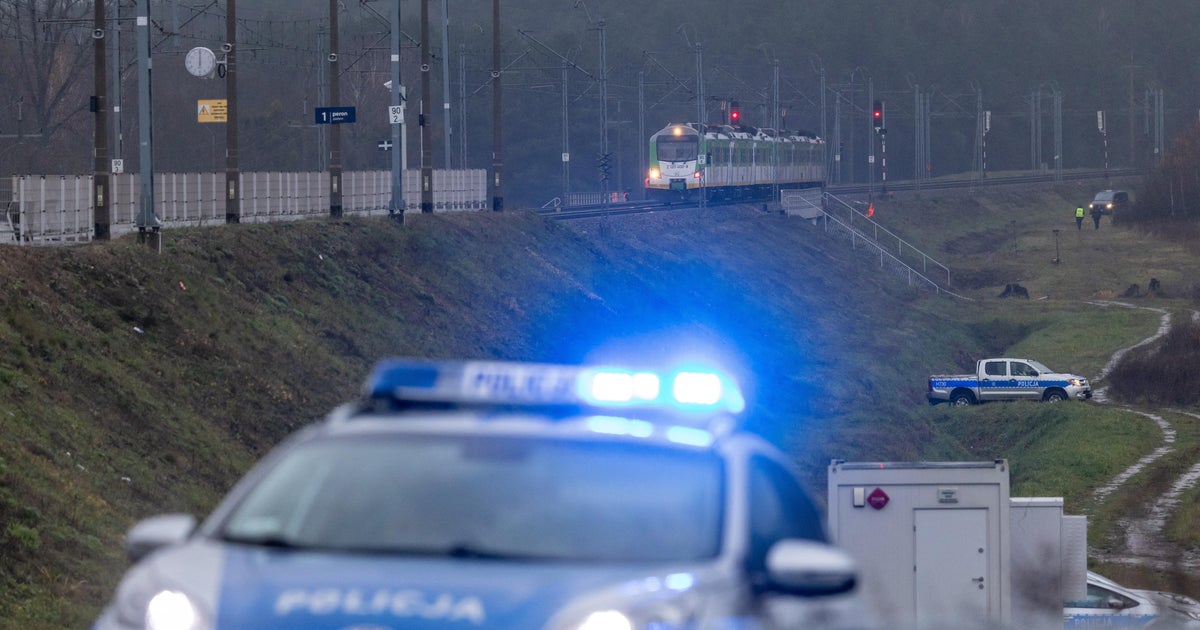
Reporting across the EU, UK and NATO points to a sustained Russia-linked hybrid campaign combining cyberespionage, sabotage attempts and information activity. The EU sanctioned nine individuals and four entities, focused on FSB Center 16 and affiliated actors, while the UK listed 24 more individuals and entities tied to Russian intelligence operations. Officials in Germany have already summoned Russia’s ambassador and France plans to do so after detecting attacks. Concurrently, a 13-nation advisory and follow-on alerts describe continued mass compromise of routers by Russia-linked operators and impacts spanning multiple sectors. Energy and heating networks are in scope: authorities attribute an attempted December 2025 attack on Poland’s grid to FSB Center 16, Sweden reported a pro-Russian attack on a heating plant last year, and a recent thwarted incident in Poland was assessed to have risked heat for roughly 500,000 people.
Change from previous assessment
Since the prior brief, coordinated EU-UK cyber sanctions were imposed, including EU listings focused on FSB Center 16 and a separate UK package naming 24 individuals and entities. Germany has summoned Russia’s ambassador and France plans to do so after detecting cyberattacks, raising diplomatic pressure. A 13-nation advisory and allied alerts detail ongoing router compromises, and new reporting highlights that a thwarted incident in Poland risked heating for roughly 500,000 people, alongside Sweden’s attribution to a pro-Russian group for a heating-plant attack. We raise the salience of energy and heating networks in our risk outlook and maintain high confidence in the existence of a sustained Russia-linked campaign. We retire prior discussion of imminent EU sanctions-package timing and LNG exposure due to lack of new reporting in this window.
Key judgments
- Europe is very likely facing a sustained Russia-linked hybrid campaign anchored by FSB Center 16, with operations spanning at least a dozen EU states and a coordinated EU-UK response that on 13 July 2026 sanctioned nine individuals and four entities and, separately in the United Kingdom, 24 additional individuals and entities. (Confidence: high · REPORTED)
- I&W: EU or UK announce another tranche of listings naming FSB Center 16 operatives or the Turla group. (0-14 days)
- I&W: A major EU member publicly retracts or materially revises attribution to FSB Center 16 or Turla for recent incidents. (1-3 months)
- Targeting of energy and district heating infrastructure in EU member states is likely to persist, with Poland’s energy grid and a Swedish heating plant already in scope and one recent thwarted Polish incident assessed to have risked heating for roughly 500,000 people. (Confidence: medium · REPORTED)
- I&W: Poland or Sweden publish a forensic report attributing attempts on power or district heating systems to FSB Center 16 or a pro-Russian group. (1-3 months)
- I&W: No reported energy or district heating outages linked to cyber incidents in Poland or Sweden. (1-3 months)
- FSB Center 16 and aligned actors are very likely to continue mass exploiting poorly configured routers across Europe in the near term, sustaining access into government and critical sectors. (Confidence: high · ASSESSED)
- I&W: European national cyber authorities issue fresh advisories citing active exploitation of home or SOHO routers with SNMP weaknesses by Russia-linked actors. (0-14 days)
- I&W: Observable decline in European advisories referencing FSB Center 16 router campaigns. (1-3 months)
- Diplomatic friction with Moscow is likely to intensify in the short term, as Germany has summoned Russia’s ambassador and France plans to do so after detecting cyberattacks, alongside EU statements denouncing Russia’s malicious cyber ecosystem. (Confidence: medium · REPORTED)
- I&W: France posts an official readout of a démarche to Russia’s ambassador referencing the multi-country cyber campaign. (0-14 days)
- I&W: France or Germany cancel or postpone planned ambassador summons or issue statements signalling de-escalation. (0-14 days)
Outlook & scenarios
Sanctions-and-attribution cycle continues (60%)
EU and UK roll out additional designations tied to FSB Center 16, Turla and affiliated entities, while Berlin, Paris and other capitals maintain diplomatic pressure. Router exploitation and probing of public services persist, but most incidents are contained, with limited, short-lived service impacts and steady public attributions.
Energy network hit produces visible outage (30%)
Russia-linked operators penetrate an EU electricity distribution or district heating provider, causing a city-scale outage or heating disruption comparable to the scale feared in Poland. Attribution aligns with FSB Center 16 tradecraft, prompting emergency response, new EU-UK listings, and intensified public messaging.
Short-term quiet as defences bite (20%)
Rapid hardening of routers and improved monitoring reduce adversary access. Public exposure and sanctions raise legal and diplomatic costs for Russian services, which shift to lower-noise reconnaissance. Visible incidents decline and diplomatic activity slows over the outlook period.
Recommendations
- Map the EU and UK designations of 13 July 2026 to known intrusion sets, maintaining a watchlist of the nine EU-listed individuals and four entities and the 24 UK-listed actors to support collection and attribution cross-checks.
- Prioritise collection on FSB Center 16 and the Turla group across EU networks; task for telemetry indicative of router exploitation and for indicators of compromise in power and district-heating operators referenced in public reporting.
- Disseminate a short note to stakeholders summarising the 13-nation advisory and CISA-led warnings on router compromises, highlighting immediate mitigations consistent with the advisories: secure or disable SNMP, change default credentials, and apply current firmware.
- Set standing alerts for official communiqués from France and Germany on ambassador summons, and for any new EU or UK listings referencing FSB Center 16, to use as escalation indicators.
- Build an analytic playbook for an EU urban power or district-heating outage scenario sized to the 500,000-person risk cited in Poland, including likely public-safety impacts, cross-border spillovers and recovery timelines.
- Archive and analyse any forensic detail released on the December 2025 Poland grid incident or the Swedish heating-plant attack to refine hypotheses about targeting, toolsets and potential next targets.
Confidence & uncertainty
Multiple independent government and multilateral sources corroborate a Russia-linked hybrid campaign: EU and UK sanctions actions naming FSB Center 16 and affiliated actors, NATO and EU statements on malicious cyber activity, and a 13-nation advisory describing ongoing router compromises. Reporting on Poland’s grid and Sweden’s heating plant provides concrete targets, and France and Germany’s diplomatic steps reinforce the picture. Uncertainties persist around technical forensics that are not publicly available, timeline inconsistencies on diplomatic actions, and the extent to which physical effects will materialise, which together support an overall medium confidence assessment.
Alternative analysis (red cell)
The reporting documents real concern and concrete actions (sanctions, warnings, summonses), but the evidence is fragmented and contains mixed, lower-admiralty attributions for the key linkages to FSB Center 16. A defensible alternative estimate is that European governments are responding to multiple, possibly distinct Russian-linked cyber incidents and longstanding campaigns (e.g., Turla and other groups) with public sanctions and statements, rather than to a single, sustained hybrid campaign centrally directed from Center 16.
Intelligence gaps
- [EEI 1.2 · UNCOVERED] Observed reconnaissance activity around critical sites indicative of attack planning (unauthorised drone flights, repeated surveillance visits, loitering vehicles, mapping/photography of assets). Recommended collection: open-source/media
- [EEI 1.3 · UNCOVERED] Law-enforcement or customs seizures, arrests or interdictions of persons or shipments carrying explosives, sabotage tools, specialty cutting/electrical equipment, or covert comms gear destined for/near critical infrastructure. Recommended collection: law enforcement
- [EEI 2.1 · UNCOVERED] Emergence or amplification of coordinated social-media networks (sets of accounts, pages, channels) pushing identical narratives or hashtags across multiple platforms, including bot-like activity metrics and origin IP/common management indicators. Recommended collection: social-media/OSINT
- [EEI 2.2 · UNCOVERED] Publication or internal guidance from state-run media, proxy outlets, or identified influence platforms distributing talking points, pre-scripted messaging, or translated content targeted at specific EU countries/communities. Recommended collection: open-source/media
- [EEI 2.3 · UNCOVERED] Distribution of manipulated multimedia (deepfakes), targeted phishing/whaling campaigns, or localized false narratives timed to political events (elections, protests, court rulings) with tracked reach and engagement metrics. Recommended collection: cyber/forensic
- [EEI 3.1 · UNCOVERED] Unusual financial transactions: wire transfers, crypto conversions, or payments to shell companies, NGOs or individuals exceeding typical baselines that link to known proxies or front organisations. Recommended collection: financial
- [EEI 3.2 · UNCOVERED] Travel and movement indicators for suspected operatives: repeated border crossings, chartered/irregular flights, booking patterns or mobile/location data placing identified individuals in staging areas shortly before incidents. Recommended collection: border/immigration
- [EEI 3.3 · PARTIAL] Cargo, freight or maritime movements with discrepancies (concealed/dual-use equipment, false manifests, unusual routing) detected at ports, rail hubs or via AIS that correspond to deliveries of material used in sabotage or influence operations. Recommended collection: customs/ports
- [EEI 3.4 · PARTIAL] Intercepted or otherwise-obtained communications showing tasking, coordination, or payment instructions between Russian agencies/handlers and proxy groups, including identified command-and-control servers or encrypted group identifiers. Recommended collection: signals-intel/SIGINT
Cited sources
[1] CBS News · France to summon Russia's ambassador over "sabotage and espionage in a dozen European countries" (A) · sha256:97c7e2e728a2 [2] gigazine.net · The EU and the UK have added Russian government-backed hackers to their sanctions list, and the British Foreign Secretary has stated that 'support for Ukraine remains unwavering.' (A) · sha256:015b11e90511 [3] military.com · EU and Britain Target Russian Intelligence Officers Over a Major Cyberspying Campaign (A) · sha256:d98ae60bd6d6 [4] tvpworld.com · EU, UK sanction Russia over cyberattacks (A) · sha256:9601ee539f6b [5] cyberscoop.com · Europe strikes out against Russia’s Turla over espionage, ‘destructive attacks’ (A) · sha256:04bc3ca4ac8c [6] cyberscoop.com · Officials once again warn defenders that Russian hackers are targeting network devices (B) · sha256:f6e337662dc7 [7] arstechnica.com · The US government warns that Russia state hackers are coming after your router (B) · sha256:5b0a234a7741
Source content hashes were computed at collection time; the cited text is preserved unmodified for the life of this product.
Red cell review: PARTIAL DISSENT
TLP:CLEAR