TLP:CLEAR · Disclosure is not limited.
Europe: Russia‑linked hybrid pressure and Baltic tripwires, 18 July
Time window: Last 1 day · Audience: General analyst · Type: Situation report · DTG: 2026-07-18 13:14Z · Overall confidence: MEDIUM
BLUF
Russia‑linked hybrid activity in Europe remains elevated. Documented sabotage cases, fresh airspace restrictions over the eastern Gulf of Finland, and eastern‑flank border pressure point to a likely continuation of grey‑zone operations against European infrastructure and cohesion.
Executive summary
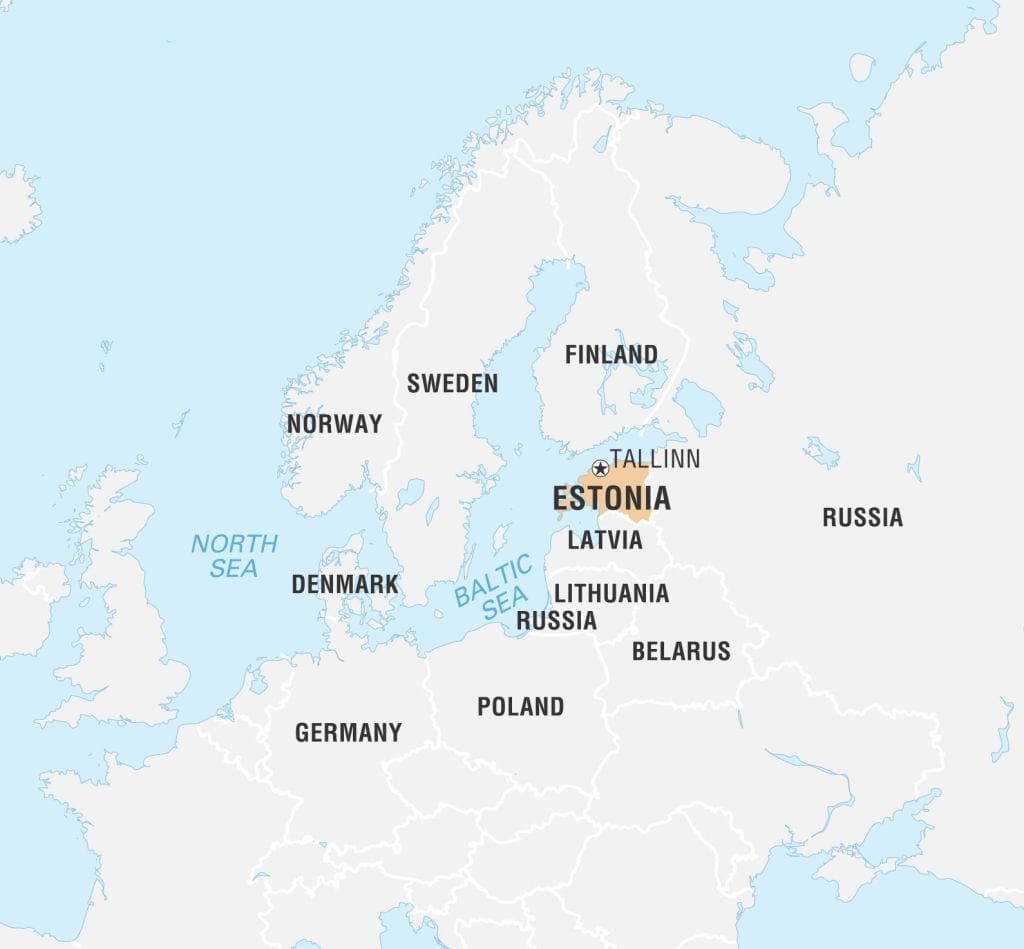
Open reporting and official statements over recent cycles continue to tie Russia or its services to sabotage in EU states, including rail fibre cuts in Germany, an undersea power cable breach between Finland and Estonia, and a Warsaw shopping centre fire alleged to have been ordered by a GRU officer. Finland imposed temporary flight restrictions over the eastern Gulf of Finland on 18 July, a timely Baltic tripwire amid NATO’s prior warnings of record‑high sabotage threats. Poland and the Baltic states characterise migrant flows via Belarus as weaponised pressure, while regional governments harden defences through higher spending, a Baltic Defence Line and continued high‑end capability programmes. The public‑sector ransomware tempo remains high, increasing the surface that hostile actors, including Russia, could exploit, though current attributions to Russia are unconfirmed.
Change from previous assessment
New Baltic tripwire: Finnish authorities imposed temporary flight restrictions over the eastern Gulf of Finland on 18 July, sharpening our near‑term risk watch on the Baltic corridor. We consolidated documented European sabotage cases into a single judgment with higher specificity, elevated undersea infrastructure vulnerability in our baseline, and reframed the cyber judgment to reflect high tempo without confirmed Russia attribution this week. Defence‑hardening continuity is maintained through Polish spending, the Baltic Defence Line and FCAS.
Key judgments
- Russia‑linked sabotage networks are very likely active across multiple EU states, with operations targeting critical infrastructure and logistics since 2022. (Confidence: high · REPORTED)
- I&W: EU law‑enforcement or court disclosures naming GRU or FSB officers in prosecutions tied to cable, rail or depot attacks in Germany, Poland, Finland or Estonia. (1-3 months)
- I&W: New, coordinated disruptions to rail signalling, undersea power/data links or large logistics sites in Germany, Poland or the Baltics. (0-14 days)
- There is likely a near‑term risk of limited provocations or grey‑zone activity around the Baltic approaches and NATO’s eastern flank. (Confidence: medium · ASSESSED)
- I&W: Repeat NOTAMs, maritime safety alerts, or temporary restrictions by Finland, Estonia or Latvia over the Gulf of Finland and adjacent air‑sea corridors. (0-14 days)
- I&W: Observable electromagnetic interference or GPS jamming reported by aviation or maritime authorities in the Baltic region. (0-14 days)
- Belarus‑facilitated migrant movements at Poland’s border are likely to remain a recurring hybrid instrument weaponised by Russia to strain EU cohesion. (Confidence: medium · ASSESSED)
- I&W: Polish authorities report new spikes in attempted crossings along the Belarus frontier, accompanied by state‑linked travel facilitation from Minsk. (0-14 days)
- I&W: Belarus publicly curtails transit visas or restricts onward movement for third‑country nationals to EU borders. (1-3 months)
- European eastern‑flank deterrence and resilience are very likely to keep strengthening through spending, fortifications and advanced programmes. (Confidence: high · ASSESSED)
- I&W: Announcements of new segments of the Baltic Defence Line entering construction or service. (1-3 months)
- I&W: Poland tables or enacts budget measures sustaining defence outlays near 5 percent of GDP. (1-3 months)
- The public‑sector cyberattack tempo is likely to remain high, creating daily disruption risks that state adversaries, including Russia, could exploit, although current attributions to Russia are unconfirmed. (Confidence: medium · ASSESSED)
- I&W: EU or national CERTs attribute coordinated campaigns against government networks to Russian‑nexus actors. (1-3 months)
- I&W: Sustained decline in reported ransomware incidents against government entities below the present daily baseline. (1-3 months)
Outlook & scenarios
Rolling sabotage intensifies against EU infrastructure (50%)
Covert networks mount a new wave of attacks against rail signalling in Germany and Poland, and attempt interference with Baltic undersea power and data links. The campaign seeks to raise insurance and security costs, slow military mobility and erode confidence in state protection without triggering a NATO Article 5 threshold.
Managed deterrence contains grey‑zone risks (40%)
Baltic tripwires such as temporary flight restrictions recur but do not escalate. Poland’s near‑5 percent GDP defence posture, the Baltic Defence Line build‑out and Franco‑German capability programmes raise costs for covert action, limiting operational effects to transient disruptions and narrative operations.
Baltic corridor incident (20%)
A hazardous air or maritime interaction in the Gulf of Finland prompts emergency restrictions and EU‑NATO crisis consultations. Moscow calibrates activity below open conflict, but the event drives accelerated counter‑sabotage measures and renewed NATO signalling in the region.
Recommendations
- Stand up an infrastructure incident tracker for the Baltics and Poland that fuses rail and grid operator notices with NASA FIRMS thermal alerts near depots and junctions, treating detections as heat only and tasking rapid ground truth to classify cause.
- Task continuous OSINT collection on Baltic NOTAMs and maritime safety alerts, logging all new restrictions over the Gulf of Finland and correlating with vessel and air traffic anomalies.
- Prioritise open‑source collection on Belarus‑to‑EU travel facilitation pipelines and Polish border force bulletins to detect renewed migrant‑flow surges used as hybrid pressure.
- Catalogue and map undersea power and data links in the Baltic Sea and Gulf of Finland against recent disruption reports to identify high‑value nodes for enhanced monitoring.
- Coordinate with national CERTs to watch for TTPs of The Gentlemen, Qilin and LockBit and reassess cyber exposure of defence‑industrial suppliers, including shipbuilding and naval electronics firms.
- Prepare a quick‑turn analytic playbook aligning tripwires to response options: arrests or court disclosures naming Russian officers, new rail or port disruptions, and repeated Baltic airspace restrictions should trigger immediate cross‑border information‑sharing.
Confidence & uncertainty
Overall confidence is medium. Multiple independent reports and official statements corroborate a pattern of sabotage in Europe and sustained eastern‑flank pressure, including specific incidents to rail and undersea infrastructure and an on‑date Finnish airspace restriction. Some elements derive from earlier intelligence warnings and allegations rather than adjudicated attributions, and current cyber activity lacks confirmed Russia nexus in this window. These gaps and mixed sourcing temper confidence despite the converging indicators.
Alternative analysis (red cell)
The reporting indicates elevated concern—isolated sabotage incidents, defensive precautions, and high cybercrime tempo—but does not uniformly demonstrate high‑confidence, cross‑border Russian orchestration or imminent provocations. Several supporting items are medium‑grade (B6/C1) or government posture statements and contradictions are unaddressed, so a more cautious analytic framing that distinguishes confirmed operations from suspicion and precaution is defensible.
Intelligence gaps
- [EEI 1.2 · UNCOVERED] Observed reconnaissance activity around critical sites indicative of attack planning (unauthorised drone flights, repeated surveillance visits, loitering vehicles, mapping/photography of assets). Recommended collection: open-source/media
- [EEI 1.3 · UNCOVERED] Law-enforcement or customs seizures, arrests or interdictions of persons or shipments carrying explosives, sabotage tools, specialty cutting/electrical equipment, or covert comms gear destined for/near critical infrastructure. Recommended collection: law enforcement
- [EEI 2.1 · UNCOVERED] Emergence or amplification of coordinated social-media networks (sets of accounts, pages, channels) pushing identical narratives or hashtags across multiple platforms, including bot-like activity metrics and origin IP/common management indicators. Recommended collection: social-media/OSINT
- [EEI 2.2 · UNCOVERED] Publication or internal guidance from state-run media, proxy outlets, or identified influence platforms distributing talking points, pre-scripted messaging, or translated content targeted at specific EU countries/communities. Recommended collection: open-source/media
- [EEI 2.3 · PARTIAL] Distribution of manipulated multimedia (deepfakes), targeted phishing/whaling campaigns, or localized false narratives timed to political events (elections, protests, court rulings) with tracked reach and engagement metrics. Recommended collection: cyber/forensic
- [EEI 3.1 · UNCOVERED] Unusual financial transactions: wire transfers, crypto conversions, or payments to shell companies, NGOs or individuals exceeding typical baselines that link to known proxies or front organisations. Recommended collection: financial
- [EEI 3.2 · UNCOVERED] Travel and movement indicators for suspected operatives: repeated border crossings, chartered/irregular flights, booking patterns or mobile/location data placing identified individuals in staging areas shortly before incidents. Recommended collection: border/immigration
- [EEI 3.3 · UNCOVERED] Cargo, freight or maritime movements with discrepancies (concealed/dual-use equipment, false manifests, unusual routing) detected at ports, rail hubs or via AIS that correspond to deliveries of material used in sabotage or influence operations. Recommended collection: customs/ports
- [EEI 3.4 · UNCOVERED] Intercepted or otherwise-obtained communications showing tasking, coordination, or payment instructions between Russian agencies/handlers and proxy groups, including identified command-and-control servers or encrypted group identifiers. Recommended collection: signals-intel/SIGINT
Cited sources
[1] Wikipedia · Russian sabotage operations in Europe (B) · sha256:e332876d2064 [2] dp.ru · Вертолётам до конца года запретили взлёт и посадку у Петропавловской крепости (B) · sha256:44fdcd3b1a0a [3] libertynation.com · Are the Baltic States Ripe for a Russian Invasion? (B) · sha256:9f9867806ebd [4] globalbankingandfinance.com · France, Germany Deepen Defence Ties as Europe Seeks Military Autonomy (B) · sha256:42e70e0e7f3f [5] infosecurity-magazine.com · Government Agencies Falling Victim to Ransomware Daily, Warns Study (C) · sha256:d4d11e9bd01c [6] securityweek.com · In Other News: Iran Tracks US Military Phones, CrashStealer macOS Malware, CVD Blueprint (B) · sha256:f7bf27632b6b
Source content hashes were computed at collection time; the cited text is preserved unmodified for the life of this product.
Red cell review: PARTIAL DISSENT
TLP:CLEAR