TLP:CLEAR · Disclosure is not limited.
Europe: Russia-Linked Hybrid Pressure Broadens, Attribution Remains Unsettled
Time window: Last 1 day · Audience: General analyst · Type: Situation report · DTG: 2026-08-23 16:37Z · Overall confidence: LOW
BLUF
Russia-linked hybrid pressure in Europe is likely continuing below the threshold of open conflict, with reporting now spanning a 14 August 2026 airspace incident in Daugavpils, expanded German intelligence powers and sharper UK-Russia diplomatic friction. Attribution remains unsettled, and the supplied material does not show that the Latvia, Germany and other European cases form one Russian-directed network.
Executive summary
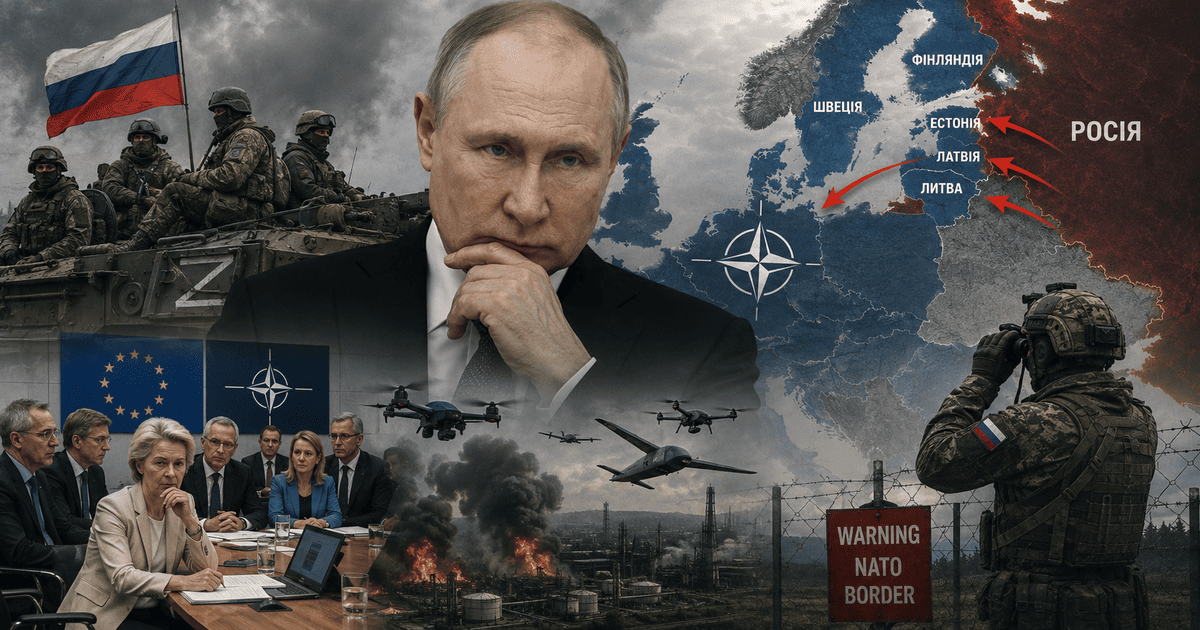
On 14 August 2026, residents in Daugavpils received a shelter alert after a drone loaded with explosives from Belarus entered Latvian airspace and was shot down by NATO fighter jets. Western governments and intelligence agencies allege that Russian military or intelligence services have organised sabotage in Europe, but specific links among the Leipzig Airport drone, the Milrem Robotics fire and other cases remain unproven. Germany has approved an overhaul expanding BND and BfV data-collection powers and permitting non-lethal operations such as hacking enemy servers. Russia has withdrawn its ambassador from the UK while its embassy has warned of consequences for British support to Ukraine. French authorities are investigating alleged Russian interference involving Gabriel Attal and Edouard Philippe, although competing reporting disputes whether the issue reflects genuine interference or domestic political messaging.
Change from previous assessment
Since 22 August, the assessment of continuing Russia-linked pressure with unsettled attribution remains unchanged. The picture has broadened through reporting on the 14 August 2026 Daugavpils airspace incident, Germany's approved intelligence reforms, Russia's ambassadorial withdrawal from the UK and the Paris investigation involving Gabriel Attal and Edouard Philippe. Confidence remains low, and confidence in a single coordinated network is lower than in the prior brief. The prior Russian House assessment is not carried forward as a lead judgement because the current claims add no corroboration on that issue.
Key judgments
- Hybrid-security pressure involving Russia is likely to remain active across Europe, but the supplied reporting does not establish that the 14 August 2026 Daugavpils airspace incident, the armed drone found at Leipzig Airport and the 15 August 2023 Milrem Robotics fire in Tallinn were directed by one Russian chain of command. Western governments and intelligence agencies allege Russian military or intelligence involvement in European sabotage, while Latvian authorities detained three Latvian citizens over the Milrem arson and investigated sabotage. The records also contain a location discrepancy concerning that investigation. Confidence is low because the cross-case linkage relies on allegations, think-tank reporting and incomplete investigative findings rather than corroborated forensic evidence. (Confidence: low · ASSESSED)
- I&W: Confirm: within 0-14 days, a national prosecutor or intelligence service attributes both the Leipzig Airport drone and the Milrem Robotics fire to Russian handlers and identifies shared operational, financial or communications evidence. (0-14 days)
- I&W: Break: within 1-3 months, official findings leave Russian involvement unsubstantiated in either the Milrem Robotics case or the Daugavpils incident. (1-3 months)
- Germany is likely to remain the principal European focus of Russian hybrid-pressure reporting, while Berlin is very likely to expand its capacity to investigate and disrupt such activity. The German government has approved an intelligence-services overhaul that expands BND and BfV powers to collect and analyse data and permits non-lethal operations such as hacking enemy servers. Confidence is medium because the reform details are reported by major media and the assessment that Germany is Russia's main target is not independently corroborated in the supplied record. (Confidence: medium · ASSESSED)
- I&W: Confirm: within 1-3 months, German authorities publish implementing measures or announce the first operational use of expanded BND or BfV data-collection and hacking powers against a suspected foreign operation. (1-3 months)
- I&W: Break: within 1-3 months, the German government pauses, narrows or withdraws the approved intelligence reforms. (1-3 months)
- Russian diplomatic pressure on the UK is very likely to continue, while the supplied reporting does not establish that Moscow has moved beyond warnings and diplomatic downgrading. Russia has withdrawn its ambassador to the UK, the embassy's online senior-staff list names only Vasily A Tsyganov, and Russian representatives have warned of consequences for British support to Ukraine and the use of British-made drones against targets inside Russia. Confidence is medium because major-media reporting supports the withdrawal and warnings, but the records contain conflicting timelines and the embassy rejects implications that Russia intends to downgrade relations. (Confidence: medium · ASSESSED)
- I&W: Confirm: within 0-14 days, the Kremlin or Russian embassy announces a retaliatory measure explicitly linked to UK military support for Ukraine or British-made drones. (0-14 days)
- I&W: Break: within 1-3 months, Moscow appoints a replacement ambassador and publicly ends its current series of warnings against the UK. (1-3 months)
- European government action against alleged Russian influence is likely to intensify as France's 2027 presidential campaign approaches, but confidence in the specific French attribution and motive is low. European governments are increasingly focused on foreign interference, the Paris prosecutor's office is investigating allegations involving Gabriel Attal and Edouard Philippe, and Ukraine has offered to assist EU member states. The supplied claims conflict over whether French authorities are responding to Russian activity or using the Russian-threat narrative to distract voters and control dissenting voices. Confidence is low because the claims are mainly major-media reporting and provide no corroborating technical evidence of the alleged campaign. (Confidence: low · ASSESSED)
- I&W: Confirm: within 1-3 months, the Paris prosecutor's office publishes evidence linking the alleged interference involving Gabriel Attal or Edouard Philippe to Russian actors. (1-3 months)
- I&W: Break: within 1-3 months, French authorities close or narrow the investigation without substantiating Russian involvement. (1-3 months)
Outlook & scenarios
Persistent below-threshold pressure (60%)
The most likely path is continued reporting of suspected sabotage, airspace incidents, arrests, intelligence investigations and diplomatic warnings across Germany, Latvia, France and the UK. European governments strengthen countermeasures without publicly establishing a single Russian command structure linking the cases.
Fragmented attribution and political contestation (35%)
Investigations leave the Leipzig Airport, Milrem Robotics, Daugavpils and other cases only partly resolved. European governments continue to describe Russian interference as a threat, while competing accounts dispute attribution or portray the issue as domestic political messaging. This outcome would preserve pressure but weaken confidence in claims of a coordinated campaign.
Limited attack on a NATO member (8%)
A limited Russian attack on a NATO member within months remains an unlikely but high-impact wildcard. The supplied support is a low-confidence think-tank account of a US intelligence assessment, so this scenario is a warning case rather than the base case.
Recommendations
- Maintain a separate attribution matrix for the Daugavpils airspace incident, the Leipzig Airport drone and the Milrem Robotics fire. Record dates, locations, arrests, physical evidence and official findings separately, and do not merge cases until investigators identify shared handlers, financing or communications.
- Prioritise collection on implementation of the German intelligence overhaul. Track measures affecting BND and BfV data collection, analysis and non-lethal hacking powers, then compare them with new German investigations into suspected sabotage.
- Monitor UK-Russia diplomatic signals for an ambassador replacement, changes to the Russian embassy's senior-staff list and any retaliation explicitly tied to British military support for Ukraine or British-made drones.
- Track the Paris prosecutor's investigation involving Gabriel Attal and Edouard Philippe. Separate evidence released by French authorities from claims that the Russian-interference narrative serves domestic political purposes.
- Use Ukraine's stated readiness to share hybrid-threat expertise with EU member states as a collection priority. Identify whether European governments establish formal exchanges, joint investigations or shared warning procedures.
- Trigger an urgent cross-European review if a further NATO airspace incursion involving explosives receives confirmed Russian attribution, or if two European defence or logistics sites show common operational signatures within 14 days.
Confidence & uncertainty
Overall confidence is low because the evidence combines official and multilateral reporting with major-media, think-tank, blog and unknown-source material. The strongest reporting confirms individual incidents, arrests, diplomatic statements and German policy changes, but attribution across cases remains incomplete. The supplied records also contain conflicting dates, locations and actor descriptions, limiting confidence in the scale, coordination and direction of the threat.
Intelligence gaps
- [EEI 1.2 · UNCOVERED] Observed reconnaissance activity around critical sites indicative of attack planning (unauthorised drone flights, repeated surveillance visits, loitering vehicles, mapping/photography of assets). Recommended collection: open-source/media
- [EEI 1.3 · UNCOVERED] Law-enforcement or customs seizures, arrests or interdictions of persons or shipments carrying explosives, sabotage tools, specialty cutting/electrical equipment, or covert comms gear destined for/near critical infrastructure. Recommended collection: law enforcement
- [EEI 2.1 · UNCOVERED] Emergence or amplification of coordinated social-media networks (sets of accounts, pages, channels) pushing identical narratives or hashtags across multiple platforms, including bot-like activity metrics and origin IP/common management indicators. Recommended collection: social-media/OSINT
- [EEI 2.2 · UNCOVERED] Publication or internal guidance from state-run media, proxy outlets, or identified influence platforms distributing talking points, pre-scripted messaging, or translated content targeted at specific EU countries/communities. Recommended collection: open-source/media
- [EEI 2.3 · UNCOVERED] Distribution of manipulated multimedia (deepfakes), targeted phishing/whaling campaigns, or localized false narratives timed to political events (elections, protests, court rulings) with tracked reach and engagement metrics. Recommended collection: cyber/forensic
- [EEI 3.1 · UNCOVERED] Unusual financial transactions: wire transfers, crypto conversions, or payments to shell companies, NGOs or individuals exceeding typical baselines that link to known proxies or front organisations. Recommended collection: financial
- [EEI 3.2 · UNCOVERED] Travel and movement indicators for suspected operatives: repeated border crossings, chartered/irregular flights, booking patterns or mobile/location data placing identified individuals in staging areas shortly before incidents. Recommended collection: border/immigration
- [EEI 3.3 · UNCOVERED] Cargo, freight or maritime movements with discrepancies (concealed/dual-use equipment, false manifests, unusual routing) detected at ports, rail hubs or via AIS that correspond to deliveries of material used in sabotage or influence operations. Recommended collection: customs/ports
- [EEI 3.4 · UNCOVERED] Intercepted or otherwise-obtained communications showing tasking, coordination, or payment instructions between Russian agencies/handlers and proxy groups, including identified command-and-control servers or encrypted group identifiers. Recommended collection: signals-intel/SIGINT
Cited sources
[1] Wikipedia · Russian sabotage operations in Europe (B) · sha256:6ddb9eb89c7f [2] Atlantic Council · As pressure mounts on Putin, Russia is escalating against Ukraine’s allies (C) · sha256:5813f6f4dc20 [3] The Canadian Press · Latvia: Drones, hybrid warfare, and the redeployment of Canadian troops (A) · sha256:28499cc11879 [4] tsn.ua · В шаге от войны: Россия устраивает диверсии на оружейных заводах Европы (B) · sha256:eed1e8696940 [5] Die Welt · "Торговля страхом": экс-чиновник НАТО усомнился в нападении России (Die Welt, Германия) (B) · sha256:a00319385f20 [6] courthousenews.com · Germany to give spy services more cloak-and-dagger powers (B) · sha256:8b58d9a8385d [7] The Guardian · Russia withdraws ambassador to UK as Kremlin raises pressure over Ukraine support (A) · sha256:968876453e8f [8] inews.co.uk · The veiled threat behind Putin’s latest move against Britain (B) · sha256:94c847fcb5da [9] 112.ua · Ukraine ready to help EU counter Russia's hybrid influence — Sybiha (B) · sha256:436176af3a88 [10] Le Journal du Dimanche · А вот и потрясающий список "агентов Кремля"! В Париже не мелочатся (Le Journal du Dimanche, Франция) (B) · sha256:bce034fd5c84
Source content hashes were computed at collection time; the cited text is preserved unmodified for the life of this product.
TLP:CLEAR