TLP:CLEAR · Disclosure is not limited.
Europe: Russia-Linked Hybrid Threats and European Responses
Time window: Last 1 day · Audience: General analyst · Type: Situation report · DTG: 2026-10-12 12:40Z · Overall confidence: HIGH
BLUF
Reporting now describes specific alleged plots against European defence-sector leaders and a reported link between the Leipzig/Halle drone plot and a GRU operative. The operational attribution and Germany's reported caseload remain weakly corroborated in public reporting; the available claims do not establish an imminent mass-casualty attack.
Executive summary
European intelligence officials reportedly assess that the Kremlin ordered an expansion of hybrid operations and sabotage, including threats against defence-industry leaders. Germany's BfV has expanded security consultations with contractors, and German agencies are reportedly investigating more than 100 suspected state-sponsored sabotage and espionage cases. Separate reporting links the logistics of the thwarted Leipzig/Halle explosive-drone plot to a GRU operative, but the underlying evidence is not publicly detailed. The EU announced a large new sanctions package while visa and travel restrictions remain under discussion or preparation. The energy ceasefire announced by Donald Trump on 11 October remains contested in reporting: Emmanuel Macron said he had observed no Russian compliance, and Volodymyr Zelenskyy accused Russia of violations. Accounts differ on when Zelenskyy learned of the announcement.
Change from previous assessment
Since the 11 October brief, reporting has added a German figure of more than 100 suspected state-sponsored sabotage and espionage investigations and a specific reported link between Leipzig/Halle plot logistics and a GRU operative. The BfV's expanded consultations and advice on close protection add detail to the earlier warning about threats to defence-sector personnel. EU reporting now describes an almost 1,600-person sanctions expansion alongside proposed visa and travel restrictions. These developments make the reported operational threat more specific, but do not justify raising confidence in an imminent mass-casualty attack or in every public attribution.
Key judgments
- It is likely Russian intelligence will continue to use intermediaries to threaten European defence-sector leaders and disrupt military supplies to Ukraine. European intelligence officials reportedly say the Kremlin ordered expanded hybrid operations and kinetic sabotage; officials also report disrupted plots, while Germany's BfV has expanded consultations and advised defence contractors' senior staff to use close protection. Public reporting does not provide case-level evidence for every attribution. (Confidence: medium · ASSESSED)
- I&W: Confirmation: European or national security services issue new, named advisories to defence manufacturers about threats to executives or report additional disrupted plots. (0-30 days)
- I&W: Break: European authorities publicly revise the reported threat assessment or state that the identified plots were not linked to Russian state or state-controlled actors. (0-3 months)
- German security agencies are investigating more than 100 suspected state-sponsored sabotage and espionage cases, but the available reporting does not establish that these are 100 completed attacks or that every case is linked to Russia. The figure is attributed to regional law-enforcement data through an unidentified source, so confidence in the count is low. (Confidence: low · REPORTED)
- I&W: Confirmation: German regional law-enforcement agencies or federal security authorities publish a breakdown that maintains a total above 100 suspected cases. (0-30 days)
- I&W: Break: German authorities clarify that the figure was misreported or that the count includes substantially fewer suspected state-sponsored cases. (0-30 days)
- Reporting indicates German investigators linked the logistics of the thwarted August explosive-drone plot at Leipzig/Halle Airport to a GRU operative, and separately says German authorities linked two suspects directly to Moscow. Because the claims come from reporting without an identified primary source or publicly detailed evidence, confidence in the operational attribution is low. (Confidence: low · REPORTED)
- I&W: Confirmation: German prosecutors or investigators publicly confirm the suspects' identities or status and describe evidence linking the plot logistics to a GRU operative. (0-30 days)
- I&W: Break: German authorities publicly qualify or withdraw the reported Moscow or GRU link. (0-30 days)
- It is likely Kremlin-linked actors will seek to exploit European political divisions and opposition to further aid for Ukraine ahead of elections planned in EU member states in 2027. Support for this judgement is thin: a think-tank assessment alleges Kremlin funding and amplification of pro-Russian populist parties, while reporting on growing opposition to further aid does not itself establish Russian direction. (Confidence: low · ASSESSED)
- I&W: Confirmation: A European national authority publishes evidence tracing funding or coordinated online amplification for a named political party or campaign to Kremlin-linked actors. (1-3 months)
- I&W: Break: An official investigation or platform transparency release finds no Russian funding or coordination in the specific campaign activity under review. (1-3 months)
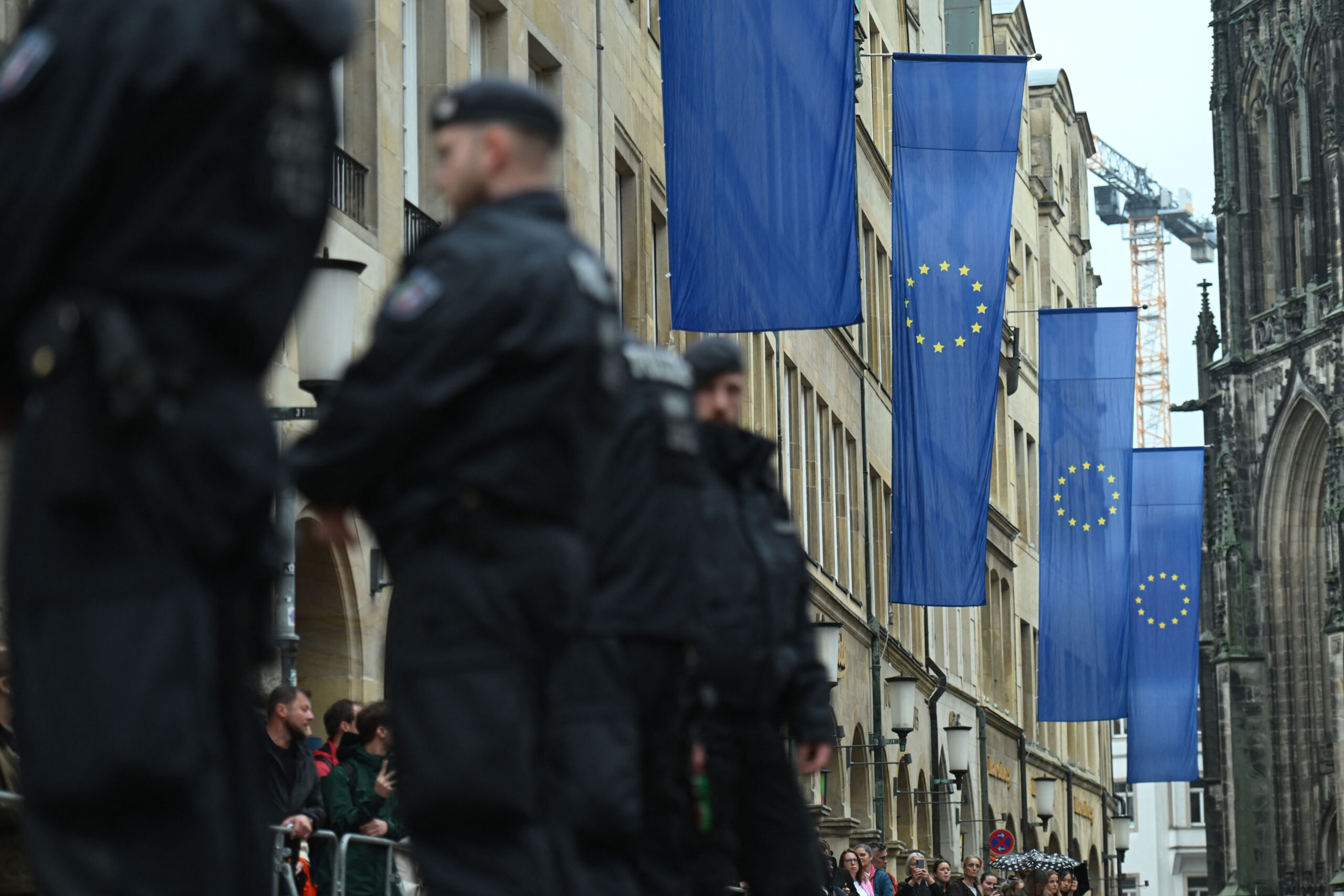
- The EU has announced almost 1,600 sanctions against Russia's military-industrial complex, while proposed visa and travel restrictions remain under discussion or preparation. Reporting also describes a 77-person sanctions listing linked to Russian State Duma elections in occupied Ukrainian territories, but does not establish whether that action is separate from or part of the larger package. (Confidence: medium · REPORTED)
- I&W: Confirmation: EU legal publications clarify the status of the almost 1,600 listings and whether the 77-person action is separate, and EU ministers announce a decision on travel curbs for accredited Russian diplomats. (0-30 days)
- I&W: Break: The European Commission withdraws or formally postpones its planned Schengen visa proposals, or EU ministers confirm that no travel-curb decision will follow. (1-3 months)
Outlook & scenarios
Continued pressure through intermediaries (65%)
Likely: Russian services continue to use intermediaries for sabotage and intimidation, with defence-sector leaders and infrastructure among the reported targets. European authorities identify and disrupt some plots, while public evidence of Russian tasking remains uneven.
Security measures contain near-term activity (25%)
Unlikely: Expanded close-protection measures, investigations and EU policy steps constrain opportunities for attacks on defence-sector personnel. Authorities continue to report suspected cases, but no publicly confirmed successful attack on a defence executive emerges.
A plot succeeds and forces a wider response (10%)
Very unlikely, but high impact: A plot against a defence-sector leader or critical infrastructure succeeds, prompting stronger European security measures and a sharper dispute over attribution and response. The reported disrupted assassination plots and Leipzig/Halle drone case make this a relevant warning scenario, not an established forecast.
Recommendations
- Maintain a case register that separates suspected incidents, disrupted plots and completed attacks. Record the alleged actor, attribution basis, source reliability and whether authorities have confirmed Russian tasking. Treat Germany's reported count of more than 100 cases as investigations, not completed attacks.
- Prioritise verification of the Leipzig/Halle reporting: establish whether German authorities confirm the two suspects, the alleged GRU operative, the logistics link and the plot's intended target.
- Track EU legal publications and Foreign Affairs Council decisions separately from proposals. Reconcile the almost 1,600 sanctions package with the reported 77-person listing before using either figure in trend analysis.
- For claims of Kremlin-backed political influence, distinguish documented financial or platform evidence from general assessments of polarisation and opposition to aid for Ukraine.
Confidence & uncertainty
Overall confidence is high for the existence of reported official warnings, German security measures and EU policy announcements. Major-media reporting attributes the expanded-operation warning to officials from five European intelligence services and also describes named BfV actions. This confidence does not extend to every covert attribution: the German case count and the Leipzig/Halle GRU link rely on reporting without an identified primary source, and the relationship between the 77-person listing and the larger sanctions package remains unclear.
Alternative analysis (red cell)
The available evidence more securely establishes heightened concern about Russian hybrid activity and political influence than a demonstrated, continuing campaign with predictable future behavior. Existing warnings, disrupted plots, and protective measures may reflect precautionary responses to a limited or evolving threat rather than proof that intermediaries will continue targeting defence leaders and supplies. Political opposition to further aid may also be primarily domestically generated; the record does not establish that Kremlin-linked actors will materially shape the 2027 elections.
Intelligence gaps
- [EEI 1.2 · UNCOVERED] Observed reconnaissance activity around critical sites indicative of attack planning (unauthorised drone flights, repeated surveillance visits, loitering vehicles, mapping/photography of assets). Recommended collection: open-source/media
- [EEI 1.3 · PARTIAL] Law-enforcement or customs seizures, arrests or interdictions of persons or shipments carrying explosives, sabotage tools, specialty cutting/electrical equipment, or covert comms gear destined for/near critical infrastructure. Recommended collection: law enforcement
- [EEI 2.1 · UNCOVERED] Emergence or amplification of coordinated social-media networks (sets of accounts, pages, channels) pushing identical narratives or hashtags across multiple platforms, including bot-like activity metrics and origin IP/common management indicators. Recommended collection: social-media/OSINT
- [EEI 2.2 · UNCOVERED] Publication or internal guidance from state-run media, proxy outlets, or identified influence platforms distributing talking points, pre-scripted messaging, or translated content targeted at specific EU countries/communities. Recommended collection: open-source/media
- [EEI 2.3 · PARTIAL] Distribution of manipulated multimedia (deepfakes), targeted phishing/whaling campaigns, or localized false narratives timed to political events (elections, protests, court rulings) with tracked reach and engagement metrics. Recommended collection: cyber/forensic
- [EEI 3.1 · PARTIAL] Unusual financial transactions: wire transfers, crypto conversions, or payments to shell companies, NGOs or individuals exceeding typical baselines that link to known proxies or front organisations. Recommended collection: financial
- [EEI 3.2 · UNCOVERED] Travel and movement indicators for suspected operatives: repeated border crossings, chartered/irregular flights, booking patterns or mobile/location data placing identified individuals in staging areas shortly before incidents. Recommended collection: border/immigration
- [EEI 3.3 · UNCOVERED] Cargo, freight or maritime movements with discrepancies (concealed/dual-use equipment, false manifests, unusual routing) detected at ports, rail hubs or via AIS that correspond to deliveries of material used in sabotage or influence operations. Recommended collection: customs/ports
- [EEI 3.4 · UNCOVERED] Intercepted or otherwise-obtained communications showing tasking, coordination, or payment instructions between Russian agencies/handlers and proxy groups, including identified command-and-control servers or encrypted group identifiers. Recommended collection: signals-intel/SIGINT
Cited sources
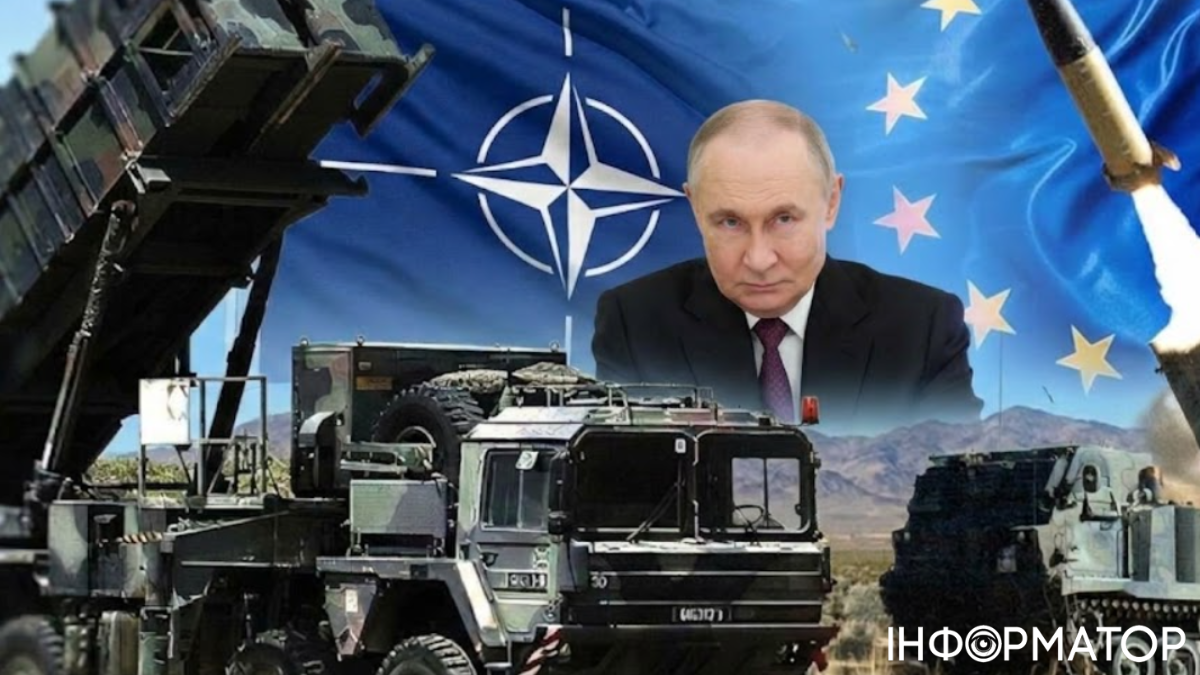
[1] Kyiv Post · Russia Plots Assassinations of European Arms Executives (B) · 11 October 2026 · sha256:50eea1756d55 [2] Nexus Europa · Nexus Europa — Oct 12, 2026, 01:30 AM UTC (F) · 12 October 2026 · sha256:363a02bd25b4 [3] Atlantic Council · Ukraine can help Europe counter Russia’s escalating shadow war (C) · 8 October 2026 · sha256:2c1c3b6bc82e [4] Informator.ua · В НАТО убеждены – Европа должна усилить поддержку Украины для сдерживания Путина. (D) · 12 October 2026 · sha256:c94e7b1d4a2b [5] Al Jazeera · Ukraine’s Zelenskyy accuses Russia of violating Trump’s ‘energy ceasefire’ (A) · 12 October 2026 · sha256:cd4b101b76b7 [6] Европейская правда (eurointegration.com.ua) · Новости (B) · sha256:66ab630bf7a0
Source content hashes were computed at collection time; the cited text is preserved unmodified for the life of this product.
Red cell review: PARTIAL DISSENT
TLP:CLEAR