TLP:CLEAR · Disclosure is not limited.
Europe: Russia-linked maritime drone activity and shadow‑fleet enforcement update
Time window: Last 1 day · Audience: General analyst · Type: Situation report · DTG: 2026-07-03 08:44Z · Overall confidence: LOW
BLUF
Think‑tank reporting and a French interdiction indicate Russia has likely used shadow‑fleet tankers as staging platforms for drones that surveilled European military sites and disrupted civil aviation. EU enforcement against the shadow fleet is tightening, while attribution of the 2022 Nord Stream blasts remains contested, creating space for influence operations. Overall confidence is low given reliance on single‑strand reporting and unresolved contradictions.
Executive summary
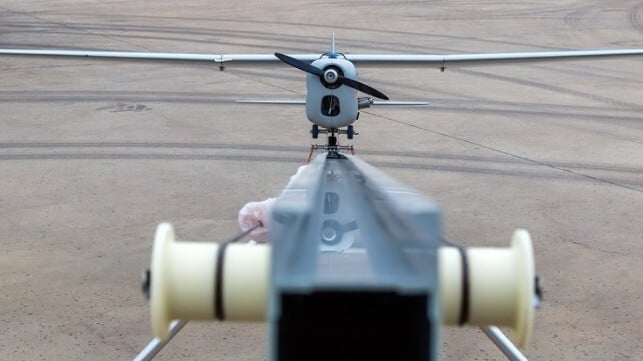
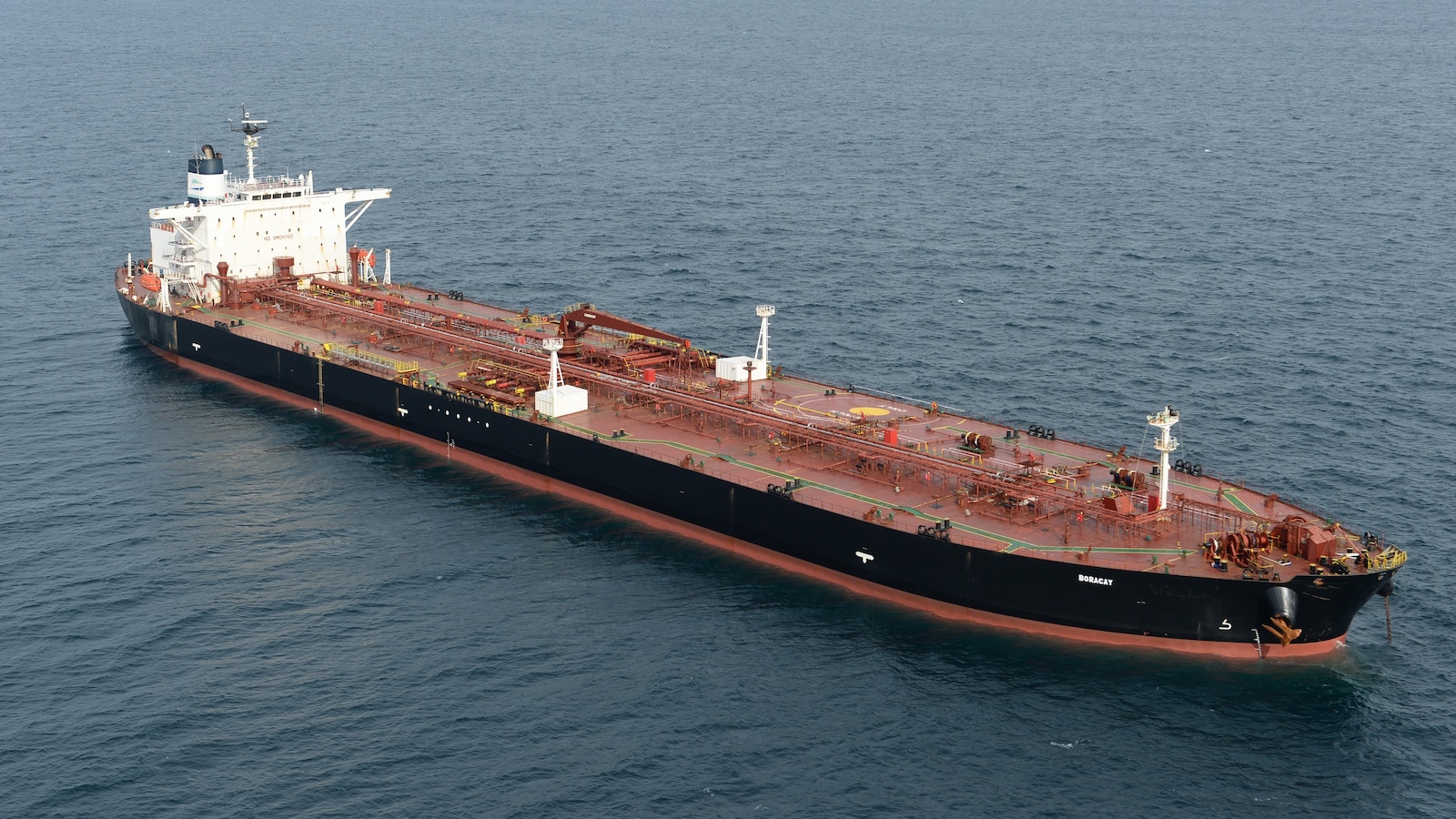
Recent analysis assesses that Russia has likely used shadow‑fleet tankers to launch or support drone operations over Western Europe, disrupting civilian aviation and surveilling military installations in the U.K., the Netherlands, Belgium, France and Germany, with half of documented incursions at military sites. Germany’s Federal Criminal Police Office recorded 1,072 drone incursions in 2025, and Danish leadership labelled related incidents the most serious attack on Danish critical infrastructure to date. French forces boarded the tanker Pushpa/Boracay after drone incursions into Danish airspace, consistent with the maritime‑launch vector. In parallel, Europe is stepping up action against tankers misusing Cameroon’s flag to move Russian oil, with Cameroon dumping 39 vessels and the EU preparing sanctions targeting the shadow fleet. Separately, German prosecutors charged a former Ukrainian army officer over the Nord Stream blasts, keeping attribution contested and open to competing narratives.
Change from previous assessment
Since the prior brief, new think‑tank reporting details likely ship‑launched Russian drone activity that disrupted civil aviation and surveilled military sites across five EU and NATO countries, and a French boarding tied to Danish airspace incursions adds a concrete maritime touchpoint. EU actions against Cameroon‑flag misuse and preparation of shadow‑fleet sanctions sharpen the enforcement picture. A German indictment in the Nord Stream case introduces a competing attribution narrative. Confidence is lower than previously judged due to the reliance on single‑strand sourcing for the maritime‑UAS activity and the provisional nature of the Nord Stream legal proceedings.
Key judgments
- Russia is likely using shadow‑fleet tankers in European waters as staging platforms for drone reconnaissance and harassment, with operations since at least 2024 that have disrupted civil aviation and targeted military sites in the U.K., the Netherlands, Belgium, France and Germany. (Confidence: medium · ASSESSED)
- I&W: An EU navy boarding recovers shipboard UAS launch equipment or flight logs linking deck‑level launches to incursions over the U.K., the Netherlands, Belgium, France or Germany. (1-3 months)
- I&W: Civil aviation NOTAMs or regulator bulletins explicitly cite ship‑launched UAS as the cause of airspace disruption over North Sea or Baltic approach corridors. (0-30 days)
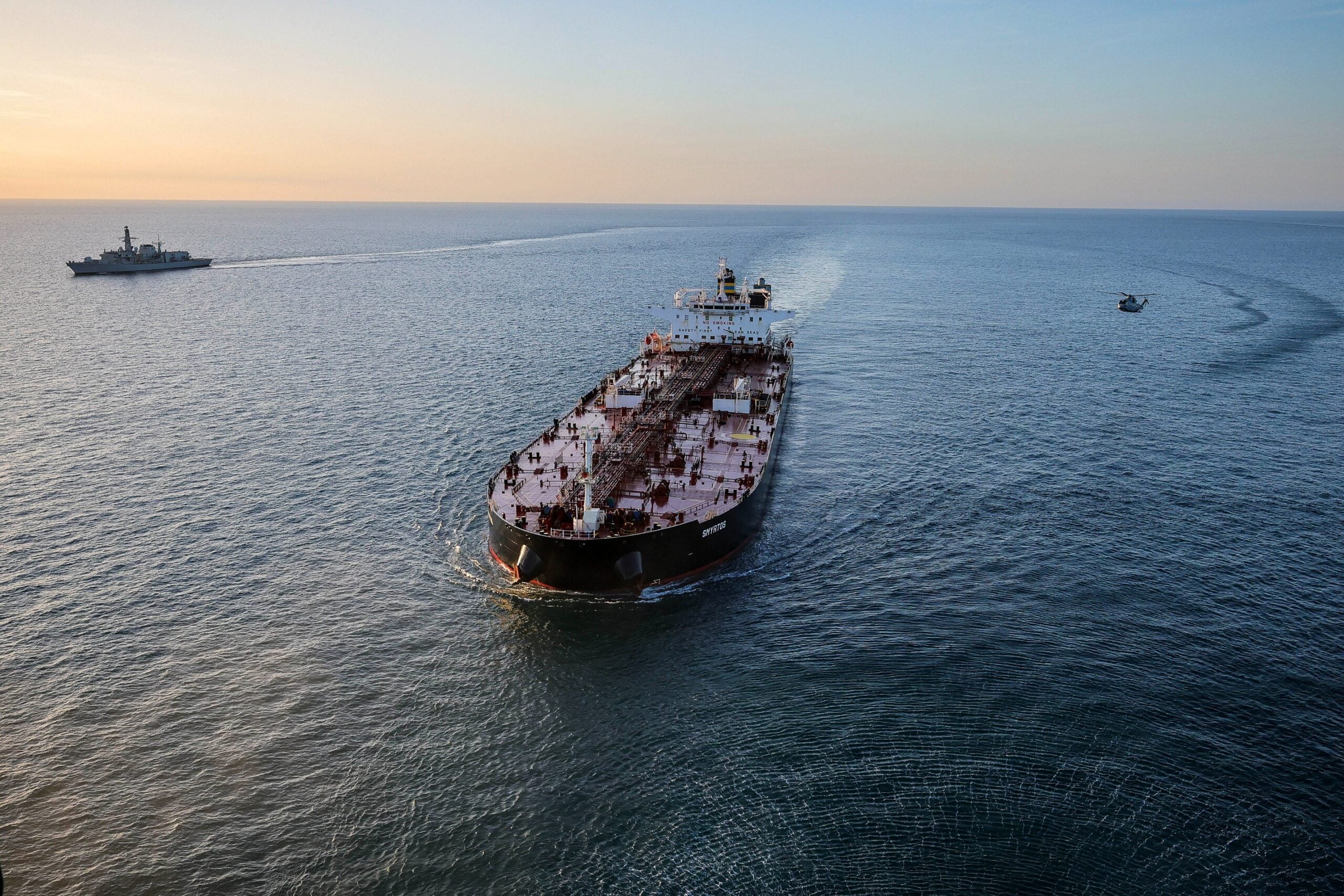
- EU member states are likely to sustain and intensify maritime enforcement and sanctions against the shadow fleet moving Russian oil, including vessels misusing Cameroon’s flag registry, over the next 1-3 months. (Confidence: medium · ASSESSED)
- I&W: Announcement and publication of a new EU sanctions package listing shadow‑fleet vessels, facilitators or front registries, followed by fresh at‑sea boardings by French, Belgian, British or Swedish navies. (0-30 days)
- I&W: Reversal of Cameroon’s deregistrations or EU slippage on the sanctions timetable targeting the shadow fleet. (0-30 days)
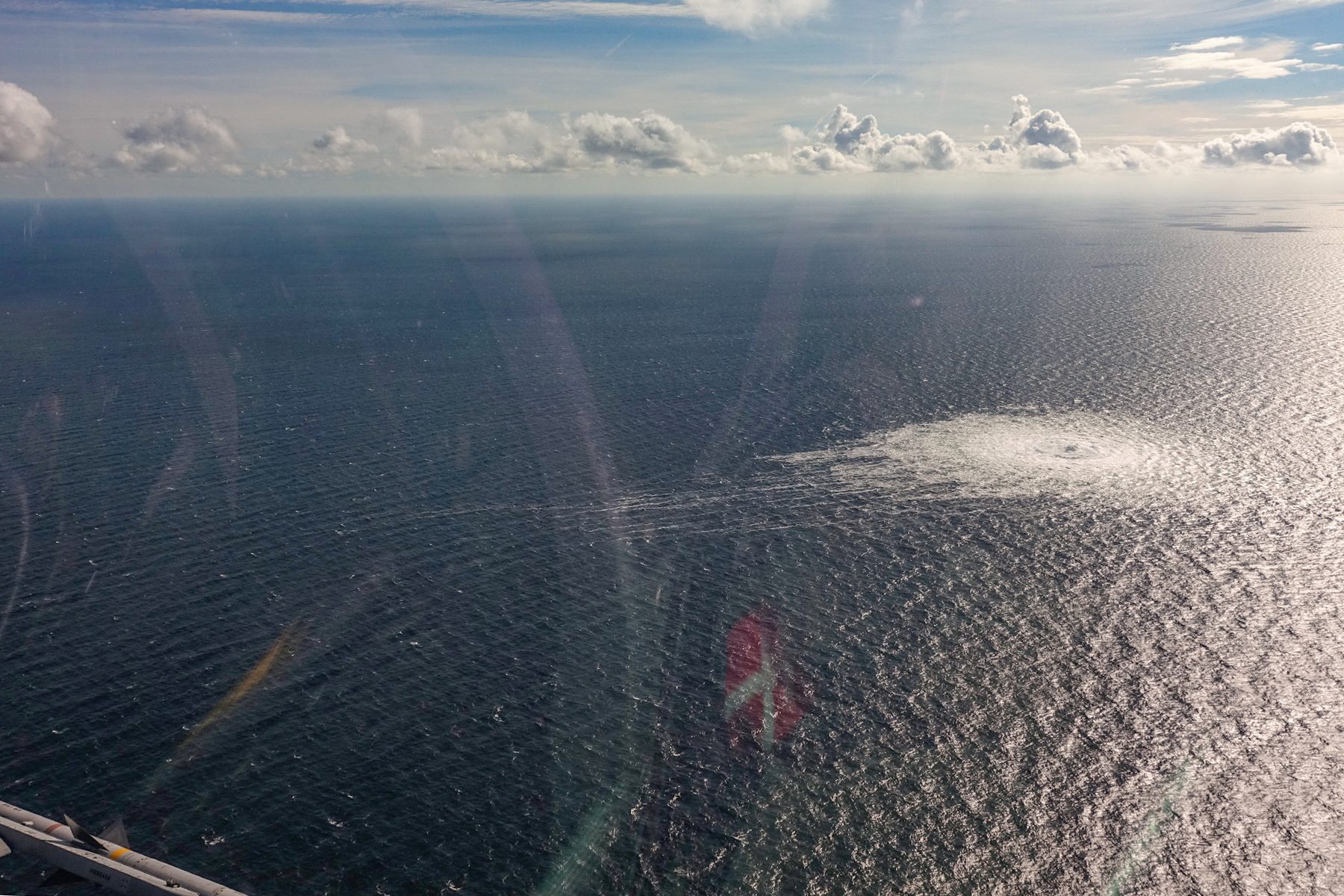
- Hazardous drone incursions over European airspace and around critical infrastructure are likely to recur in the next 0-30 days, with a roughly even chance of renewed temporary airport restrictions or closures. (Confidence: low · ASSESSED)
- I&W: Airport NOTAMs or police bulletins in Germany, Denmark, the Netherlands, Belgium or France citing UAS activity proximate to runways or critical installations. (0-30 days)
- I&W: A full month passes without any publicly recorded UAS‑related airspace restrictions at major EU hubs that experienced 2025 incursions. (0-30 days)
- Attribution for the 2022 Nord Stream pipeline blasts is likely to remain unsettled in the near term, enabling competing narratives and information operations that implicate non‑Russian actors. (Confidence: low · ASSESSED)
- I&W: German court proceedings either secure a conviction or find evidence insufficient in the Serhii K. case, clarifying the evidentiary bar for attribution. (1-3 months)
- I&W: Publication of corroborated, multi‑agency forensic findings that ascribe the blasts to a single state sponsor. (1-3 months)
- Russia is likely to sustain asymmetric pressure against European energy and maritime nodes as the war features massed strikes on Ukraine and Ukrainian attacks on Russian oil facilities. (Confidence: low · ASSESSED)
- I&W: An uptick in maritime‑proximate UAS sightings in weeks that coincide with large Russian strike packages or Ukrainian long‑range hits on Russian refineries. (0-30 days)
- I&W: A sustained lull in both Russian long‑range strikes and Ukrainian refinery attacks without corresponding maritime UAS reporting in Europe. (1-3 months)
Outlook & scenarios
Steady maritime‑UAS harassment around North Sea and Baltic corridors (60%)
Shadow‑fleet tankers continue to support Russia‑linked UAS sorties that probe air defences and sensitive sites, with occasional airspace restrictions near major hubs and sporadic port security alerts. French and partner navies conduct intermittent boardings at sea, creating tactical friction but not yet deterring activity.
Enforcement bite degrades shadow‑fleet operations (45%)
EU listings and coordinated at‑sea interdictions target ships misusing Cameroon’s registry and other facilitators. Registry dumping accelerates and ship‑to‑ship transfers face tighter scrutiny, raising costs and operational risk for maritime‑enabled UAS operations and illicit oil logistics.
Attribution contest over Nord Stream intensifies information operations (40%)
German legal proceedings against a former Ukrainian officer keep attribution ambiguous. Competing narratives circulate across Europe, complicating consensus on counter‑sabotage posture and distracting from maritime enforcement priorities.
Wildcard: A ship‑launched UAS triggers an aviation safety incident (15%)
A near‑miss or minor collision involving a civil aircraft and a UAS traced to a tanker in European waters forces immediate airspace and sea‑lane restrictions, driving emergency EU measures on maritime exclusion zones and rules of engagement.
Recommendations
- Stand up a joint OSINT watch on ship‑launched UAS: fuse AIS gaps, ship‑to‑ship transfer patterns, and UAS sightings to flag high‑risk tankers for collection and potential interdiction, prioritising vessels linked to prior incidents such as Pushpa/Boracay.
- Task routine collection on EU maritime enforcement: track boardings by French, Belgian, British and Swedish navies and registry actions by Cameroon to assess the real‑world impact of shadow‑fleet measures and update a live risk list for European approaches.
- Prepare pre‑bunking and response lines for contested sabotage attribution: coordinate with legal and policy teams on the Nord Stream case timeline in Germany and rehearse messaging that separates judicial process from operational vigilance.
- Brief airport and port security leads on ship‑to‑shore UAS risk indicators: unusual loitering by dark or recently reflagged tankers near approach corridors, repeated AIS obscuration, or low‑altitude UAS tracks inbound from sea.
- Prioritise diplomatic and regulatory tracking: monitor the emergence of an EU sanctions annex targeting shadow‑fleet vessels and facilitators, and ensure rapid dissemination to European operators, insurers and port state control authorities.
Confidence & uncertainty
Overall confidence is low. The central Russia‑linked maritime‑UAS assessment rests heavily on a single think‑tank line of reporting, albeit detailed, with limited independent corroboration in the current window. French boarding of Pushpa/Boracay aligns with the maritime vector but does not by itself prove systematic ship‑launched operations. Indicators of airspace disruption include retrospective 2025 data and a general claim of aviation disruption, which weakens recency. Enforcement reporting on Cameroon’s registry and EU sanction planning is credible but partially dated. The Nord Stream development is a prosecutorial allegation, not a court finding, and therefore provisional. These gaps and contradictions warrant caution despite plausible linkages.
Alternative analysis (red cell)
The claim set is weighted toward retrospective, medium/low admiralty reporting and contains timing/attribution inconsistencies (notably the contradiction involving f37ea74f and d0a93f02). A defensible alternative estimate is that while 2025 incidents prompted heightened alerting and some policy responses, the current evidence does not reliably establish a sustained, state‑directed Russian shadow‑fleet campaign or an imminent spike in attacks on European nodes; higher‑value, contemporary technical and legal evidence is required to substantiate those operational forecasts.
Intelligence gaps
- [EEI 1.1 · PARTIAL] Reports, operator notifications, CCTV or satellite imagery showing unexplained physical damage or operational outages at critical infrastructure sites (power substations, gas pipelines/compressor stations, water treatment plants, railway signaling centers, major telecom exchanges). Recommended collection: satellite/imagery
- [EEI 1.2 · UNCOVERED] Observed reconnaissance activity around critical sites indicative of attack planning (unauthorised drone flights, repeated surveillance visits, loitering vehicles, mapping/photography of assets). Recommended collection: open-source/media
- [EEI 1.3 · UNCOVERED] Law-enforcement or customs seizures, arrests or interdictions of persons or shipments carrying explosives, sabotage tools, specialty cutting/electrical equipment, or covert comms gear destined for/near critical infrastructure. Recommended collection: law enforcement
- [EEI 2.1 · UNCOVERED] Emergence or amplification of coordinated social-media networks (sets of accounts, pages, channels) pushing identical narratives or hashtags across multiple platforms, including bot-like activity metrics and origin IP/common management indicators. Recommended collection: social-media/OSINT
- [EEI 2.2 · UNCOVERED] Publication or internal guidance from state-run media, proxy outlets, or identified influence platforms distributing talking points, pre-scripted messaging, or translated content targeted at specific EU countries/communities. Recommended collection: open-source/media
- [EEI 2.3 · UNCOVERED] Distribution of manipulated multimedia (deepfakes), targeted phishing/whaling campaigns, or localized false narratives timed to political events (elections, protests, court rulings) with tracked reach and engagement metrics. Recommended collection: cyber/forensic
- [EEI 3.1 · UNCOVERED] Unusual financial transactions: wire transfers, crypto conversions, or payments to shell companies, NGOs or individuals exceeding typical baselines that link to known proxies or front organisations. Recommended collection: financial
- [EEI 3.2 · UNCOVERED] Travel and movement indicators for suspected operatives: repeated border crossings, chartered/irregular flights, booking patterns or mobile/location data placing identified individuals in staging areas shortly before incidents. Recommended collection: border/immigration
- [EEI 3.3 · UNCOVERED] Cargo, freight or maritime movements with discrepancies (concealed/dual-use equipment, false manifests, unusual routing) detected at ports, rail hubs or via AIS that correspond to deliveries of material used in sabotage or influence operations. Recommended collection: customs/ports
- [EEI 3.4 · UNCOVERED] Intercepted or otherwise-obtained communications showing tasking, coordination, or payment instructions between Russian agencies/handlers and proxy groups, including identified command-and-control servers or encrypted group identifiers. Recommended collection: signals-intel/SIGINT
Cited sources
[1] International Institute of Strategic Studies · Russia waged a drone campaign in Europe and likely launched drones from shadow ships, report says (C) · sha256:8421122e9334 [2] IISS · Report: Russian Shadow Fleet Vessels Play a Role in Drone Incursions in EU (C) · sha256:eb60f2e43aff [3] gcaptain.com · Europe Targets Shadow Fleet Tankers Falsely Flying Cameroon Flag, Sources Say (A) · sha256:5049ca913dcf [4] gcaptain.com · Germany Charges Former Ukrainian Officer Over Nord Stream Pipeline Sabotage (A) · sha256:d11509d2d1ac [5] HuffPost · Major Russian Attack Kills 20 In Kyiv As Ukraine Keeps Striking Moscow's Oil Sector (A) · sha256:dabe8cdae7b9 [6] Associated Press · Putin shrugs off fuel shortages in Russia as he ramps up attacks on Ukraine (A) · sha256:5d6a9d94c622
Source content hashes were computed at collection time; the cited text is preserved unmodified for the life of this product.
Red cell review: PARTIAL DISSENT
TLP:CLEAR