TLP:CLEAR · Disclosure is not limited.
Europe: Russia-linked sabotage and cyber activity sustain a hybrid threat as EU response remains uneven
Time window: Last 1 day · Audience: General analyst · Type: Situation report · DTG: 2026-07-13 11:13Z · Overall confidence: MEDIUM
BLUF
Europe is very likely facing a sustained Russia-linked hybrid campaign, combining physical sabotage and cyber activity. Near-term risk of further incidents in Poland and Lithuania and cyber operations targeting France and allied institutions remains high, while EU policy moves are split and energy ties to Russian LNG persist.
Executive summary
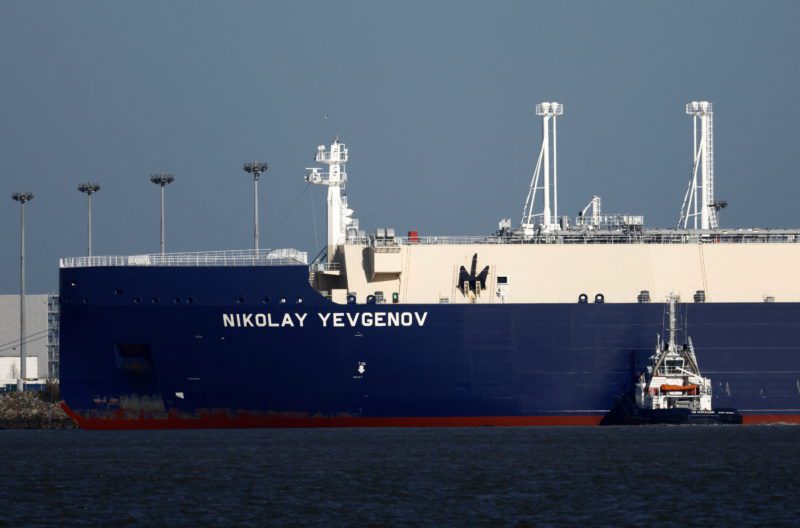
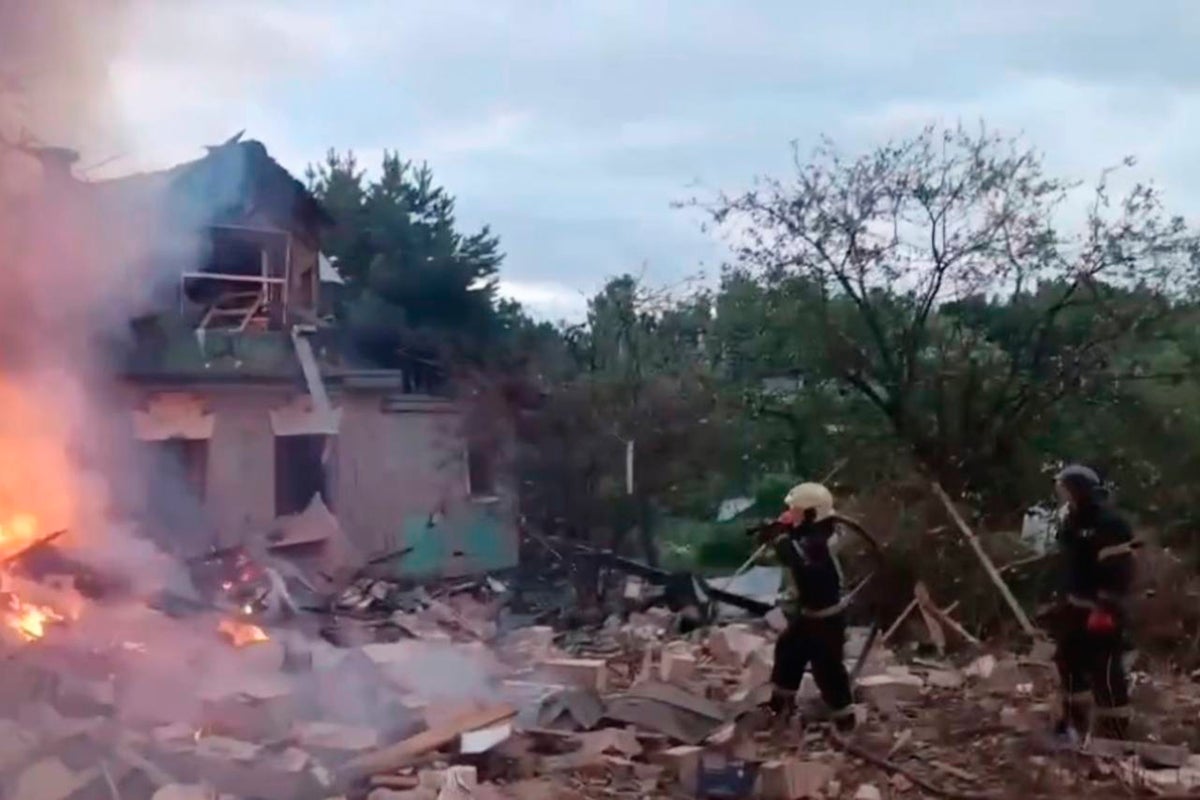
Reporting across multiple EU states points to a continuing hybrid threat attributed to Russia. Arsons in Vilnius on 8 May 2024 and at Warsaw’s Marywilska 44 on 11 May 2024, with investigators later tying the Warsaw fire to a GRU order, sit alongside a 2023 Polish spy-ring arrest over alleged rail sabotage plotting and official allegations of a 2023-2024 surge in suspected sabotage incidents. Paris plans to summon Russia’s ambassador over an alleged cyberhacking campaign against European countries, and separate reporting alleges Russian hacking of NATO’s civilian infrastructure. EU states are divided over a 21st Russia sanctions package, even as Europe’s exposure to Russian LNG remains high, with €5.96 billion paid for Yamal cargoes in the first half of 2026 and the bulk of 2026 shipments landing at EU ports, led by France.
Change from previous assessment
France’s plan to summon Russia’s ambassador over an alleged multi-country cyberhacking campaign adds a sharper cyber dimension to the hybrid threat picture. Energy exposure has been quantified with data on EU purchases and flows of Yamal LNG and servicing of Arc7 carriers. Reporting continues to link the 2024 Warsaw fire to a GRU order and recalls a 2023 Polish spy-ring arrest, reinforcing the sabotage vector. EU sanctions reporting is mixed, so we frame the outlook on the 21st package as uncertain. Overall analytic thrust is unchanged, with confidence maintained at medium.
Key judgments
- Europe is very likely under a sustained, Russia-linked hybrid campaign blending physical sabotage with cyber operations, evidenced by arsons in Vilnius and Warsaw, a 2023 Polish spy-ring arrest over rail sabotage plotting, France’s planned demarche over an alleged Russian cyber campaign, and public allegations that Russia has hacked NATO’s civilian infrastructure. (Confidence: high · ASSESSED)
- I&W: France delivers the summons to Russia’s ambassador and publishes technical indicators of compromise linked to Russian services. (0-14 days)
- I&W: Prosecutors in Poland or Lithuania publicly name Russian handlers or units in new sabotage cases. (1-3 months)
- Physical sabotage risks to EU civilian and commercial infrastructure are likely to persist, with Poland and Lithuania at elevated near-term risk given the Vilnius IKEA arson, the GRU-linked Marywilska 44 fire in Warsaw, and prior plotting against Polish rail. (Confidence: medium · ASSESSED)
- I&W: Additional arsons or interdictions at retail, logistics, or rail nodes in Poland or Lithuania with early official suspicion of foreign direction. (0-14 days)
- I&W: Judicial findings in Warsaw that dismiss a GRU link to the Marywilska 44 fire. (1-3 months)
- Russia-linked cyber activity against EU and NATO members is likely to intensify in the near term, with France a focal point following Paris’s plan to summon Russia’s ambassador amid allegations of a multi-country campaign and reporting on intrusions into NATO civilian infrastructure. (Confidence: medium · ASSESSED)
- I&W: ANSSI or CERT-EU release technical advisories attributing recent intrusions to Russian state-linked operators affecting French or allied networks. (0-14 days)
- I&W: The French government backs away from the demarche or attributes the activity to a non-Russian actor. (1-3 months)
- EU efforts to escalate pressure on Russia are split: there is a roughly even chance the EU will adopt a 21st sanctions package next week given conflicting reporting on consensus, while Europe remains heavily exposed to Russian LNG via Yamal, with higher H1 2026 inflows concentrated at French and Belgian terminals. (Confidence: medium · ASSESSED)
- I&W: EU Council communiqué confirms adoption of the 21st sanctions package adding approximately 250 individuals and entities. (0-14 days)
- I&W: Arc7 carriers continue calling at Zeebrugge, Dunkerque or Montoir and undergo servicing at Fayard without interruption. (1-3 months)
Outlook & scenarios
Baseline: Rolling hybrid pressure continues (60%)
Sporadic, deniable sabotage attempts recur in Poland and Lithuania while phishing and intrusion campaigns probe EU institutions and allies, including France. Public attributions accumulate but stop short of detailed unit-level naming. EU debate on new sanctions remains contentious and energy flows from Yamal LNG continue.
Coordinated allied pushback (40%)
France’s demarche catalyses a joint EU response: the 21st sanctions package is passed, additional expulsions follow the Polish precedent, and member states coordinate public advisories on Russian TTPs. Russian-directed activity shifts to quieter tempo but persists.
Sanctions stall, energy dependence endures (50%)
EU capitals fail to reach consensus, delaying the 21st package. Russian LNG deliveries to France, Belgium and Spain remain elevated, preserving economic leverage. Sabotage and probing cyber activity continue at a manageable but steady rate.
Wildcard: Disruptive cyberattack on NATO-aligned civilian infrastructure (15%)
A Russia-attributed intrusion causes visible outages in a NATO member’s civilian systems tied to alliance functions. Political fallout triggers emergency consultations, but the operation remains calibrated below conventional thresholds.
Recommendations
- Prioritise liaison with Polish and Lithuanian security services to track cross-border enablers behind the Vilnius and Warsaw arsons and the 2023 rail sabotage plot; request timely sharing of arrest and prosecutorial documents that reference Russian handlers or units.
- Coordinate with France’s ANSSI and allies’ CERTs to obtain technical indicators from the alleged cyber campaign; ingest IOCs into analytic tooling and build a watchlist focused on EU and NATO-adjacent civilian networks.
- Stand up a weekly hybrid-threat SITREP across the EU that fuses sabotage, cyber and diplomatic indicators, highlighting tripwires for escalation and de-escalation.
- Task OSINT and maritime data feeds to monitor Yamal LNG deliveries to Zeebrugge, Dunkerque and Montoir, and maintenance calls at Fayard; assess how energy flows shape EU policy space on Russia.
- Prepare decision support on likely contours of the EU’s 21st sanctions package, including the proposed addition of about 250 targets, and decision points where US coordination could raise allied cohesion.
- Develop a targeted collection plan against Russian services and proxies implicated in European sabotage, including HUMINT and SIGINT gaps around tasking, finance and logistics.
Confidence & uncertainty
Overall confidence is medium. The hybrid activity picture is supported by multiple, independent reports across several EU states and official actions, including France’s planned demarche and prior Polish counterintelligence and law enforcement activity. Several key elements rely on major media reporting and public allegations without full judicial disclosure, and there are contradictions on the timing and status of the EU’s 21st sanctions package. Attribution for specific sabotage incidents, while strengthened by the reported GRU link to the Warsaw fire, still rests on single-source or not-yet-public evidence in places, which tempers confidence.
Alternative analysis (red cell)
The compiled evidence documents several suspicious incidents and formal allegations but does not unambiguously demonstrate a single, sustained, centrally directed Russian hybrid campaign across Europe. Isolated medium- and low-admiralty events, internal contradictions (notably on the Marywilska 44 attribution and EU sanctions timing), and a lack of cross-validated forensic or SIGINT indicators leave alternative explanations—criminal actors, proxies, or opportunistic operations—plausible. Additional multi-source technical and law enforcement corroboration is required before asserting a high-confidence, geographically concentrated risk picture.
Intelligence gaps
- [EEI 1.1 · PARTIAL] Reports, operator notifications, CCTV or satellite imagery showing unexplained physical damage or operational outages at critical infrastructure sites (power substations, gas pipelines/compressor stations, water treatment plants, railway signaling centers, major telecom exchanges). Recommended collection: satellite/imagery
- [EEI 1.2 · UNCOVERED] Observed reconnaissance activity around critical sites indicative of attack planning (unauthorised drone flights, repeated surveillance visits, loitering vehicles, mapping/photography of assets). Recommended collection: open-source/media
- [EEI 1.3 · UNCOVERED] Law-enforcement or customs seizures, arrests or interdictions of persons or shipments carrying explosives, sabotage tools, specialty cutting/electrical equipment, or covert comms gear destined for/near critical infrastructure. Recommended collection: law enforcement
- [EEI 2.1 · UNCOVERED] Emergence or amplification of coordinated social-media networks (sets of accounts, pages, channels) pushing identical narratives or hashtags across multiple platforms, including bot-like activity metrics and origin IP/common management indicators. Recommended collection: social-media/OSINT
- [EEI 2.2 · PARTIAL] Publication or internal guidance from state-run media, proxy outlets, or identified influence platforms distributing talking points, pre-scripted messaging, or translated content targeted at specific EU countries/communities. Recommended collection: open-source/media
- [EEI 2.3 · UNCOVERED] Distribution of manipulated multimedia (deepfakes), targeted phishing/whaling campaigns, or localized false narratives timed to political events (elections, protests, court rulings) with tracked reach and engagement metrics. Recommended collection: cyber/forensic
- [EEI 3.1 · UNCOVERED] Unusual financial transactions: wire transfers, crypto conversions, or payments to shell companies, NGOs or individuals exceeding typical baselines that link to known proxies or front organisations. Recommended collection: financial
- [EEI 3.2 · UNCOVERED] Travel and movement indicators for suspected operatives: repeated border crossings, chartered/irregular flights, booking patterns or mobile/location data placing identified individuals in staging areas shortly before incidents. Recommended collection: border/immigration
- [EEI 3.3 · PARTIAL] Cargo, freight or maritime movements with discrepancies (concealed/dual-use equipment, false manifests, unusual routing) detected at ports, rail hubs or via AIS that correspond to deliveries of material used in sabotage or influence operations. Recommended collection: customs/ports
- [EEI 3.4 · UNCOVERED] Intercepted or otherwise-obtained communications showing tasking, coordination, or payment instructions between Russian agencies/handlers and proxy groups, including identified command-and-control servers or encrypted group identifiers. Recommended collection: signals-intel/SIGINT
Cited sources
[1] Wikipedia · Russian sabotage operations in Europe (B) · sha256:e332876d2064 [2] The Independent · Ukraine-Russia war latest: Kyiv bombs 15 more Russian ships on key trade route (A) · sha256:f2c8f7615a19 [3] cryptobriefing.com · Russia escalates war tactics, raising NATO clash concerns (B) · sha256:0bde63b24075 [4] jpost.com · Western allies seek to secure air defense aid for Ukraine as shortages leave Kyiv vulnerable (B) · sha256:72223a5973f8 [5] gcaptain.com · EU Paid Nearly €6 Billion for Russian Arctic LNG in First Half of 2026 Despite Phase-Out Plan (B) · sha256:347c17e7f89c
Source content hashes were computed at collection time; the cited text is preserved unmodified for the life of this product.
Red cell review: PARTIAL DISSENT
TLP:CLEAR