TLP:CLEAR · Disclosure is not limited.
Europe: Russian Hybrid Pressure and Escalation Risks
Time window: Last 7 days · Audience: General analyst · Type: Situation report · DTG: 2026-08-21 00:08Z · Overall confidence: MEDIUM
BLUF
Russia is very likely sustaining hybrid pressure against European states, with Lithuania and Latvia the clearest current pressure points and the UK facing intensified coercive signalling. A limited attack on a NATO member within months remains unlikely but high impact. European border measures are strengthening, while air defence and munitions gaps constrain confidence in rapid response.
Executive summary
Between 14 and 21 August 2026, reporting described sustained Russian hybrid pressure across Europe, including cyber, informational, economic and kinetic activity affecting Lithuania, suspected sabotage and arson concerns in Latvia, and an armed drone linked by investigators to Russia at Leipzig Airport. The Kremlin and Vladimir Putin warned Britain over reports that Ukraine was using drones produced by British companies, while the British Prime Minister reaffirmed support for Kyiv. Latvia has expanded border surveillance, and Norway is strengthening the Finnmark Brigade. These measures are offset by reported Patriot and munitions shortages. NASA thermal detections in Europe provide evidence of heat only and do not establish Russian responsibility for any incident.
Key judgments
- Russia is very likely sustaining a below-threshold hybrid campaign against European states, with Lithuania and Latvia as the clearest current pressure points and the Nordic-Baltic region as the main theatre. Reporting identifies Russian cyber, informational, economic and kinetic pressure on Lithuania, Latvian reports of sabotage, arson and provocations, an investigation into a July 2026 fire at a charity warehouse supporting Ukraine, and an armed drone linked by investigators to Russia at Leipzig Airport near cargo aircraft used by NATO and the Ukrainian military. Confidence is medium because the assessment draws on repeated reporting, but the claims do not establish Russian responsibility for the Latvian fire and the Leipzig attribution rests on a single reported investigation. (Confidence: medium · ASSESSED)
- I&W: Confirm the assessment if Latvian investigators attribute the July 2026 charity warehouse fire to Russia or a Russian-linked actor, or if Lithuania reports a new cyber, informational, economic or kinetic incident with evidence tying it to Russia. (0-14 days)
- I&W: Break the assessment if Latvia closes the warehouse-fire inquiry without a hostile or Russian link and no new Russian-attributed incident is reported in Lithuania or Latvia. (1-3 months)
- Russia is likely to intensify coercive pressure on the UK short of overt war, following reports that Ukraine is using drones produced by two British companies and London's declared commitment to support Kyiv. The Kremlin warned Britain on 20 August 2026 of inevitable consequences, while separate reporting attributed a similar warning to Vladimir Putin on 19 August. The direct threat reporting is concentrated in limited-source media accounts and does not establish an operational order, so confidence is medium. (Confidence: medium · ASSESSED)
- I&W: Confirm the assessment if the Kremlin or Vladimir Putin issues a new warning that specifically names British drone supply or UK assistance to Ukraine, or if the Russian vessel Yantar is again detected near the UK's critical underwater infrastructure. (0-14 days)
- I&W: Break the assessment if the British Prime Minister publicly reverses the commitment to help Ukraine, Russia withdraws its warnings, and no UK-linked disruption is reported. (1-3 months)
- A limited Russian attack on a NATO member within months is unlikely, but it remains the principal low-probability, high-impact escalation risk. A US intelligence assessment reports that the Kremlin is preparing such an attack, while separate reporting states that Russia has the capacity to strike the UK with missile systems in Belarus. The British intelligence assessment supports a longer ten-year risk horizon rather than a months-long timeline. Confidence is low because the near-term warning is a single assessed report and the claims provide no specific evidence of Russian attack preparations. (Confidence: low · ASSESSED)
- I&W: Confirm the assessment if Russian missile systems in Belarus are placed on operational alert or a Russian strike hits the territory of a NATO member, including the UK, Latvia, Lithuania, Norway or Germany. (1-3 months)
- I&W: Break the near-term assessment if US intelligence publicly downgrades the warning and no Russian attack or missile alert occurs during the period. (1-3 months)
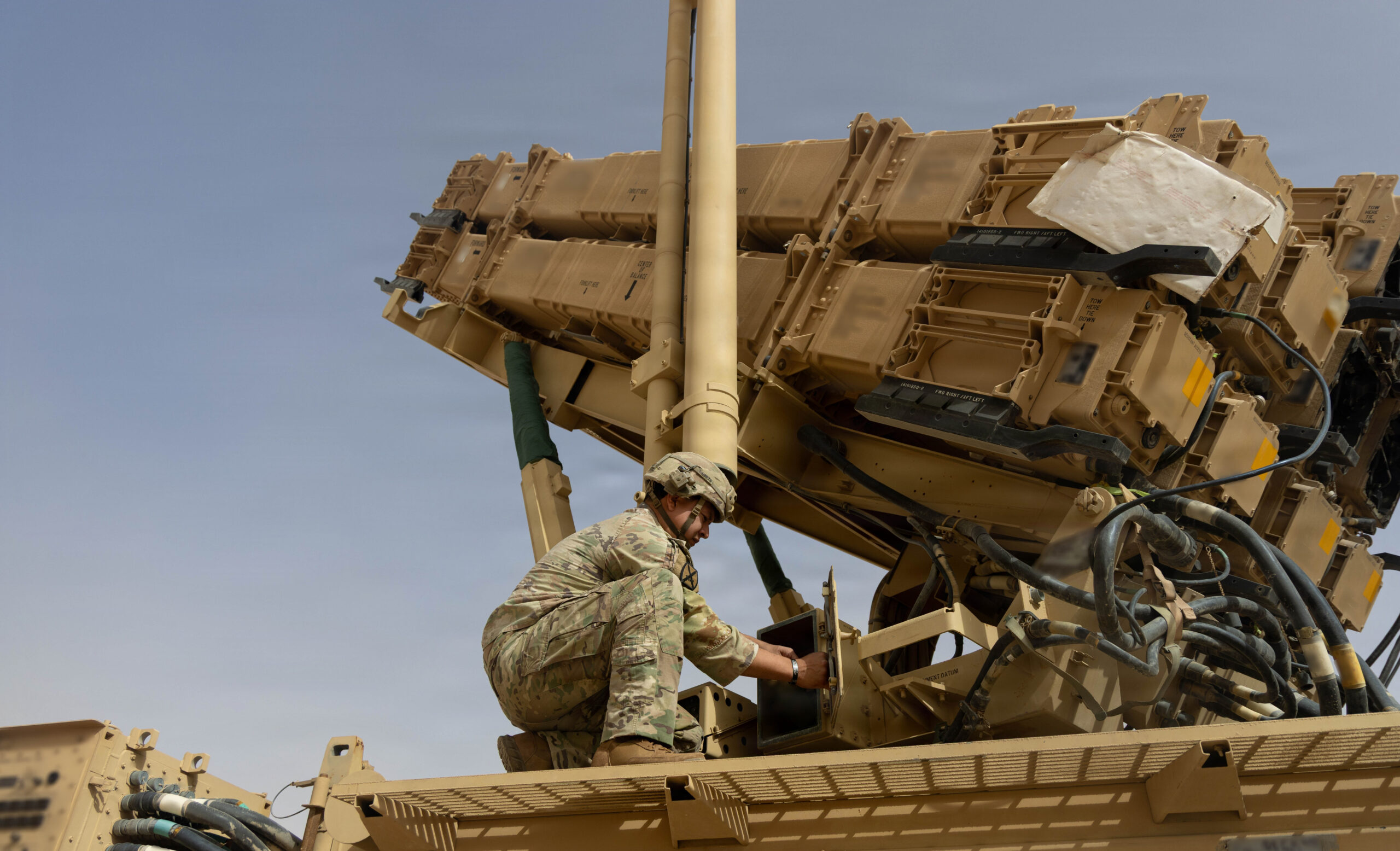
- European states are likely to expand local surveillance and defence measures faster than they resolve air-defence and munitions shortages. Latvia has deployed drones, helicopters, special sensors, additional forces and technical means on its border with Belarus. Norway is expanding the Finnmark Brigade with an artillery battalion, an air-defence battery and a communications company. At the same time, Germany has donated about one-third of its Patriot systems to Ukraine, US Patriot stocks have reportedly fallen by up to three-fifths, and the UK is reported to lack sufficient air-defence capacity. Confidence is medium because the capability figures rely mainly on think-tank reporting and some supporting claims have disputed timelines. (Confidence: medium · ASSESSED)
- I&W: Confirm the assessment if Latvia announces further deployment on the Belarus border or Norway reports that the Finnmark Brigade's artillery, air-defence and communications elements have become operational. (1-3 months)
- I&W: Break the assessment if the US ends reported munitions delays to European allies and Germany publicly restores Patriot coverage above its current baseline. (1-3 months)
- It is very unlikely that NASA's 82 active fire and thermal anomalies recorded across Europe from 17 to 20 August, including zero high-confidence detections, can by themselves establish Russian sabotage. NASA reports that the VIIRS instrument detects heat rather than cause, and that thermal signatures can corroborate strikes, shelling, industrial fires or wildfires. Confidence is high for this evidentiary limit because it rests on official NASA reporting, although attribution of individual events remains unresolved. (Confidence: high · ASSESSED)
- I&W: Confirm the evidentiary limit if authorities require separate imagery, forensic evidence or witness reporting before attributing a named thermal anomaly to Russian sabotage. (0-14 days)
- I&W: Break the assessment if NASA publishes a causal attribution linking a named anomaly to a Russian sabotage incident without relying on separate evidence. (0-14 days)
Outlook & scenarios
Persistent hybrid pressure without overt attack (55%)
Russia continues pressure below the threshold of open conflict against Lithuania, Latvia and the UK through warnings, cyber, informational, economic and kinetic activity. Latvia and Norway continue strengthening border and defence measures, while NATO avoids a direct military confrontation.
Selective sabotage and coercive disruption (30%)
A new fire, sabotage incident or disruption involving European infrastructure increases pressure on governments. Attribution remains contested, but the incident prompts additional surveillance and protection measures in the Baltic Sea region and the UK.
Limited Russian attack on a NATO member (12%)
Russia conducts a limited kinetic action against a NATO member, potentially involving missile systems in Belarus. The event tests NATO's response while exposing the air-defence and munitions gaps already reported across Europe.
Attribution weakens and pressure plateaus (20%)
The Latvian warehouse fire receives no Russian attribution, the Leipzig Airport drone link remains unconfirmed, and NASA thermal detections are explained by non-hostile causes. Russian warnings continue, but the evidence for a coordinated Europe-wide campaign does not materially strengthen.
Recommendations
- Prioritise collection on Lithuania, Latvia and the UK, with separate reporting lines for cyber, informational, economic, arson, sabotage and kinetic incidents.
- Request an attribution review of the Leipzig Airport drone and the July 2026 Latvian charity warehouse fire. Keep confirmed facts separate from investigator-linked or politically asserted responsibility.
- Track every Kremlin and Vladimir Putin statement that names British drone suppliers, UK aid to Ukraine or possible action against British infrastructure. Compare rhetoric with observable Russian military or maritime activity.
- Monitor Russian missile systems in Belarus, Russian activity near UK underwater infrastructure and any incident affecting Latvia, Lithuania, Norway, Germany or the UK for the NATO attack warning.
- Use NASA FIRMS thermal detections for collection cueing only. Require independent imagery, forensic evidence or official investigation before treating a detection as sabotage.
- Maintain a capability dashboard covering Latvian border surveillance, Finnmark Brigade expansion, German Patriot availability, US munitions deliveries to European allies and UK air-defence capacity.
Confidence & uncertainty
Overall confidence is medium. The picture is supported by multiple claims from major media, official government reporting and think-tank analysis, including separate reporting on Lithuania, Latvia, the UK and NATO-related risks. Confidence is reduced because several attribution judgements rely on think-tank or single-source material, NASA thermal detections do not identify cause, and the dataset contains disputed timelines for some supporting events.
Cited sources
[1] RBC-Ukraine · Гибридная война России против Европы уже началась, - президент Латвии (B) · sha256:d36b93b825f1 [2] news.liga.net · В стране НАТО заявили, что Европа уже в гибридной войне с Россией (B) · sha256:494b5d057cd2 [3] Jamestown · Lessons Learned From Russia’s War Against Ukraine: The Case of Lithuania - Jamestown (C) · sha256:06fa68401acf [4] gordonua.com · Гибридная война России в Европе уже началась – президент Латвии (B) · sha256:a0618086c49c [5] Freedom · Гибридная война России против Европы уже идет: на тревожные признаки указал президент Латвии - Freedom (B) · sha256:328023661a04 [6] Atlantic Council · As pressure mounts on Putin, Russia is escalating against Ukraine’s allies (C) · sha256:bfbf950f046d [7] lavanguardia.com · Rusia amenaza a Londres si sigue enviando drones a Kyiv (B) · sha256:d1c82333bbe8 [8] aol.com · ‘Putin has repeatedly threatened the UK and Nato over Ukraine – but he is too weak to follow through’ (B) · sha256:03fd45a4ed18 [9] gcaptain.com · Norway Boosts Defense Footprint with Expansion of Arctic Brigade (A) · sha256:ab056f51e1d6 [10] Atlantic Council · What shrinking US missile stocks means for allies and adversaries around the world (B) · sha256:328270ac68a6 [11] NASA · NASA FIRMS thermal detections — Europe (5d) (A) · sha256:4f678de22d5e
Source content hashes were computed at collection time; the cited text is preserved unmodified for the life of this product.
Red cell review: CONCUR WITH COMMENT
TLP:CLEAR