TLP:CLEAR · Disclosure is not limited.
Europe: Russian Hybrid Pressure Sharpens Around Critical Infrastructure
Time window: Last 7 days · Audience: General analyst · Type: Situation report · DTG: 2026-08-21 06:12Z · Overall confidence: MEDIUM
BLUF
Europe faces a likely increase in Russian hybrid pressure, with the clearest current incident at Romania's Neptun Deep offshore gas project on 20 August, where Romanian forces reportedly dispatched two F-16s and destroyed Russian drones. The immediate priority is to reconcile conflicting accounts of whether one or two drones were involved, while treating a limited Russian attack on a NATO member as an unlikely but high-impact watch item.
Executive summary
During 14-21 August 2026, reporting indicates a widening European security concern centred on ambiguous Russian-linked activity. On 20 August, Romanian forces responded to a suspected Russian naval drone near the Neptun Deep project by dispatching two F-16s, while separate reporting stated that Romanian military divers destroyed two Russian aerial drones. An armed drone linked to Russia was also reportedly discovered at Leipzig Airport. The Kremlin warned Britain of unspecified consequences after reports that Ukraine was using British-made drones inside Russia, while European officials described an escalating campaign of threats. The evidence supports a persistent below-threshold threat, but the drone count, attribution of some incidents, and the basis of a reported US intelligence warning about a possible limited attack on a NATO member remain uncertain.
Key judgments
- Romanian forces very likely responded to a Russian drone incident near the Neptun Deep offshore gas project on 20 August by dispatching two F-16s and using military divers to destroy aerial drones. The reporting is strong on the Romanian response but inconsistent on whether one or two drones were involved, making this a medium-confidence judgement. (Confidence: medium · REPORTED)
- I&W: CONFIRM: Romanian authorities or independent imagery identify additional Russian drones, wreckage, or an airspace incursion in the Neptun Deep area. (0-14 days)
- I&W: BREAK: Romanian authorities attribute the 20 August incident to a non-Russian source or establish that no drone was present. (1-3 months)
- Russia is likely sustaining a below-threshold campaign against European states that combines cyber, informational, economic and kinetic pressure, with Lithuania and the Baltic region as the clearest reported focus and Romania and Germany as recent incident locations. This is an assessed pattern based mainly on think tank reporting rather than a fully corroborated incident series, which limits confidence. (Confidence: medium · ASSESSED)
- I&W: CONFIRM: Lithuanian, Romanian or German authorities report a new cyber incident, GPS disruption, sabotage event or drone incident and publicly link it to Russia. (0-14 days)
- I&W: BREAK: Investigations in Lithuania, Romania and Germany find no Russian link across the Neptun Deep and Leipzig incidents, and no new kinetic incident is reported in the Baltic region. (1-3 months)
- Russia is likely using public threats to deter UK support for Ukraine and impose political costs without immediately crossing into a clearly acknowledged NATO attack. This interpretation rests on think tank reporting and inference about Russian intent, so the distinction between coercive signalling and operational preparation remains uncertain. (Confidence: medium · ASSESSED)
- I&W: CONFIRM: The Kremlin or Russian officials issue a specific retaliation warning against London or British assets, or another incident is attributed to British-made systems used by Ukraine. (0-14 days)
- I&W: BREAK: Russian messaging drops the accusation of deliberate UK escalation and no related incident follows while UK support for Ukraine remains publicly unchanged. (1-3 months)
- An intentional limited Russian attack on a NATO member within the next few months is unlikely, but the risk is not negligible. The warning rests on a single, medium-confidence US intelligence assessment reported through a think tank, without independent corroboration in the supplied material. NATO's existing tripwire presence in the Baltic states and Poland raises the potential consequences of any incident there. (Confidence: low · ASSESSED)
- I&W: CONFIRM: NATO or a second US intelligence assessment corroborates preparations for a limited attack, or Russian forces conduct an armed incident against NATO personnel or infrastructure in the Baltic states or Poland. (1-3 months)
- I&W: BREAK: NATO and national authorities publicly reject the assessment after review, with no armed incident in the Baltic states or Poland. (1-3 months)
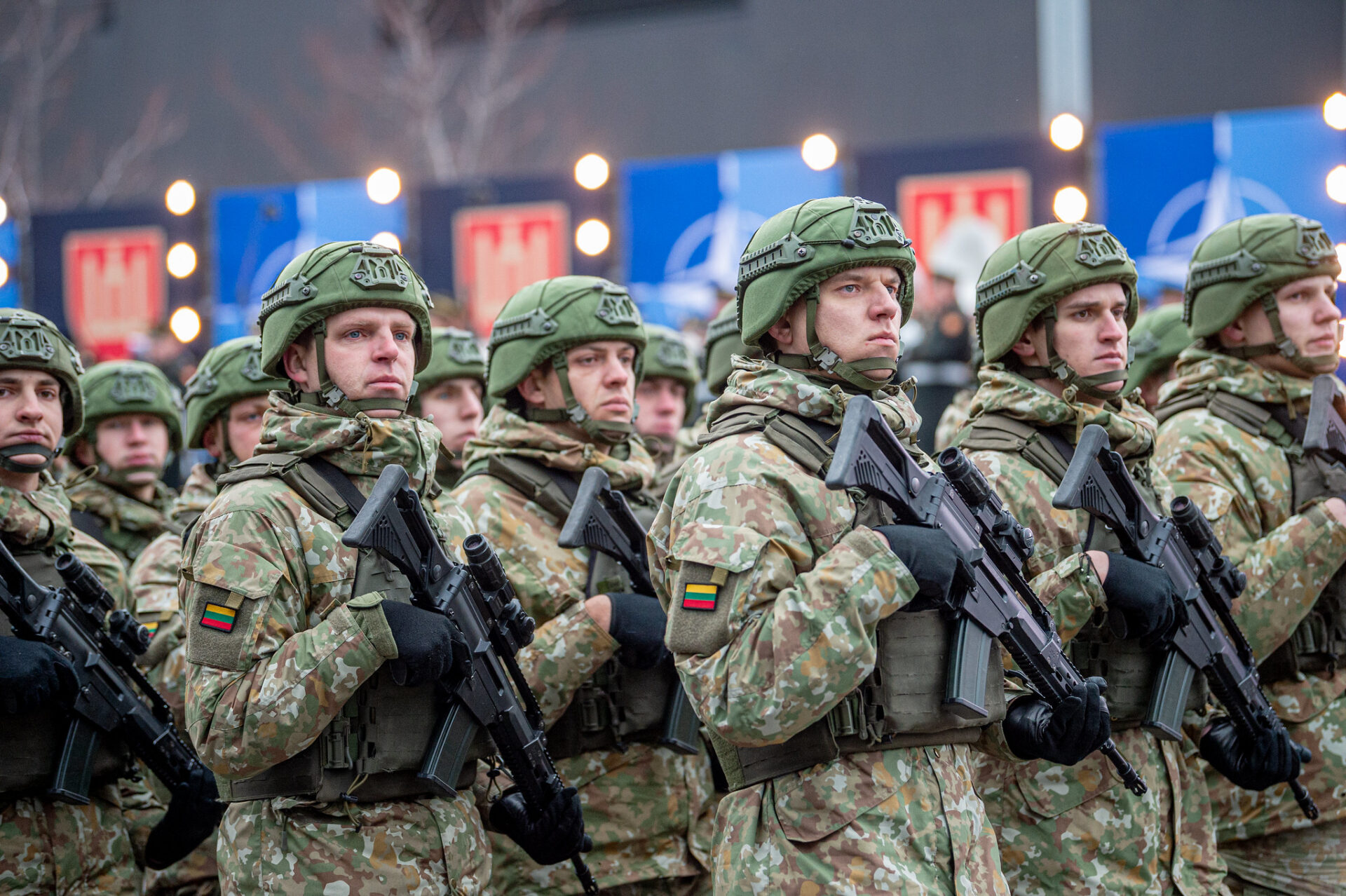
- European responses are likely to prioritise integrated national defence and critical infrastructure resilience rather than immediate offensive retaliation. Lithuania's emphasis on linking government, business, infrastructure and civil society, together with Norway's expansion of the Finnmark Brigade to include artillery, air defence and communications elements, points towards defensive adaptation. The judgement is based on policy statements and analytic commentary, with limited evidence of implementation. (Confidence: medium · ASSESSED)
- I&W: CONFIRM: Lithuania announces measures linking government, businesses, infrastructure and civil society, while Norway advances the Finnmark Brigade expansion with artillery, air defence and communications elements. (1-3 months)
- I&W: BREAK: European governments announce direct military retaliation linked to the reported incidents without first announcing additional resilience or defensive measures. (1-3 months)
Outlook & scenarios
Persistent deniable pressure (55%)
Russia sustains below-threshold activity in the Baltic region while ambiguous drone incidents recur around Romanian and German infrastructure. European governments respond through stronger monitoring, local air defence and integrated resilience. This is the most likely path because the supplied reporting already describes sustained Russian pressure in Lithuania, increasingly kinetic activity across the Baltic region, and recent incidents at Neptun Deep and Leipzig Airport.
Contained coercion and defensive adaptation (28%)
The Kremlin continues public warnings against Britain and other European supporters of Ukraine, but no further Russian-linked incident produces casualties or infrastructure damage. Lithuania, Norway and other European states strengthen defensive coordination, limiting the political effect of Russian signalling.
Limited NATO test (12%)
The reported US intelligence warning proves accurate and Russia initiates a limited armed incident against NATO personnel or infrastructure in a Baltic state or Poland. NATO's existing tripwire presence creates a rapid alliance decision point, even if Moscow seeks to keep the action geographically and politically limited.
Critical infrastructure miscalculation (5%)
A Russian-linked drone incident at Neptun Deep or Leipzig Airport causes casualties or material damage. The event triggers competing attribution claims, pressure for a collective response and a sharp increase in the risk of an uncontrolled NATO-Russia confrontation.
Recommendations
- Within 0-14 days, create a single incident file for Neptun Deep that reconciles the one-drone and two-drone accounts, records the roles of the Romanian Coast Guard, Romanian Air Force and military divers, and separates confirmed facts from suspected Russian attribution.
- Run a two-track attribution assessment for the Neptun Deep and Leipzig Airport incidents. Maintain separate confidence scores for the physical occurrence, Russian linkage and assessment of intent.
- Place Lithuania, the wider Baltic region, Poland, Neptun Deep and Leipzig Airport on a priority watchlist for the next 1-3 months. Record new cyber incidents, GPS disruption, sabotage, drone activity and official attribution separately rather than merging them into a single trend line.
- Track Kremlin statements for a shift from general warnings against Britain to specific threats against London, British assets or NATO personnel. Compare new rhetoric with any incident involving British-made systems used by Ukraine.
- Treat the reported limited attack warning as a low-confidence, high-impact collection requirement. Seek independent corroboration from NATO and a second US intelligence assessment before raising the likelihood estimate.
- Use the Lithuanian integrated-defence model and Norway's Finnmark Brigade expansion as reference points when assessing whether European responses are moving from public concern towards implementable resilience and defence measures.
Confidence & uncertainty
Overall confidence is medium. Multiple high-confidence claims from major media and think tank sources support the Romanian response, the Kremlin warning to Britain and the reported European security concerns. The broader hybrid campaign assessment relies heavily on think tank analysis, while the warning of a possible limited Russian attack on a NATO member is a single, medium-confidence assessment without independent corroboration in the supplied material. Conflicting accounts over one versus two drones, together with differing dates and locations in some older reporting, limit precision.
Cited sources
[1] maritime-executive.com · Romanian Forces Destroy Russian Drone Near Black Sea Gas Project (B) · sha256:42e80ea311f8 [2] Atlantic Council · As pressure mounts on Putin, Russia is escalating against Ukraine’s allies (C) · sha256:5813f6f4dc20 [3] Jamestown · Lessons Learned From Russia’s War Against Ukraine: The Case of Lithuania - Jamestown (C) · sha256:06fa68401acf [4] Wikipedia · Russia–NATO relations (F) · sha256:5cd2a502c4c6 [5] gcaptain.com · Norway Boosts Defense Footprint with Expansion of Arctic Brigade (A) · sha256:003d7e6f16cc [6] Atlantic Council · What shrinking US missile stocks means for allies and adversaries around the world (C) · sha256:328270ac68a6
Source content hashes were computed at collection time; the cited text is preserved unmodified for the life of this product.
Red cell review: CONCUR WITH COMMENT
TLP:CLEAR