TLP:CLEAR · Disclosure is not limited.
Europe: Russian Hybrid Threats and the Romanian Black Sea Incident
Time window: Last 1 day · Audience: General analyst · Type: Situation report · DTG: 2026-08-20 16:24Z · Overall confidence: LOW
BLUF
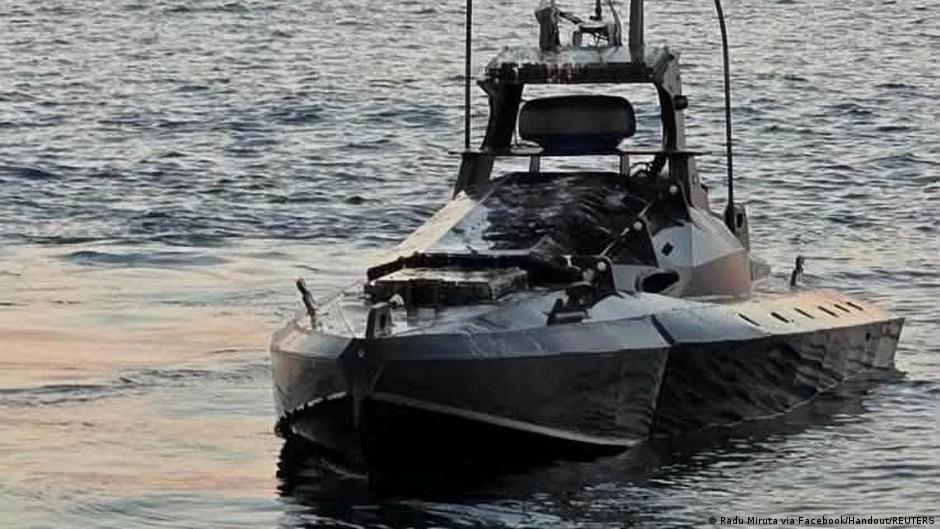
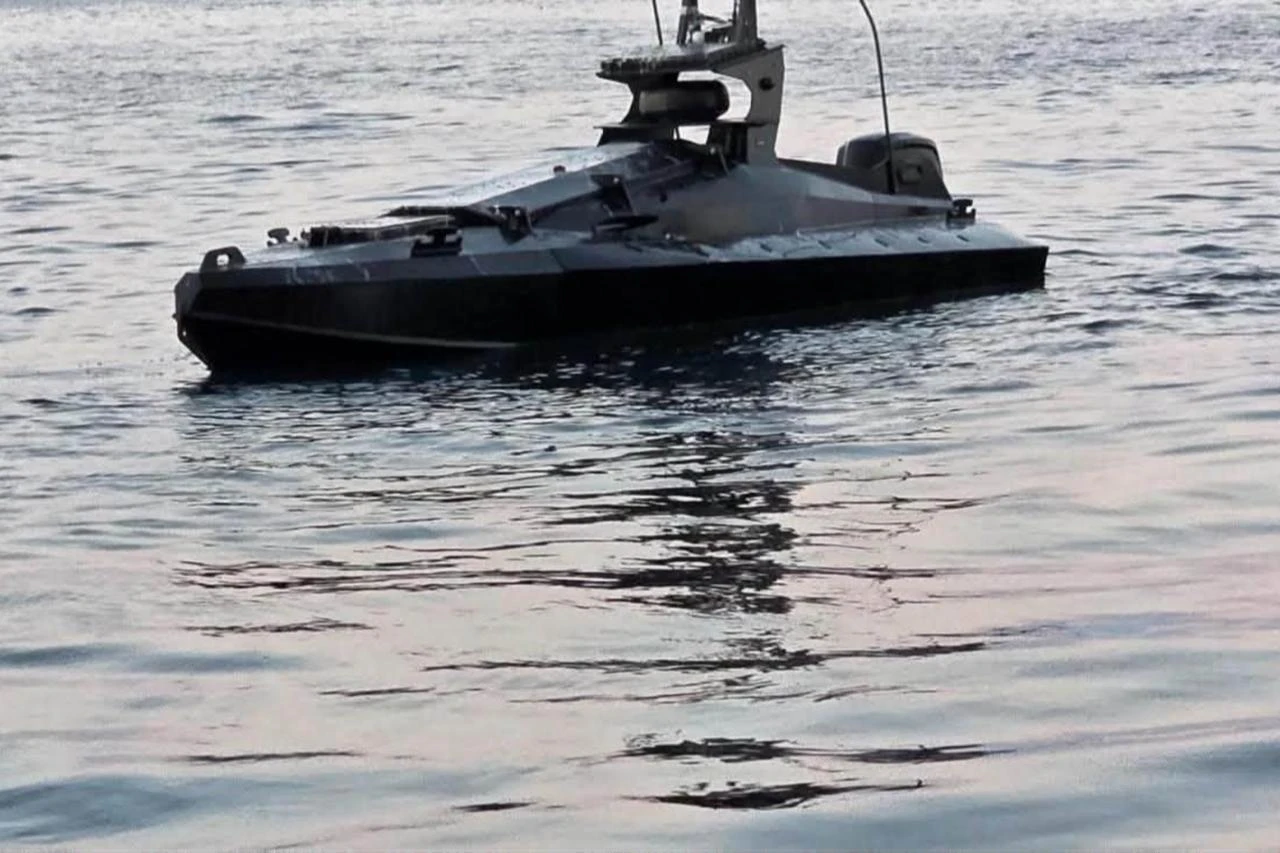
The reported destruction of a marine drone near Romania's Neptun Deep gas project on 20 August 2026 is the most decision-relevant development in this reporting window. Romanian attribution to Moscow, Ukraine's denial of ownership, and conflicting reporting on the incident's date and method leave the immediate threat assessment unsettled. Broader Russia-linked hybrid pressure in Europe remains likely, while uneven US and European defence signals complicate deterrence.
Executive summary
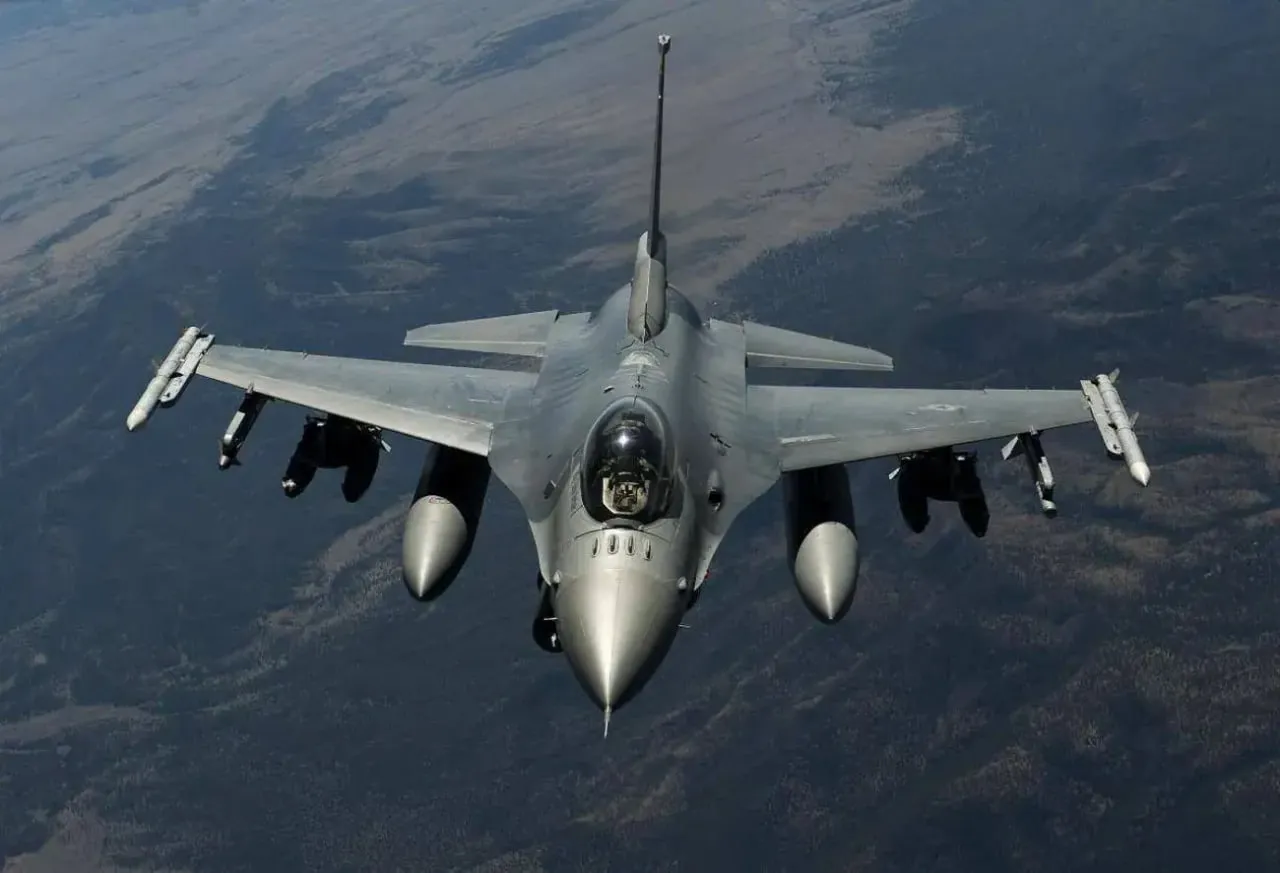
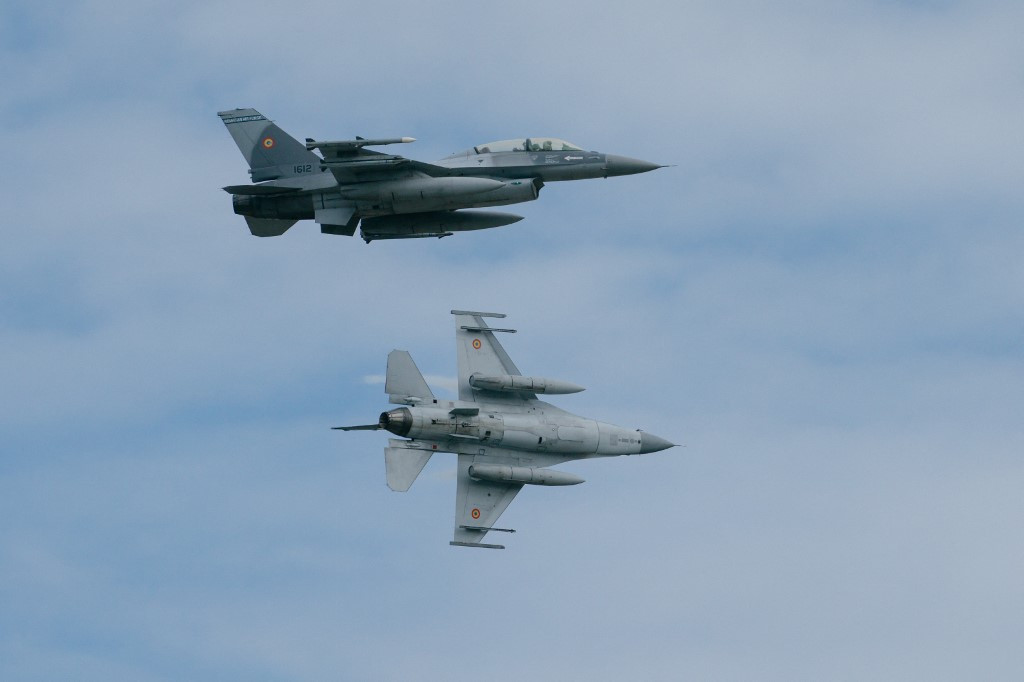
Romania reported that F-16 fighter jets destroyed a marine drone near the Neptun Deep gas project after a commercial vessel detected it at 06:28 local time. Romanian officials said the drone carried explosives, and Romania blamed Moscow, while Ukraine said it was not Ukrainian. The incident is potentially linked to the wider Russia-linked hybrid campaign reported across Europe, but the evidence is internally inconsistent: other claims date a similar Neptun Deep incident to 20 August 2023 and attribute earlier drone destruction to Romanian army divers. Reporting also points to continuing Russian pressure on Latvia and the Baltic states through cyber, information and GPS-disruption activity. European defence efforts are expanding amid reporting of US resource redirection and reduced military support for Europe.
Change from previous assessment
Since the 19 August 2026 brief, this assessment adds the reported Romanian F-16 engagement near the Neptun Deep gas project on 20 August and lowers the confidence in incident-level attribution because of conflicting dates and destruction methods. The prior high-confidence judgement on continuing Russia-linked sabotage is lowered to medium confidence. The assessment that pressure on Latvia and the Baltic states will persist remains likely at medium confidence. A new low-confidence judgement on unresolved attribution of the Romanian incident is added. The earlier forecast of rapid Russian retaliation to UK-supplied drones is retired because the current reporting does not provide a confirmed retaliatory act.
Key judgments
- Russia-linked hybrid activity in Europe is very likely continuing, with the reported Romanian marine-drone incident near the Neptun Deep gas project adding pressure on a major Romanian energy development to reported sabotage, cyberattacks and political interference. American and European officials accuse Russia of these activities, and Russian intelligence agencies are reported to have adapted their attack methods. Confidence is medium because broader attribution relies heavily on official and media reporting, while the Romanian incident has conflicting dates and accounts of whether an F-16 or army divers destroyed the drone. (Confidence: medium · ASSESSED)
- I&W: Confirm: within 0-14 days, the Romanian Ministry of Defence or the Constanta Prosecutor's Office publishes forensic findings linking the drone's design, explosives, control system or launch pathway to Russia. (0-14 days)
- I&W: Break: Romanian investigators identify a non-Russian origin or conclude that the incident occurred on an earlier date than 20 August 2026. (0-14 days)
- Russian pressure on Latvia and the Baltic states is likely to persist over the next 1-3 months through GPS jamming and spoofing, cyber incidents, attacks on critical infrastructure and information operations. Reporting also identifies Russian actions in international organisations as part of hybrid pressure and describes Belarus as a rear-operating base for Russia's military strategy. Confidence is medium because the forecast of intensifying pressure comes chiefly from Sigita Struberga's interview, while the Belarus assessment relies partly on think-tank reporting. (Confidence: medium · ASSESSED)
- I&W: Confirm: within 0-14 days, maritime or aviation authorities report a new GPS jamming or spoofing episode in the Baltic Sea region, or Latvia reports a new cyber or critical-infrastructure incident. (0-14 days)
- I&W: Break: over 1-3 months, Latvia reports no new Russia-linked incidents and there is no new observable Russian pressure campaign directed at the Baltic states through international organisations. (1-3 months)
- European defence efforts are likely to expand while US support for Europe is likely to remain uneven, creating an uneven deterrence posture over the next 6-12 months. Ursula von der Leyen has called for stronger EU defence efforts, while reporting says the US intends to redirect resources from Europe and has reduced capabilities available to assist European countries. Confidence is medium because the European policy direction is directly reported, but the US reporting is supported by medium and low-confidence material that does not establish the scale or timing of further reductions. (Confidence: medium · ASSESSED)
- I&W: Confirm: within 1-3 months, EU institutions or European governments announce new defence, counter-hybrid or missile-defence measures while the US announces another reduction in forces or capabilities assigned to Europe. (1-3 months)
- I&W: Break: within 1-3 months, the US announces the retention or reinforcement of key European capabilities and European governments report no new defence measures beyond existing commitments. (1-3 months)
- Attribution of the reported 20 August 2026 Neptun Deep incident is unlikely to be resolved quickly, and this dispute will likely complicate a unified European response. The reported facts are that F-16 fighter jets responded after a commercial vessel spotted the drone at 06:28 local time, Romanian officials said it carried explosives, Romania blamed Moscow, and Ukraine said it was not Ukrainian. Other supplied claims date a similar incident to 20 August 2023 and attribute earlier drone destruction near Neptun Deep to Romanian army divers. Confidence is low because the reporting is internally inconsistent and relies largely on official statements repeated by major media. (Confidence: low · ASSESSED)
- I&W: Confirm: within 0-14 days, the Constanta Prosecutor's Office or the Romanian Ministry of Defence releases a consistent account of the incident's date, number of drones, destruction method and origin. (0-14 days)
- I&W: Break: Romanian authorities formally revise the incident date or attribute the drone to Ukraine, another non-Russian actor or an undetermined source. (0-14 days)
Outlook & scenarios
Contained Romanian incident (50%)
The most likely outcome over the next 14 days is containment. Romanian authorities complete the inspection and investigation, no further confirmed drone incident occurs near Neptun Deep, and EU responses remain political while attribution stays disputed.
Persistent Russia-linked pressure (30%)
Russia-linked activity likely produces another incident affecting Romania, Latvia or the wider European information and cyber environment within 1-3 months. European governments respond with additional protective measures and stronger counter-hybrid coordination, without a direct military response.
Uneven European deterrence (15%)
European states increase defence and resilience measures while US resource redirection continues. National responses become more prominent, and gaps in available capabilities complicate a common response to ambiguous incidents over 6-12 months.
High-impact escalation (5%)
Very unlikely but high impact: a further drone or sabotage incident causes casualties or interrupts a European energy or transport node, forcing governments to adopt a formal collective response despite unresolved attribution.
Recommendations
- For the next 14 days, prioritise Romanian Ministry of Defence, Constanta Prosecutor's Office and Romanian Navy updates on the drone's recovery, explosive-ordnance inspection and technical origin.
- Reconcile the 20 August 2026 and 20 August 2023 dates, and the conflicting F-16 and army-diver accounts, before treating the Neptun Deep incident as evidence of a confirmed Russian operation.
- Maintain a watchlist for GPS jamming and spoofing in the Baltic Sea region, cyber incidents affecting Latvian critical infrastructure, and new Russian information or diplomatic pressure against the Baltic states.
- Separate confirmed actions from government attribution in all reporting on the Romanian incident. Use the Romanian and Ukrainian positions as competing claims until forensic evidence is released.
- Track EU defence announcements alongside US force-posture statements. Assess whether European measures compensate for any reduction in US capabilities available to assist European countries.
- Prepare a short cross-European incident matrix covering Romania, Latvia, Germany and other reported target states, recording date, location, affected infrastructure, actor attribution, source reliability and unresolved contradictions.
Confidence & uncertainty
Overall confidence is low because the occurrence of the Romanian response is supported by several major-media reports, but the record contains high-confidence reports dated 20 August 2026 alongside claims dating a similar Neptun Deep incident to 20 August 2023. The accounts also differ on whether an F-16 or Romanian army divers destroyed the drone. Broader Russian attribution and forward-looking assessments rely partly on official statements, one expert interview, think-tank reporting and some low-confidence material. The scale and timing of any further Russian activity and US force reductions remain uncertain.
Intelligence gaps
- [EEI 1.1 · PARTIAL] Reports, operator notifications, CCTV or satellite imagery showing unexplained physical damage or operational outages at critical infrastructure sites (power substations, gas pipelines/compressor stations, water treatment plants, railway signaling centers, major telecom exchanges). Recommended collection: satellite/imagery
- [EEI 1.2 · PARTIAL] Observed reconnaissance activity around critical sites indicative of attack planning (unauthorised drone flights, repeated surveillance visits, loitering vehicles, mapping/photography of assets). Recommended collection: open-source/media
- [EEI 1.3 · UNCOVERED] Law-enforcement or customs seizures, arrests or interdictions of persons or shipments carrying explosives, sabotage tools, specialty cutting/electrical equipment, or covert comms gear destined for/near critical infrastructure. Recommended collection: law enforcement
- [EEI 2.1 · UNCOVERED] Emergence or amplification of coordinated social-media networks (sets of accounts, pages, channels) pushing identical narratives or hashtags across multiple platforms, including bot-like activity metrics and origin IP/common management indicators. Recommended collection: social-media/OSINT
- [EEI 2.2 · UNCOVERED] Publication or internal guidance from state-run media, proxy outlets, or identified influence platforms distributing talking points, pre-scripted messaging, or translated content targeted at specific EU countries/communities. Recommended collection: open-source/media
- [EEI 2.3 · UNCOVERED] Distribution of manipulated multimedia (deepfakes), targeted phishing/whaling campaigns, or localized false narratives timed to political events (elections, protests, court rulings) with tracked reach and engagement metrics. Recommended collection: cyber/forensic
- [EEI 3.1 · UNCOVERED] Unusual financial transactions: wire transfers, crypto conversions, or payments to shell companies, NGOs or individuals exceeding typical baselines that link to known proxies or front organisations. Recommended collection: financial
- [EEI 3.2 · UNCOVERED] Travel and movement indicators for suspected operatives: repeated border crossings, chartered/irregular flights, booking patterns or mobile/location data placing identified individuals in staging areas shortly before incidents. Recommended collection: border/immigration
- [EEI 3.3 · UNCOVERED] Cargo, freight or maritime movements with discrepancies (concealed/dual-use equipment, false manifests, unusual routing) detected at ports, rail hubs or via AIS that correspond to deliveries of material used in sabotage or influence operations. Recommended collection: customs/ports
- [EEI 3.4 · UNCOVERED] Intercepted or otherwise-obtained communications showing tasking, coordination, or payment instructions between Russian agencies/handlers and proxy groups, including identified command-and-control servers or encrypted group identifiers. Recommended collection: signals-intel/SIGINT
Cited sources
[1] informat.ro · Russian hybrid threats are increasing in Europe, including in Romania (B) · sha256:92949a5910dc [2] Tempo · Romania Destroys Drone Near Gas Project, Blames Russia (B) · sha256:97891d9af4a7 [3] Türkiye Today · Romania destroys explosive-laden naval drone near Neptun Deep gas project - Türkiye Today (B) · sha256:b856dd7bbae9 [4] Kyiv Post · Romanian F-16 Destroys Marine Bomber Drone Near Black Sea Gas Project, Bucharest Condemns Russian Escalation (A) · sha256:c055b84676a2 [5] ua.news · Romanian F-16s shot down a maritime drone in the Black Sea (B) · sha256:655b3a8023e7 [6] dw.com · Romania destroys drone near gas project, blames Russia (A) · sha256:f10a62f51b63 [7] foreignpolicy.com · Gray-Zone Warfare Picks Easy Targets in Germany (A) · sha256:522434fcb3bd [8] rus.jauns.lv · "Давление России будет только расти": Латвии посоветовали готовиться к новым инцидентам (B) · sha256:b5e622655fb1 [9] European Council on Foreign Relations · In the bear’s paw: How Europeans can loosen Russia’s grip on Belarus – European Council on Foreign Relations (C) · sha256:635fc65ba33f [10] bgnes.com · Von der Leyen: Russia is waging hybrid warfare against the EU (B) · sha256:704579676eff [11] Euronews · Как концепция «НАТО 3.0» изменит оборону в Европе? (B) · sha256:22d6261d3989
Source content hashes were computed at collection time; the cited text is preserved unmodified for the life of this product.
TLP:CLEAR