TLP:CLEAR · Disclosure is not limited.
Europe: Russian-linked hybrid pressure broadens
Time window: Last 1 day · Audience: General analyst · Type: Situation report · DTG: 2026-09-13 00:36Z · Overall confidence: HIGH
BLUF
Russian-linked hybrid activity in Europe is likely to persist and broaden over the next 1 to 3 months, with Germany and European defence, logistics and critical infrastructure as the main pressure points. The Leipzig/Halle Airport case now includes named suspects and reported forensic evidence, but the incident chronology and Russian attribution remain contested.
Executive summary
The threat picture has widened beyond the Leipzig/Halle Airport operation. Germany has closed Russian diplomatic and cultural facilities, tightened entry restrictions and announced tougher measures against Russia's shadow fleet, while Russia has announced reciprocal closures. Reporting also identifies a foiled arson attempt against a Ukrainian drone manufacturer in Slovakia, a fire investigation at an Estonian defence supplier, Danish intelligence warnings about Russian targeting of defence companies, reported Polish railway sabotage and an AI-enabled cyberespionage campaign against Ukrainian government and defence organisations. Russian-linked disinformation has targeted German regional elections. The risk of an open Russia-NATO clash remains low, but conflicting Russian messaging and reported incidents near Romanian and Polish territory raise the risk of miscalculation.
Change from previous assessment
Since the 12 September prior brief, the assessment has become more granular rather than fundamentally changing. New reporting names Oleg L. and Andrei K. in the Leipzig/Halle case, adds DNA and explosive evidence, documents reciprocal German-Russian facility closures, and introduces the GTG-20006 cyberespionage case, Danish warnings about defence companies, the Slovak arson case and German election-disinformation reporting. The Leipzig attribution remains a medium-confidence judgement because of date, device-sequence and denial discrepancies. A low-confidence judgement on AI-enabled cyberespionage has been added. The prior kinetic-clash judgement remains low confidence, while the broad assessment of persistent Russian-linked hybrid activity remains unchanged.
Key judgments
- Russian-linked hybrid activity in Europe is likely to persist and broaden over the next 1 to 3 months, with Germany, Slovakia, Estonia, Denmark, Poland and Latvia as the clearest pressure points. The reported pattern includes the explosives-laden drone operation at Leipzig/Halle Airport, a foiled arson plot against a Ukrainian drone manufacturer in Slovakia, an Estonian fire investigation, Danish intelligence warnings about Russian targeting of defence companies, reported railway sabotage in Poland, and Latvian reporting on cyberattacks, espionage and drone incursions. This is an assessed regional pattern, not proof that Russia directed every incident; attribution remains incomplete for the Estonian fire and some Polish reporting. (Confidence: medium · ASSESSED)
- I&W: German, Slovak, Estonian, Danish, Polish or Latvian authorities publicly attribute a new sabotage, arson, cyber or drone incident to Russian state actors or proxies. (0-30 days)
- I&W: No new incident or official warning involving those countries is recorded, or an existing Russian attribution is withdrawn. (0-30 days)
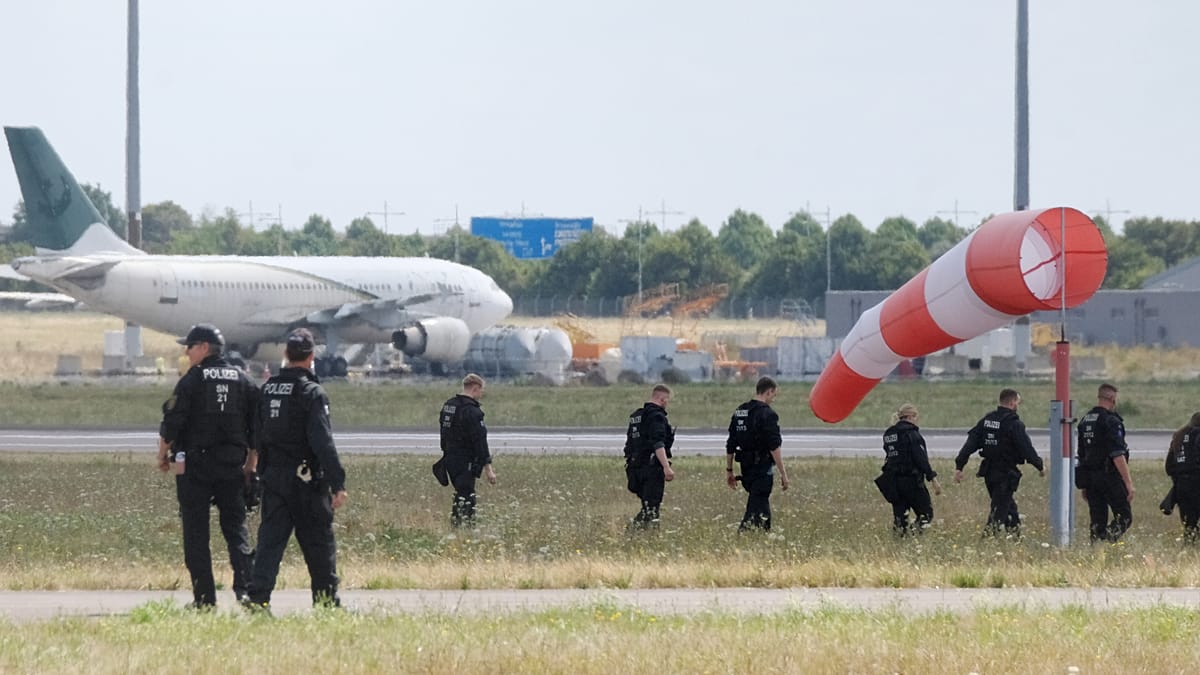
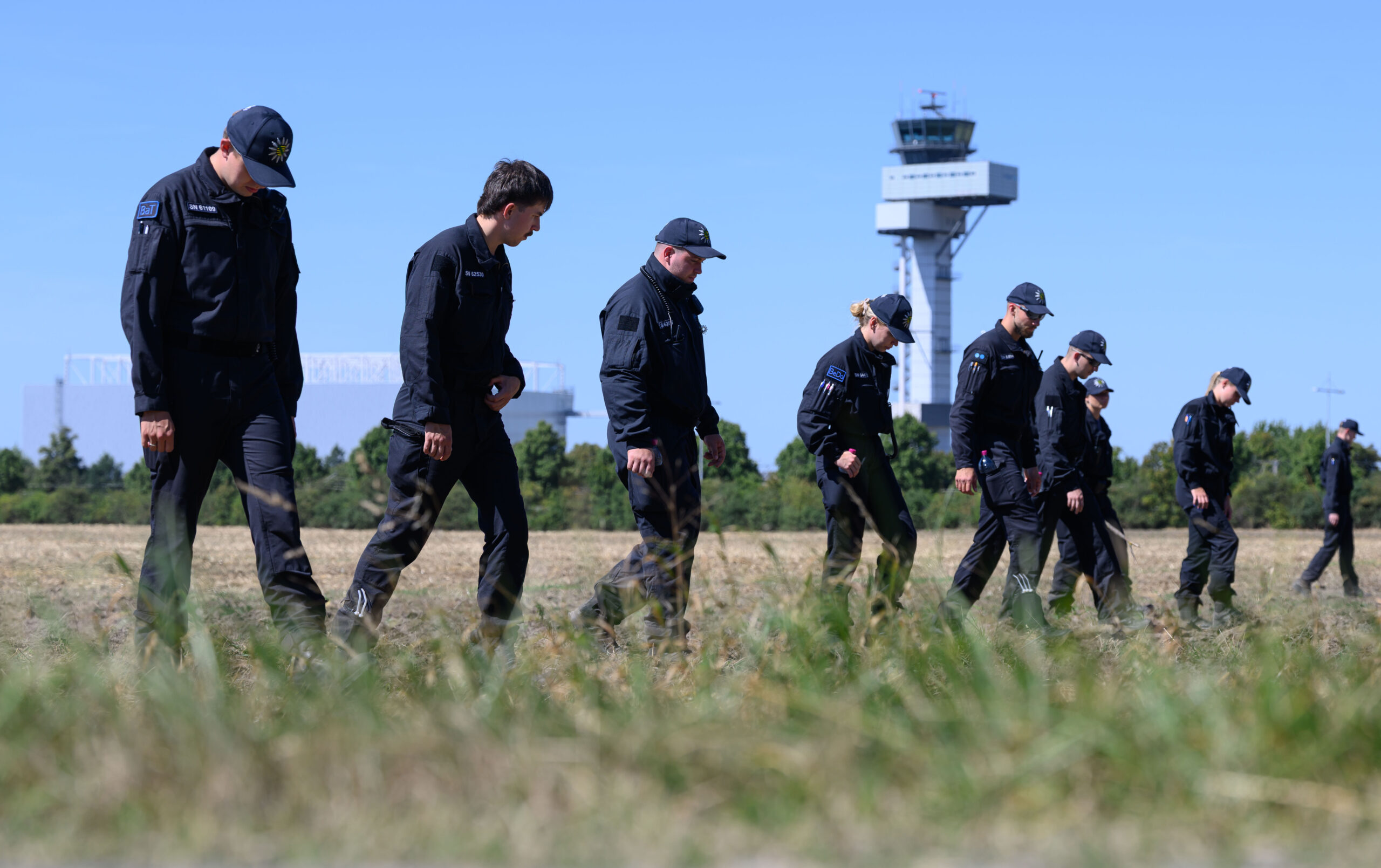
- The German government is likely to sustain a hard response to the Leipzig/Halle Airport operation, while the Russian attribution remains contested at the tactical level. Berlin has ordered the closure of the Russian Consulate General in Bonn and the Russian House in Berlin, summoned the Russian ambassador, tightened entry restrictions and announced tougher measures against Russia's shadow fleet. Russia has responded by closing the German consulate general in Saint Petersburg and announcing the closure of Goethe Institutes in Russia. German investigators identified Russian citizen Oleg L. and Belarusian citizen Andrei K. as suspects, reported a DNA match involving Andrei K., and reported the recovery of another drone and about 50 grams of Semtex. The incident is reported as occurring on 4 August 2026 in one account and 1 August 2026 in another, while Moscow denies responsibility. (Confidence: medium · ASSESSED)
- I&W: German prosecutors or courts release additional forensic evidence or formal charges linking Oleg L. or Andrei K. to the Leipzig/Halle operation. (0-30 days)
- I&W: German investigators correct the reported attack date, disavow the DNA or explosive evidence, or withdraw the Russian attribution. (0-30 days)
- European defence and logistics infrastructure is likely to face repeated Russian-linked collection or sabotage attempts over the next 1 to 3 months. The clearest named targets are a Ukrainian drone manufacturer in Slovakia, defence-industry premises in Estonia, German DHL operations and power substations, Danish defence companies, Polish railway lines and a Polish weapons factory supplying Ukraine. Confidence is medium because the Slovak account conflicts on attribution, the Estonian and Polish fires remain under investigation or are described as likely Russian involvement, and the German DHL reporting is less reliable than the official German attribution of the Leipzig operation. (Confidence: medium · ASSESSED)
- I&W: A European government reports an attempted or completed attack against a named defence manufacturer, logistics hub, railway, energy facility or telecommunications provider and identifies Russian state actors or proxies. (0-90 days)
- I&W: Investigators formally attribute the Slovak, Estonian or Polish incidents to a non-Russian cause and report no additional attacks against comparable infrastructure. (0-90 days)
- Russian state-linked cyberespionage against Ukrainian and European defence networks is likely to recur, but confidence is low because the current detailed case rests chiefly on Anthropic's single threat-intelligence report. Anthropic tracked GTG-20006, whose attribution it assessed as consistent with Midnight Blizzard, targeting more than 20 organisations, scanning systems at more than two dozen Ukrainian government organisations, extracting mailboxes from at least two drone component manufacturers, targeting a military drone producer, stealing drone-vision software, targeting WhatsApp accounts of at least two former Ukrainian officials and compromising at least three hotel Wi-Fi providers. AI agents were reportedly used to evade malware detection. This supports a capability concern, not proof of a broader European campaign. (Confidence: low · ASSESSED)
- I&W: A second cyber-security company, a victim organisation or a European government independently confirms intrusion into a named defence, government or hotel Wi-Fi network linked to GTG-20006 or Midnight Blizzard. (0-60 days)
- I&W: No independent victim or technical confirmation emerges, or Anthropic revises its attribution of GTG-20006. (0-60 days)
- Russian-linked disinformation is likely to continue affecting Germany's information environment, but it is unlikely that current evidence will establish that it determined electoral outcomes. German security authorities recorded fabricated allegations and manipulated news-like material targeting regional elections during the summer. The AfD won the Saxony-Anhalt election, with polls citing fear of war in Europe as a decisive factor. The available reporting does not establish that Russian-linked material caused the result, so both attribution and electoral effect remain unresolved. (Confidence: low · ASSESSED)
- I&W: German authorities identify a new Russian-linked campaign, publish examples of fabricated material and document its distribution to voters or media outlets. (0-90 days)
- I&W: Independent election analysis finds no Russian-linked material in the affected campaign or German authorities withdraw the attribution. (0-90 days)
- An open Russia-NATO kinetic clash in Europe is unlikely over the next 1 to 3 months, but the risk of miscalculation is likely to rise. Reports of Vladimir Putin's remarks in New Delhi conflict between a warning that European troops in Ukraine would mean war with Russia and an assertion that Moscow does not threaten European countries. Sergei Lavrov described German accusations as the beginning of a real war, while Dmitry Medvedev threatened strikes against German military manufacturing facilities. A Russian cruise missile reportedly struck Polish farmland in late July, and reporting conflicts over whether a Russian-made drone entered Romanian airspace or only skirted it. Confidence is low because the Russian statements are contradictory and several border-incident reports rely on contested or lower-reliability reporting. (Confidence: low · ASSESSED)
- I&W: A Russian missile or drone impacts Polish, Romanian or other NATO territory, or NATO publicly confirms an interception and attributes the incident to Russia. (0-30 days)
- I&W: Putin or Dmitry Peskov publicly withdraws or qualifies the warning about European troops, while Romania and Poland report no new airspace or territorial incident. (0-30 days)
Outlook & scenarios
Persistent below-threshold campaign (60%)
Very likely over the next 1 to 3 months. Russian-linked actors continue cyberespionage, disinformation, intelligence collection and attempted sabotage against German, Slovak, Estonian, Danish, Polish and Latvian targets. European governments increase protective measures without entering a direct kinetic confrontation with Russia.
European hardening and reciprocal diplomatic escalation (35%)
Likely over the next 1 to 3 months. Germany expands restrictions on Russian nationals, diplomatic facilities and the shadow fleet, while other European governments strengthen protection for defence production, logistics and energy infrastructure. Russia responds with additional diplomatic closures, threats and information operations.
Contained cross-border kinetic incident (12%)
Unlikely but high impact. A Russian missile or drone impacts NATO territory or is intercepted after entering allied airspace, prompting emergency consultations and military protection measures. The incident remains contained and does not develop into sustained Russia-NATO hostilities.
Recommendations
- Prioritise verification of the Leipzig/Halle case within 14 days. Reconcile the 1 August and 4 August dates, determine whether the device was launched or discovered before launch, and seek independent confirmation of the DNA, Semtex and suspect-identification claims.
- Maintain a named-country watchlist for Germany, Slovakia, Estonia, Denmark, Poland, Latvia, Moldova and Romania. Record each new incident by target, method, suspected actor, official attribution and evidence level rather than treating all incidents as part of one campaign.
- Treat the GTG-20006 reporting as a low-confidence capability warning until an affected organisation, a second cyber-security provider or a European government independently confirms the activity. Prioritise collection on drone manufacturers, Ukrainian government networks, hotel Wi-Fi providers and WhatsApp accounts used by senior officials.
- Separate information-operation activity from electoral impact in reporting on Germany. Track fabricated allegations, impersonated news material, distribution volume and audience reach, but do not attribute the Saxony-Anhalt result to Russian activity without independent causal evidence.
- Monitor Russian statements by Vladimir Putin, Dmitry Peskov, Sergei Lavrov and Dmitry Medvedev alongside operational indicators such as missile or drone impacts, airspace incursions and NATO interceptions. Give greater weight to confirmed physical activity than to conflicting public warnings.
- Assess the protection of European defence and logistics sites against the specific methods already reported: incendiary devices, explosive drones, railway sabotage, power-substation attacks, hostile network access and hotel Wi-Fi compromise.
Confidence & uncertainty
Overall confidence is high for the core event picture because major-media reporting, official German statements, German investigative reporting, multilateral reporting and specialist threat intelligence corroborate the principal developments. Confidence is lower for the exact Leipzig/Halle chronology, the weapon and device sequence, Russian attribution for the Slovak, Estonian and Polish incidents, the wider reach of the GTG-20006 campaign and any effect of disinformation on election results. These uncertainties affect the scope and attribution of the threat, not the reported occurrence of the main incidents and government responses.
Intelligence gaps
- [EEI 1.2 · UNCOVERED] Observed reconnaissance activity around critical sites indicative of attack planning (unauthorised drone flights, repeated surveillance visits, loitering vehicles, mapping/photography of assets). Recommended collection: open-source/media
- [EEI 2.1 · UNCOVERED] Emergence or amplification of coordinated social-media networks (sets of accounts, pages, channels) pushing identical narratives or hashtags across multiple platforms, including bot-like activity metrics and origin IP/common management indicators. Recommended collection: social-media/OSINT
- [EEI 2.2 · PARTIAL] Publication or internal guidance from state-run media, proxy outlets, or identified influence platforms distributing talking points, pre-scripted messaging, or translated content targeted at specific EU countries/communities. Recommended collection: open-source/media
- [EEI 2.3 · UNCOVERED] Distribution of manipulated multimedia (deepfakes), targeted phishing/whaling campaigns, or localized false narratives timed to political events (elections, protests, court rulings) with tracked reach and engagement metrics. Recommended collection: cyber/forensic
- [EEI 3.1 · UNCOVERED] Unusual financial transactions: wire transfers, crypto conversions, or payments to shell companies, NGOs or individuals exceeding typical baselines that link to known proxies or front organisations. Recommended collection: financial
- [EEI 3.2 · UNCOVERED] Travel and movement indicators for suspected operatives: repeated border crossings, chartered/irregular flights, booking patterns or mobile/location data placing identified individuals in staging areas shortly before incidents. Recommended collection: border/immigration
- [EEI 3.3 · PARTIAL] Cargo, freight or maritime movements with discrepancies (concealed/dual-use equipment, false manifests, unusual routing) detected at ports, rail hubs or via AIS that correspond to deliveries of material used in sabotage or influence operations. Recommended collection: customs/ports
- [EEI 3.4 · UNCOVERED] Intercepted or otherwise-obtained communications showing tasking, coordination, or payment instructions between Russian agencies/handlers and proxy groups, including identified command-and-control servers or encrypted group identifiers. Recommended collection: signals-intel/SIGINT
TLP:CLEAR