TLP:CLEAR · Disclosure is not limited.
Europe: Russian-Linked Hybrid Pressure Broadens
Time window: Last 1 day · Audience: General analyst · Type: Situation report · DTG: 2026-08-28 18:40Z · Overall confidence: MEDIUM
BLUF
Russian-linked hybrid activity affecting Europe is very likely continuing and increasingly targets defence, industrial and logistics infrastructure, although the supplied reporting does not establish a single Kremlin-directed campaign. A direct Russian invasion of Latvia is unlikely in the next three months, while further sabotage attempts, coercive threats and defensive hardening remain the principal near-term concerns.
Executive summary
The latest reporting indicates a sustained Russian-linked threat picture across Europe. Cases involving the Skyeton plant in Haniska, Slovakia, planned attacks on German infrastructure and suspected recruitment of European criminal networks point to a physical sabotage risk, but attribution remains uneven. The reporting on drones and explosives at Leipzig Airport contains conflicting dates, and several other incidents remain unresolved. Latvian officials continue to assess the risk of a direct Russian attack as low while preparing for hybrid provocations. Russia has also issued threats against British military targets, reinforcing the need to distinguish coercive signalling from preparations for a direct attack.
Change from previous assessment
Since the 27 August brief, the assessment has shifted from continuing hybrid pressure to a higher likelihood that physical sabotage against European defence and logistics infrastructure is becoming a sustained feature of the threat picture. The new material adds reporting on the Haniska Skyeton case, German prosecutions, Leipzig Airport and suspected recruitment of criminal networks. Confidence in the direct-threat assessment for Latvia remains medium because official Latvian and Estonian statements still describe the conventional risk as low, while reporting on Russia's changing perception of Latvia raises longer-term concern. The prior judgement on Russian coercive signalling towards the UK is retained, with low confidence. The previous Gdańsk GNSS assessment is not refreshed by this package because no current supplied claim addresses it. The previous insufficient assessment of a defined Russian campaign against European influencers remains unchanged, although the Colleferro example provides limited additional evidence of narrative amplification.
Key judgments
- Russian-linked hybrid activity affecting Europe is very likely continuing and is broadening towards physical sabotage of defence, industrial and logistics infrastructure, but the supplied reporting does not establish that every incident forms part of one Kremlin-directed operation. The strongest evidence includes the Slovak police case involving three foreign nationals, an incendiary mixture and a map of the Haniska Skyeton plant, German prosecutions involving planned explosions and arson, and reporting that Russia is seeking European criminal networks for sabotage. The Haniska evidence is carried through a think-tank reporting stream, while the Leipzig Airport reporting contains conflicting dates. (Confidence: medium · ASSESSED)
- I&W: Supports this judgement if Slovak or German authorities identify Russian intelligence direction, financing or handlers in the Haniska or Leipzig cases. (0-14 days)
- I&W: Breaks this judgement if German and Slovak authorities attribute the relevant cases to non-Russian causes and report no comparable attempted attacks on European defence or logistics facilities. (1-3 months)
- A direct Russian conventional attack on Latvia is unlikely in the next 0-3 months, despite reporting that Russia's perception of Latvia is becoming more similar to its pre-war view of Ukraine. Latvian President Edgars Rinkēvičs and NBS commander Kaspars Pudāns state that Latvia faces no current direct military threat, while the NBS is preparing for Russian hybrid provocations. Estonia's Ministry of Defence also rejects a direct comparison between Ukraine in late 2021 and the Baltic states now. The unresolved tension between low current threat assessments and warnings about longer-term Russian intent lowers confidence. (Confidence: medium · ASSESSED)
- I&W: Supports this judgement if Edgars Rinkēvičs, Kaspars Pudāns or Estonia's Ministry of Defence reiterates that the immediate conventional threat remains low or is not comparable to Ukraine in late 2021. (0-14 days)
- I&W: Breaks this judgement if Russian forces conduct a direct attack or sustained incursion into Latvia, Estonia or Lithuania. (0-3 months)
- Further attempted sabotage against European defence and logistics infrastructure is likely over the next 1-3 months. The reporting describes the Haniska Skyeton plot, German investigations into planned explosions and arson, suspected Russian recruitment of criminal networks and a possible attack involving drones and explosives at Leipzig Airport. Confidence is low because the Leipzig reports give different dates, and several attribution claims rely on single-source or think-tank reporting. (Confidence: low · ASSESSED)
- I&W: Confirms this judgement if Germany's Federal Prosecutor's Office or Slovak police announce charges linking Leipzig, Haniska or another named defence facility to Russian intelligence. (0-14 days)
- I&W: Breaks this judgement if German authorities resolve the Leipzig report as non-security-related and no further attempted attacks on named European defence facilities appear. (1-3 months)
- Russian coercive signalling towards the UK and NATO is very likely to continue over the next 1-3 months, while a direct Russian strike on a UK defence-related site is unlikely in that period. Russia has threatened strikes against British military targets inside Ukraine and potentially beyond Ukrainian territory, while John Ratcliffe's reported Moscow visit involved warnings against attacks on NATO allies. The reporting relies partly on sources familiar with the matter and records no executed operation, so confidence remains low. (Confidence: low · ASSESSED)
- I&W: Confirms continuing coercive signalling if Russian officials repeat threats and name a British military facility or expand the stated geographic scope. (0-14 days)
- I&W: Breaks the low direct-attack assessment if Russian forces strike a British defence-related site in Ukraine or Europe. (1-3 months)
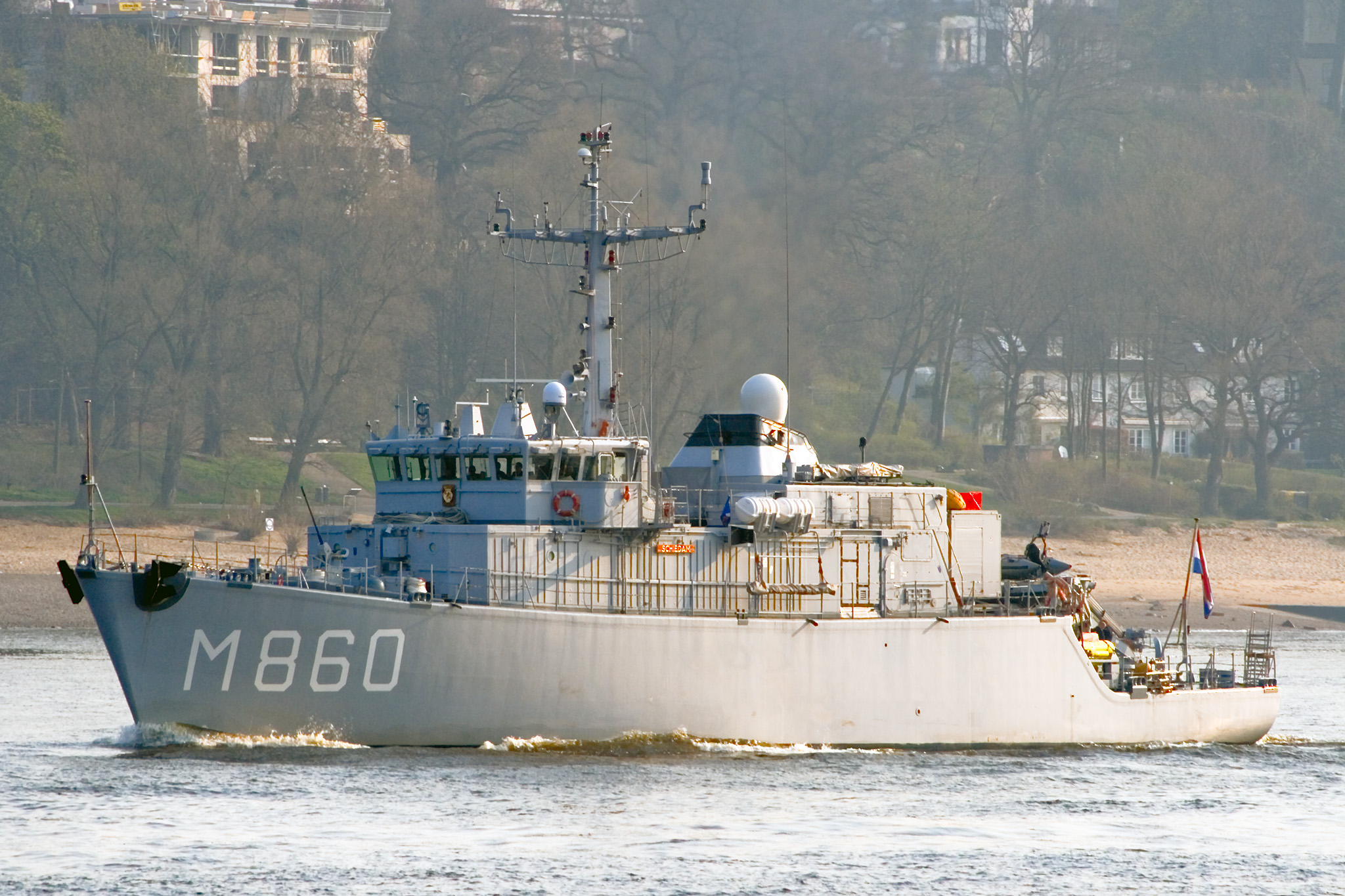
- European governments are very likely to expand defensive measures against Russian-linked hybrid threats. Latvia is preparing for hybrid provocations, Poland is expanding East Shield fortifications, Germany has opened a Technology Centre for Drone Security, and NATO members are transferring mine countermeasure vessels to Bulgaria. Germany's planned investment in long-range strike capabilities and Poland's inclusion in a US F-15EX framework also indicate broader defence adaptation. The judgement is medium confidence because some measures address wider military requirements rather than a confirmed Russian operation. (Confidence: medium · ASSESSED)
- I&W: Confirms this judgement if Poland publishes a new East Shield construction milestone, Germany expands drone-security testing, or Latvia announces additional NBS preparations. (0-3 months)
- I&W: Breaks this judgement if a European government publicly announces immediate retaliation against a named Russian actor instead of defensive or law-enforcement measures. (0-3 months)
- It is unlikely that the supplied reporting supports a confident judgement that a defined, large-scale Russian campaign is targeting European influencers. The only directly relevant example is the reported use of the Colleferro industrial explosion narrative in the Russian propaganda circuit despite Italy's Defence Ministry ruling out sabotage. This is single-case reporting and does not identify a network, platform or current campaign scale. (Confidence: insufficient · ASSESSED)
- I&W: Confirms a wider campaign if named Russian networks, platforms and European influencer accounts are documented carrying coordinated narratives about Colleferro or other incidents. (0-14 days)
- I&W: Breaks the wider campaign hypothesis if independent European reporting identifies unrelated actors and no coordinated network behind the narratives. (1-3 months)
Outlook & scenarios
Persistent, calibrated hybrid pressure (62%)
Russian-linked sabotage attempts, cyber incidents and information activity remain below the threshold of open conflict. Germany, Slovakia, Poland and the Baltic states strengthen protection for defence and logistics infrastructure. Moscow continues coercive warnings towards the UK and NATO while avoiding a direct attack on Latvia.
Expanded sabotage campaign (30%)
A further arson, explosive or drone operation targets a defence or logistics facility in Germany, Slovakia, Poland or another European state. Russian intelligence links remain contested, but arrests and public attribution raise pressure for coordinated European countermeasures.
Direct NATO-Russia incident (8%)
A Russian drone or aircraft enters Baltic or NATO airspace, or a strike hits a British defence-related site in Ukraine or Europe. The incident triggers urgent allied consultations and sharply raises the risk of escalation. This is a very unlikely but high-impact outcome.
Recommendations
- Maintain a separate incident and attribution matrix for Haniska, Leipzig Airport, German industrial infrastructure and reported recruitment of European criminal networks. Record the date, source type, physical evidence, arrests and any stated Russian intelligence link.
- Prioritise collection over the next 0-14 days on German and Slovak prosecutorial actions, including suspect identities, seized material, communications evidence and any official attribution to Russian intelligence.
- Track Latvia, Estonia and Lithuania separately from the wider hybrid threat picture. Record changes in official direct-threat assessments, airspace incidents and NBS or allied defensive preparations.
- Treat Russian threats against British military targets as coercive signalling unless they are accompanied by a named target, operational preparation or corroborated physical incident. Report any such change immediately.
- Use the three scenarios in routine updates and avoid presenting the sabotage cases as one confirmed Kremlin-directed campaign until independent investigative or prosecutorial evidence links them.
- Continue monitoring Russian propaganda narratives around ambiguous incidents, but do not assess a large-scale influencer operation without named platforms, accounts, coordination indicators and independent corroboration.
Confidence & uncertainty
Overall confidence is medium. The threat picture is supported by multiple reporting streams, including official Latvian and Slovak material, German prosecutorial reporting, major media coverage and a current assessment that Russian hybrid tactics are intensifying across the Baltic states, Poland, Romania and Bulgaria. Confidence is reduced by conflicting Leipzig dates, uneven attribution of individual incidents, reliance on single-source or think-tank reporting for several sabotage claims and limited evidence on the scale of Russian information activity.
Intelligence gaps
- [EEI 1.1 · PARTIAL] Reports, operator notifications, CCTV or satellite imagery showing unexplained physical damage or operational outages at critical infrastructure sites (power substations, gas pipelines/compressor stations, water treatment plants, railway signaling centers, major telecom exchanges). Recommended collection: satellite/imagery
- [EEI 1.2 · UNCOVERED] Observed reconnaissance activity around critical sites indicative of attack planning (unauthorised drone flights, repeated surveillance visits, loitering vehicles, mapping/photography of assets). Recommended collection: open-source/media
- [EEI 2.1 · UNCOVERED] Emergence or amplification of coordinated social-media networks (sets of accounts, pages, channels) pushing identical narratives or hashtags across multiple platforms, including bot-like activity metrics and origin IP/common management indicators. Recommended collection: social-media/OSINT
- [EEI 2.2 · PARTIAL] Publication or internal guidance from state-run media, proxy outlets, or identified influence platforms distributing talking points, pre-scripted messaging, or translated content targeted at specific EU countries/communities. Recommended collection: open-source/media
- [EEI 2.3 · UNCOVERED] Distribution of manipulated multimedia (deepfakes), targeted phishing/whaling campaigns, or localized false narratives timed to political events (elections, protests, court rulings) with tracked reach and engagement metrics. Recommended collection: cyber/forensic
- [EEI 3.1 · UNCOVERED] Unusual financial transactions: wire transfers, crypto conversions, or payments to shell companies, NGOs or individuals exceeding typical baselines that link to known proxies or front organisations. Recommended collection: financial
- [EEI 3.2 · UNCOVERED] Travel and movement indicators for suspected operatives: repeated border crossings, chartered/irregular flights, booking patterns or mobile/location data placing identified individuals in staging areas shortly before incidents. Recommended collection: border/immigration
- [EEI 3.3 · UNCOVERED] Cargo, freight or maritime movements with discrepancies (concealed/dual-use equipment, false manifests, unusual routing) detected at ports, rail hubs or via AIS that correspond to deliveries of material used in sabotage or influence operations. Recommended collection: customs/ports
- [EEI 3.4 · UNCOVERED] Intercepted or otherwise-obtained communications showing tasking, coordination, or payment instructions between Russian agencies/handlers and proxy groups, including identified command-and-control servers or encrypted group identifiers. Recommended collection: signals-intel/SIGINT
Cited sources
[1] chosun.com · Russia Intensifies Hybrid Warfare on NATO With Drones, Cyberattacks (B) · sha256:d56555ed7a3b [2] lansinginstitute.org · From Skyeton to Rheinmetall: A New Stage in Russia’s Sabotage War in Europe (C) · sha256:265636add56e [3] defence24.com · East Front News #109: CIA Director visits Moscow (B) · sha256:b705de0b6e2e [4] spotmedia.ro · Russia’s “hybrid war” in Europe is looking less and less hybrid. How far has the confrontation with Moscow gone? (B) · sha256:32141248150b [5] bnn-news.com · SAB: Russia’s perception of Latvia increasingly resembles its pre-war view of Ukraine - Baltic News Network (A) · sha256:fb8e3793b665 [6] understandingwar.org · Russian Offensive Campaign Assessment, August 27, 2026 (B) · sha256:55c795d7ed80 [7] WarFronts · What is Russia Up To? (B) · sha256:aa113c95781a [8] maritime-executive.com · Belgium and the Netherlands Give Seven Minehunting Vessels to Bulgaria (B) · sha256:5f0f0f130eb6 [9] decode39.com · Russia’s peace rhetoric finds an Italian stage (B) · sha256:147ae0b0e280
Source content hashes were computed at collection time; the cited text is preserved unmodified for the life of this product.
TLP:CLEAR