TLP:CLEAR · Disclosure is not limited.
Europe: Russian-Linked Hybrid Pressure Intensifies
Time window: Last 1 day · Audience: General analyst · Type: Situation report · DTG: 2026-08-30 19:42Z · Overall confidence: MEDIUM
BLUF
Russian-linked hybrid activity in Europe is very likely continuing, with reported effects from the Server Killers cyberattack on Norway and threats against UK defence interests, while attribution of the Leipzig/Halle airport incident remains unsettled. NATO sees no imminent conventional attack, but Russia’s announced preparations for massive strikes on Ukraine’s energy infrastructure and repeated airspace incidents sustain near-term escalation risk.
Executive summary
On 30 August, Volodymyr Zelensky said a Russian drone strike on the Myla munitions depot near Kyiv had killed 38 people, injured 20 and left four missing. Russia’s defence ministry said it was preparing large-scale strikes on Ukraine’s energy infrastructure, while the Ukrainian air force reported two Iskander-M missiles and 130 drones launched by Russia. In Europe, NATO said Russia was increasing hybrid activity but saw no imminent threat of attack. Germany is expected to announce its position on the Leipzig/Halle airport incident and possible sanctions, although German law enforcement has not reached a final conclusion on Russian involvement. Cyber activity affecting Norway, warnings to UK defence companies and election-related influence concerns in Sweden and Latvia remain the principal European indicators.
Change from previous assessment
Since the 29 August brief, the assessment adds the Myla depot strike death toll of 38, Russia’s stated preparation for massive strikes on Ukraine’s energy infrastructure and the Ukrainian report of two Iskander-M missiles and 130 drones. The Norway cyberattack is now assessed in greater detail, including the three-day disruption of dozens of government services and the budget-information leak. The Leipzig sanctions judgment remains, but confidence in the underlying attribution stays medium because the investigation has not reached a final conclusion. The election-influence judgment has been refined from an insufficient generic assessment to a medium-confidence assessment focused on the named Sweden and Latvia campaigns. The assessment that a direct Russian attack on a NATO member is unlikely in the next 0-3 months remains unchanged at medium confidence.
Key judgments
- Russian-linked hybrid activity in Europe is very likely continuing and likely broadening across cyber operations, sabotage attempts, drone incidents and influence activity. NATO says Russia is stepping up hybrid acts, while reported Russia-linked incidents rose from a previous maximum of 10 per month to about 15 per month since April 2026. The reported set includes Server Killers attacks on Norway, suspected Russian links to the Milrem Robotics fire in Estonia, a foiled arson plot at a drone facility in Slovakia, Russian espionage using hacked surveillance cameras in the Netherlands and a fake-video campaign in Sweden. Attribution remains uneven: Italian authorities found no evidence of Russian sabotage at KNDS Ammo Italy, and Bulgarian officials found insufficient evidence of foreign interference at an EMCO ammunition warehouse. Confidence is medium because the activity reports draw on multiple official and media sources, but several cases remain allegations and Russia denies involvement. (Confidence: medium · ASSESSED)
- I&W: Confirm: within 0-14 days, NATO or a European national authority publicly attributes a new sabotage, cyber or drone incident in Germany, Norway, Estonia, Slovakia or the Netherlands to Russian military or intelligence services, with named suspects or technical evidence. (0-14 days)
- I&W: Break: within 1-3 months, investigations in at least two of those states reject Russian involvement and no new Russia-linked incident is publicly recorded. (1-3 months)
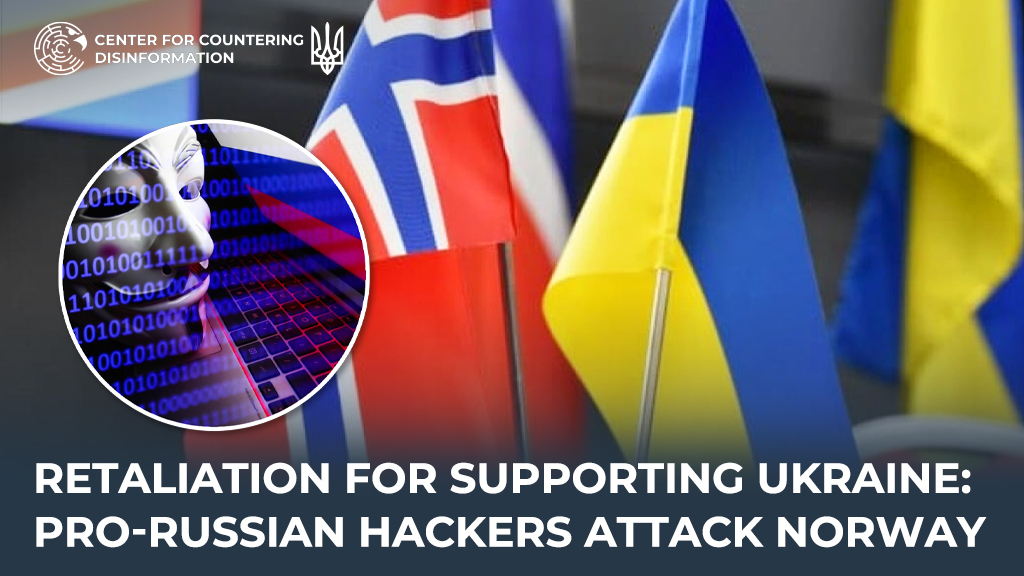
- Pro-Russian cyber and espionage activity is very likely to persist against European public services and supply chains supporting Ukraine over the next 1-3 months. Server Killers caused outages affecting dozens of Norwegian government services for three days and leaked information related to Norway’s state budget. Dutch intelligence services reported Russian use of hacked surveillance cameras to monitor Western weapons shipments to Ukraine. British authorities have formally linked GRU units 29155, 26165 and 74455 to cyber espionage, destructive hacking, sabotage and information operations, while British officials warned defence executives of Russian espionage and hostile intelligence activity. Confidence is medium because the Norway reporting is official and specific, but the UK threat reporting contains less detail on planned operations and the wider attribution picture remains incomplete. (Confidence: medium · ASSESSED)
- I&W: Confirm: Norwegian or another European national authority reports a new intrusion affecting a named public service or Ukraine-related logistics route and attributes it to Server Killers, GRU units 29155, 26165 or 74455. (0-14 days)
- I&W: Break: within 1-3 months, German, Dutch or UK investigators report that the relevant access was not Russian and identify no follow-on intrusion against the affected networks or facilities. (1-3 months)
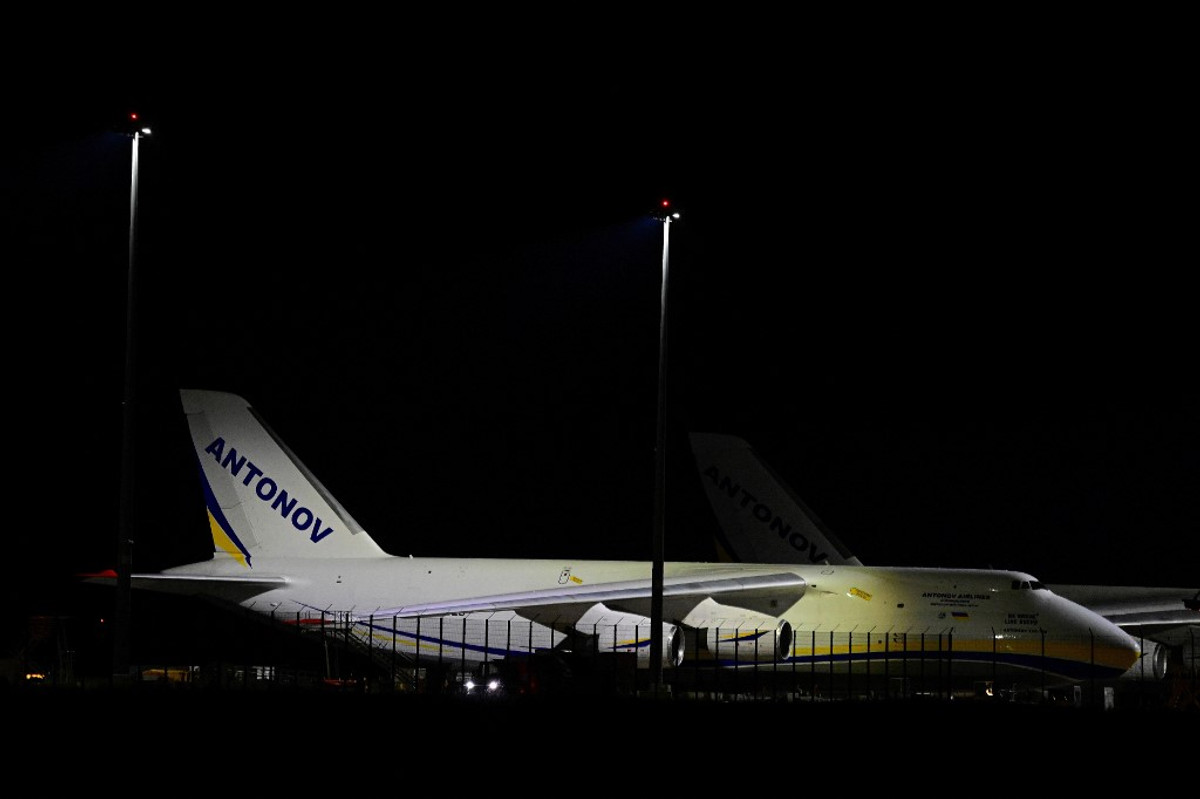
- Germany is very likely to announce an attribution decision on the Leipzig/Halle airport incident and impose or advance new sanctions against Russian entities within 0-14 days, but Russian responsibility for the incident remains unconfirmed. The German government reportedly plans to attribute the attempted drone attack to Russia, with an announcement expected early next week ahead of an EU foreign ministers’ meeting in Ireland. In contrast, German law enforcement is still investigating possible foreign intelligence involvement, and a German government spokesperson previously said authorities would await the official investigation before assigning responsibility. Confidence is medium because the planned political response is supported by multiple reports, while the underlying attribution is directly contested. (Confidence: medium · REPORTED)
- I&W: Confirm: the German government issues a formal statement naming Russia or a Russian entity as responsible and announces new restrictive measures. (0-14 days)
- I&W: Break: Berlin postpones the announcement or states that the investigation found insufficient evidence to attribute the Leipzig/Halle incident to Russia. (0-14 days)
- A direct Russian conventional attack on Estonia, Latvia or another NATO member is unlikely over the next 0-3 months, although Russian drone incursions near Romania, Poland, Estonia and Latvia and warnings of future Russian action keep the risk above zero. NATO says it sees no imminent threat of attack, and Alexander Stubb said Russia would not risk testing NATO militarily. A lower-confidence US intelligence assessment describes a possible limited Russian strike on a NATO member within the next few years, while German officials warn that Russia could develop the capacity to attack a NATO member before the end of the decade. Confidence is medium because the public NATO assessment concerns the immediate horizon, whereas the US and German warnings concern longer periods. (Confidence: medium · ASSESSED)
- I&W: Confirm: NATO reiterates that it sees no imminent threat, while Russian activity remains limited to hybrid operations, airspace incursions and coercive signalling without a direct strike. (0-14 days)
- I&W: Break: Russian forces conduct an overt missile or drone strike causing damage or casualties on territory of Romania, Poland, Estonia, Latvia or another NATO member, and NATO publicly attributes it to Russia. (0-3 months)
- Russian or pro-Russian influence activity targeting Sweden and Latvia is likely during the countries’ election periods. Estonian Defence Minister Hanno Pevkur warned that Russia would seek to influence societies and incite tensions before elections in Sweden and Latvia. Sweden has already faced fake videos on X using Swedish and German media logos, fabricated claims of electoral fraud and accusations against Prime Minister Ulf Kristersson; Antibot4navalny identified the campaign as part of the Matryoshka operation. Latvia’s government has warned of false information targeting Russian-speaking citizens ahead of the 3 October election. Confidence is medium because the election warnings and Swedish campaign are separately reported, but Russian direction of the specific Swedish activity is not independently established. (Confidence: medium · ASSESSED)
- I&W: Confirm: additional videos appear on X before 13 September using Swedish or German media branding and fabricated claims about electoral fraud or corruption. (0-14 days)
- I&W: Break: Swedish or Latvian authorities conclude that the reported material is isolated, non-coordinated activity and find no Russian or pro-Russian link by the respective election dates. (0-2 months)
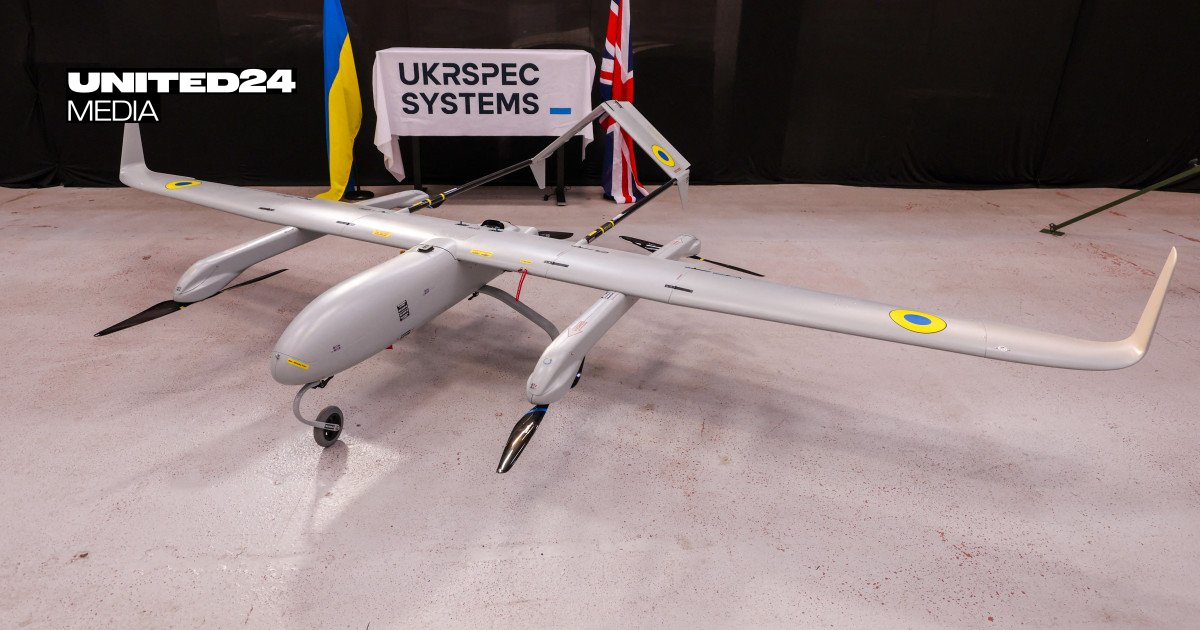
- Russian coercive signalling towards Britain is very likely to continue over the next 1-3 months, while a direct military strike on the missile company, the Ukrspecsystems facility near RAF Mildenhall or another named UK defence site is unlikely in that period. Andrey Fedorov described the missile company and Ukrspecsystems facility as legitimate targets and said senior Russian officials were considering sabotage or arson. Maria Zakharova threatened British military targets, while the Kremlin and Russian Embassy in the UK warned of consequences linked to British support for Ukraine. Confidence is low because the assessment rests largely on media reporting, and Russian statements differ over covert sabotage, arson and direct military action. (Confidence: low · ASSESSED)
- I&W: Confirm: the Kremlin, Russian Embassy in the UK or Maria Zakharova issues another threat explicitly tied to British weapons, Ukraine or a named UK defence facility. (0-14 days)
- I&W: Break: an attack, fire or attempted sabotage affects the missile company, the Ukrspecsystems facility near RAF Mildenhall or another named UK defence site. (0-3 months)
Outlook & scenarios
Persistent below-threshold campaign (65%)
Russia sustains cyber operations, espionage, influence activity and selected sabotage attempts against European government services, defence firms, logistics routes and election-related targets. NATO maintains that no conventional attack is imminent, while European governments improve protective measures and attribution remains contested.
Attribution and sanctions cycle (50%)
Germany attributes the Leipzig/Halle incident to Russia and announces new sanctions, with EU foreign ministers in Ireland discussing parallel measures. Moscow responds with further threats against Britain and other Ukraine-supporting states, but avoids an overt conventional strike on NATO territory.
Severe but contained hybrid incident (25%)
A Russian-linked cyberattack, arson attempt or explosive-drone incident affects a European defence, logistics or public-service target and causes casualties or prolonged disruption. European governments tighten security and impose additional measures, but the incident remains below the threshold of a direct NATO-Russia military clash.
Limited conventional test of NATO (10%)
In this low-probability, high-impact outcome, Russia conducts a limited strike or other overt military action against a NATO member to test collective defence commitments. The outcome would contradict NATO’s current public assessment of no imminent attack and validate the lower-confidence US warning about a future limited strike.
Recommendations
- For the next 0-14 days, prioritise collection on the German government’s Leipzig/Halle statement. Record the evidence cited, the entities sanctioned and any distinction between political attribution and the formal law-enforcement finding.
- Maintain a named watchlist for Server Killers, GRU units 29155, 26165 and 74455, the Norwegian Agency for Digitalisation, Dutch logistics-route cameras, British defence companies and the Ukrspecsystems facility near RAF Mildenhall.
- Create a dedicated election-monitoring line for Sweden and Latvia. Archive X content using media logos, fabricated fraud claims and attacks on Ulf Kristersson, and compare it with material identified by Latvian authorities before 3 October.
- Use an attribution matrix for European fires, drone incidents, cyberattacks and infrastructure disruptions. Separate confirmed official findings from intelligence warnings, media allegations and Russian denials.
- Keep immediate conventional-attack indicators separate from longer-term capability warnings. Track Russian airspace incidents near Romania, Poland, Estonia and Latvia, while preserving NATO’s no-imminent-threat assessment unless a direct strike occurs.
- Monitor whether Russia’s defence ministry follows its announced preparation for massive strikes on Ukraine’s energy infrastructure. Compare subsequent Ukrainian air-force reporting with Russian statements and assess any effect on European political and security responses.
Confidence & uncertainty
Overall confidence is medium. The assessment benefits from NATO and German official or wire reporting, Norwegian government reporting, and major-media coverage of the Leipzig investigation, UK security warnings and Russian military statements. Confidence is reduced by unresolved Leipzig attribution, conflicting accounts of the number and effects of drones, direct Russian denials, and lower-reliability reporting on election influence and longer-term conventional risk.
Intelligence gaps
- [EEI 1.2 · PARTIAL] Observed reconnaissance activity around critical sites indicative of attack planning (unauthorised drone flights, repeated surveillance visits, loitering vehicles, mapping/photography of assets). Recommended collection: open-source/media
- [EEI 1.3 · PARTIAL] Law-enforcement or customs seizures, arrests or interdictions of persons or shipments carrying explosives, sabotage tools, specialty cutting/electrical equipment, or covert comms gear destined for/near critical infrastructure. Recommended collection: law enforcement
- [EEI 2.1 · PARTIAL] Emergence or amplification of coordinated social-media networks (sets of accounts, pages, channels) pushing identical narratives or hashtags across multiple platforms, including bot-like activity metrics and origin IP/common management indicators. Recommended collection: social-media/OSINT
- [EEI 2.2 · UNCOVERED] Publication or internal guidance from state-run media, proxy outlets, or identified influence platforms distributing talking points, pre-scripted messaging, or translated content targeted at specific EU countries/communities. Recommended collection: open-source/media
- [EEI 2.3 · PARTIAL] Distribution of manipulated multimedia (deepfakes), targeted phishing/whaling campaigns, or localized false narratives timed to political events (elections, protests, court rulings) with tracked reach and engagement metrics. Recommended collection: cyber/forensic
- [EEI 3.1 · UNCOVERED] Unusual financial transactions: wire transfers, crypto conversions, or payments to shell companies, NGOs or individuals exceeding typical baselines that link to known proxies or front organisations. Recommended collection: financial
- [EEI 3.2 · UNCOVERED] Travel and movement indicators for suspected operatives: repeated border crossings, chartered/irregular flights, booking patterns or mobile/location data placing identified individuals in staging areas shortly before incidents. Recommended collection: border/immigration
- [EEI 3.3 · UNCOVERED] Cargo, freight or maritime movements with discrepancies (concealed/dual-use equipment, false manifests, unusual routing) detected at ports, rail hubs or via AIS that correspond to deliveries of material used in sabotage or influence operations. Recommended collection: customs/ports
- [EEI 3.4 · UNCOVERED] Intercepted or otherwise-obtained communications showing tasking, coordination, or payment instructions between Russian agencies/handlers and proxy groups, including identified command-and-control servers or encrypted group identifiers. Recommended collection: signals-intel/SIGINT
Cited sources
[1] Reuters (republished by Global Banking and Finance) · NATO Sees No Imminent Threat of Attack Amid Russia Tensions (A) · sha256:6c3bc0ac0212 [2] UNN (Ukrainian National News) · Russia intensifies its "gray zone" war against Europe - WSJ (D) · sha256:c93e11c84a87 [3] Wikipedia · Russian sabotage operations in Europe (C) · sha256:7ee8e473fb50 [4] Informator.ua · Кремль активизирует диверсии в Европе, чтобы компенсировать неудачи в Украине – WSJ (D) · sha256:4a77bac4d455 [5] Center for Countering Disinformation (cpd.gov.ua), Ukraine · Retaliation for supporting Ukraine: pro-russian hackers attack Norway | Центр протидії дезінформації (A) · sha256:515322ca71e8 [6] Vijesti (en.vijesti.me) · Moscow tests Europe's borders ahead of key elections (D) · sha256:b9aa26ac77ea [7] United24 Media · Russia’s Spy Network Turns Toward UK Companies Building Weapons for Ukraine (B) · sha256:35220079acd3 [8] Kyiv Post · UK Defense Bosses Warned of Russian Spy Threats Amid Escalation (B) · sha256:3e626d616cb4 [9] Kyiv Post · Germany to Blame Russia for Leipzig Drone Attack, Plan Sanctions (B) · sha256:107a3b17dad9 [10] Atlantic Council · As pressure mounts on Putin, Russia is escalating against Ukraine’s allies (C) · sha256:5813f6f4dc20 [11] Ynetnews · Russia threatens attacks inside Britain over weapons supplied to Ukraine (B) · sha256:77c9dac0c1bb [12] News.az · Finland’s Stubb says Russia unlikely to risk attack on NATO | News.az (D) · sha256:f33414a430a0 [13] The Jerusalem Post · Ukraine, a living laboratory for modern warfare, is shaping the global economy, security - opinion (B) · sha256:44910bb66d6e
Source content hashes were computed at collection time; the cited text is preserved unmodified for the life of this product.
TLP:CLEAR