TLP:CLEAR · Disclosure is not limited.
Europe: Russian-Linked Hybrid Pressure Intensifies, Attribution Remains Uneven
Time window: Last 1 day · Audience: General analyst · Type: Situation report · DTG: 2026-08-26 18:07Z · Overall confidence: LOW
BLUF
Russian-linked cyber and influence activity targeting European communications and information networks is very likely continuing. Physical incidents, including the Slovakia arson plot and the fire at Estonia's Milrem Robotics, indicate a persistent threat, but attribution and links between cases remain unresolved.
Executive summary
Dutch intelligence attributed hacking campaigns on Signal and WhatsApp to Russia in March 2026. OpenAI reported dismantling a covert Russian influence operation that used ChatGPT, VPN services and the Telegram channel Lahme Ente, which had about 20,000 subscribers. Germany reported that 87% of companies experienced data theft, espionage or sabotage in the previous twelve months, with Russia accounting for 46% of externally attributed incidents. European authorities also reported or investigated physical operations in Slovakia, Estonia, Poland and Germany, but the evidence does not establish a common Russian command structure. Germany and NATO are strengthening cyber and intelligence responses, while public attribution and retaliation remain uncertain.
Change from previous assessment
Since 25 August 2026, the core assessment that Russian-linked hybrid pressure against Europe is continuing is unchanged. This brief adds the Slovak arson plot involving three foreign nationals and an incendiary mixture identified as napalm, Germany's reported cyber exposure figures, the Dutch attribution of Signal and WhatsApp hacking campaigns, and the Estonia reporting that separates an accusation against Moscow from an ongoing investigation. Confidence in treating physical incidents as one Russian-directed operation has been lowered from medium to low. The prior focus on suspected sabotage has been expanded to give greater weight to cyber and influence activity. No prior judgment has been retired.
Key judgments
- Russian-linked cyber and influence activity in Europe is very likely continuing across protected communications and public information channels. Dutch intelligence attributed hacking campaigns on Signal and WhatsApp to Russia in March 2026. OpenAI reported dismantling a covert Russian operation that used ChatGPT, VPN services and the Telegram channel Lahme Ente, which had about 20,000 subscribers. Germany reported that Russia accounted for 46% of externally attributed cyber incidents, up from 39% a year earlier. Confidence is medium because the Dutch attribution and OpenAI findings come from separate reporting streams, but the German figures are industry survey data and do not establish that every incident was Russian-linked. (Confidence: medium · ASSESSED)
- I&W: Confirm: Within 0-14 days, Dutch intelligence publicly attributes a new compromise of Signal or WhatsApp accounts to Russian operators. (0-14 days)
- I&W: Break: Within 0-30 days, an independent technical investigation establishes that the International Burke Institute or Lahme Ente infrastructure was not operated by Russian-linked actors. (0-30 days)
- Russian-linked physical sabotage and coercive activity against European defence-related targets is likely to recur over the next 1-3 months, but it is unlikely that the Slovakia, Estonia, Poland and Germany cases form one Russian-directed operation. Slovak police detained three foreign nationals over a suspected arson plot at a drone manufacturing plant and seized an incendiary mixture identified as napalm. Estonian authorities accused Moscow over a fire at Milrem Robotics while also stating that Russian involvement remained under investigation. Poland reported thwarting an assassination attempt against a US citizen of Ukrainian origin ordered by Russia. Lithuania's prosecutor linked a drone attack in Germany to an investigation into an attempted bombing of a DHL package in 2024. Confidence is low because the reporting is largely single-source, the Estonian claims differ in attribution certainty, and the provided reporting does not establish a common command structure. (Confidence: low · ASSESSED)
- I&W: Confirm: Within 0-60 days, Slovak police, Estonian authorities or another named European service announce a new arrest or charge involving Russian tasking against a drone, defence or critical infrastructure site. (0-60 days)
- I&W: Break: Within 0-90 days, Slovak or Estonian investigators publicly identify an unrelated criminal motive and withdraw the Russian link, while Lithuanian authorities withdraw the reported connection to the Germany investigation. (0-90 days)
- European governments are likely to expand cyber defence and intelligence measures in response to the threat environment, while public retaliation against named Russian actors remains uncertain. Germany has been reinforcing its response to cyber threats from foreign powers. NATO has been signing cyber partnerships with Microsoft, Palo Alto and ESET. The EU's cyber defence unit lists account takeover targeting high-ranking officials among the bloc's top threats in 2026. German Chancellor Friedrich Merz has warned that those responsible for hybrid attacks will pay the price, but the provided reporting does not show completed retaliation against a named Russian actor. Confidence is medium because the defensive measures are directly reported, while the assessment of restraint rests partly on an absence of reported action. (Confidence: medium · ASSESSED)
- I&W: Confirm: Within 0-90 days, Germany announces a new intelligence or cyber measure specifically protecting the messaging accounts of high-ranking political, military or diplomatic officials. (0-90 days)
- I&W: Break: Within 0-90 days, Germany or NATO states that the recent account-takeover activity was criminal rather than state-linked and terminates the cited cyber partnerships. (0-90 days)
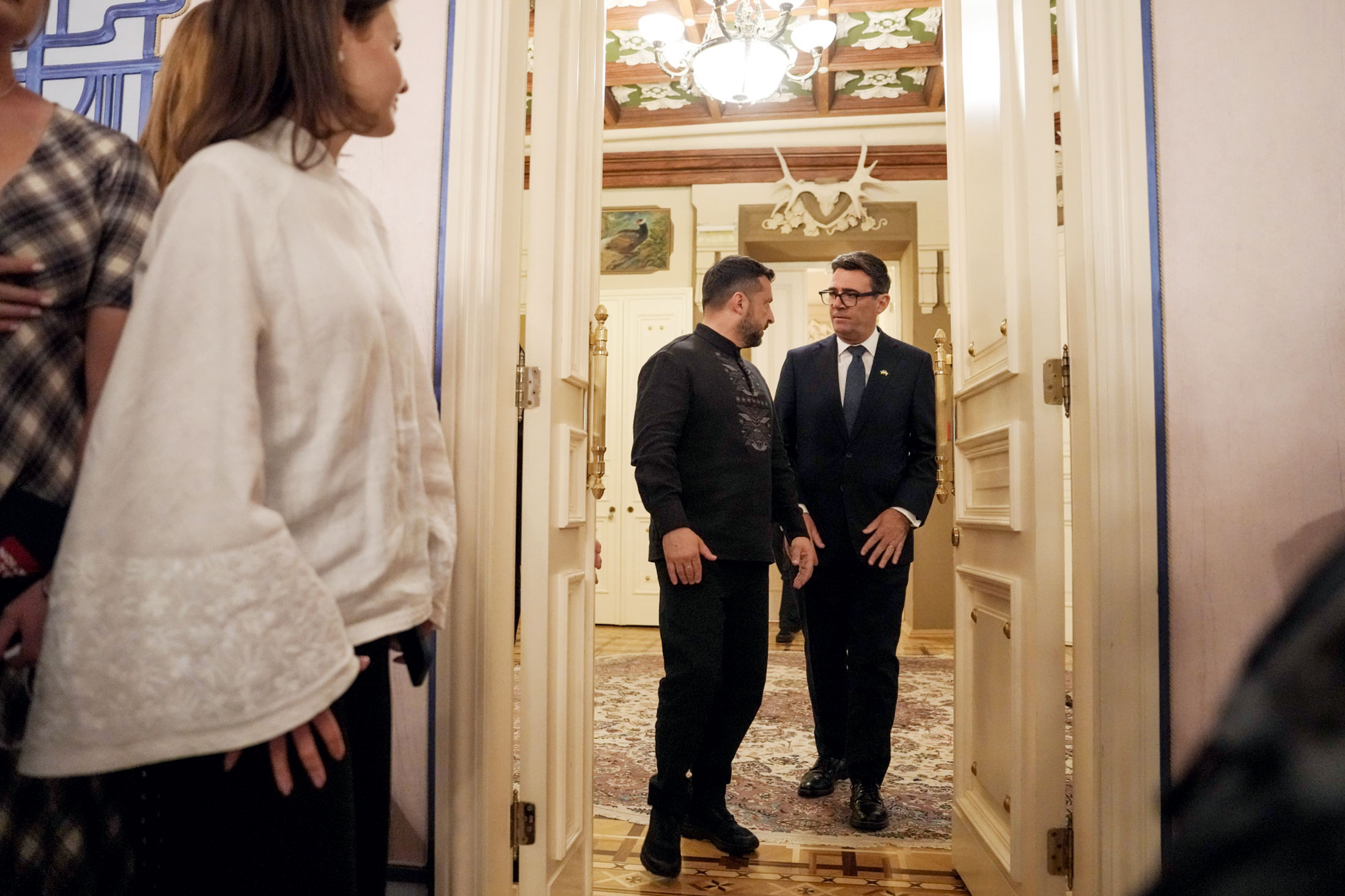
- Russia is likely to continue coercive signalling against the UK after the decision to share sensitive missile design details with Ukraine, but a direct physical attack on a UK defence-related site is unlikely in the next 1-3 months. Russia warned the UK that it would face consequences. Moscow reacted negatively to the UK's decision to share missile designs with Ukraine, and Andy Burnham announced the decision during his visit to Kyiv. Confidence is low because the claims show public rhetoric and technology transfer, not an executed Russian plan or an explicit named UK target. (Confidence: low · ASSESSED)
- I&W: Confirm: Within 0-30 days, Russian officials explicitly name a UK defence site or British military-production programme while threatening retaliation. (0-30 days)
- I&W: Break: Within 0-90 days, UK authorities report a completed physical attack or credible plot against a named UK defence-related site. (0-90 days)
Outlook & scenarios
Persistent, bounded hybrid pressure (50%)
Russian-linked cyber intrusions, account targeting and influence activity continue against European institutions and political information networks. European governments strengthen protective measures, while physical incidents remain disputed and public retaliation stays limited.
Cross-domain escalation (28%)
A new arson plot, assassination attempt or attack on a defence-related site coincides with a cyber campaign and targeted disinformation. A European government publicly attributes the activity to Russia and introduces further defensive or punitive measures.
Attribution weakens (17%)
Investigations in Slovakia, Estonia, Poland or Germany fail to substantiate Russian direction. European authorities continue to treat the incidents as separate criminal or security cases, reducing the case for a single coordinated Russian campaign.
High-impact coordinated operation (5%)
A very unlikely operation combines cyber intrusion, arson and disinformation and causes casualties or prolonged disruption at a named European defence or critical infrastructure site. Public attribution triggers a sharper European response and sustained Russian coercive signalling.
Recommendations
- Maintain separate analytic tracks for Russian-attributed cyber activity, suspected physical sabotage, influence operations and un-attributed incidents. Record the target, date, actor attribution, evidentiary basis and any link to other cases.
- Prioritise collection on the Slovak arson investigation, including forensic findings, suspect travel and communications, financing and evidence of Russian tasking. Apply the same standards to the Milrem Robotics fire, the reported Polish assassination plot and the Germany-DHL investigation.
- Monitor Signal, WhatsApp, ChatGPT, VPN infrastructure, the International Burke Institute and Lahme Ente for repeat narratives, account clusters, shared technical indicators and changes in audience reach.
- Track Russian public statements after the UK decision to share missile design details with Ukraine. Distinguish general warnings from threats that name a British defence facility, contractor or production programme.
- Assess European response measures against observable outputs, including new account-protection requirements, intelligence authorities, NATO cyber partnerships and public attribution standards. Avoid treating announced cooperation as evidence that a joint operational response is already in place.
- Reconcile the inconsistent dates in the incident reporting before using the cases to establish a campaign timeline, particularly for the Poland, Estonia, Germany and Ukraine-related reporting.
Confidence & uncertainty
Overall confidence is low because the strongest Russian links rely on single-source intelligence statements, company reporting or major-media accounts rather than multiple independent investigations. The Estonia reporting contains an unresolved difference between accusation and ongoing investigation, while the Poland and Germany cases also have limited publicly described evidence. The event set mixes 2023 and 2026 dates, weakening chronology and making campaign-level attribution less reliable. Confidence is higher for the existence of individual reported incidents than for their direction, coordination or strategic purpose.
Intelligence gaps
- [EEI 1.2 · UNCOVERED] Observed reconnaissance activity around critical sites indicative of attack planning (unauthorised drone flights, repeated surveillance visits, loitering vehicles, mapping/photography of assets). Recommended collection: open-source/media
- [EEI 2.1 · PARTIAL] Emergence or amplification of coordinated social-media networks (sets of accounts, pages, channels) pushing identical narratives or hashtags across multiple platforms, including bot-like activity metrics and origin IP/common management indicators. Recommended collection: social-media/OSINT
- [EEI 2.2 · UNCOVERED] Publication or internal guidance from state-run media, proxy outlets, or identified influence platforms distributing talking points, pre-scripted messaging, or translated content targeted at specific EU countries/communities. Recommended collection: open-source/media
- [EEI 2.3 · UNCOVERED] Distribution of manipulated multimedia (deepfakes), targeted phishing/whaling campaigns, or localized false narratives timed to political events (elections, protests, court rulings) with tracked reach and engagement metrics. Recommended collection: cyber/forensic
- [EEI 3.1 · UNCOVERED] Unusual financial transactions: wire transfers, crypto conversions, or payments to shell companies, NGOs or individuals exceeding typical baselines that link to known proxies or front organisations. Recommended collection: financial
- [EEI 3.2 · UNCOVERED] Travel and movement indicators for suspected operatives: repeated border crossings, chartered/irregular flights, booking patterns or mobile/location data placing identified individuals in staging areas shortly before incidents. Recommended collection: border/immigration
- [EEI 3.3 · UNCOVERED] Cargo, freight or maritime movements with discrepancies (concealed/dual-use equipment, false manifests, unusual routing) detected at ports, rail hubs or via AIS that correspond to deliveries of material used in sabotage or influence operations. Recommended collection: customs/ports
- [EEI 3.4 · UNCOVERED] Intercepted or otherwise-obtained communications showing tasking, coordination, or payment instructions between Russian agencies/handlers and proxy groups, including identified command-and-control servers or encrypted group identifiers. Recommended collection: signals-intel/SIGINT
Cited sources
[1] thenextweb.com · The EU cannot send a classified file to itself securely (B) · sha256:61a0da2e9793 [2] ynetnews.com · OpenAI exposes Russian influence campaign built around Israel-based think tank (B) · sha256:0079e5068a76 [3] thenextweb.com · 87% of German companies were attacked last year, and Russia has caught up with China (B) · sha256:56af92f95ebc [4] news.liga.net · Police in Slovakia prevented an arson attack on a UAV manufacturing plant (B) · sha256:ba310f50244b [5] insurancejournal.com · Russia's Escalating Hybrid Attacks Put Europeans in a Bind (B) · sha256:5a8e34a8d4fc [6] unian.net · РФ прощупывает, как далеко можно зайти: гибридная война против Европы усиливается, - Bloomberg (B) · sha256:38bffcdd73fa [7] Defense News · With UK military secrets, Ukraine could now build SCALP missiles at home - but it will take time (A) · sha256:0e833465f28d
Source content hashes were computed at collection time; the cited text is preserved unmodified for the life of this product.
Red cell review: CONCUR WITH COMMENT
TLP:CLEAR