TLP:CLEAR · Disclosure is not limited.
Europe: Russian-Linked Hybrid Pressure Nears Poland
Time window: Last 1 day · Audience: General analyst · Type: Situation report · DTG: 2026-09-14 01:07Z · Overall confidence: HIGH
BLUF
The 13 September 2026 Russian drone strikes near the Yahodyn-Dorohusk crossing brought attacks on western Ukrainian transport infrastructure to roughly 1-2 kilometres from Poland. The incident raises the risk of spillover and miscalculation, but available reporting does not establish that the Kyiv-Warsaw passenger train or a diplomatic train was specifically targeted. Russian-linked pressure on European transport, defence and logistics nodes is likely to persist over the next 1-3 months.
Executive summary
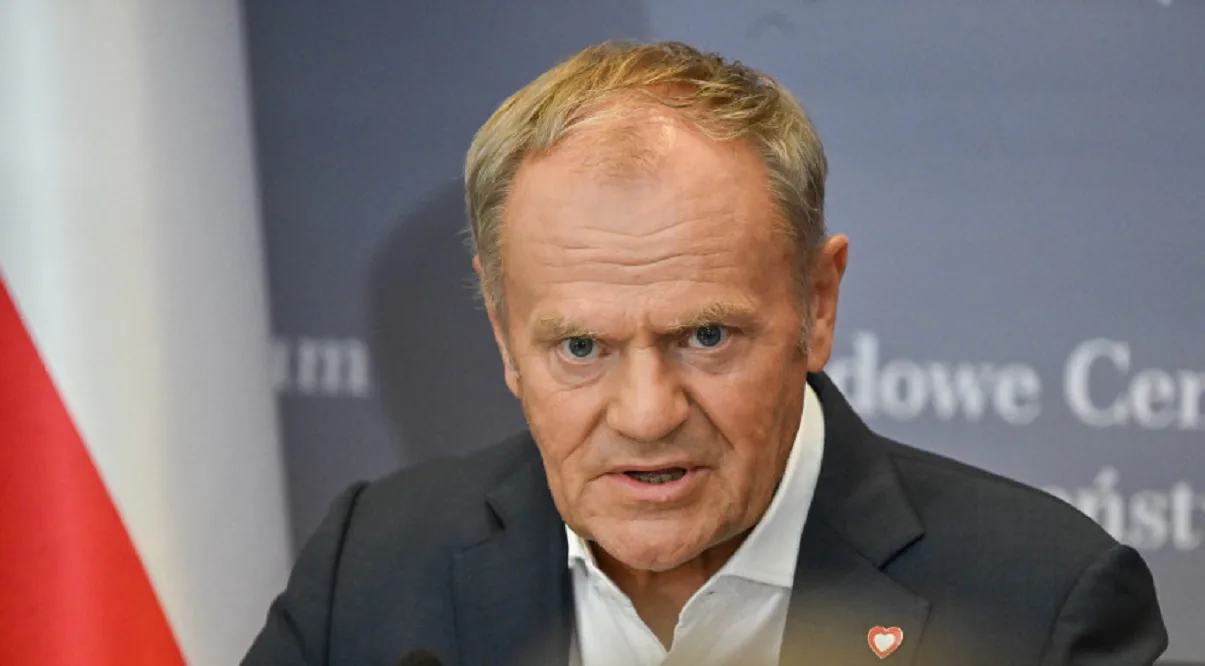
Russian drones struck a Kyiv-Warsaw passenger train locomotive and a gas station near the Yahodyn-Dorohusk crossing on 13 September 2026. Ukrainian and Polish officials reported no Polish airspace violation and no casualties, while Russia said it had targeted western Ukrainian infrastructure used to move military cargo from Europe. Polish Prime Minister Donald Tusk ordered heightened alert and warned of more frequent attacks and more dangerous jet-powered drones. The episode adds to contested reporting about Russian-linked activity at Leipzig/Halle Airport, Mechernich military base and a Bulgarian weapons storage site. The strongest evidence supports a continuing pressure campaign against Ukraine's supply routes and European defence-related infrastructure, while the specific intent behind individual incidents remains unevenly established.
Change from previous assessment
Since the 13 September prior brief, the assessment has shifted from a broad 1-3 month outlook centred on Germany and wider European infrastructure to a more immediate focus on the Yahodyn-Dorohusk border area and the risk of spillover into Poland. Confidence in the near-term miscalculation risk has risen from low to medium because the new train and border-crossing incidents are supported by multiple official and media accounts. The Leipzig/Halle judgement remains medium because German attribution is contested by Moscow and the incident chronology remains inconsistent. The prior low-confidence cyberespionage and disinformation judgements are not expanded in this update because the current reporting contains no new supporting claims.
Key judgments
- The 13 September strikes very likely reflect deliberate Russian targeting of western Ukrainian transport infrastructure, while it is unlikely that available reporting proves the Kyiv-Warsaw passenger train was specifically targeted. The train locomotive was hit roughly 2 kilometres from the Polish border, a gas station and trucks were struck less than 1 kilometre from the Dorohusk-Yahodyn crossing, and Russia's Defence Ministry said it targeted infrastructure supporting military cargo deliveries from Europe. Ukrzaliznytsia's suggestion that a diplomatic train might have been the intended target remains uncorroborated. (Confidence: medium · ASSESSED)
- I&W: Confirmation: within 0-14 days, Polish or Ukrainian authorities report another Russian strike on a rail line, road or border-crossing asset within 5 kilometres of Poland's frontier. (0-14 days)
- I&W: Break: within 0-14 days, a joint Ukrainian or Polish investigation attributes the Yahodyn incidents to an accidental or non-Russian cause and finds no connection to military-cargo routes. (0-14 days)
- Russian-linked pressure against European transport, defence and logistics nodes is likely to persist and broaden over the next 1-3 months. The clearest named cases are the explosive drone incident at Leipzig/Halle Airport, the reported drone overflight at the Mechernich military base, the deliberate fire reported at an EMCO weapons storage site in Bulgaria, and allegations involving Rheinmetall. The regional pattern is assessed rather than proven for every incident, because several cases rely on single-source or contested attribution. (Confidence: medium · ASSESSED)
- I&W: Confirmation: within 0-14 days, authorities in another European state attribute sabotage, an explosive drone or a fire at a named defence or logistics site to Russian operatives and release forensic or investigative evidence. (0-14 days)
- I&W: Break: within 1-3 months, no additional comparable incidents occur and German or Bulgarian investigations close without a Russian attribution. (1-3 months)
- An open Russia-NATO kinetic clash is unlikely over the next 1-3 months, but the risk of miscalculation is likely higher than in the prior brief. Polish Defence Minister Władysław Kosiniak-Kamysz said Polish systems detected the attack without a Polish airspace violation, while Donald Tusk warned of more frequent Russian attacks, jet-powered drones and possible effects on Polish territory. The assessment remains uncertain because reporting ranges from warnings of a possible future Russian attack on a NATO member to a lower-reliability assertion that such a war has already begun. (Confidence: medium · ASSESSED)
- I&W: Confirmation: within 0-14 days, Polish or NATO authorities report a Russian drone or munition entering Poland, causing casualties or infrastructure damage, or prompting a fighter interception. (0-14 days)
- I&W: Break: within 0-14 days, Polish and NATO authorities confirm that subsequent Russian strikes remain inside Ukraine, with no Polish airspace violation or damage on Polish territory. (0-14 days)
- Germany is very likely to sustain a hard response to the Leipzig/Halle Airport incident, while tactical Russian attribution remains contested. Berlin has blamed Russia, announced the closure of the Russian Consulate General in Bonn and ended an agreement related to the Russian House in Berlin. German Interior Minister Alexander Dobrindt said equipment examination and intelligence findings pointed to Russian involvement, while Moscow rejected the allegation and the reporting contains unresolved differences over the incident's chronology and whether the drone struck or was found near the Ukrainian An-124 aircraft. (Confidence: medium · ASSESSED)
- I&W: Confirmation: within 0-14 days, Berlin announces additional diplomatic, legal or protective measures linked to the Leipzig/Halle incident, or German investigators identify and charge further suspects. (0-14 days)
- I&W: Break: within 1-3 months, German authorities withdraw the Russian attribution or publish findings that identify a non-Russian perpetrator. (1-3 months)
Outlook & scenarios
Continued below-threshold pressure near Poland (60%)
This is the most likely outcome over the next 1-3 months. Russia continues strikes on western Ukrainian rail and logistics infrastructure, including routes supporting European military cargo, while Russian-linked sabotage and surveillance attempts persist at selected European defence and transport nodes. Poland maintains heightened alert, but no Russian munition causes damage on Polish territory.
Limited spillover into Polish territory (25%)
An unlikely but consequential outcome is a Russian drone or munition entering Poland or damaging an asset near the border. The immediate effect would likely be a sharper Polish security response, intensified NATO consultations and stronger pressure for additional measures against Russia. The available reporting does not establish that this outcome is imminent.
European attribution drives coordinated countermeasures (45%)
A likely parallel track is the publication of further German, Polish or Bulgarian investigative findings linking specific incidents to Russian operatives. Germany is likely to expand restrictions connected to Leipzig/Halle, while Poland and other European governments increase protection for rail, airport, weapons-storage and defence-industry sites.
Deliberate attack on diplomatic or NATO-linked transport (10%)
A very unlikely, high-impact outcome is evidence that the Yahodyn strike deliberately targeted a diplomatic train or senior European officials. Such evidence would likely produce a sharp increase in European sanctions, protective measures and military alerting, while raising the risk of direct Russia-NATO confrontation.
Recommendations
- Prioritise near-term collection on the Yahodyn-Dorohusk incidents. Reconcile the 12 and 13 September reporting, establish whether one or several strikes occurred, confirm the number of affected trucks, and verify whether any Russian munition entered Polish airspace.
- Keep the alleged diplomatic-train targeting separate from the confirmed train strike in all reporting. Treat the claim as unconfirmed and avoid repeating the contradicted account that placed David Petraeus on the struck train.
- Track Russian and Ukrainian official statements against independent reporting on western Ukrainian rail infrastructure, the Kyiv-Warsaw route, the Dorohusk crossing and European military-cargo movements.
- Maintain a named watchlist for Leipzig/Halle Airport, Mechernich military base, EMCO weapons-storage sites and Rheinmetall-related reporting. Seek forensic evidence, prosecutions and official attribution before treating the incidents as one coordinated campaign.
- Monitor Polish and NATO alert measures for the specific spillover indicators in this brief, especially airspace incursions, damage on Polish territory, casualties and fighter interceptions.
- Prepare separate analytic lines for continued below-threshold activity and a limited spillover incident. Do not merge them into an open-clash assessment unless a Russian munition damages Polish territory or NATO authorities confirm a direct attack.
Confidence & uncertainty
Overall confidence is high because the 13 September border-area strikes, the train impact, the temporary Dorohusk closure and the Polish security response are corroborated by multiple independent major-media reports and statements from Ukrainian and Polish authorities. The Leipzig/Halle attribution also draws on German government statements and reporting about an explosive device near a Ukrainian An-124 aircraft. The main uncertainties concern Russian intent, whether the diplomatic train was a target, the precise chronology of the border incidents and the attribution of other European fires and drone sightings.
Intelligence gaps
- [EEI 1.2 · PARTIAL] Observed reconnaissance activity around critical sites indicative of attack planning (unauthorised drone flights, repeated surveillance visits, loitering vehicles, mapping/photography of assets). Recommended collection: open-source/media
- [EEI 2.1 · UNCOVERED] Emergence or amplification of coordinated social-media networks (sets of accounts, pages, channels) pushing identical narratives or hashtags across multiple platforms, including bot-like activity metrics and origin IP/common management indicators. Recommended collection: social-media/OSINT
- [EEI 2.2 · UNCOVERED] Publication or internal guidance from state-run media, proxy outlets, or identified influence platforms distributing talking points, pre-scripted messaging, or translated content targeted at specific EU countries/communities. Recommended collection: open-source/media
- [EEI 2.3 · UNCOVERED] Distribution of manipulated multimedia (deepfakes), targeted phishing/whaling campaigns, or localized false narratives timed to political events (elections, protests, court rulings) with tracked reach and engagement metrics. Recommended collection: cyber/forensic
- [EEI 3.1 · UNCOVERED] Unusual financial transactions: wire transfers, crypto conversions, or payments to shell companies, NGOs or individuals exceeding typical baselines that link to known proxies or front organisations. Recommended collection: financial
- [EEI 3.2 · UNCOVERED] Travel and movement indicators for suspected operatives: repeated border crossings, chartered/irregular flights, booking patterns or mobile/location data placing identified individuals in staging areas shortly before incidents. Recommended collection: border/immigration
- [EEI 3.3 · UNCOVERED] Cargo, freight or maritime movements with discrepancies (concealed/dual-use equipment, false manifests, unusual routing) detected at ports, rail hubs or via AIS that correspond to deliveries of material used in sabotage or influence operations. Recommended collection: customs/ports
- [EEI 3.4 · UNCOVERED] Intercepted or otherwise-obtained communications showing tasking, coordination, or payment instructions between Russian agencies/handlers and proxy groups, including identified command-and-control servers or encrypted group identifiers. Recommended collection: signals-intel/SIGINT
Cited sources
[1] TVP World (Telewizja Polska's English-language news service) · Russian drone 'strikes Kyiv-Warsaw train' near Polish border (A) · Sun Sep 13 2026 15:57:00 GMT+0000 (Coordinated Universal Time) · sha256:ea8457514a67 [2] Firstpost · Russian drones strike passenger train near Poland border, says Ukraine (B) · Sun Sep 13 2026 12:19:47 GMT+0000 (Coordinated Universal Time) · sha256:f17a3a5d9f5a [3] BBC News · Russia hits Ukrainian train shortly after Boris Johnson and top European officials leave station (A) · Sun Sep 13 2026 16:05:41 GMT+0000 (Coordinated Universal Time) · sha256:202e827d9d96 [4] Главред (glavred.info) · РФ сделала циничное заявление после массированной атаки по Украине: что выдумали оккупанты (D) · Sun Sep 13 2026 09:29:00 GMT+0000 (Coordinated Universal Time) · sha256:59fdb8c3af60 [5] UNN (Ukrainian National News) · Tusk warned of an intensification of Russia’s attacks and the risk of escalation in Poland (D) · Sun Sep 13 2026 22:29:32 GMT+0000 (Coordinated Universal Time) · sha256:e81e94c81202 [6] Syrian Arab News Agency (SANA) · Putin warns Europe against troop deployment as Ukraine strikes intensify (C) · Sun Sep 13 2026 12:22:54 GMT+0000 (Coordinated Universal Time) · sha256:88a4db2389d1 [7] Wikipedia · 2026 Leipzig Airport drone attack (C) · Fri Aug 07 2026 18:31:33 GMT+0000 (Coordinated Universal Time) · sha256:cbe42b9df3df [8] TVP World (Telewizja Polska) · Putin ‘sees no reason’ to halt hybrid war against West, analyst warns (B) · Sun Sep 13 2026 06:30:00 GMT+0000 (Coordinated Universal Time) · sha256:956b9507fd19 [9] Politico Europe · Russian drone hits passenger train headed from Kyiv to Warsaw (A) · Sun Sep 13 2026 09:45:41 GMT+0000 (Coordinated Universal Time) · sha256:1e17c2e07203 [10] LIGA.net · Tusk: The coming months will be a period of very active action on Russia's part (B) · Sun Sep 13 2026 23:24:00 GMT+0000 (Coordinated Universal Time) · sha256:1efbdad46685 [11] Телеканал FREEДОМ (Freedom TV) · Война России против стран НАТО уже началась, считают в Институте изучения войны. Кремль все чаще проводит гибридные атаки на аэропорты и военные склады в странах Европы. По мнению экспертов, Москва действует ниже порога, который мог бы привести к применению Пятой статьи НАТО. Сдержать дальнейшие провокации Кремля, по мнению президента Владимира Зеленского, может членство Украины в Альянсе. Он считает это неотъемлемой частью новой архитектуры безопасности Европы. О гибридной войне в Европе и доказательствах причастности к ней российских спецслужб – в сюжете Дмитрия Шульги. #stoprussia #FREEДОМ | Телеканал FREEДОМ (E) · sha256:f37f0f8dca2f [12] Al Jazeera · Poland, Ukraine accuse Russia of ‘escalation’ after strikes near border (A) · Sun Sep 13 2026 21:10:07 GMT+0000 (Coordinated Universal Time) · sha256:e4f215c1dd9b
Source content hashes were computed at collection time; the cited text is preserved unmodified for the life of this product.
TLP:CLEAR