TLP:CLEAR · Disclosure is not limited.
Europe: Russian-Linked Hybrid Pressure Raises Near-Term Sabotage Risk
Time window: Last 1 day · Audience: General analyst · Type: Situation report · DTG: 2026-09-03 21:36Z · Overall confidence: HIGH
BLUF
Russian-linked hybrid pressure in Europe is very likely to continue over the next 1-3 months, with the immediate risk centred on deniable attacks against defence-related sites, energy infrastructure and digital platforms. The 3 September incendiary-device incident in Munich and Denmark's warning of specific Russian sabotage planning increase concern, while a direct conventional Russian attack on a NATO member remains very unlikely.
Executive summary
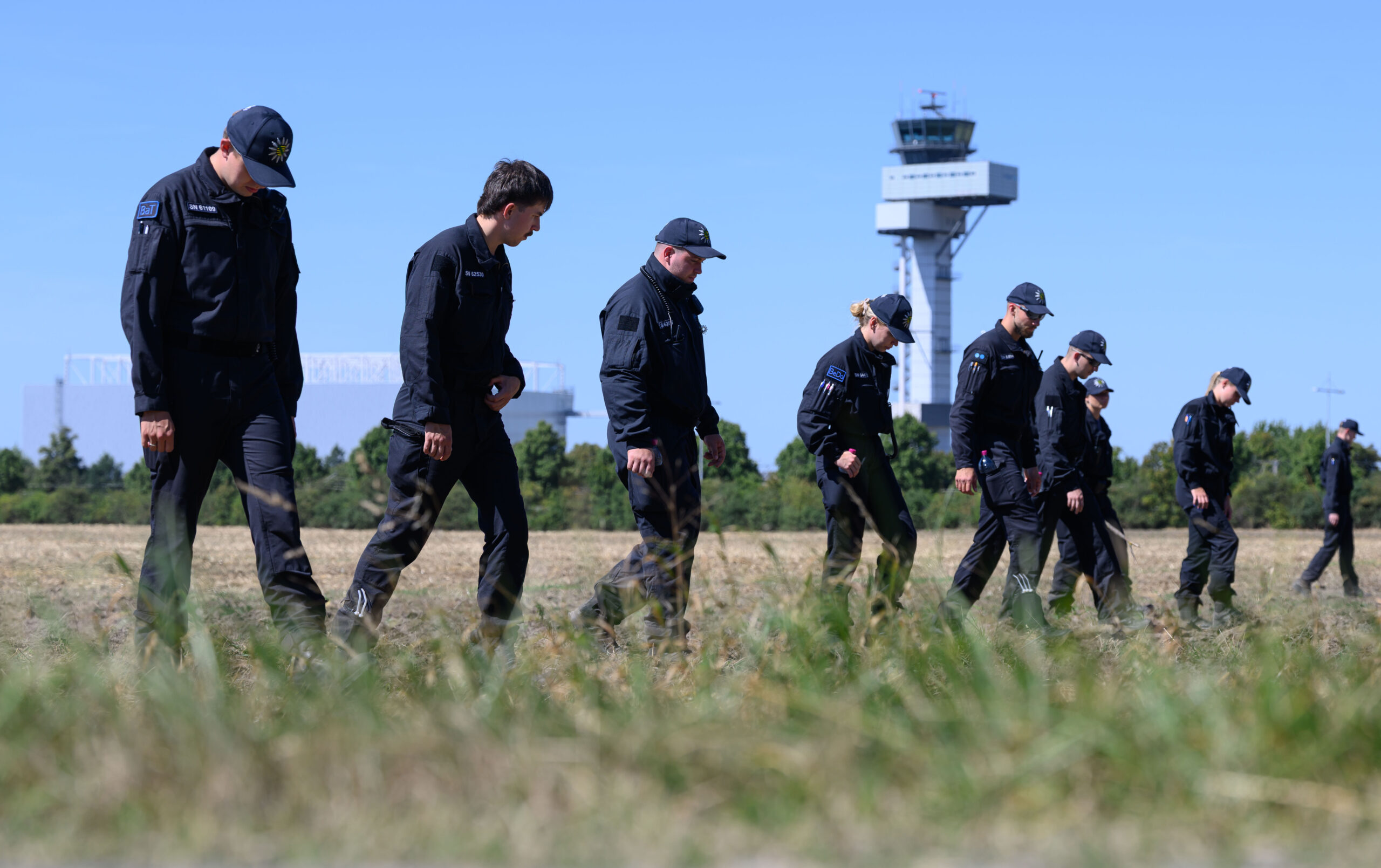
Germany's attribution of the August Leipzig/Halle Airport explosive-drone operation to Russian state agencies remains the main driver of European responses, despite Russian denials and unresolved discrepancies over the discovery date, number of drones and explosive type. On 3 September, incendiary devices were thrown at a construction site near Rohde & Schwarz headquarters in Munich, and two Bulgarian nationals were arrested, although their involvement remains unconfirmed. Denmark's PET separately reported specific Russian planning against defence companies supplying Ukraine. Germany, Poland, the UK and other European governments are applying diplomatic pressure, while Moscow is closing German cultural centres in response.
Change from previous assessment
Since the 2 September brief, the assessment has shifted towards a firmer near-term concern about sabotage against defence-related targets. New developments are the Munich incendiary-device incident, the arrest of two Bulgarian nationals with involvement unconfirmed, and PET's warning of specific Russian planning against Danish defence companies supplying Ukraine. The assessment of continued hybrid pressure remains medium confidence because several incidents remain unattributed, while the direct-attack judgement is retained and refined by the reported 17 Russian violations of Moldovan airspace in August and the latest European civil-defence preparations.
Key judgments
- Russian-linked hybrid pressure against European defence, infrastructure and government targets is very likely to continue over the next 1-3 months, with the near-term focus likely to remain deniable sabotage and cyber activity rather than an overt military attack. The 3 September incendiary-device incident near Rohde & Schwarz headquarters in Munich and PET's warning of specific Russian planning against Danish defence companies supplying Ukraine raise the near-term sabotage concern. The perpetrators of the Munich incident, the fire at an Estonian company supplying unmanned ground vehicles to Ukraine, the Polish weapons-factory fire and the attacks on Polish power and heating plants remain unconfirmed or only suspected, so this judgement includes single-source and unresolved-attribution elements. (Confidence: medium · ASSESSED)
- I&W: Confirm: German or Danish investigators identify Russian intelligence tasking, financial links or communications connected to the Munich incident, or report another attempted attack against a named Danish defence supplier. (0-14 days)
- I&W: Break: German police establish that the Munich incident was unrelated to foreign direction and European authorities report no further attempts against defence or energy sites. (0-30 days)
- Germany's attribution of the 4 August Leipzig/Halle Airport operation to Russian state agencies is likely to remain the principal basis for European countermeasures over the next 1-3 months. The reported case is stronger than the Munich attribution because German officials cited investigation and intelligence findings, US intelligence linked the operation to Russia, Alexander Dobrindt said the components matched materials used in documented Russian operations, and authorities identified two suspects from Belarus and Latvia. Confidence is reduced because Russia denies responsibility, the underlying intelligence has not been disclosed publicly, and reporting conflicts over whether the drone was discovered on 4 or 5 August, whether one or several drones were involved, and whether the explosive was Semtex or Hexogen. (Confidence: medium · ASSESSED)
- I&W: Confirm: Germany or the US releases forensic, communications or intelligence details that link the suspects, drone components and explosives to Russian intelligence agencies. (0-30 days)
- I&W: Break: German prosecutors revise the attribution, identify a non-Russian network as responsible, or state that the evidence does not establish Russian state involvement. (1-3 months)
- European governments are very likely to widen diplomatic, sanctions and visa pressure on Russia over the next 1-3 months, while direct military retaliation is very unlikely. EU ministers are seeking non-military responses and fresh sanctions; Germany has closed or ordered the closure of the Russian Consulate in Bonn and the Russian House in Berlin; Poland, Denmark, Finland, the UK, the Czech Republic and Lithuania have summoned Russian diplomats; and Sergey Lavrov announced retaliatory closures of Goethe-Institut centres in Moscow, St Petersburg and Yekaterinburg. Confidence is medium because one conflicting account describes EU defence ministers as deciding to escalate the war against Russia, while the more specific reporting describes a non-military response. (Confidence: medium · ASSESSED)
- I&W: Confirm: The EU adopts a new sanctions or visa package linked to the Leipzig/Halle case, or another European government closes a Russian diplomatic or cultural facility. (1-3 months)
- I&W: Break: A NATO member reports a deliberate Russian armed attack on its territory and the alliance authorises a military response rather than diplomatic or economic measures. (0-3 months)
- An overt Russian attack on a NATO member is very unlikely over the next 0-3 months, but Russian airspace violations and activity near Moldova are likely to sustain miscalculation risk. Moldova reported 17 Russian airspace violations in August, including five drones before Independence Day celebrations; a Russian cruise missile reportedly struck Polish farmland in late July; and Estonian and Latvian leaders have warned that Russian provocations require close attention even as the invasion threat remains low. The assessment is also consistent with the reported warning delivered by John Ratcliffe in Moscow against directly testing NATO and with the judgement that Russia is more likely to continue grey-zone aggression than launch an imminent direct attack. (Confidence: medium · ASSESSED)
- I&W: Confirm: Another Russian missile or drone enters Polish, Moldovan or other NATO airspace, or a Russian projectile causes casualties on NATO territory. (0-30 days)
- I&W: Break: Russia and NATO establish a verified deconfliction arrangement followed by no further airspace violations or cross-border incidents. (1-3 months)
Outlook & scenarios
Persistent deniable pressure (70%)
Over the next 1-3 months, Russia-linked operatives continue attempts against defence-related sites, energy infrastructure and digital platforms in Germany, Denmark and other European states. The Munich incident, the PET warning and the reported attacks on Polish and Estonian facilities remain the pattern, while responsibility for individual operations stays contested.
European countermeasures and reciprocal retaliation (60%)
Germany, Poland, Denmark, Finland, the UK, the Czech Republic and Lithuania sustain diplomatic pressure and support new EU sanctions or visa measures. Russia responds through further diplomatic and cultural closures, including measures directed at German institutions. The confrontation remains below the threshold of direct military retaliation.
Disputed attribution limits the response (25%)
Investigations fail to connect the Munich arrests to Russia, while Germany does not publish additional evidence for the Leipzig/Halle attribution. EU governments retain the existing diplomatic response and avoid new measures that require a stronger public evidential case.
NATO airspace or territory incident (10%)
A Russian missile or drone crosses into the territory or airspace of a NATO member, following the reported Polish missile incident and repeated Moldovan violations. A resulting interception, casualties or armed response creates a high-impact test of NATO cohesion and Russian willingness to control escalation.
Recommendations
- Prioritise collection on the Munich incident. Establish whether the two Bulgarian nationals have been charged, identify the evidence linking them to the incendiary devices, and determine whether German investigators assess a Russian connection or an unrelated criminal motive.
- Maintain a dedicated Leipzig/Halle evidence file. Reconcile the 4 August and 5 August discovery dates, determine whether the case involved one, two or three drones, verify the explosive type, and track any German or US release of underlying forensic or intelligence evidence.
- Track PET reporting and Danish protective measures for defence companies supplying military components to Ukraine. Compare Danish warnings with incident reporting from Germany, Estonia, Slovakia and Poland to identify common operational features.
- Separate the Bergheim and Turnow-Preilack power incidents in the incident timeline. Confirm whether they were distinct sites, record the number of devices and outages at each location, and monitor for repeat activity against German transmission infrastructure.
- Monitor EU decisions for a formal sanctions or visa package, and record the timing of German closures in Bonn and Berlin against Russia's retaliatory closure of Goethe-Institut centres. Treat the conflicting accounts of EU military escalation as an unresolved reporting issue until official decisions are available.
- Maintain warning indicators for Russian airspace activity near Moldova and NATO territory. Track new violations, projectile impact locations, Russian military movement associated with Transnistria, and any NATO interception or attribution decision.
- Assess Russian and European information operations separately from physical incidents. Compare Russia's denials and claims of fabricated evidence with German, EU and US public disclosures, and avoid treating unconfirmed Munich arrests or disputed Leipzig technical details as established attribution.
Confidence & uncertainty
Overall confidence is high for the core situation picture because official statements, wire reporting, major-media coverage and intelligence-related reporting corroborate the Leipzig/Halle attribution, the Munich incendiary-device incident, Denmark's warning of specific Russian sabotage planning, and the coordinated European diplomatic response. Confidence is lower for individual perpetrator attribution and for some technical details, including the Leipzig discovery date, drone count and explosive type, as well as the connection between the Munich arrests and the incident. The principal uncertainty is whether the current pattern produces another attack or remains at the level of warnings, investigations and deniable disruption.
Intelligence gaps
- [EEI 1.2 · UNCOVERED] Observed reconnaissance activity around critical sites indicative of attack planning (unauthorised drone flights, repeated surveillance visits, loitering vehicles, mapping/photography of assets). Recommended collection: open-source/media
- [EEI 1.3 · PARTIAL] Law-enforcement or customs seizures, arrests or interdictions of persons or shipments carrying explosives, sabotage tools, specialty cutting/electrical equipment, or covert comms gear destined for/near critical infrastructure. Recommended collection: law enforcement
- [EEI 2.1 · UNCOVERED] Emergence or amplification of coordinated social-media networks (sets of accounts, pages, channels) pushing identical narratives or hashtags across multiple platforms, including bot-like activity metrics and origin IP/common management indicators. Recommended collection: social-media/OSINT
- [EEI 2.2 · UNCOVERED] Publication or internal guidance from state-run media, proxy outlets, or identified influence platforms distributing talking points, pre-scripted messaging, or translated content targeted at specific EU countries/communities. Recommended collection: open-source/media
- [EEI 2.3 · UNCOVERED] Distribution of manipulated multimedia (deepfakes), targeted phishing/whaling campaigns, or localized false narratives timed to political events (elections, protests, court rulings) with tracked reach and engagement metrics. Recommended collection: cyber/forensic
- [EEI 3.1 · UNCOVERED] Unusual financial transactions: wire transfers, crypto conversions, or payments to shell companies, NGOs or individuals exceeding typical baselines that link to known proxies or front organisations. Recommended collection: financial
- [EEI 3.2 · UNCOVERED] Travel and movement indicators for suspected operatives: repeated border crossings, chartered/irregular flights, booking patterns or mobile/location data placing identified individuals in staging areas shortly before incidents. Recommended collection: border/immigration
- [EEI 3.3 · UNCOVERED] Cargo, freight or maritime movements with discrepancies (concealed/dual-use equipment, false manifests, unusual routing) detected at ports, rail hubs or via AIS that correspond to deliveries of material used in sabotage or influence operations. Recommended collection: customs/ports
- [EEI 3.4 · UNCOVERED] Intercepted or otherwise-obtained communications showing tasking, coordination, or payment instructions between Russian agencies/handlers and proxy groups, including identified command-and-control servers or encrypted group identifiers. Recommended collection: signals-intel/SIGINT
TLP:CLEAR