TLP:CLEAR · Disclosure is not limited.
Europe: Russian-Linked Hybrid Threats and Attribution Gaps
Time window: Last 1 day · Audience: General analyst · Type: Situation report · DTG: 2026-10-24 16:11Z · Overall confidence: HIGH
BLUF
Moldovan authorities reported a Russian Geran-type drone crash at Kishtenitsa on 23 October, while German Chancellor Friedrich Merz warned on 24 October of daily Russian efforts to destabilise Germany. The reporting supports concern about European security, but does not establish that the reported incidents form a single Moscow-directed campaign.
Executive summary
Moldova reported two drone airspace incidents between 16 and 23 October and expelled a Russian embassy employee after a Geran-type drone crashed near a residence in Kishtenitsa. Merz publicly described Russia as a daily destabilisation threat to Germany; Russia denies conducting a hybrid campaign against Germany and other European countries. Separate think-tank reporting describes damage to weapons factories in Italy and Bulgaria and a foiled drone attack on a Ukraine resupply aircraft at Leipzig airport. Claims of Russian-linked disinformation include reported amplification after an arson attack on the then UK Prime Minister’s residence and 14 fabricated reports often blaming migrants. The incident reports and public statements warrant monitoring, but attribution and any operational link between events remain unresolved.
Change from previous assessment
Since the 23 October brief, the assessment adds Moldova’s report of two drone airspace incidents from 16 to 23 October, including the Geran-type drone crash at Kishtenitsa, and Merz’s 24 October warning about Russian efforts to destabilise Germany. The supplied reporting also describes damage at weapons factories in Italy and Bulgaria and a foiled attack at Leipzig airport, but does not provide reliable attribution. Confidence in the prior assessments of Polish influence activity, the Leipzig operation, a false-flag plot and Russian trawler reconnaissance is not raised because this brief provides no new independent corroboration for those claims.
Key judgments
- Russian-linked hybrid activity is likely to remain a European security concern through 24 January 2027, but the available public reporting does not establish a single centrally directed campaign. Merz’s warning is a public assessment, Russia denies the allegation, and reporting on the Italy, Bulgaria and Leipzig incidents does not identify their perpetrators. Confidence is low because the attribution evidence is thin and includes think-tank reporting. (Confidence: low · ASSESSED)
- I&W: A European authority publicly links two or more of the reported Italy, Bulgaria or Leipzig incidents to the same Russian state organ, with supporting evidence. (1-3 months)
- I&W: Investigators publicly identify non-Russian perpetrators or accidental causes for the Italy, Bulgaria and Leipzig incidents, with no further publicly attributed operation in the same period. (1-3 months)
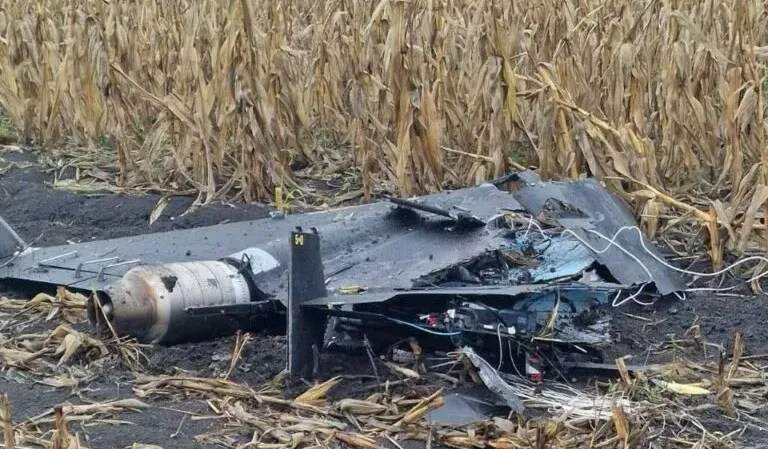
- A Russian Geran-type attack drone almost certainly entered Moldovan airspace and crashed in Kishtenitsa on 23 October, about 100 metres from a residential building. Moldova reported two drone airspace incidents between 16 and 23 October and declared a Russian embassy employee persona non grata. The incident is well supported in Moldovan official reporting and media accounts, but the drone’s origin rests on those reports rather than independently reported forensic findings. (Confidence: medium · REPORTED)
- I&W: Moldova’s Ministry of Defence publishes forensic findings identifying the recovered drone as Russian-origin or reports another Russian-origin drone crossing Moldovan airspace. (0-14 days)
- I&W: Moldovan authorities revise the drone’s identification or state that its origin cannot be established. (0-14 days)
- It is unlikely that the supplied public reporting establishes Russian direction of the reported damage at an Italian weapons factory, a Bulgarian munitions factory or the foiled drone attack on a Ukraine resupply aircraft at Leipzig airport. The accounts identify the perpetrators as unknown and come from think-tank reporting, so confidence in any Russian attribution is low. (Confidence: low · ASSESSED)
- I&W: Italian, Bulgarian or German investigators publish forensic or communications evidence tying any of the three incidents to a Russian handler. (1-3 months)
- I&W: Investigators identify a specific non-Russian perpetrator or establish an accidental cause for one of the reported incidents. (1-3 months)
- Russian-linked amplification of divisive UK and migration narratives is likely to recur through 24 January 2027, although confidence is low. The reporting describes a campaign after an arson attack on the then UK Prime Minister’s residence and 14 fabricated reports often blaming migrants; the claims rely on a think-tank account and a social-media post summarising NewsGuard’s findings. (Confidence: low · ASSESSED)
- I&W: NewsGuard or a UK authority publicly identifies new fabricated reports targeting migrants or UK political tensions and links them to a Russian influence operation. (1-3 months)
- I&W: A published review finds that the reported UK residence amplification or the 14 fabricated reports lacked Russian direction. (1-3 months)
Outlook & scenarios
Low-level pressure and unresolved attribution (60%)
Through 24 January 2027, European officials continue to report Russian-linked information activity and security concerns, but investigations do not establish a common Russian command behind the Moldova drone incident, the Italy and Bulgaria factory damage, or the Leipzig airport attack.
Investigations establish Russian links (25%)
Authorities publish evidence linking one or more reported incidents in Italy, Bulgaria, Leipzig or Moldova to Russian state direction. European governments respond with public attribution and further diplomatic measures, extending the response Moldova has already taken against a Russian embassy employee.
Incidents prove unrelated (10%)
Investigations identify separate or non-Russian causes for the reported factory damage and Leipzig airport incident. No further Russian-origin drone incident is reported in Moldova during the period, reducing the basis for treating these events as a coordinated European campaign.
High-impact attack triggers an attribution crisis (5%)
An attack on a Ukraine-linked weapons facility in Italy or Bulgaria, or on a Ukraine resupply aircraft at Leipzig airport, causes deaths or major disruption before investigators establish responsibility. Competing public accusations prompt rapid diplomatic retaliation and deepen the dispute over Russian direction.
Recommendations
- Seek current investigative findings from Italian and Bulgarian authorities and German authorities responsible for Leipzig airport. Record separately the confirmed damage, suspected sabotage and any evidence of Russian direction.
- Request or monitor Moldovan Defence Ministry updates on the Geran-type drone reported at Kishtenitsa, including recovery details, flight path and any forensic identification. Distinguish Moldova’s attribution from independently established origin.
- Maintain a dated watchlist of the named incidents and public statements by Friedrich Merz, Moldovan authorities and Russian officials. Update the assessment when investigations provide evidence that links or separates the cases.
- Track the reported UK residence arson amplification and the 14 fabricated reports through identifiable NewsGuard or UK authority publications. Do not treat unverified social-media summaries as independent confirmation of Russian direction.
Confidence & uncertainty
Overall confidence is high for the occurrence of the reported Moldova drone incidents and for the public statements by Friedrich Merz and Russian officials, which are supported by official reporting and major-media accounts. This rating does not extend to attribution or to a single coordinated campaign: the Russia links for the Italy, Bulgaria and Leipzig incidents and the disinformation examples rely on thin think-tank or social-media reporting. Attribution remains the main uncertainty.
Alternative analysis (red cell)
The reporting supports the occurrence of a Russian-linked or allegedly Russian-linked influence episode and several unattributed security incidents, but it does not establish a continuing coordinated campaign across Europe. The Moldova case is better supported as an airspace violation and crash than as independently verified proof of Russian origin. On the available record, recurrence through January 2027 remains possible but not sufficiently demonstrated to support a likely judgment.
Intelligence gaps
- [EEI 1.2 · UNCOVERED] Observed reconnaissance activity around critical sites indicative of attack planning (unauthorised drone flights, repeated surveillance visits, loitering vehicles, mapping/photography of assets). Recommended collection: open-source/media
- [EEI 1.3 · UNCOVERED] Law-enforcement or customs seizures, arrests or interdictions of persons or shipments carrying explosives, sabotage tools, specialty cutting/electrical equipment, or covert comms gear destined for/near critical infrastructure. Recommended collection: law enforcement
- [EEI 2.1 · UNCOVERED] Emergence or amplification of coordinated social-media networks (sets of accounts, pages, channels) pushing identical narratives or hashtags across multiple platforms, including bot-like activity metrics and origin IP/common management indicators. Recommended collection: social-media/OSINT
- [EEI 2.2 · PARTIAL] Publication or internal guidance from state-run media, proxy outlets, or identified influence platforms distributing talking points, pre-scripted messaging, or translated content targeted at specific EU countries/communities. Recommended collection: open-source/media
- [EEI 2.3 · PARTIAL] Distribution of manipulated multimedia (deepfakes), targeted phishing/whaling campaigns, or localized false narratives timed to political events (elections, protests, court rulings) with tracked reach and engagement metrics. Recommended collection: cyber/forensic
- [EEI 3.1 · PARTIAL] Unusual financial transactions: wire transfers, crypto conversions, or payments to shell companies, NGOs or individuals exceeding typical baselines that link to known proxies or front organisations. Recommended collection: financial
- [EEI 3.2 · UNCOVERED] Travel and movement indicators for suspected operatives: repeated border crossings, chartered/irregular flights, booking patterns or mobile/location data placing identified individuals in staging areas shortly before incidents. Recommended collection: border/immigration
- [EEI 3.3 · UNCOVERED] Cargo, freight or maritime movements with discrepancies (concealed/dual-use equipment, false manifests, unusual routing) detected at ports, rail hubs or via AIS that correspond to deliveries of material used in sabotage or influence operations. Recommended collection: customs/ports
- [EEI 3.4 · UNCOVERED] Intercepted or otherwise-obtained communications showing tasking, coordination, or payment instructions between Russian agencies/handlers and proxy groups, including identified command-and-control servers or encrypted group identifiers. Recommended collection: signals-intel/SIGINT
Red cell review: PARTIAL DISSENT
TLP:CLEAR