TLP:CLEAR · Disclosure is not limited.
Europe: Russian-linked sabotage and threats to defence personnel
Time window: Last 1 day · Audience: General analyst · Type: Situation report · DTG: 2026-10-11 12:10Z · Overall confidence: MEDIUM
BLUF
It is likely that Russia-linked sabotage and intimidation in Europe will persist through recruited intermediaries, with defence-sector personnel increasingly exposed. Evidence for an expanding threat is stronger than public evidence for Russian responsibility in every incident or for an imminent mass-casualty attack.
Executive summary
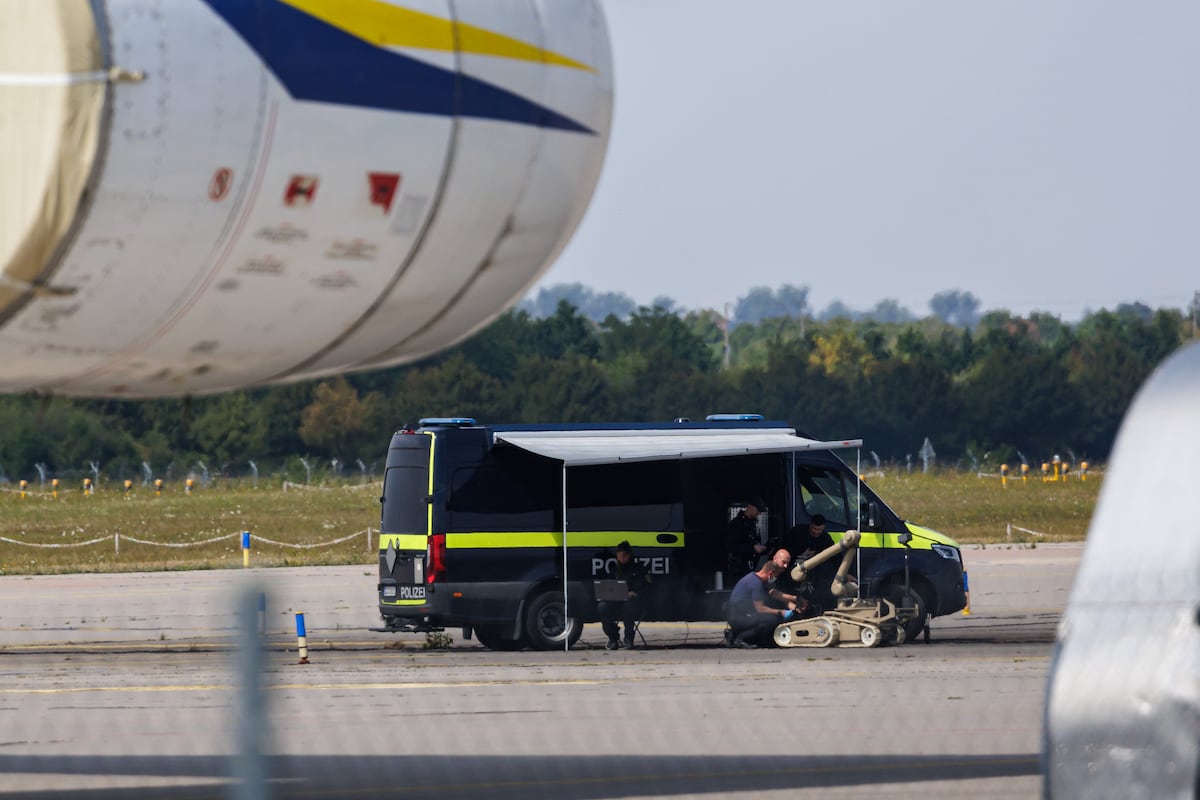
Reporting published on 11 October describes an expanding European campaign attributed to Russia, including the use of online and criminal networks to recruit operatives. European intelligence officials have warned of threats to defence industry leaders and staff, while companies report increased personal security measures. The reported rise in attributed incidents is not equivalent to a verified rise in completed attacks: the figures come from different datasets, and some operational claims rely on intelligence sources speaking anonymously. German authorities found an explosive-laden drone in a restricted area at Leipzig Airport in August; the device did not detonate, and the German government attributes the attempt to Russia.
Change from previous assessment
Since the 10 October brief, the assessment has broadened from the reported Estonian cases, Moldova and Danish warnings to a Europe-wide pattern of proxy recruitment and reported threats against defence industry personnel. New reporting adds the 60 per cent rise in attributed incidents, separate research totals on cases and arrests, and the August Leipzig/Halle explosive-drone incident near a Ukrainian military-transport aircraft. Confidence in the broad threat assessment remains medium; confidence in specific Russian attribution and in the likelihood of a further mass-casualty aviation attack remains limited.
Key judgments
- Reported assessments show a larger caseload attributed to Russia, but do not establish a 60 per cent rise in independently verified completed attacks. A major-media report says incidents attributed to Russia rose by 60 per cent in the first ten months of 2026. An ICCT and Globsec study counted 151 known operations from February 2022 to February 2026 and identified 172 people, 95 per cent of whom had no formal ties to Russian intelligence. Dragonfly Intelligence tracked 351 people arrested since 2022 for suspected Russian-origin attacks, including 73 in the past ten months. These figures use different populations and definitions. (Confidence: medium · REPORTED)
- I&W: An updated ICCT and Globsec or European-authority dataset records a higher number of case-level Russia-linked operations for 2026 than for the comparable period in 2025, confirming the reported trend. (1-3 months)
- I&W: A published review attributes the reported 60 per cent increase to changes in reporting or attribution criteria rather than an increase in recorded incidents, weakening the trend assessment. (1-3 months)
- It is likely that Russian services will continue to use recruited intermediaries for sabotage across Europe, including people recruited through criminal networks and online platforms, rather than relying solely on formal intelligence officers. Western intelligence sources report that the GRU steers sabotage efforts through organised crime syndicates and cross-border networks. Reporting also describes payments ranging from £5 for graffiti to £10,000 for assassination or large-scale arson. This assessment draws on intelligence reporting and research findings, but public case-level evidence of tasking remains uneven. (Confidence: medium · ASSESSED)
- I&W: Prosecutors in Lithuania or the UK disclose case evidence linking recruited intermediaries to Russian handlers, payments or tasking, confirming continued use of proxy networks. (1-3 months)
- I&W: Court findings in the Lithuanian case concerning the 2024 attempted arson of Ukraine-bound equipment establish that the suspects had no Russian or GRU direction, weakening the claim of state tasking in that case. (1-3 months)
- European intelligence reporting describes Russian-directed efforts to threaten defence industry personnel and deter cooperation with Ukraine. Officials from five European intelligence agencies told the Financial Times that the Kremlin had ordered an expansion of sabotage and hybrid operations. BfV chief Sinan Selen warned German lawmakers that Russia was planning acts of violence against individuals. Reporting identifies leaders and senior staff at defence manufacturers, including smaller firms producing drones and components, as targets; several executives said they had expanded close-protection measures over the past six months. The warnings are corroborated by reported company security changes, but public reporting does not name a newly targeted executive. (Confidence: medium · REPORTED)
- I&W: Police or prosecutors publicly disclose a new threat or attempted attack naming a defence manufacturer, an executive, or a drone or component producer, confirming continued targeting. (0-3 months)
- I&W: German or other European security officials publicly retract or materially qualify the warnings about Russian-directed threats to defence personnel, weakening the assessment. (1-3 months)
- A further attack causing mass casualties at German aviation infrastructure in the next three months is unlikely, but the August 2026 Leipzig/Halle incident is a serious warning. German authorities found an explosive-laden drone in a restricted area near a Ukrainian aircraft used to transport military material; it did not detonate, and the German government holds Russia responsible. The available reporting does not establish a second plot or an imminent follow-on attack, so confidence in this forecast is low. (Confidence: low · ASSESSED)
- I&W: German prosecutors announce a second explosive-device plot against an airport or identify an operative surveillance network at Leipzig/Halle, breaking the low-likelihood estimate. (0-3 months)
- I&W: The Leipzig/Halle investigation concludes that the device was isolated and identifies no second device or associated plot, supporting the low-likelihood estimate. (1-3 months)
Outlook & scenarios
Deniable operations continue (60%)
Over the next three months, Russia-linked actors continue using online and criminal recruitment for surveillance, vandalism, arson and attempted disruption in Europe. Arrests and protective measures increase, but authorities do not report a successful mass-casualty attack.
Threats against defence firms become more direct (25%)
Over the next three months, recruited networks move from intimidation and surveillance towards attacks on defence industry personnel or facilities, including firms producing drones and components. Public evidence of Russian direction remains incomplete, slowing a common European response.
Arrests and security measures disrupt operations (10%)
European investigations identify additional recruiters and intermediaries, while companies maintain increased protection for senior staff. Disrupted plots and prosecutions limit the number of attacks reaching their intended targets.
Limited incursion into NATO territory (5%)
A low-probability, high-impact wildcard is a limited Russian incursion into a NATO state bordering Russia, with the Baltic states identified in reporting as the area NATO considers most exposed. This would shift the immediate assessment from hybrid activity to a collective-defence crisis.
Recommendations
- Maintain a Europe-wide incident tracker that separates confirmed incident occurrence from official attribution and analytic assessment. Record the status of each investigation or prosecution.
- Reconcile the reported 60 per cent increase against its original denominator, case definitions and attribution criteria. Do not combine it with the separate totals for known operations, identified individuals or arrests.
- Prioritise updates from German authorities on the Leipzig/Halle drone investigation and from Lithuanian and UK prosecutors on cases involving suspected Russian tasking or recruited intermediaries.
- Track publicly confirmed threats, attacks and changes in close protection for defence industry personnel, with particular attention to smaller drone and component producers. Treat uncorroborated warnings of plots as leads, not confirmed incidents.
Confidence & uncertainty
Overall confidence is medium. The reporting draws on major-media accounts, statements from named officials including BfV chief Sinan Selen, company-reported security changes, and research by ICCT, Globsec and Dragonfly Intelligence. However, the datasets use different definitions, some operational claims rely on anonymous intelligence sources, and the public evidence does not independently establish Russian responsibility for every attributed incident. The German attribution of the Leipzig/Halle attempt is reported, but the supplied material contains no forensic findings or evidence of an imminent follow-on plot.
Alternative analysis (red cell)
The Leipzig/Halle incident demonstrates an alleged capability and intent to strike aviation infrastructure, but the available claims do not establish whether it was isolated or part of a continuing effort. Accordingly, a further mass-casualty attack cannot responsibly be characterized as unlikely merely because no second plot is publicly reported. The evidence supports low confidence in the forecast direction itself, rather than a meaningful estimate that the event is unlikely.
Intelligence gaps
- [EEI 1.2 · UNCOVERED] Observed reconnaissance activity around critical sites indicative of attack planning (unauthorised drone flights, repeated surveillance visits, loitering vehicles, mapping/photography of assets). Recommended collection: open-source/media
- [EEI 1.3 · PARTIAL] Law-enforcement or customs seizures, arrests or interdictions of persons or shipments carrying explosives, sabotage tools, specialty cutting/electrical equipment, or covert comms gear destined for/near critical infrastructure. Recommended collection: law enforcement
- [EEI 2.1 · UNCOVERED] Emergence or amplification of coordinated social-media networks (sets of accounts, pages, channels) pushing identical narratives or hashtags across multiple platforms, including bot-like activity metrics and origin IP/common management indicators. Recommended collection: social-media/OSINT
- [EEI 2.2 · UNCOVERED] Publication or internal guidance from state-run media, proxy outlets, or identified influence platforms distributing talking points, pre-scripted messaging, or translated content targeted at specific EU countries/communities. Recommended collection: open-source/media
- [EEI 2.3 · UNCOVERED] Distribution of manipulated multimedia (deepfakes), targeted phishing/whaling campaigns, or localized false narratives timed to political events (elections, protests, court rulings) with tracked reach and engagement metrics. Recommended collection: cyber/forensic
- [EEI 3.1 · PARTIAL] Unusual financial transactions: wire transfers, crypto conversions, or payments to shell companies, NGOs or individuals exceeding typical baselines that link to known proxies or front organisations. Recommended collection: financial
- [EEI 3.2 · UNCOVERED] Travel and movement indicators for suspected operatives: repeated border crossings, chartered/irregular flights, booking patterns or mobile/location data placing identified individuals in staging areas shortly before incidents. Recommended collection: border/immigration
- [EEI 3.3 · PARTIAL] Cargo, freight or maritime movements with discrepancies (concealed/dual-use equipment, false manifests, unusual routing) detected at ports, rail hubs or via AIS that correspond to deliveries of material used in sabotage or influence operations. Recommended collection: customs/ports
- [EEI 3.4 · PARTIAL] Intercepted or otherwise-obtained communications showing tasking, coordination, or payment instructions between Russian agencies/handlers and proxy groups, including identified command-and-control servers or encrypted group identifiers. Recommended collection: signals-intel/SIGINT
Cited sources
[1] The i Paper (inews.co.uk) · Russia’s ‘spook gangster’ tactics for recruiting spies to target UK military sites (B) · 11 October 2026 · sha256:4c0d2f7e89a0 [2] El País (English edition) · Students recruited via Telegram, amateur saboteurs and hitmen: How Russia outsources its operations in Europe (A) · 11 October 2026 · sha256:965aa67374b0 [3] upday.com · Why European Arms Bosses Are Suddenly Ramping Up Personal Bodyguards (B) · 11 October 2026 · sha256:5b876b405042 [4] Atlantic Council · Ukraine can help Europe counter Russia’s escalating shadow war (C) · 8 October 2026 · sha256:2c1c3b6bc82e [5] Deutsche Welle (DW) · Operations Plan Germany: How the Bundeswehr trains for NATO defense (A) · 10 October 2026 · sha256:253c52a7e271
Source content hashes were computed at collection time; the cited text is preserved unmodified for the life of this product.
Red cell review: PARTIAL DISSENT
TLP:CLEAR