TLP:CLEAR · Disclosure is not limited.
Europe: Russian-linked sabotage warnings sharpen, attribution remains uneven
Time window: Last 1 day · Audience: General analyst · Type: Situation report · DTG: 2026-11-24 13:30Z · Overall confidence: HIGH
BLUF
The UK has issued a direct warning that Russian state actors are targeting British organisations supplying Ukraine, and has briefed defence and critical infrastructure leaders in Whitehall. This raises concern about near-term proxy sabotage against defence suppliers, but current reporting does not establish one centrally directed campaign linking incidents across Europe.
Executive summary
On 24 November, the UK Government said the NPSA had warned organisations supplying the Ukrainian Armed Forces that they are being targeted by the Russian state. UK ministers and intelligence representatives are briefing defence and critical infrastructure leaders in Whitehall on 24 and 25 November. The alert follows sabotage attempts against European defence facilities and a September charge against a British man accused of preparing sabotage on instructions from an individual believed linked to the GRU Volunteer Corps. Separately, Estonia plans to close its Russian-border checkpoints from 1 December for at least six months after an alleged sabotage plot; Russia has protested the plan and rejected Estonia's allegations. The European Commission has issued guidance on tighter checks for Russian nationals and proposed visa restrictions on Russian combatants, but the Council has yet to decide when the combatant ban enters into force. Reporting supports concern about the threat and the response, but leaves the direction and connections between individual incidents unresolved.
Change from previous assessment
Since the 23 November brief, the assessment has shifted towards a more specific UK warning: the NPSA has now alerted organisations supplying the Ukrainian Armed Forces, and UK ministers and intelligence representatives are briefing defence and critical infrastructure leaders in Whitehall on 24 and 25 November. Reporting also adds a September UK prosecution allegation and confirms Russia's formal protest over Estonia's planned 1 December checkpoint closure. These developments raise confidence that authorities assess defence suppliers and border security as active concerns, but do not change the prior judgement that public reporting does not establish one coordinated Russian campaign across Europe. The EU's new visa guidance adds a policy response; the combatant ban remains pending a Council decision.
Key judgments
- The risk of Russian-linked proxy sabotage against UK organisations supplying Ukraine is likely elevated over the next 1 to 3 months, but the reporting establishes a heightened official warning and an alleged plot, not a new completed attack. The UK Government says the NPSA issued the warning, and Associated Press reporting describes arson and other low-sophistication proxy methods against European defence facilities. The September charge concerns an alleged plot against a drone factory in England and instructions from an individual believed linked to the GRU Volunteer Corps. Confidence is medium: the warning is direct official reporting with independent media corroboration, while the specific alleged plot remains a prosecution allegation and does not establish the scale of current operations. (Confidence: medium · ASSESSED)
- I&W: UK police or prosecutors identify a further suspect, target or handler linked to an attack plot against a named defence supplier or organisation supporting Ukraine. (0 to 30 days)
- I&W: The NPSA or UK police publicly downgrade the alert and report no further identified plots against organisations supplying Ukraine. (1 to 3 months)
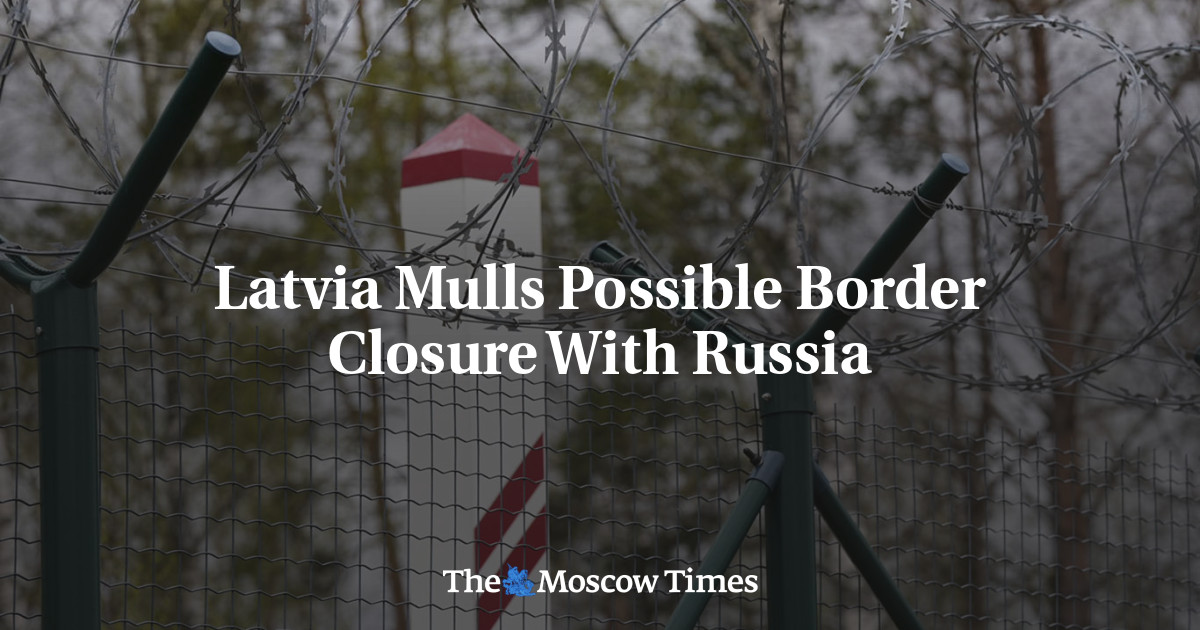
- Estonia's planned closure of its Russian-border checkpoints from 1 December will likely keep Estonia-Russia tensions elevated into December; Latvian authorities are also considering possible restrictions on their Russian land border. Estonia says the closure will last at least six months, and Russia's Foreign Ministry summoned Estonia's top diplomat on 23 November to protest. Russia has rejected Estonia's sabotage allegations, leaving the underlying attribution contested. Confidence is medium: the closure and diplomatic protest are reported by major media, while the sabotage allegation is disputed and the Latvian proposal remains under consideration. (Confidence: medium · ASSESSED)
- I&W: Estonia closes the announced checkpoints on 1 December, or publicly changes the scope or duration of the closure. (0 to 14 days)
- I&W: Latvia's government announces a decision on Russian-border restrictions, rather than only further review or discussion. (1 to 3 months)
- It is unlikely that current reporting establishes one centrally directed Russian operation linking the reported sabotage incidents across Europe. The reporting includes an Estonian attribution of an August arson attack, a UK prosecution allegation, and claims that authorities in Poland, Romania and other NATO countries disrupted Moscow-backed plots, but it does not identify a common handler, tasking channel or operational network. Russia rejects Estonia's allegation, although that denial does not independently resolve attribution. Confidence is low because the public reporting is fragmentary, the incidents are not independently connected, and some attributions remain contested. (Confidence: low · ASSESSED)
- I&W: Investigations in at least two European countries identify the same handler, payment route or tasking network across separate incidents. (1 to 3 months)
- I&W: Public investigative findings attribute the incidents to unrelated actors or report no evidence of Russian tasking. (1 to 3 months)
- The EU is tightening checks on Russian nationals and preparing visa restrictions on Russian combatants, but the combatant ban is not yet in force. The European Commission adopted revised guidance on 23 November, including interviews and systematic fingerprint checks for Russian nationals entering the Schengen area; the Council will decide when the combatant ban takes effect. Confidence is high for this policy status because the claims are supported by European Commission and multilateral reporting, although implementation will depend on subsequent Council and member-state decisions. (Confidence: high · REPORTED)
- I&W: The Council publishes a decision setting the date the visa ban on Russian combatants enters into force. (0 to 3 months)
- I&W: EU member states issue implementation notices confirming interviews, fingerprint checks or non-recognition of non-biometric Russian passports. (0 to 3 months)
Outlook & scenarios
Continued proxy pressure, without a single publicly established campaign (60%)
It is likely that UK and European authorities will continue to warn defence suppliers and investigate suspected low-sophistication sabotage, while public evidence remains insufficient to connect all incidents to one Russian-directed network. UK briefings to defence and critical infrastructure leaders continue on 24 and 25 November; Estonia's border measures add friction but do not themselves demonstrate a wider operational escalation.
Baltic restrictions deepen diplomatic friction (25%)
There is an unlikely but plausible prospect that Estonia implements the six-month checkpoint closure on 1 December and Latvia moves from review to specific restrictions. Russian protests and redirected traffic at Latvian checkpoints would add pressure, while the sabotage attribution remains disputed.
A high-impact attack triggers a sharper security response (8%)
A very unlikely, high-impact scenario is a successful attack on a named defence supplier or critical infrastructure site that causes casualties or prolonged disruption. The UK warning and reported plots make this a relevant contingency, but the available reporting does not indicate that such an attack is imminent. A confirmed incident would likely prompt urgent protective measures and closer public scrutiny of Russian attribution.
Recommendations
- Prioritise collection on the NPSA warning: identify which categories of UK organisations supplying the Ukrainian Armed Forces are covered, what threat indicators were shared, and whether the alert identifies specific locations, methods or timeframes.
- Maintain a case-level incident tracker for the UK, Estonia, Poland and Romania. Record the date, target, method, investigating authority and stated attribution separately; do not merge incidents into one campaign without evidence of a shared handler or tasking channel.
- Track Estonia's 1 December checkpoint decision and Latvia's border review. Monitor announced closures, redirected traffic and any new Russian diplomatic measures as distinct indicators of border friction.
- Check for a Council decision on the EU combatant visa ban and member-state notices on interviews, fingerprint checks and non-biometric passports. Report the ban as pending until its entry into force is confirmed.
- For the disinformation line, seek specific evidence from election authorities, platforms or investigators on named narratives, reach, coordination and attribution before linking any campaign to Russian actors.
Confidence & uncertainty
Overall confidence is high for the existence and content of the UK warning, the Whitehall briefings and the European Commission's policy guidance, which are supported by official reporting and independent major-media coverage. Confidence is lower on the direction and linkage of individual sabotage plots: several remain allegations, and Russia contests Estonia's attribution. The headline confidence applies to the reported warning and policy response, not to a claim that one centrally directed campaign has been proven.
Alternative analysis (red cell)
The public record does not establish whether the reported incidents are unrelated or part of a centrally directed Russian campaign. The absence of a publicly identified handler or tasking channel is compatible with either decentralized activity or compartmented coordination, so the more defensible assessment is that the network question remains unresolved rather than that a centralized operation is unlikely.
Intelligence gaps
- [EEI 1.1 · PARTIAL] Reports, operator notifications, CCTV or satellite imagery showing unexplained physical damage or operational outages at critical infrastructure sites (power substations, gas pipelines/compressor stations, water treatment plants, railway signaling centers, major telecom exchanges). Recommended collection: satellite/imagery
- [EEI 1.2 · PARTIAL] Observed reconnaissance activity around critical sites indicative of attack planning (unauthorised drone flights, repeated surveillance visits, loitering vehicles, mapping/photography of assets). Recommended collection: open-source/media
- [EEI 1.3 · PARTIAL] Law-enforcement or customs seizures, arrests or interdictions of persons or shipments carrying explosives, sabotage tools, specialty cutting/electrical equipment, or covert comms gear destined for/near critical infrastructure. Recommended collection: law enforcement
- [EEI 2.1 · UNCOVERED] Emergence or amplification of coordinated social-media networks (sets of accounts, pages, channels) pushing identical narratives or hashtags across multiple platforms, including bot-like activity metrics and origin IP/common management indicators. Recommended collection: social-media/OSINT
- [EEI 2.2 · UNCOVERED] Publication or internal guidance from state-run media, proxy outlets, or identified influence platforms distributing talking points, pre-scripted messaging, or translated content targeted at specific EU countries/communities. Recommended collection: open-source/media
- [EEI 2.3 · UNCOVERED] Distribution of manipulated multimedia (deepfakes), targeted phishing/whaling campaigns, or localized false narratives timed to political events (elections, protests, court rulings) with tracked reach and engagement metrics. Recommended collection: cyber/forensic
- [EEI 3.1 · UNCOVERED] Unusual financial transactions: wire transfers, crypto conversions, or payments to shell companies, NGOs or individuals exceeding typical baselines that link to known proxies or front organisations. Recommended collection: financial
- [EEI 3.2 · UNCOVERED] Travel and movement indicators for suspected operatives: repeated border crossings, chartered/irregular flights, booking patterns or mobile/location data placing identified individuals in staging areas shortly before incidents. Recommended collection: border/immigration
- [EEI 3.3 · PARTIAL] Cargo, freight or maritime movements with discrepancies (concealed/dual-use equipment, false manifests, unusual routing) detected at ports, rail hubs or via AIS that correspond to deliveries of material used in sabotage or influence operations. Recommended collection: customs/ports
- [EEI 3.4 · PARTIAL] Intercepted or otherwise-obtained communications showing tasking, coordination, or payment instructions between Russian agencies/handlers and proxy groups, including identified command-and-control servers or encrypted group identifiers. Recommended collection: signals-intel/SIGINT
Red cell review: PARTIAL DISSENT
TLP:CLEAR