TLP:CLEAR · Disclosure is not limited.
Europe’s hybrid threat picture: disruption widens, attribution remains open
Time window: Last 1 day · Audience: General analyst · Type: Situation report · DTG: 2026-11-13 22:43Z · Overall confidence: HIGH
BLUF
It is very likely that repeated bomb threats disrupted aviation, schools, media and rail services across Europe in early November. It is unlikely that current reporting establishes Russian direction of those threats; European threat assessments identify broader Russian-linked hybrid risks, but do not connect them to this specific wave.
Executive summary
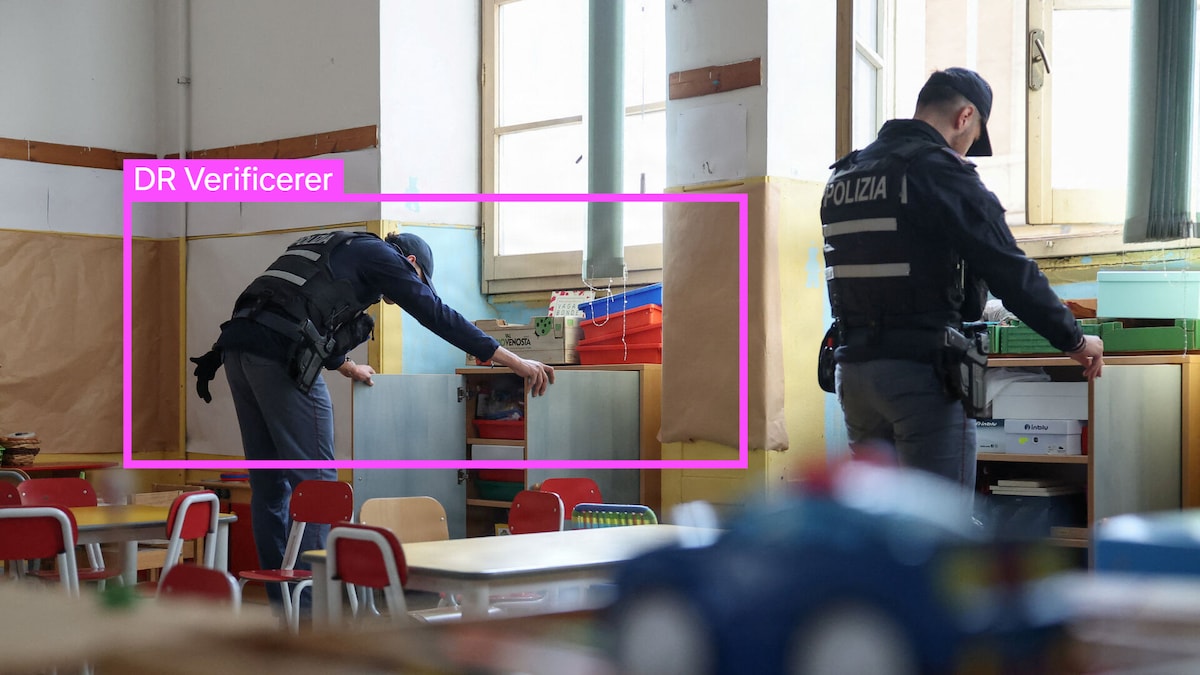
Reporting through 13 November describes bomb threats affecting Copenhagen Airport, airports in Poland, Bulgaria, Italy and Spain, schools in several countries, broadcasters in Ireland and Bulgaria, and a train station in Calais. The number and geographic scope of affected schools remain unclear, and reported tracing of Italian threat emails does not identify who directed them. Separately, ACLED assessed that Russian hybrid threats had increased, Kaja Kallas described attacks in Leipzig as having hallmarks of state-sponsored terrorism, and Danish intelligence reported a low but growing risk of a limited Russian military attack against NATO. These are distinct assessments and allegations, not evidence that the bomb threats form one Russia-directed campaign.
Change from previous assessment
Since the 12 November brief, reporting has added named targets across Copenhagen, Poland, Bulgaria, Italy, Spain, Ireland, Northern Ireland, Scotland and Calais, along with reported email-origin leads for two Italian school-threat waves. New reporting also includes Kaja Kallas’s public characterisation of the Leipzig attacks and expanded ACLED, Danish, US intelligence and NATO threat assessments. The assessment that the bomb-threat campaign is not established as Russia-directed has not changed; confidence in that attribution judgment remains low because the new email traces do not identify a directing actor.
Key judgments
- It is very likely that repeated bomb threats disrupted European aviation, schools, media and rail services in early November. Reports name Copenhagen Airport; airports in Poland, Bulgaria, Italy and Spain; RTÉ in Ireland and Nova in Bulgaria; schools in Ireland, Northern Ireland and Scotland; and a train station in Calais. One report says more than 6,000 Italian schools received an identical threat on Wednesday and around 1,800 on Thursday, while another gives a figure of more than 6,000 schools across several European countries. The totals and geographic scope are unresolved. Reported tracing of two Italian email waves points to a location near a university in Taiwan and an allegedly hacked account belonging to a teacher in the Philippines; neither trace identifies the sender or a directing actor. (Confidence: medium · REPORTED)
- I&W: Confirm if police or airport authorities report another named threat causing a closure, evacuation, cancellation or delay in a European city. Break if authorities document that the reported incidents did not cause operational disruption. (0-14 days)
- I&W: Confirm if investigators publish technical findings linking threats in different countries to the same sender infrastructure. Break if investigators establish that the reported email waves used unrelated accounts and infrastructure. (0-30 days)
- It is unlikely that available reporting establishes Russian direction of the November bomb threats. The senders remain unidentified, and the reported Italian email traces point to a Taiwan-area location and an allegedly compromised Philippines-based account, not to Russian tasking. ACLED’s assessment of separate activity involving German aviation, Polish infrastructure, and drone incursions in Romania and Moldova does not link that activity to these threats. Russia denies directing attacks on NATO or escalating its hybrid campaign. The attribution judgment rests on incomplete public reporting and is therefore low confidence. (Confidence: low · ASSESSED)
- I&W: Confirm if a European investigation publishes forensic evidence or charges linking a named threat campaign to Russian direction. Break if investigators attribute the messages to unrelated actors or compromised accounts without evidence of Russian tasking. (0-30 days)
- It is likely that Russia-linked hybrid activity will remain a European security concern, but the cited reporting presents this as a wider threat assessment rather than proof of one coordinated campaign. ACLED assessed that Russian hybrid threats had increased, citing aviation in Germany, attempted infrastructure sabotage in Poland, and drone incursions in Romania and Moldova, and forecast more cyber activity and attacks on defence and transport infrastructure. Separately, Danish intelligence described the risk of a limited Russian military attack against NATO as low but growing; reporting on US intelligence identified a possible operation window from autumn 2026 to 2029, while NATO said the threat would be most acute by 2030. Russia denies planning attacks on NATO. These assessments do not establish an imminent attack. (Confidence: medium · ASSESSED)
- I&W: Confirm if Danish intelligence or NATO publishes an updated assessment identifying specific preparations or a changed risk level for a Russian attack against NATO. Break if either publicly withdraws or materially revises the cited risk outlook. (1-3 months)
- I&W: Confirm if European authorities report a cyber incident or attack on named defence or transport infrastructure that they assess as Russian-linked. Break if subsequent official findings attribute such an incident to a non-state or non-Russian actor. (0-3 months)
Outlook & scenarios
Repeated low-cost disruption, attribution stays unresolved (55%)
Likely near-term course. Further anonymous threats prompt local evacuations, airport disruption or delays to rail services, while investigators identify senders or compromised accounts without establishing a common directing actor. The conflicting school counts remain a reporting problem rather than a reliable measure of campaign scale.
Forensics point to unrelated senders (25%)
Unlikely, but consistent with the reported Taiwan-area email trace and alleged compromise of a Philippines-based teacher’s account. Investigations find separate senders or account misuse across the threat incidents, weakening the case for a single coordinated campaign.
Russian-linked hybrid activity expands beyond threats (15%)
Unlikely. European authorities report a cyberattack or an attack on named defence or transport infrastructure and assess it as Russian-linked. This would fit ACLED’s forecast of increased cyber activity and pressure on defence and transport infrastructure, but would not by itself prove that Russia directed the bomb threats.
Narva crisis escalates into direct NATO-Russia conflict (5%)
Very unlikely, but high impact. RAND’s war-game describes a pathway beginning with Putin’s death in early 2027, Russian-incited riots in Narva and a limited land attack, followed by NATO support and a wider conflict involving Arctic undersea cables and UK ports and air bases by 2030. RAND presented this as a scenario, not a prediction.
Recommendations
- Maintain a country-by-country incident log for threats to airports, airlines, schools, broadcasters and rail services. Record date, named target, disruption, investigating authority and the status of forensic attribution; do not combine school counts until their geographic scope and reporting periods are reconciled.
- Separate evidence of an email’s route or account compromise from evidence of who directed it. Prioritise official findings from Italian investigators on the Taiwan-area and Philippines-account traces before assessing whether incidents share an operator.
- Track public attribution statements and investigative findings on the Leipzig attacks separately from the bomb-threat cases. Do not treat diplomatic summons or the phrase “hallmarks of state-sponsored terrorism” as a conclusive public attribution.
- Monitor updates from Danish intelligence, NATO and reporting on US intelligence for changes to the stated Russian military risk outlook. Keep these assessments distinct from evidence about the authorship of current threats.
- Use the stated indicators to update the assessment. Raise confidence in Russian direction only if investigators publish evidence of Russian tasking; lower it if findings establish unrelated senders or compromised accounts without Russian links.
Confidence & uncertainty
Overall confidence is high for the occurrence and reported effects of the disruptions, and for the existence of the cited official and analytic threat assessments. Established media and official sources report incidents across named European countries, while Danish intelligence, NATO and reporting on US intelligence provide separate assessments of the wider threat. Confidence is lower on attribution: the reported email traces do not identify a directing actor, the school totals conflict, and the Russian-linked claims are assessments or allegations rather than public proof of responsibility for this threat wave.
Alternative analysis (red cell)
The available reporting does not justify estimating Russian direction as unlikely; it supports only that attribution is unresolved. The Taiwan and Philippines indicators in 1fe3be24-c4cc-477a-b370-1b73367372bb may reflect compromised or intermediary infrastructure rather than the sender's identity, and Russia's denial in f536f5cf-2455-4a51-8af4-ee549decae94 has little evidentiary value. A more defensible assessment is that Russian involvement remains indeterminate pending technical and intelligence attribution.
Intelligence gaps
- [EEI 1.2 · UNCOVERED] Observed reconnaissance activity around critical sites indicative of attack planning (unauthorised drone flights, repeated surveillance visits, loitering vehicles, mapping/photography of assets). Recommended collection: open-source/media
- [EEI 1.3 · UNCOVERED] Law-enforcement or customs seizures, arrests or interdictions of persons or shipments carrying explosives, sabotage tools, specialty cutting/electrical equipment, or covert comms gear destined for/near critical infrastructure. Recommended collection: law enforcement
- [EEI 2.1 · UNCOVERED] Emergence or amplification of coordinated social-media networks (sets of accounts, pages, channels) pushing identical narratives or hashtags across multiple platforms, including bot-like activity metrics and origin IP/common management indicators. Recommended collection: social-media/OSINT
- [EEI 2.2 · UNCOVERED] Publication or internal guidance from state-run media, proxy outlets, or identified influence platforms distributing talking points, pre-scripted messaging, or translated content targeted at specific EU countries/communities. Recommended collection: open-source/media
- [EEI 2.3 · PARTIAL] Distribution of manipulated multimedia (deepfakes), targeted phishing/whaling campaigns, or localized false narratives timed to political events (elections, protests, court rulings) with tracked reach and engagement metrics. Recommended collection: cyber/forensic
- [EEI 3.1 · UNCOVERED] Unusual financial transactions: wire transfers, crypto conversions, or payments to shell companies, NGOs or individuals exceeding typical baselines that link to known proxies or front organisations. Recommended collection: financial
- [EEI 3.2 · UNCOVERED] Travel and movement indicators for suspected operatives: repeated border crossings, chartered/irregular flights, booking patterns or mobile/location data placing identified individuals in staging areas shortly before incidents. Recommended collection: border/immigration
- [EEI 3.3 · UNCOVERED] Cargo, freight or maritime movements with discrepancies (concealed/dual-use equipment, false manifests, unusual routing) detected at ports, rail hubs or via AIS that correspond to deliveries of material used in sabotage or influence operations. Recommended collection: customs/ports
- [EEI 3.4 · UNCOVERED] Intercepted or otherwise-obtained communications showing tasking, coordination, or payment instructions between Russian agencies/handlers and proxy groups, including identified command-and-control servers or encrypted group identifiers. Recommended collection: signals-intel/SIGINT
Red cell review: PARTIAL DISSENT
TLP:CLEAR