TLP:CLEAR · Disclosure is not limited.
Europe's protest wave: separate actions, no verified general strike
Time window: Last 1 day · Audience: General analyst · Type: Situation report · DTG: 2026-10-29 16:37Z · Overall confidence: HIGH
BLUF
The available reporting does not substantiate a coordinated general strike across France, Italy, Portugal and Albania. It describes student protests across nine European countries alongside distinct French union and port actions, a Portuguese police-union demonstration and Albanian anti-government protests.
Executive summary
Reporting describes student street protests in France, Belgium, Ireland, Spain, Portugal, Italy, Greece, Serbia and Albania, but does not establish a shared strike call. In France, CGT dockers have called a 24-hour strike for 30 October, Yellow Vest groups have called rallies for 31 October, and five union confederations back a nationwide day of action on 5 November. In Lisbon, ASPP/PSP and APG/GNR scheduled a 29 October demonstration over pay and career conditions. Albanian student-led protests demand Prime Minister Edi Rama's resignation. Accounts differ over whether recent demonstrations were mostly peaceful or violent, while Rama has offered dialogue and economic measures and authorities have reported new penalties and restrictions.
Change from previous assessment
The central assessment is unchanged: the available reporting does not establish a coordinated general strike across France, Italy, Portugal and Albania. This brief adds reporting of student protests across nine European countries, the French dockers' action on 30 October and five-confederation day of action on 5 November, the 29 October Lisbon police-union demonstration, and reported Albanian protest penalties and restrictions. The prior brief cited an Italian nationwide strike scheduled for 30 October; the current claims do not provide an independent update on that action, so it remains unverified here.
Key judgments
- A coordinated general strike across France, Italy, Portugal and Albania by 5 November is unlikely. Reporting documents student protests in all four countries, but identifies separate French union and port actions, a Portuguese police-union demonstration and Albanian anti-government protests, not a common strike call. (Confidence: medium · ASSESSED)
- I&W: A dated strike notice jointly issued by organisers in France, Italy, Portugal and Albania would break this assessment. (0-7 days)
- I&W: French, Portuguese and Albanian organisers publish only country-specific action notices, with no shared call by 5 November, would confirm this assessment. (0-7 days)
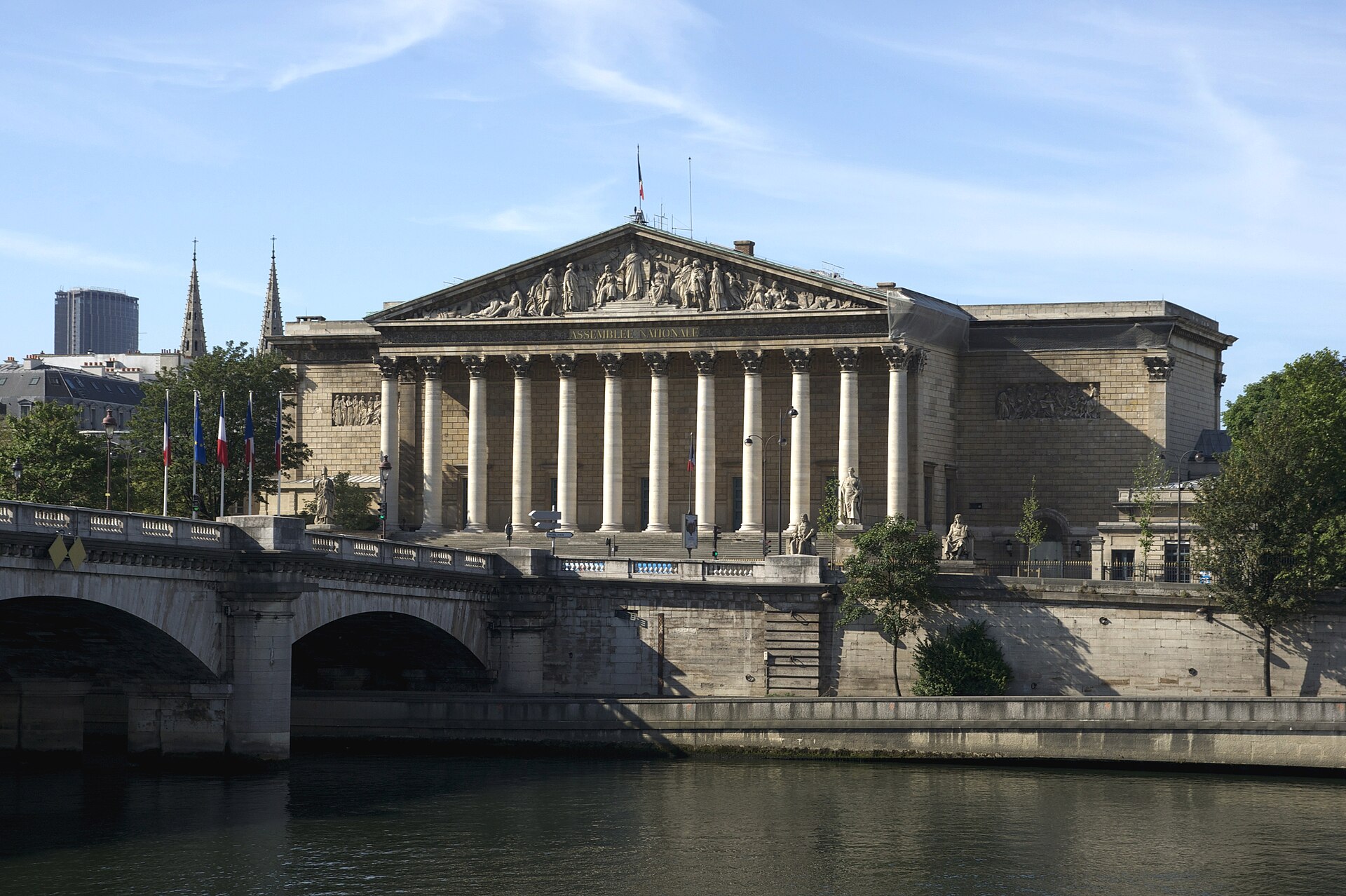
- French protest and labour action is likely to continue through 5 November, with the CGT dockers' strike on 30 October, Yellow Vest rallies on 31 October and the five-confederation day of action on 5 November as the clearest scheduled pressure points. Turnout and violence at those actions remain uncertain: the Interior Ministry counted 410,000 demonstrators on 24 October, while the CGT reported nearly 800,000, and police reported 1,314 arrests that day. (Confidence: medium · ASSESSED)
- I&W: The CGT dockers' strike and the 5 November action proceed, with the unions maintaining their published calls, would confirm continued mobilisation. (0-7 days)
- I&W: The CGT or the five confederations publicly cancel their scheduled actions would break the assessment of continued mobilisation through 5 November. (0-7 days)
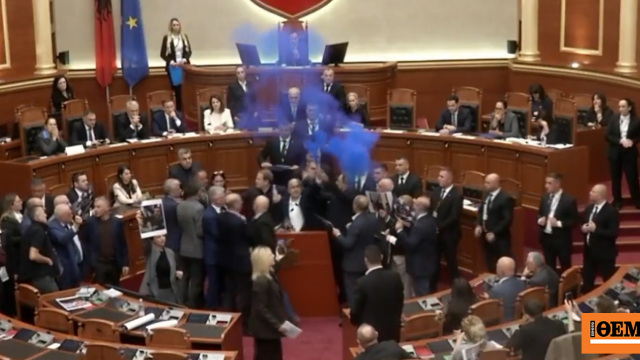
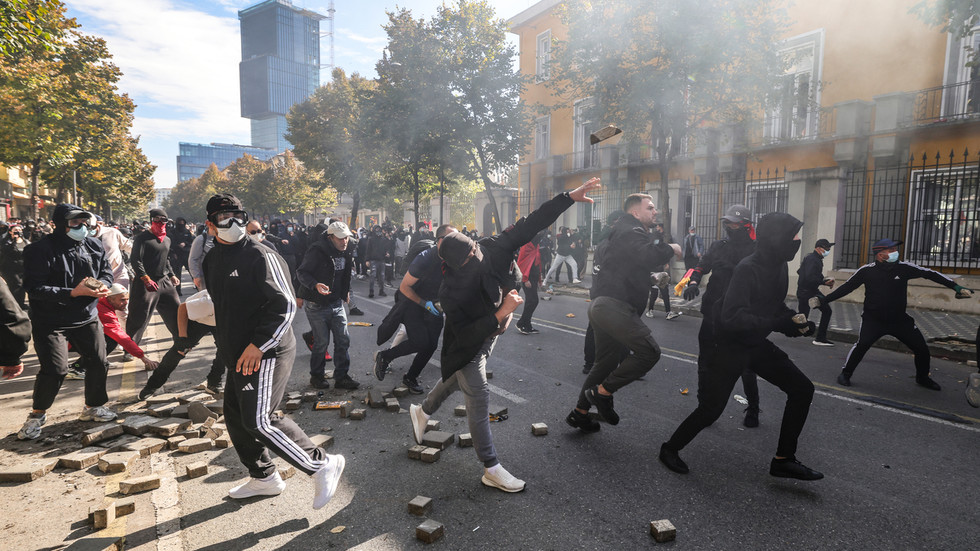
- Albanian demonstrations are likely to continue at least through the protest scheduled for 31 October, with demands for Edi Rama's resignation remaining central. The extent of violence is unresolved: reporting describes arson and attacks on police, while another account characterises demonstrations that week as mostly peaceful. (Confidence: medium · ASSESSED)
- I&W: The 31 October protest takes place in Tirana with demonstrators continuing to demand Rama's resignation, confirming near-term mobilisation. (0-3 days)
- I&W: Organisers cancel the 31 October demonstration and no replacement action is announced, breaking the near-term continuation assessment. (0-3 days)
- Albanian authorities' reported penalties and gathering restrictions increase legal exposure for people who remain at demonstrations that turn violent. This judgment rests on one outlet's reporting; the 25 October announcement and 28 October adoption dates may describe separate stages, but independent confirmation is not available in the reporting reviewed. (Confidence: low · REPORTED)
- I&W: Parliamentary approval or an official publication confirms the measures' status within the reported 45-day period, confirming that the restrictions are proceeding. (0-45 days)
- I&W: Authorities publicly withdraw the measures or parliament rejects them, breaking the assessment that the reported penalties and restrictions remain in force. (0-45 days)
Outlook & scenarios
Separate national actions continue (65%)
This is the most likely course. French port, Yellow Vest and union actions proceed on their separate schedules; the Lisbon police-union campaign remains focused on pay and career conditions; and Albanian demonstrations remain centred on Rama's resignation. Student protests continue across several countries without a common general-strike call.
A cross-border call takes shape (25%)
A shared call involving student movements or trade unions in several countries is unlikely, but would change the current picture if organisers publish a common date, demands and participating organisations. The existing reporting establishes student protests across nine countries, not coordinated strike arrangements.
Violence and enforcement intensify in Albania (10%)
A severe confrontation at the 31 October protest followed by enforcement of the reported penalties is unlikely, but would intensify pressure on Rama's government and sharpen opposition criticism. Conflicting descriptions of recent protest violence leave the scale of this risk uncertain.
Recommendations
- Keep protest reporting and strike reporting separate. Describe a pan-European general strike only after a dated, shared call from organisers in the countries concerned is documented.
- Track the CGT ports-and-docks action on 30 October at Le Havre, Rouen, Dunkirk, Calais and Marseille-Fos. Distinguish the federation's forecast of a 95% activity fall from observed port activity.
- Verify participation and disruption from the French actions on 31 October and 5 November, and attribute turnout figures to the Interior Ministry or the CGT rather than presenting them as a single agreed count.
- Check the status and enforcement of Albania's reported protest measures against official parliamentary and government announcements. Keep the 25 October announcement and 28 October adoption dates distinct until their relationship is confirmed.
- For Albania, report the conflicting accounts of protest violence and the competing explanations for how the movement began; do not present either account as settled.
Confidence & uncertainty
Confidence is high in the broad picture of distinct protest and labour actions, which is reported across multiple source types, including major media, local media and a wire service. Confidence is lower in the central coordination question because the reporting reviewed contains no shared strike notice, and lower still on the precise level of violence in Albania and the status of its newly reported measures. The high headline confidence reflects corroboration of the underlying country-level events, not certainty about future coordination.
Intelligence gaps
- [EEI 1.1 · PARTIAL] Confirmed dates, locations and participating unions or student organizations for planned general-strike actions in each country. Recommended collection: open-source/social media
- [EEI 1.2 · PARTIAL] Strike participation rates, public-transport cancellations, school or university closures, and interruptions to ports, airports, energy facilities or other critical services. Recommended collection: government/transport reporting
- [EEI 1.4 · UNCOVERED] Evidence that protest organizers are coordinating common demands, slogans, dates, funding or operational guidance across national borders. Recommended collection: open-source/social media
- [EEI 2.1 · PARTIAL] Announced or implemented policy concessions involving austerity measures, education funding, pensions, wages or youth employment. Recommended collection: government statements
- [EEI 3.1 · PARTIAL] Named organizations issuing mobilization calls, with verified membership, geographic reach and turnout at prior actions. Recommended collection: open-source/organizational websites
- [EEI 3.3 · PARTIAL] Student movement communications identifying coordinating committees, protest logistics, fundraising or links to established political parties. Recommended collection: social media/student networks
- [EEI 3.4 · PARTIAL] Participation by violent fringe groups, organized football ultras or extremist networks, including evidence of weapons, incendiary devices or coordinated attacks. Recommended collection: law-enforcement reporting
- [EEI 4.1 · PARTIAL] Changes in retail activity, industrial output, freight movement, tourism bookings or financial-market indicators attributed to strike disruption. Recommended collection: economic/financial reporting
- [EEI 4.2 · UNCOVERED] War-risk or political-risk insurance premium changes, transport rerouting and business continuity warnings linked to protest activity. Recommended collection: commercial risk reporting
- [EEI 4.3 · PARTIAL] Polling or verified public-opinion data showing support for the protests, governments or specific austerity demands. Recommended collection: polling/media reporting
- [EEI 4.4 · PARTIAL] Resignations, coalition disputes, parliamentary no-confidence actions or electoral announcements triggered by the protest wave. Recommended collection: parliamentary/political reporting
Red cell review: CONCUR WITH COMMENT
TLP:CLEAR