TLP:CLEAR · Disclosure is not limited.
Europe's protest wave: separate strike calls, coordination unverified
Time window: Last 1 day · Audience: General analyst · Type: Situation report · DTG: 2026-11-17 15:37Z · Overall confidence: HIGH
BLUF
The reporting supports a geographically broad protest wave and several separate strike or protest calls around 20 November, but not a coordinated general strike across France, Italy, Portugal and Albania. The supplied reporting does not substantiate claims of 1,200 arrests in Paris or hundreds injured in the latest French protests.
Executive summary
Demonstrations have spread across several European countries, but a major-media account describes them as not directly coordinated. Separate reports describe a student strike call for 20 November, a national strike call in Italy, a Portuguese public administration strike on the same date, and a Swiss youth protest. The country lists and organising attributions differ, and the strike schedules rely mainly on a low-reliability blog. A separate blog report gives organisers' estimates of 200,000 participants in France on 16 November, including 100,000 in Paris, and reports 219 arrests nationwide; those figures are not independently corroborated in the supplied claims. In Albania, parliamentary debate over protest damage and injuries accompanies a compensation act for eligible small businesses, with payments expected to begin in January 2027.
Change from previous assessment
Since the 16 November brief, new reporting adds planned actions around 20 November, including reported calls in Italy and Portugal and a Swiss youth protest. This raises confidence that separate mobilisations are planned in additional countries, but does not change the assessment that a coordinated general strike across France, Italy, Portugal and Albania is unlikely. A low-reliability blog now reports French attendance and arrest figures for 16 November; these do not substantiate 1,200 arrests in Paris or hundreds injured. Initial reporting still does not establish the scale of French strike participation or disruption.
Key judgments
- A coordinated general strike across France, Italy, Portugal and Albania around 20 November is unlikely. The supplied reporting describes European demonstrations as not directly coordinated and reports separate calls in Italy, Portugal and Switzerland; it does not document an Albanian strike call. The reported student-strike country list and the broader list of countries experiencing protests differ, while the strike details largely come from a low-reliability blog. (Confidence: medium · ASSESSED)
- I&W: Joint notices from unions or student organisations in France, Italy, Portugal and Albania naming a common strike date and joint organising body would break this judgement. (0-14 days)
- I&W: Published schedules showing distinct national, sectoral or city actions, without a common organising statement, would confirm this judgement. (0-14 days)
- The supplied reporting does not substantiate claims of 1,200 arrests in Paris or hundreds injured in the French protests. A low-reliability blog reports organisers' estimates of 200,000 participants nationwide, including 100,000 in Paris, and 219 arrests nationwide on 16 November; those figures have no corroboration in the supplied claims. (Confidence: low · ASSESSED)
- I&W: A dated release from the French police or Interior Ministry reporting at least 1,200 arrests in Paris on 16 November would break this judgement; a lower Paris total would confirm it. (0-14 days)
- I&W: A consolidated French official or hospital tally documenting hundreds of injuries from the 16 November protests would break the assessment that the supplied claims do not substantiate that figure. (0-14 days)
- French unions called a one-day national strike for 17 November, but the supplied reporting does not establish whether it produced national stoppages or measurable service disruption. The call is reported by a single blog source, so confidence in the call's scope and implementation is low. (Confidence: low · REPORTED)
- I&W: A French union post-action statement documenting participation in the 17 November strike would confirm that the call resulted in action. (0-2 days)
- I&W: Post-strike reports documenting normal operations and no material stoppages would break the assessment that the strike produced national disruption. (0-2 days)
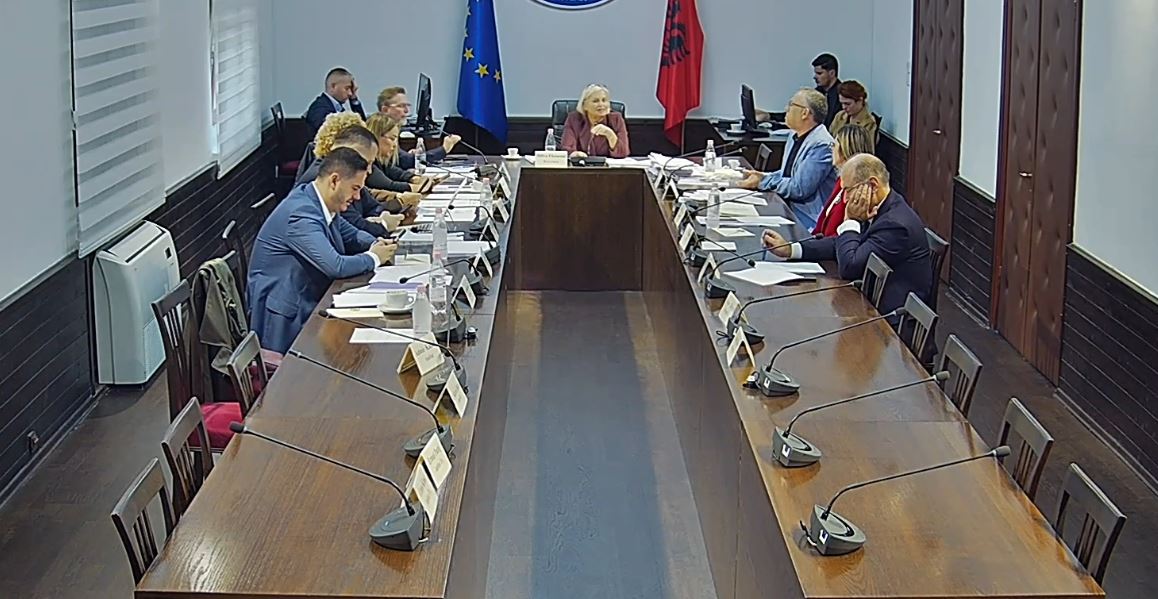
- Albania's protest aftermath is likely to remain a domestic dispute over compensation and accountability through January 2027, rather than evidence of a coordinated European strike. The Albanian Parliament's Economy Committee approved full compensation for eligible small businesses, while MPs publicly contested responsibility for protest damage and injuries; reported claims include 126 businesses registering 3.59 million euros in damage. (Confidence: medium · ASSESSED)
- I&W: The first compensation payments to eligible small businesses begin by January 2027, as reported, confirming implementation of the measure; an official postponement or cancellation would break it. (1-3 months)
- I&W: A new Tirana protest announcement explicitly centred on compensation or police treatment of injured protesters would confirm that the domestic accountability dispute remains active. (0-14 days)
Outlook & scenarios
Separate national and sectoral actions proceed (60%)
The most likely outcome is that the actions reported for 20 November proceed as distinct events: youth mobilisation in several countries, an Italian national strike call, a Portuguese public administration strike and a Swiss youth protest. Portuguese protests reported for Lisbon on 21 November and Brussels on 23 November remain separate events. No common European strike organisation emerges.
Organisers align some actions (15%)
Student groups and unions issue joint statements or synchronise additional actions after 20 November. This would increase cross-border coordination, but would not by itself establish a general strike across all four countries named in the topic.
Mobilisation remains local and loses momentum (20%)
The scheduled actions remain tied to national issues, with no sustained rise in participation after 20 November. In Albania, attention stays focused on compensation for damaged businesses and disputes over injuries and police conduct.
Renewed clashes in Tirana intensify the dispute (5%)
Low-probability, high-impact wildcard: renewed violent clashes in Tirana after the parliamentary debate produce further injuries or damage and prompt larger protests. This would intensify Albania's domestic crisis but would not, on current reporting, establish a direct link to strike activity elsewhere in Europe.
Recommendations
- Describe the mobilisation as a protest wave with separate reported strike calls, not as a coordinated European general strike, unless organisers publish joint notices naming participating countries and a common plan.
- Track 20 November actions by country, sector and organiser. Give separate treatment to the Italian national strike call, the Portuguese public administration strike, the Swiss youth protest and the student-strike country list.
- Do not repeat the 200,000 attendance estimate or the 219-arrest figure as verified totals. Seek dated police or government figures and distinguish Paris counts from nationwide counts before updating the brief.
- Monitor implementation of Albania's compensation act, including eligibility limits and the start of payments expected in January 2027. Track new Tirana protest announcements alongside parliamentary statements about injured protesters and damage.
Confidence & uncertainty
Overall confidence is high for the broad geographic spread of protests and the existence of separately reported mobilisation plans: major-media reporting describes the cross-border protest trend, while local reporting documents the Albanian parliamentary debate and compensation measure. Confidence is lower on the precise French attendance and arrest figures, and on the scope and coordination of actions planned for 20 November. The strike schedules rely mainly on a low-reliability blog, and the accounts differ on participating countries and organisers.
Alternative analysis (red cell)
The supplied evidence supports a connected European mobilization more strongly than the judgment allows: claim c2808710-98be-40e1-ae30-859eccd0189b reports a European youth strike across six countries, while claim 25087dcc-d0a4-4243-a225-0d23547f55ef attributes cross-European coordination to Juso. Claim 14b1031b-276a-495b-a371-63282c80c715 places Albania within the wider protest wave, so a coordinated protest action remains plausible even though a synchronized general strike involving Albania is not established. The competing country lists and coordination accounts should be treated as unresolved, consistent with lint code contradiction_unaddressed.
Intelligence gaps
- [EEI 1.2 · PARTIAL] Strike participation rates, public-transport cancellations, school or university closures, and interruptions to ports, airports, energy facilities or other critical services. Recommended collection: government/transport reporting
- [EEI 2.1 · PARTIAL] Announced or implemented policy concessions involving austerity measures, education funding, pensions, wages or youth employment. Recommended collection: government statements
- [EEI 2.2 · PARTIAL] Changes in crowd-control rules, emergency powers, detention practices, police reinforcements or restrictions on demonstrations. Recommended collection: official/legal reporting
- [EEI 2.4 · UNCOVERED] Negotiation schedules, mediation efforts or breakdowns between governments and trade-union or student representatives. Recommended collection: labor/government reporting
- [EEI 3.1 · PARTIAL] Named organizations issuing mobilization calls, with verified membership, geographic reach and turnout at prior actions. Recommended collection: open-source/organizational websites
- [EEI 3.2 · PARTIAL] Trade-union confederation decisions on strike mandates, rolling strikes, sector-wide action or cross-border coordination. Recommended collection: trade-union statements
- [EEI 3.3 · PARTIAL] Student movement communications identifying coordinating committees, protest logistics, fundraising or links to established political parties. Recommended collection: social media/student networks
- [EEI 3.4 · PARTIAL] Participation by violent fringe groups, organized football ultras or extremist networks, including evidence of weapons, incendiary devices or coordinated attacks. Recommended collection: law-enforcement reporting
- [EEI 4.1 · PARTIAL] Changes in retail activity, industrial output, freight movement, tourism bookings or financial-market indicators attributed to strike disruption. Recommended collection: economic/financial reporting
- [EEI 4.2 · UNCOVERED] War-risk or political-risk insurance premium changes, transport rerouting and business continuity warnings linked to protest activity. Recommended collection: commercial risk reporting
- [EEI 4.3 · PARTIAL] Polling or verified public-opinion data showing support for the protests, governments or specific austerity demands. Recommended collection: polling/media reporting
- [EEI 4.4 · PARTIAL] Resignations, coalition disputes, parliamentary no-confidence actions or electoral announcements triggered by the protest wave. Recommended collection: parliamentary/political reporting
Red cell review: PARTIAL DISSENT
TLP:CLEAR