TLP:CLEAR · Disclosure is not limited.
Europe's protests remain nationally organised, not a single general strike
Time window: Last 1 day · Audience: General analyst · Type: Situation report · DTG: 2026-10-30 15:26Z · Overall confidence: HIGH
BLUF
The reporting does not establish a single general strike spanning France, Italy, Portugal and Albania. Italy's 30 October USB-led strike and demonstrations are documented; France's next nationwide strike is scheduled for 5 November, while Albania's student protests centre on domestic grievances. Portugal appears in broad reporting, but the supplied claims do not identify a Portuguese strike organiser or protest city.
Executive summary
Italy saw a USB-led 24-hour strike and demonstrations on 30 October, with activity reported in Rome, Milan, Turin and other cities. Partial port blockages were reported in Naples, Livorno and Genoa, but accounts differ on turnout and transport disruption. France is preparing for demonstrations on 31 October, with 70,000 security personnel planned and Paris routes restricted; a nationwide strike is scheduled for 5 November. In Albania, student-led demonstrations oppose Edi Rama's government over alleged corruption, underfunded schools and employment concerns, amid recent clashes and new protest penalties. Germany has separate youth-led demonstrations planned, but the reporting does not show a common strike call across these countries.
Change from previous assessment
Since the prior brief, reporting provides more detail on the Italian strike's on-the-ground footprint, including demonstrations in Rome, Milan, Turin and Naples and partial port blockages in Naples, Livorno and Genoa. The transport picture remains disputed. French reporting now specifies the planned 70,000-person security deployment and Paris route restrictions for 31 October. Planned youth demonstrations in Germany add to the wider protest picture. The assessment that no single general strike across France, Italy, Portugal and Albania is established remains unchanged; confidence in the occurrence of the Italian mobilisation has increased, while turnout, transport effects and Portugal's role remain uncertain.
Key judgments
- A single coordinated general strike across France, Italy, Portugal and Albania is unlikely. Reporting describes Italy's USB-led strike on 30 October, a French nationwide strike planned for 5 November, and Albanian demonstrations focused on Edi Rama and domestic issues. Portugal appears in a broad report of protest activity and in reporting on online calls, but neither identifies a named Portuguese union, strike notice or protest city. Germany's planned Gen Z Regelt demonstrations add to the protest geography but are not evidence of a shared strike. (Confidence: medium · ASSESSED)
- I&W: Confirm: by 13 November, available union and student-movement notices still list separate national dates and organisers, without a joint call covering all four countries. (0-14 days)
- I&W: Break: named unions or student groups in France, Italy, Portugal and Albania publish a joint strike notice naming a shared date and common demands. (0-14 days)
- Italy's USB-led strike and demonstrations took place on 30 October in multiple cities, including Rome, Milan, Turin and Naples. Partial port blockages were reported in Naples, Livorno and Genoa. The scale of participation and the extent of transport disruption remain unsettled: Rome's subway was reported to be operating normally, while another account described central Rome transport as halted, and turnout estimates differ. (Confidence: medium · REPORTED)
- I&W: Confirm: by 13 November, port operator or municipal records continue to describe only partial disruption at Genoa, Livorno or Naples, while published turnout totals remain materially different. (0-14 days)
- I&W: Break: official post-event records provide consistent turnout figures and show full-day closures or service suspensions across the named ports and Rome public transport. (0-14 days)
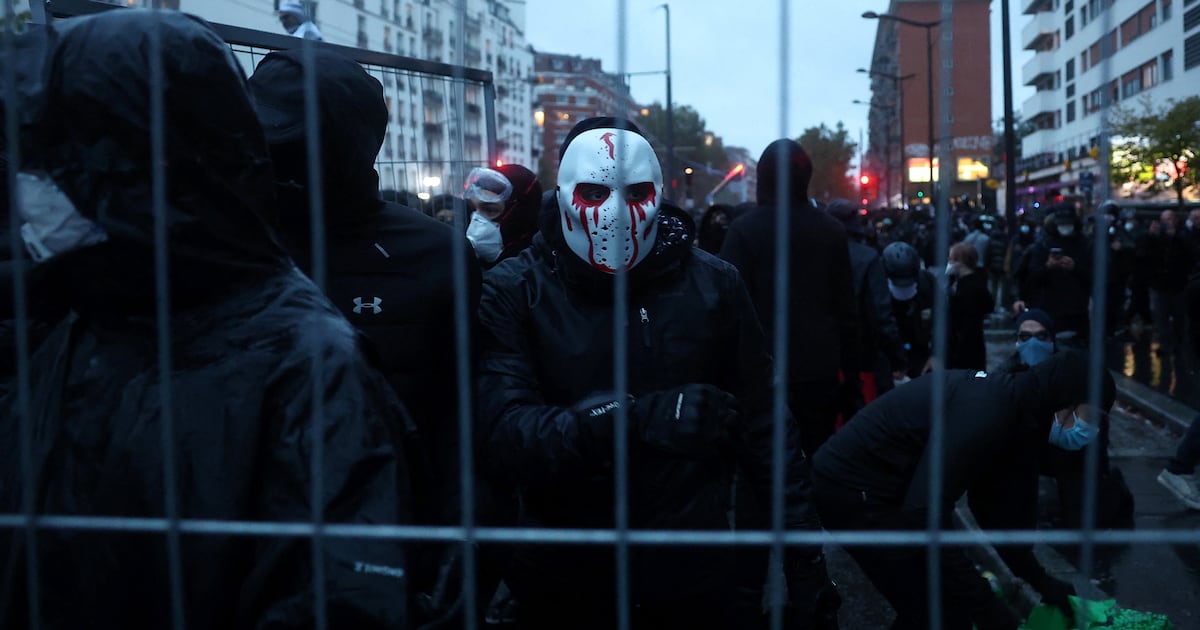
- Localized clashes during France's 31 October demonstrations are likely, but the reporting does not support treating all participants as violent. Interior Minister Laurent Nuñez described the day as a very high public-order risk, and the government planned to deploy 70,000 security personnel. Paris police directed the demonstration away from the city centre after violence and looting at earlier events. (Confidence: medium · ASSESSED)
- I&W: Confirm: French police or prefecture reports record arrests, injuries or enforcement of the République and Les Halles curfew following the 31 October demonstrations. (0-14 days)
- I&W: Break: prefecture reporting records no clashes or protest-related arrests, and the authorised demonstration concludes without curfew enforcement. (0-14 days)
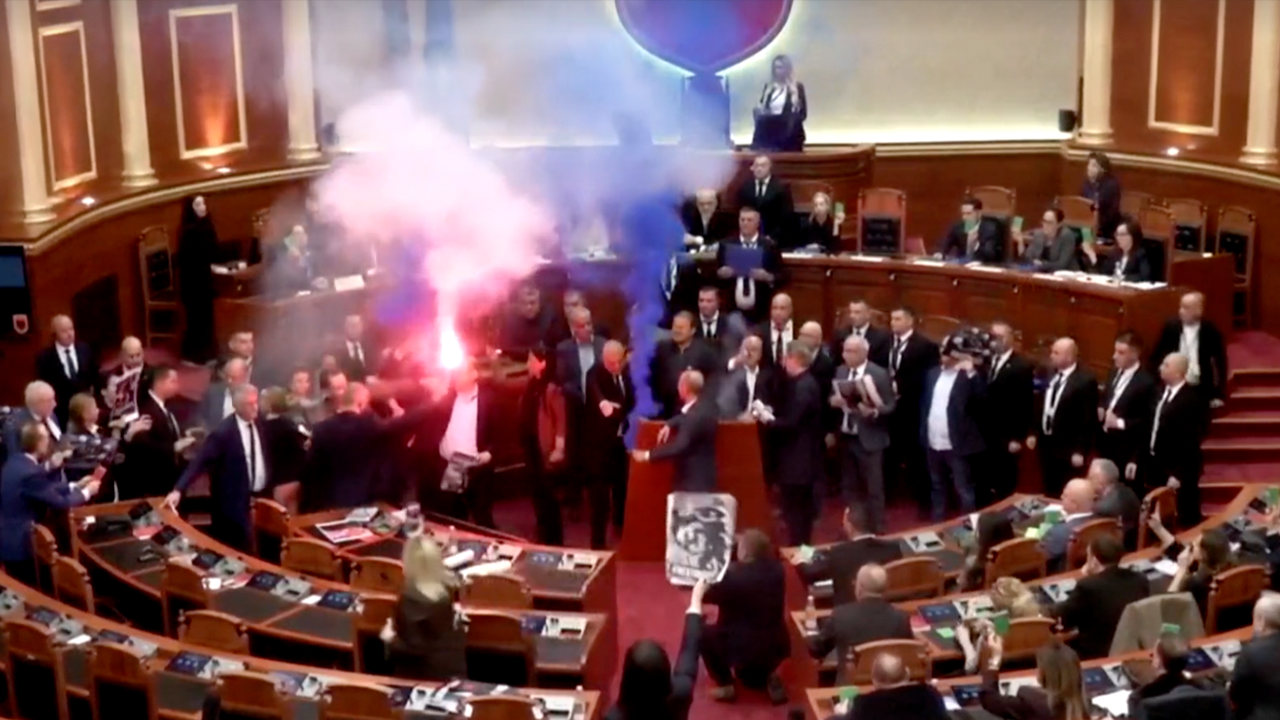
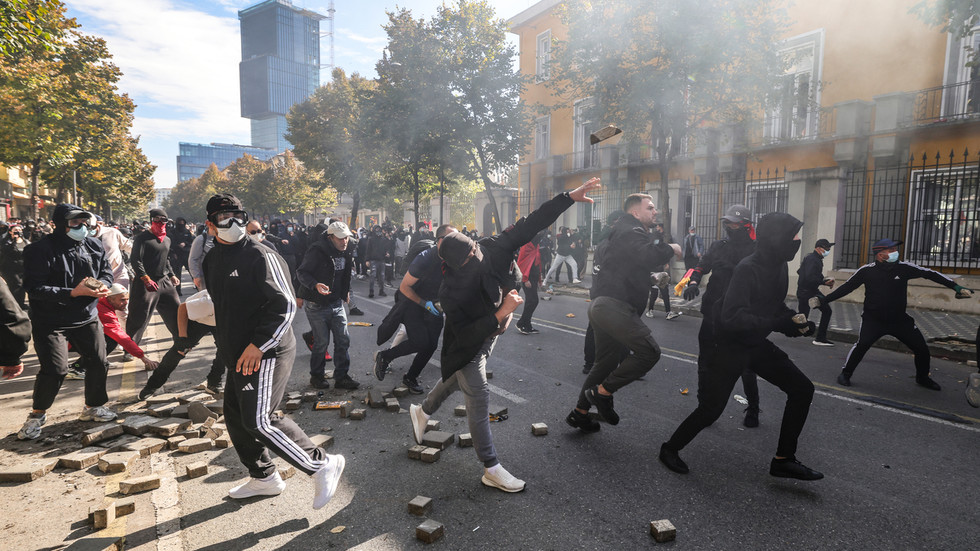
- Further student-led demonstrations against Edi Rama are likely in Tirana and other Albanian cities through early November. Students have demanded his resignation over alleged corruption, underfunded schools, unemployment and limited economic opportunity; protesters have clashed with police near the Socialist Party headquarters in Tirana. The 31 October demonstration is scheduled in one account, so confidence in its timing and turnout is limited. (Confidence: medium · ASSESSED)
- I&W: Confirm: local reporting or official notices document another student-led gathering in Tirana or another Albanian city, with police deployment or arrests. (0-14 days)
- I&W: Break: Albanian authorities and local reporting record no further demonstrations, and student groups publicly suspend mobilisation through 13 November. (0-14 days)
Outlook & scenarios
National actions continue on separate tracks (62%)
This is the most likely course. Italy's 30 October strike ends without a shared European strike call, France proceeds with its planned 5 November action, and Albanian demonstrations continue around domestic political demands. German youth protests remain a separate mobilisation.
Issue-based cross-border cooperation grows (20%)
An unlikely but plausible course is greater coordination among student groups or unions, particularly around living costs, education and military spending. The reported international dockworker mobilisation shows issue-based cooperation, but it does not establish a common general strike across the countries in focus.
Security measures contain street activity (15%)
Police deployments, route restrictions and penalties limit disorder at upcoming events. Participation remains substantial in France on 31 October, but activity becomes more dispersed, while Italy's 30 October transport and port disruption remains limited.
A serious incident triggers wider disruption (3%)
A very unlikely, high-impact course is a serious injury or major confrontation at a French or Albanian demonstration prompting new mobilisation and tighter restrictions. The result is renewed street activity and disruption at transport routes or ports beyond the locations already reported.
Recommendations
- Maintain separate country-level event records. Describe action as coordinated across countries only when named unions or student groups issue a joint notice with shared dates and demands.
- Check after-action reporting for Italy against rail, air and municipal transport updates and port operator notices for Genoa, Livorno, Naples and Rome. Keep turnout estimates attributed to their source until independent counts are available.
- For France, track prefecture updates on the 31 October route, curfew areas and security deployment, then compare them with reported arrests, injuries and disruption before assessing the 5 November strike.
- Monitor the 31 October demonstration in Tirana and subsequent Albanian notices for evidence of renewed clashes, enforcement of the new protest fines, or parliamentary action to extend the measures.
- Seek named Portuguese organisers, locations and dates before treating Portugal as part of a coordinated strike wave.
Confidence & uncertainty
Confidence is high in the core national developments because multiple major-media, wire-service and local reports document the Italian strike and demonstrations, French preparations and Albanian protests. Confidence is lower on Italian turnout and transport effects, where accounts conflict. The evidence for a common strike across four countries is weak: Portugal appears only in broad reporting, and the supplied claims identify separate national organisers and dates.
Intelligence gaps
- [EEI 1.1 · PARTIAL] Confirmed dates, locations and participating unions or student organizations for planned general-strike actions in each country. Recommended collection: open-source/social media
- [EEI 1.2 · PARTIAL] Strike participation rates, public-transport cancellations, school or university closures, and interruptions to ports, airports, energy facilities or other critical services. Recommended collection: government/transport reporting
- [EEI 2.4 · UNCOVERED] Negotiation schedules, mediation efforts or breakdowns between governments and trade-union or student representatives. Recommended collection: labor/government reporting
- [EEI 3.1 · PARTIAL] Named organizations issuing mobilization calls, with verified membership, geographic reach and turnout at prior actions. Recommended collection: open-source/organizational websites
- [EEI 3.2 · PARTIAL] Trade-union confederation decisions on strike mandates, rolling strikes, sector-wide action or cross-border coordination. Recommended collection: trade-union statements
- [EEI 3.3 · PARTIAL] Student movement communications identifying coordinating committees, protest logistics, fundraising or links to established political parties. Recommended collection: social media/student networks
- [EEI 3.4 · PARTIAL] Participation by violent fringe groups, organized football ultras or extremist networks, including evidence of weapons, incendiary devices or coordinated attacks. Recommended collection: law-enforcement reporting
- [EEI 4.2 · UNCOVERED] War-risk or political-risk insurance premium changes, transport rerouting and business continuity warnings linked to protest activity. Recommended collection: commercial risk reporting
- [EEI 4.3 · UNCOVERED] Polling or verified public-opinion data showing support for the protests, governments or specific austerity demands. Recommended collection: polling/media reporting
- [EEI 4.4 · UNCOVERED] Resignations, coalition disputes, parliamentary no-confidence actions or electoral announcements triggered by the protest wave. Recommended collection: parliamentary/political reporting
Red cell review: CONCUR WITH COMMENT
TLP:CLEAR