TLP:CLEAR · Disclosure is not limited.
Europe's Russia-linked hybrid threat: sabotage attribution and counter-drone response
Time window: Last 1 day · Audience: General analyst · Type: Situation report · DTG: 2026-10-21 14:40Z · Overall confidence: HIGH
BLUF
New reporting relays a US intelligence assessment that Vladimir Putin ordered expanded sabotage and covert operations against NATO member states, but the underlying evidence is not provided and Moscow denies involvement. European governments are strengthening counter-drone measures, while cleared incidents and sharply different attack counts make attribution the main analytic risk.
Executive summary
Reporting on 21 October says US intelligence services assess that Putin ordered an escalation of sabotage and covert operations against NATO states. Germany has attributed a failed drone attack at Leipzig/Halle airport to Moscow, but the supplied reporting does not provide the underlying attribution evidence, and Moscow denies involvement. German Chancellor Friedrich Merz has publicly described Russian disinformation, sabotage and attacks on communication systems as threats to Germany. Separately, a Dutch investigation of about 60 drone sightings found little evidence of Russian involvement. France, Germany and Poland have taken steps towards counter-drone operations, while European utilities are seeking greater defensive capability. These developments support continued monitoring, but they do not establish that every suspicious incident is Russian-directed.
Change from previous assessment
Since the 20 October brief, the reporting focus has shifted from the fabricated-video campaign about Friedrich Merz and the Black Sea shipping incidents to a reported US intelligence assessment of expanded Russian sabotage, Germany's attribution of the Leipzig/Halle airport incident, and European counter-drone measures. The new Dutch findings add a stronger caution on attribution. The prior brief's emphasis on provisional attribution remains valid; no supplied evidence resolves the underlying Russian tasking allegation.
Key judgments
- It is likely that Germany and NATO leaders will keep Russian-linked sabotage and influence operations high on their security agenda over the next three months. A Wall Street Journal account relayed in local media says US intelligence services, citing European officials familiar with their conclusions, assess that Putin ordered expanded covert operations against NATO members. Germany has attributed the failed Leipzig/Halle airport drone attack to Moscow, while Moscow denies involvement. The supplied reporting does not establish the underlying evidence or link every reported network or incident to Russia. (Confidence: medium · ASSESSED)
- I&W: A German or NATO public statement repeats the Leipzig/Halle attribution or identifies another investigation with evidence linking named operators to Russian state direction, confirming continued official concern. (0-30 days)
- I&W: German authorities formally find that the Leipzig/Halle incident was not a deliberate drone attack, or US intelligence publicly withdraws the reported tasking assessment, weakening the attribution basis. (0-3 months)
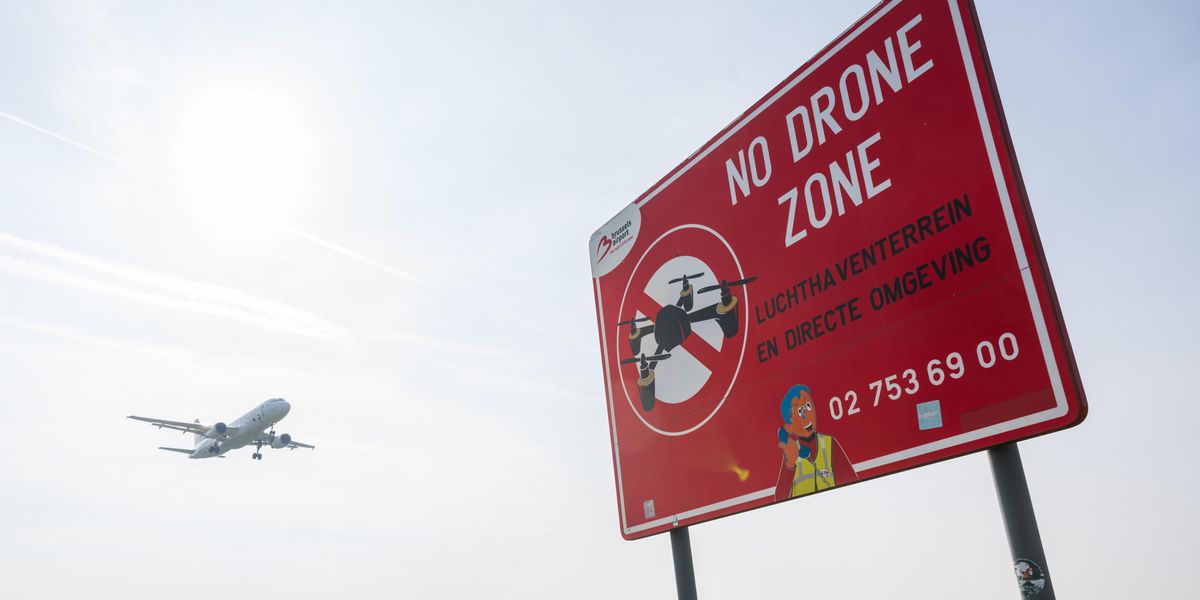
- It is likely European infrastructure protection will move towards more direct counter-drone roles for utilities and authorised operators, but legal authority will remain uneven between countries. France has adopted legislation permitting approved operators to use counter-drone measures, Germany has strengthened the police framework, and Poland has introduced provisions for drone neutralisation in specified restricted areas. There is no general EU authorisation for private companies to shoot down drones, and reporting describes continued debate over who may act. (Confidence: medium · ASSESSED)
- I&W: France, Germany or Poland publishes operational rules naming authorised counter-drone operators and permitted methods, confirming implementation of the reported shift. (1-3 months)
- I&W: The EU adopts a general authorisation for private companies to neutralise drones, breaking the current pattern of country-specific rules. (3-6 months)
- It is likely that broad published totals of 52 to 255 Russian hybrid attacks in Europe since February 2022 overstate the number of verified Russian-directed incidents. A Dutch review of about 60 drone sightings found little evidence of Russian involvement; investigators ruled out Russian involvement in the alleged GPS jamming of Ursula von der Leyen's plane, and Baltic cable damage was attributed to dragged anchors with no evidence of intent. These findings do not establish that Russian sabotage is absent, but they caution against treating unresolved or cleared cases as confirmed attacks. (Confidence: low · ASSESSED)
- I&W: A public reconciliation of the 52 to 255 attack estimates shows that most cases have independently verified Russian direction, weakening the assessment that broad totals overstate confirmed incidents. (1-3 months)
- I&W: Dutch investigators identify Russian-linked operators in multiple previously unresolved cases among the approximately 60 drone sightings, weakening the false-attribution concern. (0-3 months)
Outlook & scenarios
Defensive hardening, with attribution still contested (55%)
European governments continue counter-drone planning and infrastructure preparations. New sightings and suspected sabotage incidents draw investigation, but public evidence remains insufficient to confirm a Russian-directed operation. Officials distinguish confirmed cases from unresolved or cleared reports.
Confirmed attack on critical infrastructure (15%)
A successful attack on a European power or transport installation causes prolonged disruption during the winter period. Authorities identify evidence of Russian direction, prompting stronger security measures and a sharper political response. This is the low-probability, high-impact wildcard.
Attribution dispute eclipses the incident record (30%)
Further investigations clear suspected incidents or produce competing accounts of their causes. European governments disagree over which cases count as Russian hybrid activity, while Moscow continues to deny involvement. Public attention focuses on the reliability of attribution and the risk of overstating the threat.
Recommendations
- Prioritise verification of the Leipzig/Halle airport case. Seek German investigative findings on the device, operator, communications and any evidence of Russian tasking. Keep the reported US intelligence assessment separate from independently corroborated incident facts.
- Maintain a Europe-wide incident register that labels cases as confirmed, unresolved or cleared, records attribution evidence, and explains differences in counting methods. Do not present the 52 to 255 estimates as a single comparable total until their methods are reconciled.
- Track implementation of counter-drone rules in France, Germany and Poland. Record which public bodies, infrastructure operators and contractors are authorised to act, and what measures each may use.
- Ask European utility and transport analysts to monitor reported counter-drone deployments and winter contingency planning, with particular attention to whether a named facility reports a service disruption or heating outage.
Confidence & uncertainty
Overall confidence is high that the reported official statements, security incidents and policy changes are being publicly reported, with support across official government, major-media, wire and trade sources. That confidence does not extend equally to Russian responsibility: the Putin tasking allegation is indirect, Moscow denies involvement, several investigated incidents had non-Russian or non-hostile explanations, and published attack totals vary widely.
Intelligence gaps
- [EEI 1.2 · PARTIAL] Observed reconnaissance activity around critical sites indicative of attack planning (unauthorised drone flights, repeated surveillance visits, loitering vehicles, mapping/photography of assets). Recommended collection: open-source/media
- [EEI 1.3 · PARTIAL] Law-enforcement or customs seizures, arrests or interdictions of persons or shipments carrying explosives, sabotage tools, specialty cutting/electrical equipment, or covert comms gear destined for/near critical infrastructure. Recommended collection: law enforcement
- [EEI 2.2 · UNCOVERED] Publication or internal guidance from state-run media, proxy outlets, or identified influence platforms distributing talking points, pre-scripted messaging, or translated content targeted at specific EU countries/communities. Recommended collection: open-source/media
- [EEI 2.3 · PARTIAL] Distribution of manipulated multimedia (deepfakes), targeted phishing/whaling campaigns, or localized false narratives timed to political events (elections, protests, court rulings) with tracked reach and engagement metrics. Recommended collection: cyber/forensic
- [EEI 3.1 · PARTIAL] Unusual financial transactions: wire transfers, crypto conversions, or payments to shell companies, NGOs or individuals exceeding typical baselines that link to known proxies or front organisations. Recommended collection: financial
- [EEI 3.2 · UNCOVERED] Travel and movement indicators for suspected operatives: repeated border crossings, chartered/irregular flights, booking patterns or mobile/location data placing identified individuals in staging areas shortly before incidents. Recommended collection: border/immigration
- [EEI 3.3 · PARTIAL] Cargo, freight or maritime movements with discrepancies (concealed/dual-use equipment, false manifests, unusual routing) detected at ports, rail hubs or via AIS that correspond to deliveries of material used in sabotage or influence operations. Recommended collection: customs/ports
- [EEI 3.4 · UNCOVERED] Intercepted or otherwise-obtained communications showing tasking, coordination, or payment instructions between Russian agencies/handlers and proxy groups, including identified command-and-control servers or encrypted group identifiers. Recommended collection: signals-intel/SIGINT
TLP:CLEAR