TLP:CLEAR · Disclosure is not limited.
Europe’s Russia-linked hybrid threat: situation report, 16 October 2026
Time window: Last 1 day · Audience: General analyst · Type: Situation report · DTG: 2026-10-16 13:40Z · Overall confidence: MEDIUM
BLUF
The risk of Russian-linked sabotage and influence activity in Europe remains live, but current reporting does not establish that Moscow directed the recent Black Sea tanker strikes. The immediate operational concerns are attacks on commercial vessels near Romania, Russian strikes in Ukraine’s Volyn region near Poland, and Bulgaria’s request for NATO aircraft and anti-drone systems.
Executive summary
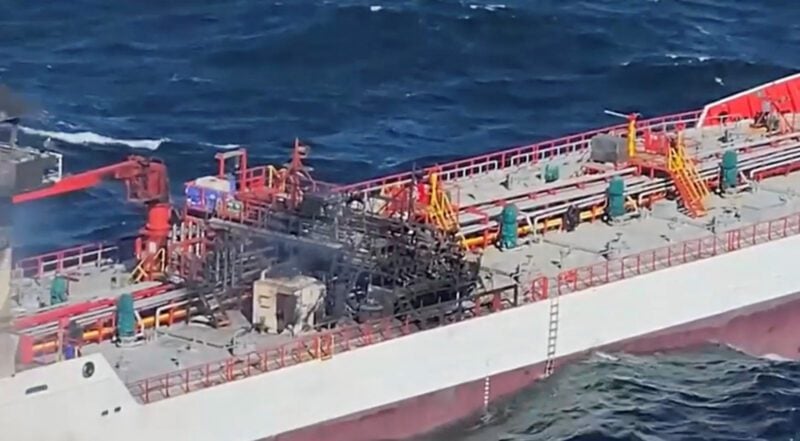
Reporting describes a broad pattern of suspected Russian-linked hybrid activity in Europe. The Sahaidachnyi Security Center in Kyiv says its database contains more than 600 incidents, while separate analysis reports online recruitment for sabotage and efforts to influence European public debate. On 14-15 October, drones struck the tankers Yara J and Wine Trader near Sulina; seven Wine Trader crew members were reported missing, while Yara J’s crew were reported safe. An unnamed NATO military source attributed the drones to Russia, but Romanian President Nicusor Dan declined to assign responsibility, and reports differ on the precise strike locations. On 16 October, Russian attacks cut electricity to 370,000 people in Ukraine’s Volyn region. Poland scrambled fighter jets and reported no airspace violation. Bulgaria has formally asked NATO to deploy combat aircraft and anti-drone systems.
Change from previous assessment
Since the 15 October brief, this assessment adds the Sahaidachnyi Security Center’s reported total of more than 600 European incidents, reporting on online recruitment for sabotage, and the 14-16 October Black Sea and western Ukraine developments. The earlier caution that public reporting does not establish Russian tasking in individual sabotage cases is retained. Confidence in Russian responsibility for the tanker strikes is low because the available attribution is anonymous and conflicts with Romania’s public position and reported strike locations.
Key judgments
- Russia-linked sabotage and influence activity in Europe is likely to persist over the next three months, but the reporting does not establish that the more than 600 incidents in the Sahaidachnyi Security Center database form one centrally directed campaign. The database reports suspected or proven Russian links in most cases; separate think-tank reporting describes online recruitment of disposable agents and efforts to polarise European debate ahead of elections. These are aggregate assessments, not public case-level proof of Russian tasking. (Confidence: medium · ASSESSED)
- I&W: Confirm: a European police or intelligence service publicly identifies an online recruiter, payment channel, and Russian tasking in a sabotage case. (0-3 months)
- I&W: Break: authorities publicly close or reclassify at least two recent sabotage investigations as non-Russian and provide the basis for that conclusion. (0-3 months)
- It is unlikely that the available reporting establishes Russian responsibility for the 14-15 October drone strikes on Wine Trader and Yara J near Sulina. An unnamed NATO military source called the drones Russian-origin, while Romanian President Nicusor Dan declined to attribute responsibility. Wine Trader was reported one mile outside Romanian waters, while Yara J was reported inside them; the accounts may describe separate incidents. Moscow separately said it had hit unnamed cargo ships carrying military cargo bound for Odesa, but the reporting does not establish whether that account refers to these tankers. (Confidence: low · ASSESSED)
- I&W: Confirm a Russian link: Romanian authorities or NATO publish drone forensics or other evidence tying the strikes to Russian platforms or tasking. Break the attribution: authorities publish evidence identifying a different operator. (0-30 days)
- I&W: Romanian authorities publish coordinates for both strikes that resolve whether each occurred inside or outside Romanian territorial waters. (0-14 days)
- Russian strikes in Ukraine’s Volyn region on 16 October are likely to keep Polish air surveillance at heightened readiness over the next two weeks, but the reporting records no Polish airspace violation and does not show an attack on NATO territory. Poland said it scrambled fighter jets during the Russian attacks; the strikes cut electricity to 370,000 people in Volyn. This is conventional wartime spillover risk, not evidence by itself of a hybrid attack on Poland. (Confidence: medium · ASSESSED)
- I&W: Confirm: Poland’s armed forces report another fighter-jet scramble linked to Russian strikes in western Ukraine, or record a Russian airspace violation. (0-14 days)
- I&W: Break: Polish authorities report no further scrambles, airspace incidents, or alert-posture changes during the next two weeks. (0-14 days)
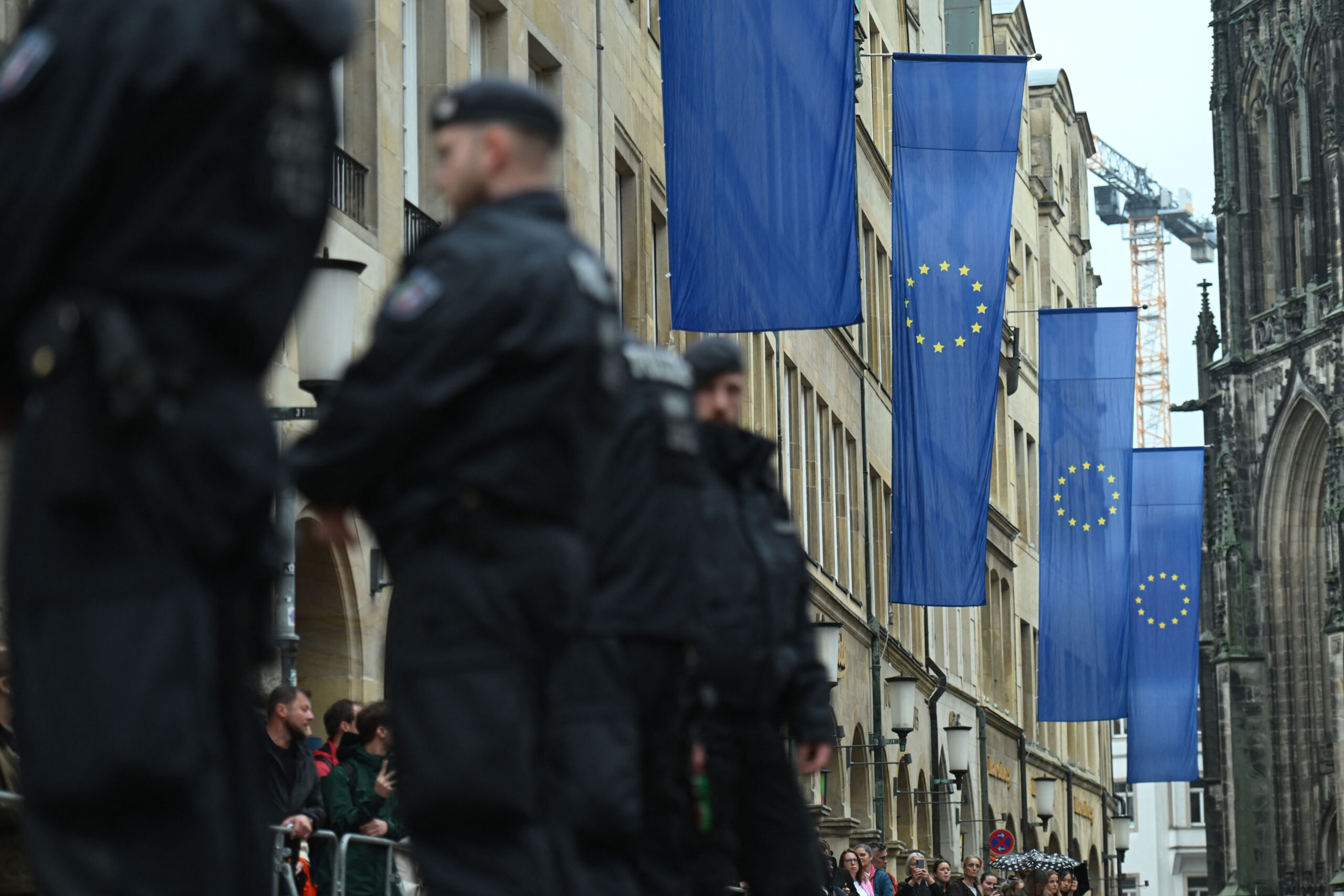
- Bulgaria has formally asked NATO to deploy combat aircraft and anti-drone systems, and NATO Secretary General Mark Rutte has said the Alliance will adjust its Black Sea posture as needed. The supplied reporting confirms the request and the stated intent to review posture, but does not report that a deployment has been approved. (Confidence: medium · REPORTED)
- I&W: Confirm implementation: NATO or Bulgaria publicly announces an assignment of combat aircraft or anti-drone systems. (0-14 days)
- I&W: Break near-term implementation: NATO or Bulgaria states that the request has been deferred or declined. (0-30 days)
Outlook & scenarios
Persistent hybrid pressure, limited public attribution (55%)
Russian-linked sabotage and influence activity continues across Europe, with online recruitment and attempts to shape public debate remaining prominent in reporting. European authorities identify individual incidents, but public evidence does not connect most cases to a single Russian-directed campaign.
Black Sea incidents drive a stronger defensive posture (25%)
Further attacks on commercial vessels near Romania or Bulgaria lead NATO to increase defensive monitoring or fulfil Bulgaria’s request for aircraft and anti-drone systems. Russian responsibility remains contested unless authorities publish forensic evidence.
Attribution remains fragmented (15%)
The tanker strikes remain unresolved, and some reported incidents prove to be distinct events linked to the wider Russia-Ukraine war rather than one coordinated campaign against Europe. Governments continue to issue warnings without publishing case-level evidence of Russian direction.
Wildcard: casualties on NATO territory (5%)
A drone or sabotage incident causes deaths or serious damage on NATO territory. If authorities attribute it to Russia, pressure for a faster and more forceful Alliance response would rise sharply.
Recommendations
- Track each incident using separate labels for verified event, publicly claimed attribution, and independently corroborated Russian direction. Apply the distinction particularly to the Sulina tanker strikes and aggregate incident totals.
- Seek or monitor for publicly releasable Romanian and NATO evidence on drone origin, strike coordinates, and the identities of the vessels involved. Do not treat the unnamed NATO source’s attribution as confirmed.
- Track NATO’s response to Bulgaria’s request through official announcements and observable deployments. Record any changes alongside Polish reports of fighter scrambles or airspace incidents.
- Keep Russian attacks on Ukrainian energy infrastructure separate from incidents inside European countries unless evidence establishes a distinct covert operation or target in Europe.
- Assess online influence and sabotage-recruitment claims against specific, checkable indicators such as identified accounts, domains, payment channels, arrests, or published evidence of tasking. Do not infer central direction from an incident count alone.
Confidence & uncertainty
Major-media and wire-service reporting supports the occurrence of the tanker strikes, power outages, and Polish military response. Attribution for the tanker strikes remains weak and contested: the Russian-origin claim comes from an unnamed NATO source, while Romania declined to assign responsibility and reports differ on strike locations. Broader hybrid-threat claims draw on an aggregate database and think-tank assessments rather than public case-level evidence. This mix supports medium overall confidence.
Intelligence gaps
- [EEI 1.2 · UNCOVERED] Observed reconnaissance activity around critical sites indicative of attack planning (unauthorised drone flights, repeated surveillance visits, loitering vehicles, mapping/photography of assets). Recommended collection: open-source/media
- [EEI 1.3 · UNCOVERED] Law-enforcement or customs seizures, arrests or interdictions of persons or shipments carrying explosives, sabotage tools, specialty cutting/electrical equipment, or covert comms gear destined for/near critical infrastructure. Recommended collection: law enforcement
- [EEI 2.1 · UNCOVERED] Emergence or amplification of coordinated social-media networks (sets of accounts, pages, channels) pushing identical narratives or hashtags across multiple platforms, including bot-like activity metrics and origin IP/common management indicators. Recommended collection: social-media/OSINT
- [EEI 2.2 · PARTIAL] Publication or internal guidance from state-run media, proxy outlets, or identified influence platforms distributing talking points, pre-scripted messaging, or translated content targeted at specific EU countries/communities. Recommended collection: open-source/media
- [EEI 2.3 · PARTIAL] Distribution of manipulated multimedia (deepfakes), targeted phishing/whaling campaigns, or localized false narratives timed to political events (elections, protests, court rulings) with tracked reach and engagement metrics. Recommended collection: cyber/forensic
- [EEI 3.1 · UNCOVERED] Unusual financial transactions: wire transfers, crypto conversions, or payments to shell companies, NGOs or individuals exceeding typical baselines that link to known proxies or front organisations. Recommended collection: financial
- [EEI 3.2 · UNCOVERED] Travel and movement indicators for suspected operatives: repeated border crossings, chartered/irregular flights, booking patterns or mobile/location data placing identified individuals in staging areas shortly before incidents. Recommended collection: border/immigration
- [EEI 3.3 · PARTIAL] Cargo, freight or maritime movements with discrepancies (concealed/dual-use equipment, false manifests, unusual routing) detected at ports, rail hubs or via AIS that correspond to deliveries of material used in sabotage or influence operations. Recommended collection: customs/ports
- [EEI 3.4 · UNCOVERED] Intercepted or otherwise-obtained communications showing tasking, coordination, or payment instructions between Russian agencies/handlers and proxy groups, including identified command-and-control servers or encrypted group identifiers. Recommended collection: signals-intel/SIGINT
Cited sources
[1] Голос Америки (Voice of America, Russian service) · Война теней: гибридная война России против Европы (A) · 15 October 2026 · sha256:06a255935eb7 [2] Atlantic Council · Ukraine can help Europe counter Russia’s escalating shadow war (C) · 8 October 2026 · sha256:2c1c3b6bc82e [3] Reuters (republished by gCaptain) · Seven Sailors Missing as Drones Strike Tankers Near Romania (A) · 15 October 2026 · sha256:c07b4fe1a6f3 [4] BBC News · Russia accuses Ukraine of attacking oil refinery after Zelensky says strikes to resume (A) · 15 October 2026 · sha256:946f3607be7a [5] Al Jazeera · Poland scrambles fighter jets as Russia strikes western Ukraine (A) · 16 October 2026 · sha256:2a6da7d6e969 [6] Diário do Grande ABC · Rússia ataca nove regiões da Ucrânia e provoca cortes emergenciais de energia - Diário do Grande ABC - Notícias e informações do Grande ABC: rússia,ucrânia,guerra,ataques (D) · 16 October 2026 · sha256:9599fd4e07ff
Source content hashes were computed at collection time; the cited text is preserved unmodified for the life of this product.
Red cell review: CONCUR WITH COMMENT
TLP:CLEAR