TLP:CLEAR · Disclosure is not limited.
European Protest Wave: National Actions and Late-November Coordination
Time window: Last 1 day · Audience: General analyst · Type: Situation report · DTG: 2026-11-04 17:36Z · Overall confidence: HIGH
BLUF
Reporting now supports a multi-country protest wave and a Paris-led call for coordinated demonstrations on 20-22 November, but not a general strike spanning France, Italy, Portugal and Albania. France’s national strike and protest action on 5 November is the immediate public-order concern; separate national actions do not establish a single European strike programme.
Executive summary
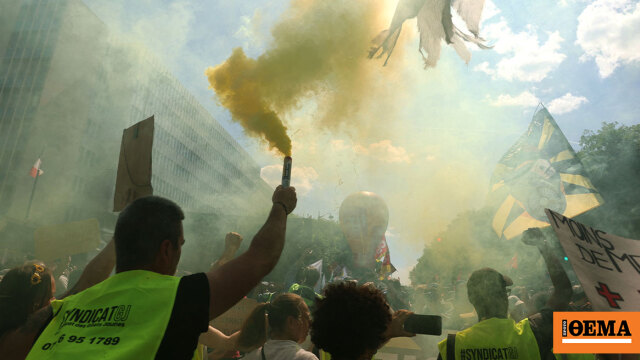
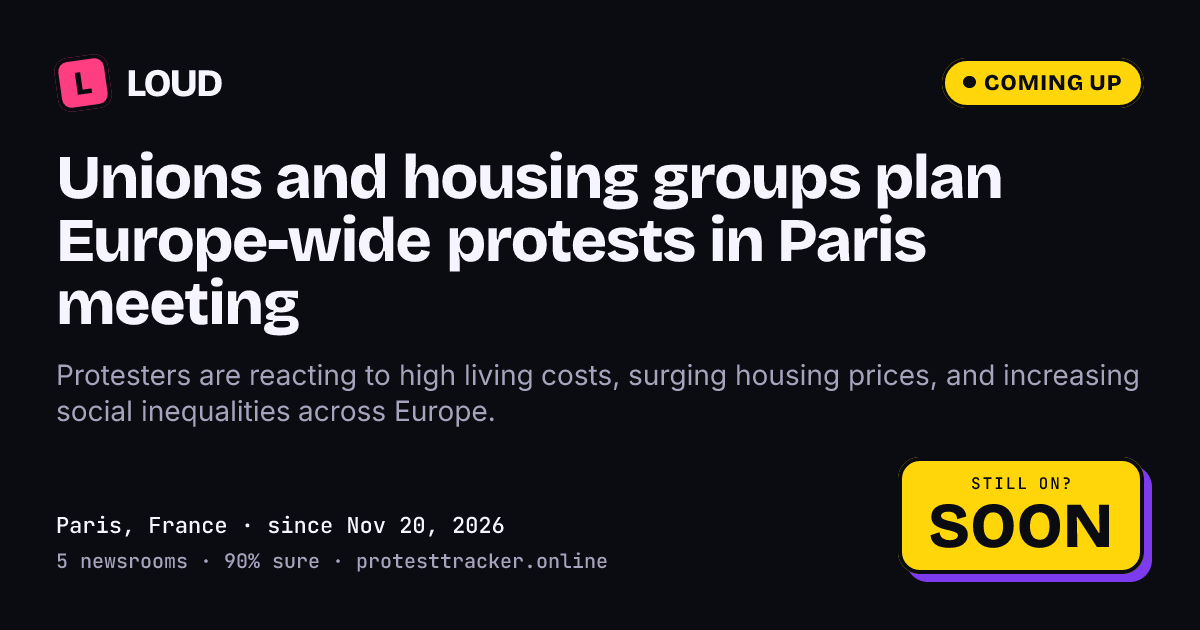
Reports describe youth-led demonstrations across at least eight European countries, with another account naming eleven. A meeting in Paris on 3 November brought together activists from seven countries and called for coordinated demonstrations from 20 to 22 November. France has a separate nationwide strike and protest action scheduled for 5 November. French authorities reportedly forecast 500,000 to 700,000 demonstrators and placed about 70,000 police officers on standby; the turnout figure is a forecast, not an observed count. Portugal has a student climate-strike call for 20 November, while Spain’s general strike is scheduled for 11 November. Reporting on Albania describes protests against Prime Minister Edi Rama, without establishing a connection to the Paris meeting. The supplied reporting does not substantiate claims of 1,200 arrests in Paris alone or hundreds injured: one account places about 1,200 arrests in France on 17 October but gives no Paris breakdown.
Change from previous assessment
Since the prior brief, reporting has established a wider protest wave across Europe and a Paris meeting on 3 November that called for coordinated demonstrations on 20-22 November. Portugal now has a reported student climate-strike call for 20 November, while reporting also describes a Spanish general strike and an Italian general strike that occurred on 30 October. This raises confidence that cross-border protest coordination exists, but it does not establish a four-country general strike involving France, Italy, Portugal and Albania. The French 5 November action remains the immediate concern. The reported 1,200 arrests refer to France on 17 October, not to a Paris-only total.
Key judgments
- A Europe-wide youth protest wave is very likely underway, but the reporting describes multiple national mobilisations rather than one unified campaign. Accounts vary in their country coverage, from at least eight countries to a named list of eleven. (Confidence: medium · ASSESSED)
- I&W: Organisers in at least two countries named at the Paris meeting publish notices for demonstrations on the same 20-22 November dates; this would confirm continued cross-border coordination. Cancellation of the Paris call or public denials from the named national groups would weaken the assessment. (0-18 days)
- France’s 5 November national action is likely to disrupt education and transport, with a heightened risk of confrontations. French authorities reportedly forecast 500,000 to 700,000 demonstrators and about 70,000 police officers on standby; the turnout estimate comes from one outlet, and the Paris march route remained disputed in reporting on 4 November. (Confidence: medium · ASSESSED)
- I&W: French prefectures or unions report strike-related disruption to education or transport in at least two cities on 5 November; this would confirm the disruption assessment. Normal service and turnout well below the forecast would weaken it. (0-2 days)
- I&W: Police or the French police watchdog report injuries, arrests or use of force during the 5 November demonstrations; this would confirm the confrontation risk. A march completed without reported injuries, arrests or police intervention would weaken it. (0-14 days)
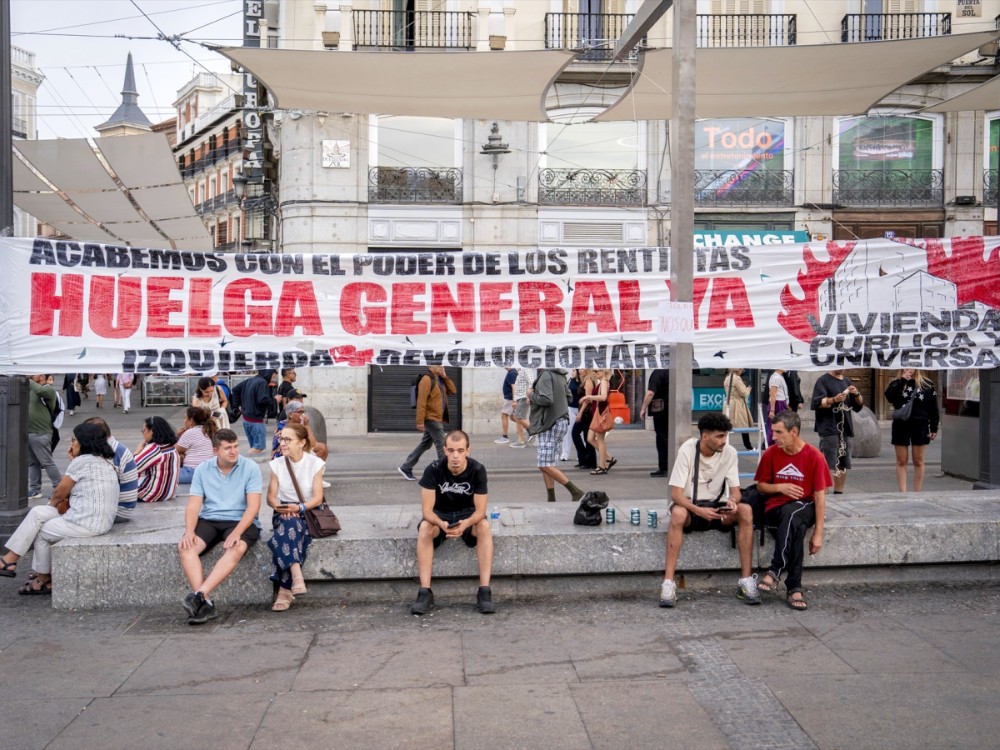
- Coordinated European demonstrations on 20-22 November are likely, but a single pan-European general strike is unlikely on the current reporting. The Paris meeting called for demonstrations, while the French action on 5 November, Spain’s strike on 11 November and Portugal’s student climate strike on 20 November are separately described actions. Italy’s reported general strike took place on 30 October. (Confidence: medium · ASSESSED)
- I&W: Organisers in at least two countries publish matching notices for demonstrations on 20-22 November; this would confirm the coordinated protest call. A cancellation or public withdrawal by the Paris meeting’s organisers would weaken it. (0-18 days)
- I&W: A joint union notice specifies a synchronised work stoppage in France, Italy, Portugal and Albania; this would break the assessment that the reported actions are separate rather than one four-country general strike. (0-18 days)
- The reported Albanian protests are likely driven by domestic opposition to Edi Rama’s government, and a link to the Paris-led coordination is not established. Reporting describes protests over corruption, limited employment opportunities and educational standards; Albania was not among the seven countries named in the Paris meeting account. (Confidence: low · ASSESSED)
- I&W: Albanian protest organisers publicly endorse the Paris meeting’s 20-22 November dates or appear in its event notices; this would support a link between the mobilisations. Continued public demands focused on Rama and domestic grievances would support the assessment that the protests remain nationally focused. (0-18 days)
- The supplied reporting does not substantiate 1,200 arrests in Paris alone or hundreds of injuries. One NGO account reports about 1,200 arrests in France on 17 October without a Paris breakdown; separate reporting describes one teenager losing a hand to a stun grenade and at least two dozen allegations of police violence under investigation. These details rest on limited NGO reporting and are not independently corroborated in the supplied claims. (Confidence: low · REPORTED)
- I&W: A French Interior Ministry or prefecture release attributes about 1,200 arrests specifically to Paris; this would contradict the current geographic correction. A France-wide total without a Paris breakdown would leave the Paris-specific claim unsupported. (0-14 days)
- I&W: An official or police-watchdog account documents hundreds of injuries from the 17 October demonstrations; this would contradict the assessment that the supplied reporting does not establish that figure. (0-14 days)
Outlook & scenarios
National actions proceed, with late-November demonstrations coordinated (65%)
The French strike and demonstrations proceed on 5 November, followed by Spain’s 11 November strike and demonstrations called for 20-22 November by activists from several countries. These remain linked protest actions rather than a single Europe-wide general strike. Disruption is most visible in French education and transport on 5 November.
Turnout broadens and national actions overlap (25%)
Strong participation on 5 November encourages further mobilisation, and organisers in several countries build attendance for the 20-22 November demonstrations. Portugal’s student climate-strike call and the Spanish union strike remain separately organised, but overlapping dates and demands increase the appearance of a continental movement.
A confrontation in France intensifies public-order concerns (10%)
A disputed march route or police intervention during the 5 November Paris action results in serious injuries or arrests. The incident draws renewed attention to police conduct and increases pressure on French authorities ahead of the late-November demonstrations. This is a low-probability, high-impact scenario.
Recommendations
- Track French prefecture, police, union, education and transport announcements on 5 November. Record observed turnout and service disruption separately from forecasts, and distinguish Paris figures from national totals.
- Verify the 20-22 November protest schedule through the organisations named as participants in the Paris meeting. Treat a demonstration call as distinct from a general-strike notice unless unions confirm a shared stoppage timetable.
- Assess Albanian protest reporting separately from the Paris coordination. Seek public statements from Albanian student and protest organisers before describing the demonstrations as part of a European campaign.
- Do not repeat the claims of 1,200 arrests in Paris alone or hundreds injured without a location-specific official release or independently corroborated casualty reporting.
- Monitor French police-watchdog updates on the reported allegations of police violence, and distinguish allegations under investigation from confirmed findings.
Confidence & uncertainty
Overall confidence is high for the core assessment that protests are occurring across multiple European countries and that organisers have announced further coordinated demonstrations. Multiple major-media reports describe the wider protest wave and the French action, while separate reporting identifies the Paris meeting and national strike calls. Confidence is lower for precise turnout, arrest and injury figures, the scale of Italian participation, and the degree to which national protests share a common organisation. Some of those details rely on single-source NGO, local-media or blog reporting.
Intelligence gaps
- [EEI 1.2 · PARTIAL] Strike participation rates, public-transport cancellations, school or university closures, and interruptions to ports, airports, energy facilities or other critical services. Recommended collection: government/transport reporting
- [EEI 2.1 · PARTIAL] Announced or implemented policy concessions involving austerity measures, education funding, pensions, wages or youth employment. Recommended collection: government statements
- [EEI 2.3 · PARTIAL] Public statements by Macron, Rama, the Italian government and other senior officials characterizing the protests or rejecting negotiations. Recommended collection: official statements
- [EEI 2.4 · UNCOVERED] Negotiation schedules, mediation efforts or breakdowns between governments and trade-union or student representatives. Recommended collection: labor/government reporting
- [EEI 3.1 · PARTIAL] Named organizations issuing mobilization calls, with verified membership, geographic reach and turnout at prior actions. Recommended collection: open-source/organizational websites
- [EEI 3.3 · PARTIAL] Student movement communications identifying coordinating committees, protest logistics, fundraising or links to established political parties. Recommended collection: social media/student networks
- [EEI 3.4 · PARTIAL] Participation by violent fringe groups, organized football ultras or extremist networks, including evidence of weapons, incendiary devices or coordinated attacks. Recommended collection: law-enforcement reporting
- [EEI 4.1 · PARTIAL] Changes in retail activity, industrial output, freight movement, tourism bookings or financial-market indicators attributed to strike disruption. Recommended collection: economic/financial reporting
- [EEI 4.2 · PARTIAL] War-risk or political-risk insurance premium changes, transport rerouting and business continuity warnings linked to protest activity. Recommended collection: commercial risk reporting
- [EEI 4.3 · UNCOVERED] Polling or verified public-opinion data showing support for the protests, governments or specific austerity demands. Recommended collection: polling/media reporting
- [EEI 4.4 · PARTIAL] Resignations, coalition disputes, parliamentary no-confidence actions or electoral announcements triggered by the protest wave. Recommended collection: parliamentary/political reporting
Red cell review: CONCUR WITH COMMENT
TLP:CLEAR