TLP:CLEAR · Disclosure is not limited.
European Protests: French Public-Order Risk, No Verified Cross-Border Strike
Time window: Last 1 day · Audience: General analyst · Type: Situation report · DTG: 2026-10-23 09:10Z · Overall confidence: HIGH
BLUF
France faces the most immediate public-order test on 24 October, following nationwide protests, serious violence and new restrictions on demonstrations. The available reporting does not substantiate a coordinated general strike across France, Italy, Portugal and Albania; the reported French arrests are nationwide, not Paris-only.
Executive summary
Reporting describes about 550,000 people protesting in France over living costs and school conditions, followed by looting, arson and clashes. French authorities report more than 2,700 people taken into custody nationwide and 217 jailed; another report says 997 police officers and gendarmes were injured. Authorities have increased police deployments and imposed restrictions ahead of a further mobilisation on 24 October, although a CGT-initiated Paris march has been authorised. Portugal reporting concerns housing costs and the removal of protest camps, while reporting from Albania describes anti-government protests and clashes in Tirana. The four-country general-strike claim appears in a blog headline, with no corroborating Italian mobilisation or cross-border union call in the available claims.
Change from previous assessment
Since the 22 October brief, reporting now describes protest activity and police action in Portugal and violent anti-government mobilisation in Tirana. France's 24 October mobilisation is now the immediate public-order priority, with reported police reinforcement and local restrictions. The assessment that a coordinated general strike is unsubstantiated has not changed; confidence in that judgment remains low because the direct coordination claim is still thinly sourced.
Key judgments
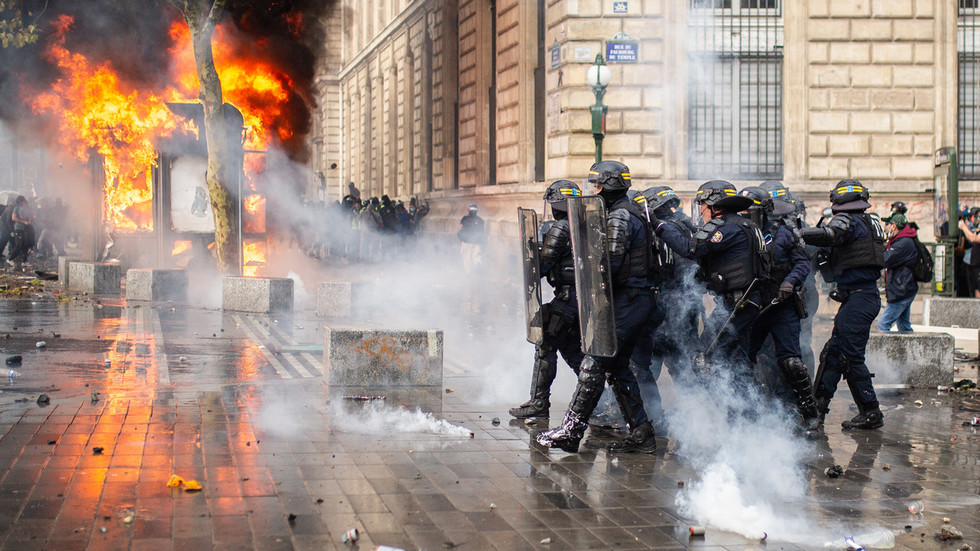
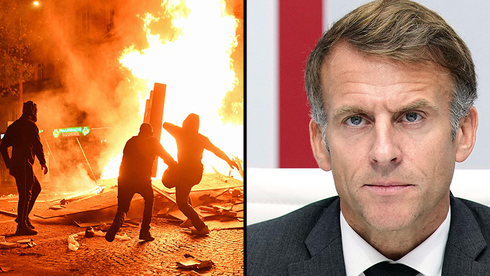
- France almost certainly experienced a nationwide mass protest wave followed by serious disorder. Reports put participation at about 550,000 and describe looting, arson and clashes in several cities. French authorities reported more than 2,700 people taken into custody nationwide, with 217 jailed; Le Monde reported 997 injured police officers and gendarmes. These figures do not support a claim of more than 1,200 arrests in Paris alone. Multiple major-media accounts support the scale of the protests and the reported security response. (Confidence: high · REPORTED)
- I&W: Confirm the reported scale if a revised French Interior Ministry tally continues to put nationwide participation near 550,000; a materially lower revised tally would weaken it. (0-14 days)
- I&W: Confirm the injury reporting if a subsequent IGPN update retains at least 40 investigations into police conduct; a formal correction withdrawing that figure would weaken it. (0-14 days)
- A security-heavy public-order response in France on 24 October is likely. Jean-Didier Berger said police presence would increase by 20 per cent, Marseille and Lyon authorities announced protest bans, Paris extended a partial curfew, and the Paris police prefecture authorised a CGT-initiated march between Place de la Bastille and Place de la Nation. The forecast concerns substantial security measures, not a certainty of renewed violence. The preparations are reported by multiple major-media sources, while the likelihood of renewed disorder remains an analytic inference. (Confidence: medium · ASSESSED)
- I&W: Confirm a high-friction day if authorities or major media report arrests, injuries, or renewed closures on the authorised Paris march route or in Lyon and Marseille. (24-25 October)
- I&W: Weaken the assessment if the authorised Paris march proceeds without reported arrests or injuries and the announced restrictions are lifted or not enforced. (24-26 October)
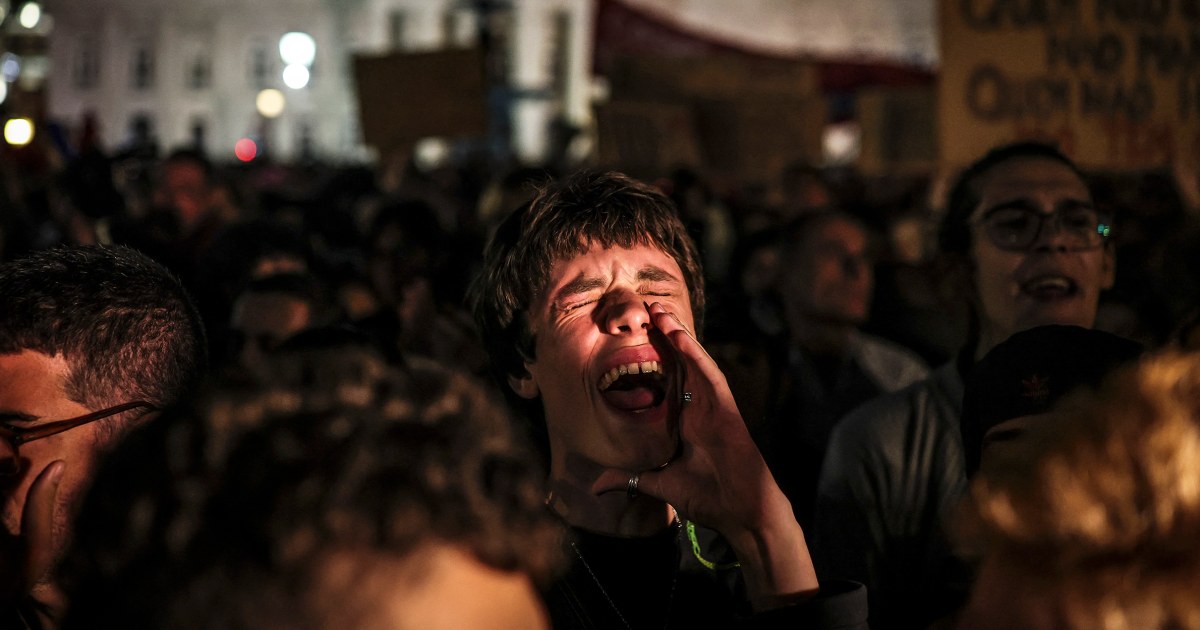
- A coordinated general strike across France, Italy, Portugal and Albania is unlikely in the near term. The only direct claim of a four-country strike is a blog headline. The claims provide a French union call for a nationwide strike beginning 5 November, separate Portuguese housing protests and camp clearances, and Albanian anti-government demonstrations, but no corroborated Italian mobilisation or common cross-border organiser. Confidence is low because the coordination claim is thinly sourced and the available reporting does not establish that all four countries are covered. (Confidence: low · ASSESSED)
- I&W: Break the assessment if named national union confederations in Italy, Portugal and Albania publish dated strike notices explicitly coordinating with French unions. (0-14 days)
- I&W: Confirm the assessment if no such notices appear and the French unions' 5 November call remains the only documented national strike action. (Through 5 November)
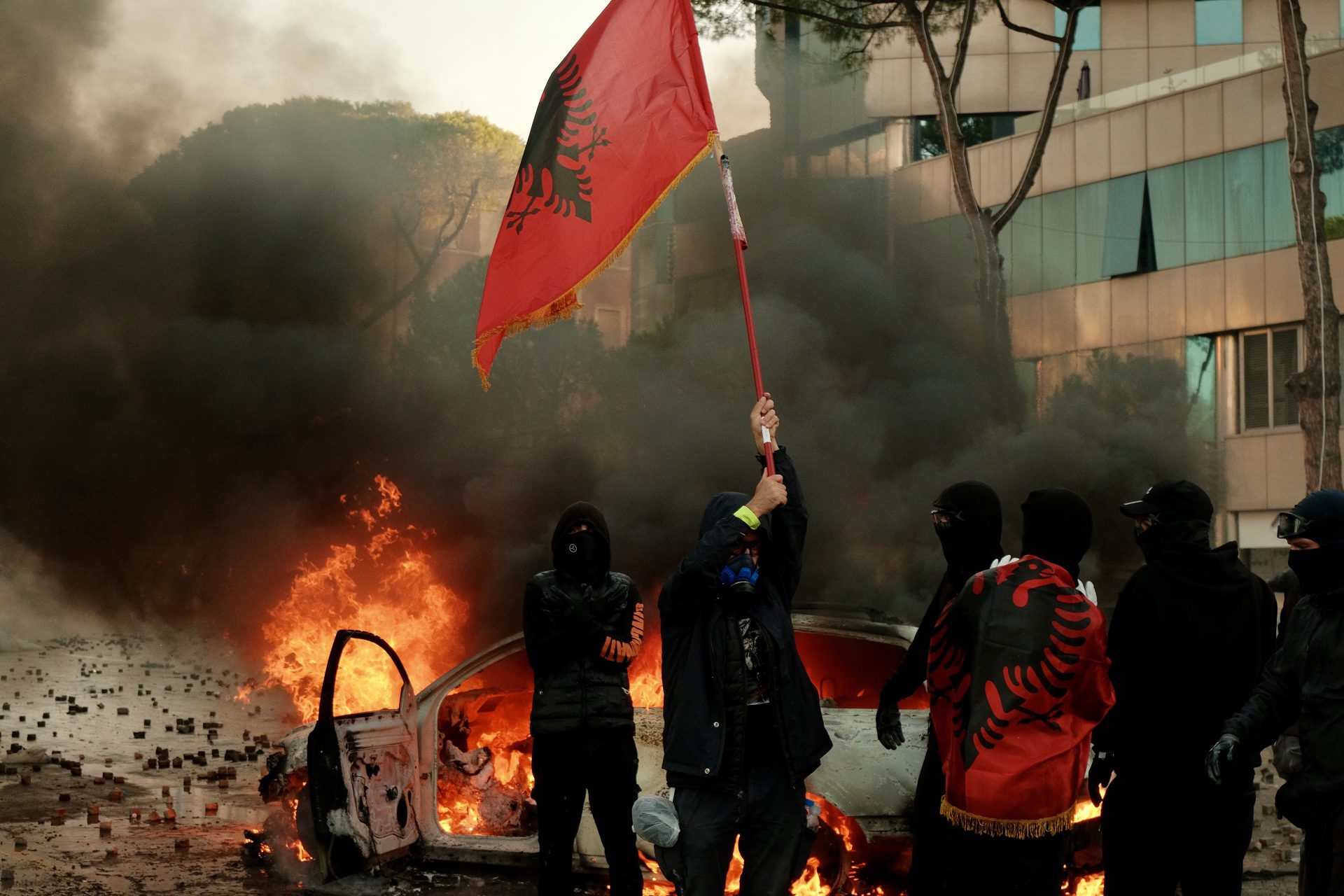
- Further protest activity in Tirana is likely, but responsibility for the violence and the cohesion of the movement remain uncertain. Reporting describes student-led demonstrations, thousands gathered near the Prime Minister's Office, clashes with riot police and black-clad youths throwing petrol bombs. Edi Rama blamed opposition and other actors, while Genc Pollo attributed the escalation to the government's response. The assessment rests mainly on one major-media account and competing political claims, so confidence is low. (Confidence: low · ASSESSED)
- I&W: Confirm continued mobilisation if local media or Tirana police report another assembly on the central boulevard or outside the Prime Minister's Office. (0-14 days)
- I&W: Weaken the assessment if protest organisers publicly suspend planned street actions and no further assembly is reported in Tirana. (0-14 days)
Outlook & scenarios
Separate national protests continue (60%)
This is the likely course. France, Portugal and Albania continue to see mobilisation driven by different domestic grievances, without a common strike organiser. French authorities manage the 24 October events through local restrictions and increased police deployments.
Renewed disorder in France (25%)
A less likely outcome is renewed clashes or looting during the 24 October mobilisation, despite restrictions and increased deployments. Further arrests or injuries would intensify disputes over protest rights, policing and the government's response.
Cross-border strike coordination emerges (10%)
A very unlikely outcome is that named unions in Italy, Portugal and Albania issue formal strike notices coordinated with French unions. That would materially strengthen the claim of a continental mobilisation; current reporting does not establish such coordination.
Tirana protest crisis forces a political transition (5%)
A very unlikely, high-impact outcome is that continued clashes and broader opposition mobilisation force Edi Rama to resign or accept a caretaker government. A demand for a caretaker administration is reported, but no evidence establishes that the government is close to such a transition.
Recommendations
- Do not describe the four-country general strike as established. Before using that formulation, verify dated strike notices from named union confederations in each country and identify any common organiser.
- Prioritise reporting on France's 24 October mobilisation. Track implementation of the Lyon and Marseille bans, the authorised CGT route from Place de la Bastille to Place de la Nation, Paris curfew enforcement, arrests and injuries.
- Keep French protest counts geographically precise. Attribute the more than 2,700 custody figure to nationwide reporting, not to Paris alone, and distinguish police injuries from injuries to protesters.
- For Albania, report Edi Rama's accusations and Genc Pollo's counter-accusations as attributed claims. Seek independent confirmation of further assemblies, arrests, injuries and damage in Tirana.
- Treat Portugal's housing demonstrations and camp clearances as a separate domestic issue unless a named Portuguese union formally announces participation in cross-border strike action.
Confidence & uncertainty
Overall confidence is high in the core reported picture of the French protest scale and security response, supported by multiple major-media accounts, and in the existence of separate protest activity in Portugal and Albania. Confidence is low in the claim of a coordinated four-country general strike because its direct support is a single blog headline and the available claims do not document Italian participation or shared union planning. Albanian accounts also present competing explanations for the violence.
Alternative analysis (red cell)
The ledger establishes substantial protest activity in France and Albania, but it does not consistently establish the forward-looking probabilities assigned to coordinated regional mobilisation or continued Tirana protests. The four-country strike claim is weakly sourced, while the Tirana evidence documents past clashes and competing political narratives rather than a reliable indicator of continuation. These developments may remain possible, but the available record supports an unresolved assessment more clearly than either a low-probability coordination judgment or a likely continuation judgment.
Intelligence gaps
- [EEI 1.1 · PARTIAL] Confirmed dates, locations and participating unions or student organizations for planned general-strike actions in each country. Recommended collection: open-source/social media
- [EEI 1.2 · PARTIAL] Strike participation rates, public-transport cancellations, school or university closures, and interruptions to ports, airports, energy facilities or other critical services. Recommended collection: government/transport reporting
- [EEI 1.4 · UNCOVERED] Evidence that protest organizers are coordinating common demands, slogans, dates, funding or operational guidance across national borders. Recommended collection: open-source/social media
- [EEI 2.4 · PARTIAL] Negotiation schedules, mediation efforts or breakdowns between governments and trade-union or student representatives. Recommended collection: labor/government reporting
- [EEI 3.1 · PARTIAL] Named organizations issuing mobilization calls, with verified membership, geographic reach and turnout at prior actions. Recommended collection: open-source/organizational websites
- [EEI 3.2 · PARTIAL] Trade-union confederation decisions on strike mandates, rolling strikes, sector-wide action or cross-border coordination. Recommended collection: trade-union statements
- [EEI 3.3 · PARTIAL] Student movement communications identifying coordinating committees, protest logistics, fundraising or links to established political parties. Recommended collection: social media/student networks
- [EEI 4.1 · PARTIAL] Changes in retail activity, industrial output, freight movement, tourism bookings or financial-market indicators attributed to strike disruption. Recommended collection: economic/financial reporting
- [EEI 4.2 · PARTIAL] War-risk or political-risk insurance premium changes, transport rerouting and business continuity warnings linked to protest activity. Recommended collection: commercial risk reporting
- [EEI 4.3 · UNCOVERED] Polling or verified public-opinion data showing support for the protests, governments or specific austerity demands. Recommended collection: polling/media reporting
- [EEI 4.4 · UNCOVERED] Resignations, coalition disputes, parliamentary no-confidence actions or electoral announcements triggered by the protest wave. Recommended collection: parliamentary/political reporting
Red cell review: PARTIAL DISSENT
TLP:CLEAR