TLP:CLEAR · Disclosure is not limited.
European Threat Disruptions Continue, Attribution Unresolved, 6 November 2026
Time window: Last 1 day · Audience: General analyst · Type: Situation report · DTG: 2026-11-06 12:31Z · Overall confidence: HIGH
BLUF
Bomb threats disrupted at least 20 to at least 30 flights across Europe on 5 November, and further threats on 6 November prompted responses at airports and evacuations at Dublin media offices. The incidents establish repeated disruption, but public reporting does not establish Russian state direction; the reported Male State Fighters signature on threats in Italy remains unverified.
Executive summary
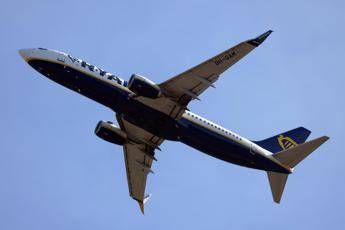
Reports describe bomb threats affecting flights departing from 16 countries on 5 November, with estimates of affected flights ranging from at least 20 to at least 30 or more. On 6 November, police dealt with further threats to air traffic in Denmark and the Czech Republic, a Ryanair flight from Rome to Lisbon received a threat, and a Tarom flight from Prague to Bucharest received a false threat. Bomb threats also forced evacuations at several Dublin media offices. Irish officials characterised the media threats as a likely coordinated disruption campaign, but reporting does not establish whether the aviation and media incidents share an operator. A group calling itself Male State Fighters claimed or appeared to claim some Rome and Milan threats, but the sender was not independently verified. Russian direction remains unestablished.
Change from previous assessment
Since the 5 November brief, the assessment now includes a further day of air-traffic threats, including incidents involving flights to Lisbon and Bucharest, and bomb threats that forced evacuations at several Dublin media organisations. Reporting has also surfaced a Male State Fighters signature on some Italian threats, but the sender remains unverified. Confidence has increased that disruption continued across transport and media targets; the assessment of Russian direction remains unresolved.
Key judgments
- The 5 and 6 November threats almost certainly caused repeated, multi-country disruption to European aviation and media operations. Reports put the 5 November flight total at at least 20 to at least 30 or more, with flights departing from 16 countries affected. On 6 November, threats prompted responses involving a Ryanair flight from Rome to Lisbon, a Tarom flight from Prague to Bucharest, and police activity at Copenhagen and Prague airports; bomb threats also forced evacuations at RTÉ, the Irish Independent, Newstalk and Today FM offices in Dublin. Flight totals differ across reports, but the occurrence and broad reach of the incidents are corroborated by major media and official statements. (Confidence: high · REPORTED)
- I&W: Confirm: police or airport statements record additional threat-related searches, diversions or evacuations in Europe. (0-14 days)
- I&W: Break: consolidated police or airport reporting establishes that the 5 November flight disruptions were materially below the reported minimums or that the 6 November incidents were not threat-related. (0-14 days)
- It is unlikely that public reporting available on 6 November establishes Russian state direction or proxy control of the airline and media threats. Some threats to flights bound for Rome and Milan were signed by, or attributed to, Male State Fighters, but Reuters reported it could not verify the sender. Irish government officials described the threats to media organisations as likely coordinated, while unnamed security sources said Russian proxy involvement was unconfirmed. This attribution judgment rests on limited public evidence and reporting that includes unnamed sources, so confidence is low. (Confidence: low · ASSESSED)
- I&W: Confirm Russian direction: investigators publish forensic, communications or payment evidence linking a threat sender to a Russian state service or a named proxy. (0-30 days)
- I&W: Break the Russian-link hypothesis: authorities identify and charge an independently motivated sender and publicly close the investigation without identifying Russian state or proxy involvement. (0-3 months)
- There is a roughly even chance that the airline and Dublin media threats formed a coordinated operation rather than separate incidents or copycat activity. Irish officials assessed the media threats as a likely coordinated campaign, but an aviation security expert cautioned that three days of incidents were too short a sample to distinguish coordination from contagion. Reporting from unnamed security sources links the threats to possible disruption ahead of the Dublin European Political Community meeting on 12 November, but does not establish a shared operator. Confidence is low because coordination across target types is an inference from limited reporting. (Confidence: low · ASSESSED)
- I&W: Confirm coordination: police identify matching email infrastructure, wording or sender accounts across threats to flights and Dublin media organisations. (0-14 days)
- I&W: Break coordination across target types: investigators publish evidence that the aviation and media threats came from unrelated senders using distinct methods. (0-3 months)
Outlook & scenarios
Further low-cost disruption (55%)
The most likely near-term path is further false threats or threat claims affecting flights, airports or media operations, with precautionary searches and short-lived disruption. The Dublin European Political Community meeting on 12 November is a plausible focus for disruption, but current reporting does not establish that the threats are linked to the meeting.
Threats subside without clear attribution (35%)
Threats diminish after the current wave, while investigators do not publicly establish a common operator. European authorities continue to treat new alerts as credible until checked, but the record remains insufficient to link the incidents to Russia or to prove a single campaign.
State-linked escalation or real-world attack (10%)
Low probability, high impact: a further threat is followed by an actual explosive device, a damaging cyber incident or sabotage against transport or communications infrastructure, with evidence of external tasking. The current reporting does not demonstrate this intent or capability in connection with the threats.
Recommendations
- Maintain a single incident log for aviation and media threats, recording receipt time, wording, email or telephone metadata, target, response and outcome. Keep attribution fields separate from confirmed incident facts.
- Ask Irish, Italian, Czech, Danish and Portuguese authorities to share threat indicators and investigation updates through the existing police, cyber and aviation channels. Prioritise comparison of sender infrastructure and message wording before assessing whether the incidents share an operator.
- Prepare targeted security and continuity measures for Dublin media organisations and the 12 November European Political Community meeting. Ensure broadcasters have tested backup transmission arrangements and that public threat updates do not expose sensitive response procedures.
- Do not use the Male State Fighters signature as proof of group responsibility or Russian involvement. Seek confirmation from investigators before repeating either attribution.
- Keep the Finnish Fitburg cable case and Poland's counter-intelligence investigation analytically separate from the bomb threats unless investigators publish evidence connecting them.
Confidence & uncertainty
Overall confidence is high that the threats occurred and caused disruption. Major-media reporting, including AP, Reuters and BBC accounts, is supported by statements from police and the Irish government. Confidence is lower on the exact flight total, which varies by source, and low on attribution and cross-target coordination: the sender of the Male State Fighters messages was not verified, and the reporting on possible Russian proxy involvement relies in part on unnamed sources.
Intelligence gaps
- [EEI 1.2 · UNCOVERED] Observed reconnaissance activity around critical sites indicative of attack planning (unauthorised drone flights, repeated surveillance visits, loitering vehicles, mapping/photography of assets). Recommended collection: open-source/media
- [EEI 1.3 · UNCOVERED] Law-enforcement or customs seizures, arrests or interdictions of persons or shipments carrying explosives, sabotage tools, specialty cutting/electrical equipment, or covert comms gear destined for/near critical infrastructure. Recommended collection: law enforcement
- [EEI 2.1 · PARTIAL] Emergence or amplification of coordinated social-media networks (sets of accounts, pages, channels) pushing identical narratives or hashtags across multiple platforms, including bot-like activity metrics and origin IP/common management indicators. Recommended collection: social-media/OSINT
- [EEI 2.2 · UNCOVERED] Publication or internal guidance from state-run media, proxy outlets, or identified influence platforms distributing talking points, pre-scripted messaging, or translated content targeted at specific EU countries/communities. Recommended collection: open-source/media
- [EEI 2.3 · UNCOVERED] Distribution of manipulated multimedia (deepfakes), targeted phishing/whaling campaigns, or localized false narratives timed to political events (elections, protests, court rulings) with tracked reach and engagement metrics. Recommended collection: cyber/forensic
- [EEI 3.1 · UNCOVERED] Unusual financial transactions: wire transfers, crypto conversions, or payments to shell companies, NGOs or individuals exceeding typical baselines that link to known proxies or front organisations. Recommended collection: financial
- [EEI 3.2 · UNCOVERED] Travel and movement indicators for suspected operatives: repeated border crossings, chartered/irregular flights, booking patterns or mobile/location data placing identified individuals in staging areas shortly before incidents. Recommended collection: border/immigration
- [EEI 3.3 · PARTIAL] Cargo, freight or maritime movements with discrepancies (concealed/dual-use equipment, false manifests, unusual routing) detected at ports, rail hubs or via AIS that correspond to deliveries of material used in sabotage or influence operations. Recommended collection: customs/ports
- [EEI 3.4 · UNCOVERED] Intercepted or otherwise-obtained communications showing tasking, coordination, or payment instructions between Russian agencies/handlers and proxy groups, including identified command-and-control servers or encrypted group identifiers. Recommended collection: signals-intel/SIGINT
Red cell review: CONCUR WITH COMMENT
TLP:CLEAR