TLP:CLEAR · Disclosure is not limited.
Gaza Ceasefire Erosion and Lebanon Escalation, 18 September 2026
Time window: Last 7 days · Audience: General analyst · Type: Situation report · DTG: 2026-09-18 13:07Z · Overall confidence: HIGH
BLUF
Very likely Israeli military operations in Gaza will continue to render the October 2025 ceasefire operationally ineffective over the next 0-14 days. Likely Israeli-Hezbollah exchanges in southern Lebanon will persist, while humanitarian pressure in Gaza worsens despite new UN, Egyptian, Qatari and Gulf relief efforts.
Executive summary
Reporting from OCHA, UNICEF, UN News, UNIFIL, Lebanese authorities and wire services shows continued Israeli strikes and civilian harm in Gaza and southern Lebanon. Gaza's humanitarian crisis is deepening as most residents remain displaced or shelter in damaged structures, recovery teams find bodies beneath rubble, and delays affecting generator supplies threaten essential services. In southern Lebanon, Hezbollah drone attacks, Israeli strikes, tunnel demolitions and airspace violations continue alongside diplomatic efforts led by Lebanon, France, Jordan and the US. These efforts have not yet produced an operational reduction in violence.
Change from previous assessment
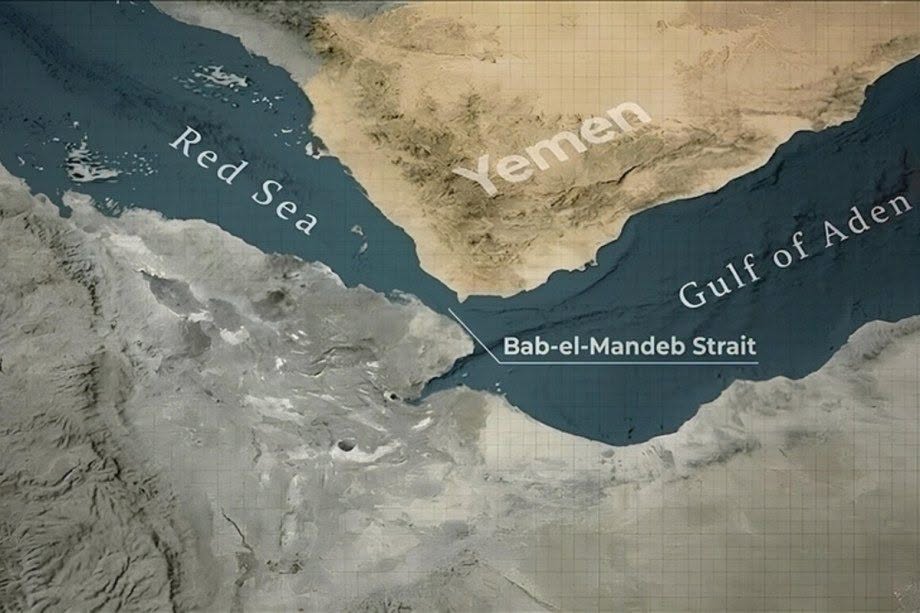
Since the 17 September brief, the Gaza assessment is unchanged: Israeli operations are very likely to continue and humanitarian pressure is very likely to worsen. The Lebanon assessment is updated with reporting of two Hezbollah explosive drones near Ali al-Taher, Israeli tunnel demolitions, at least 11 deaths near the ridge and new Paris talks on security after the UNIFIL transition. Confidence in the Lebanon judgement remains medium because attribution and casualty figures remain uneven. A new regional warning is the sharper Yemen and maritime dimension, with intensified Saudi-Houthi fighting, more than 100,000 people reportedly displaced in Yemen and the IMO reporting 80 verified attacks near the Strait of Hormuz. No prior judgement is retired, and no confidence level is raised or lowered.
Key judgments
- Very likely Israeli military operations in Gaza will continue to render the October 2025 ceasefire operationally ineffective over the next 0-14 days. OCHA reported 1,334 deaths and 4,429 injuries since the ceasefire, while UNICEF reported multiple child deaths and at least 13 child injuries during the preceding seven days. An Israeli airstrike in Tel al-Hawa, Gaza City, killed two people and wounded dozens, and UNICEF reported that sisters Bana, aged 6, and Lana, aged 12, were killed with their parents in Beit Lahia. The reporting dates the ceasefire to either 10 or 11 October 2025, a minor chronology discrepancy that does not alter the assessment. (Confidence: high · ASSESSED)
- I&W: Confirm: OCHA, UNICEF or UN News reports another Israeli airstrike, shelling incident or child casualty in Gaza while the ceasefire remains in force. (0-14 days)
- I&W: Break: UN monitors record no Israeli strike or other ceasefire violation in Gaza and both Israel and Hamas implement a verified 14-day cessation of fire. (0-14 days)
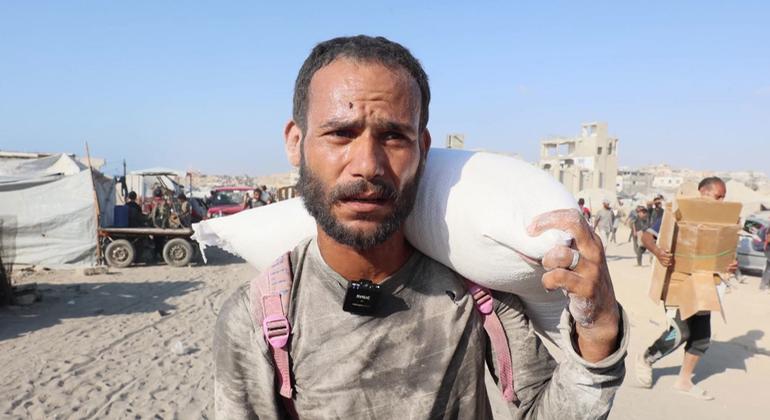
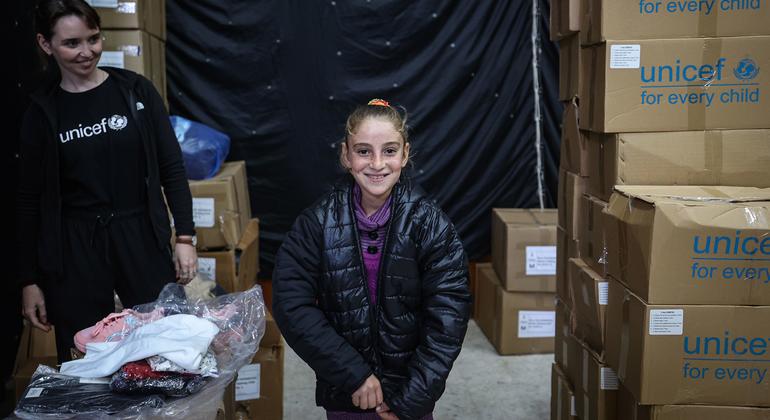
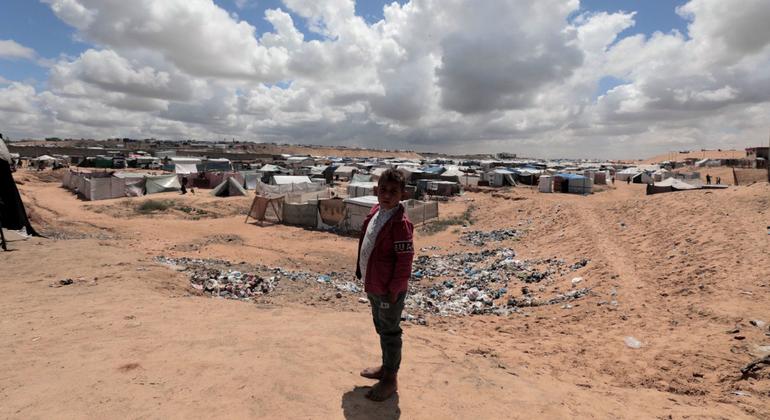
- Very likely humanitarian pressure in Gaza will worsen over the next 1-3 months. Nearly 84 per cent of Gaza's population, more than 1.76 million people, live in overcrowded displacement sites or damaged shelters, while OCHA reports that nine in ten people are internally displaced. Palestinian civil defence authorities estimate that more than 8,000 people remain missing under rubble, and OCHA says Israeli denials and delays affecting engine oil and spare parts threaten generator-dependent water, sanitation, health and waste services. UNICEF is seeking funding to pre-position winter supplies after at least 11 children reportedly died from hypothermia last winter. OCHA's $2 million allocation to power health facilities for four months will provide limited relief rather than reverse these pressures. (Confidence: high · ASSESSED)
- I&W: Confirm: OCHA records additional denials or delays for engine oil, spare parts or heavy machinery, or UNICEF reports that winter supplies have not been pre-positioned. (1-3 months)
- I&W: Break: Israel approves entry of heavy machinery, engine oil and spare parts, while UN agencies deliver tents and tarpaulins and maintain power to health facilities. (1-3 months)
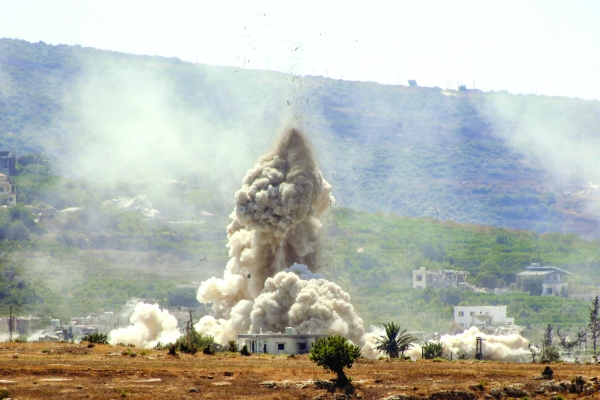
- Likely Israeli and Hezbollah military activity in southern Lebanon will continue over the next 0-14 days, keeping de-escalation fragile. The Israeli military reported that Hezbollah launched two explosive drones towards troops near the Ali al-Taher ridge, while Lebanon's health ministry reported at least 11 people killed in Israeli strikes near the same ridge. UNIFIL recorded at least 32 airstrikes and numerous Lebanese airspace violations, observed explosive-filled jerrycans dropped near Al Mansuri, and reported that Israeli personnel held a UNIFIL patrol for two hours near Kafer Chouba. Israel also announced the demolition of Hezbollah tunnels beneath Ali al-Taher. Confidence is medium because the reporting relies on separate UNIFIL, Israeli and Lebanese accounts, and casualty totals for Kfar Rumman range from 12 to at least 13. (Confidence: medium · ASSESSED)
- I&W: Confirm: UNIFIL records another airstrike or Lebanese airspace violation, or the Israeli military reports another Hezbollah drone or rocket attack near Ali al-Taher. (0-14 days)
- I&W: Break: no new Israeli or Hezbollah attack is recorded for 14 days and Israel announces a dated withdrawal plan linked to Lebanese state security arrangements. (0-14 days)
- Unlikely the emerging diplomatic track will produce an immediate reduction in southern Lebanon violence over the next 0-14 days. Lebanese President Joseph Aoun, French President Emmanuel Macron and Jordan's King Abdullah II held talks in Paris on 17 September, while the US-sponsored framework calls for phased Israeli withdrawal, expanded Lebanese state authority and border security arrangements. France and Italy have also proposed assistance for the Lebanese army after the UNIFIL mandate ends. The timetable is unsettled, with one report placing the start of UNIFIL withdrawal in January 2027 and another stating that its mandate expires at the end of 2026. Confidence is medium because the diplomatic reporting describes proposals and meetings, not implementation. (Confidence: medium · ASSESSED)
- I&W: Confirm: Israeli strikes, Hezbollah attacks or UNIFIL airspace violations continue while Paris participants publish no operational timetable for withdrawal and Lebanese army deployment. (0-14 days)
- I&W: Break: the US framework produces a signed phased withdrawal schedule, a Lebanese army deployment plan and a verified reduction in attacks. (1-3 months)
Outlook & scenarios
Continued Gaza violence with an active but bounded Lebanon front (65%)
Very likely Israeli attacks continue in Gaza, humanitarian conditions deteriorate, and likely Israeli-Hezbollah exchanges continue in southern Lebanon without developing into a wider cross-border war. Paris diplomacy remains focused on the UNIFIL transition and does not produce an immediate cessation of hostilities.
Renewed escalation around the Ali al-Taher ridge (25%)
Likely additional Hezbollah drone attacks or Israeli strikes around Ali al-Taher, Kfar Rumman and nearby towns trigger a new cycle of casualties and displacement. UNIFIL access and patrol activity face additional restrictions, increasing pressure on the diplomatic track.
Limited diplomatic stabilisation in southern Lebanon (15%)
Unlikely near-term stabilisation follows if Lebanon, Israel, France, Jordan and the US convert existing proposals into a dated withdrawal and Lebanese security deployment plan. Gaza violence continues separately, so this scenario would not amount to a regional ceasefire.
Maritime spillover becomes a regional shock (10%)
Very unlikely but high impact, a further expansion of attacks on merchant shipping in the Red Sea and Strait of Hormuz disrupts LNG movements, raises energy-market pressure and forces governments to reassess the wider regional security posture. The Gaza and Lebanon fronts remain active during the shock.
Recommendations
- Maintain a daily 0-14-day watchlist for Gaza ceasefire violations, including airstrikes, shelling, gunfire, naval fire, child casualties and attacks affecting UN staff.
- Build an attribution matrix for southern Lebanon incidents that separates UNIFIL observations from Israeli military claims and Lebanese health ministry reporting. Track the Ali al-Taher ridge, Al Mansuri, Kfar Rumman, Nabatieh al Fawqa and Kafer Chouba separately.
- Set humanitarian warning thresholds around Israeli approvals for heavy machinery, engine oil and spare parts, the delivery of tents and tarpaulins, generator availability and access to damaged shelters. Escalate reporting if these inputs remain blocked for two consecutive reporting cycles.
- Track whether the Paris initiative and the US-sponsored Lebanon-Israel framework produce a dated Israeli withdrawal schedule, Lebanese army deployment plan and agreed UNIFIL transition timeline. Treat the conflicting 2026 and January 2027 dates as unresolved until clarified.
- Include Yemen and maritime indicators in the regional risk dashboard. Monitor new Hezbollah or Houthi drone attacks, IMO shipping casualty updates, LNG transits through the Strait of Hormuz and further ship-to-ship transfers off Oman.
Confidence & uncertainty
Overall confidence is high because the core Gaza and Lebanon judgements are supported by multiple independent multilateral, UN, wire-service and official sources with close temporal proximity to the reported events. The direction of travel is consistent across military activity, civilian harm and humanitarian access reporting. The main uncertainties concern attribution of individual strikes, differing casualty counts, the precise date of the Gaza ceasefire and the timing of the UNIFIL transition. These issues lower confidence in some Lebanon-specific details but do not materially change the broader assessment.
Intelligence gaps
- [EEI 1.1 · PARTIAL] Number, type and geolocated coordinates of projectiles (rockets, mortars, anti-tank guided missiles) fired from Lebanon into Israel in the last 24/72 hours, including time-stamped launch and impact locations. Recommended collection: signals/intel
- [EEI 1.2 · UNCOVERED] Satellite or aerial imagery showing movement, concentration, or forward displacement of Hezbollah-associated military assets (armored vehicles, artillery pieces, mobile rocket launchers, logistics convoys) to positions within 0-10 km of the Israel-Lebanon border. Recommended collection: satellite/imagery
- [EEI 1.3 · UNCOVERED] Intercepted or captured Hezbollah command-and-control communications or orders explicitly directing cross-border operations or coordinated strikes with Palestinian groups (time-stamped messages, unit identifiers, orders to fire/move). Recommended collection: signals/intel
- [EEI 1.4 · UNCOVERED] Observable changes in Israeli northern-front posture within Israel (numbers and types of reinforcements deployed to northern brigades, activation of reserves, air defense redeployments, evacuation orders or shelter alerts in northern towns), including timestamps and unit IDs where available. Recommended collection: human/intel
- [EEI 2.1 · UNCOVERED] Official or corroborated reports of IDF reservist mobilization and unit-level deployment orders (number of reservists called, named brigades/units ordered to deploy, deployment timelines). Recommended collection: open-source/media
- [EEI 2.2 · UNCOVERED] Satellite or ground imagery showing concentrations of IDF heavy equipment (tanks, infantry fighting vehicles, engineering vehicles), staging areas, field hospitals or forward supply dumps within X km of the Gaza border and at known crossing points. Recommended collection: satellite/imagery
- [EEI 2.3 · PARTIAL] Change in strike patterns consistent with pre-ground-attack shaping: sustained high-frequency airstrikes on tunnel networks, command nodes, coastal launch sites, and known insurgent concentrations (strike counts, munition types, locations, times). Recommended collection: open-source/media
- [EEI 2.4 · UNCOVERED] Logistics indicators: verified convoys of fuel/ammunition entering staging areas, establishment of forward logistics or medical bases, or documented requisitioning orders for bulk combat supplies with timestamps and quantities. Recommended collection: human/intel
- [EEI 3.1 · UNCOVERED] Number, participants and content of diplomatic contacts or negotiation sessions in the last 48 hours involving mediators (Egypt, Qatar, US, UN), including any proposed ceasefire text, prisoner/exchange lists, timelines or verification mechanisms. Recommended collection: diplomatic
- [EEI 3.2 · UNCOVERED] Public statements, press releases or verified communiqués from Hamas and other Gaza armed groups specifying acceptance, rejection, or conditions for a ceasefire (explicit conditions such as prisoner release lists, withdrawal terms, lifting of blockades), with timestamps and speaker attribution. Recommended collection: open-source/media
- [EEI 3.3 · PARTIAL] Humanitarian indicators relevant to ceasefire: establishment and operation of agreed humanitarian corridors/checkpoints, number of aid deliveries admitted, civilian evacuations completed, and NGO/hospital reports of access denials or safe-passage violations. Recommended collection: humanitarian/NGO reports
- [EEI 3.4 · UNCOVERED] Operational evidence of a de facto pause: verified sustained reduction (e.g., ≥12 hours) in strikes or launches from either side in specific sectors, supported by strike/impact logs, radar tracks and incident reports. Recommended collection: open-source/media
Cited sources
[1] TRT World · Lebanon, Jordan, France discuss army support, ending Israeli atrocities (B) · Thu Sep 17 2026 14:49:43 GMT+0000 (Coordinated Universal Time) · sha256:ec51478add22 [2] United Nations News · Six UN staff killed in Gaza school strike; Lebanon violations mount (A) · Mon Sep 14 2026 21:11:44 GMT+0000 (Coordinated Universal Time) · sha256:c22eb09aefdf [3] Newscord (aggregating IMEMC News, Al Jazeera Net, and Times of Israel content) · Israeli Forces Kill Mohammad Mahmoud Murshed Al-Qadi in Asda’ City Despite Ceasefire (D) · Wed Sep 02 2026 10:06:01 GMT+0000 (Coordinated Universal Time) · sha256:ed8a01145531 [4] United Nations News · World News in Brief: Winter aid for Gaza, West Bank; Haiti food production; migrant deaths at sea; human rights funding (A) · Thu Sep 17 2026 19:58:51 GMT+0000 (Coordinated Universal Time) · sha256:c7a558703a33 [5] United Nations News · Gaza remains recovery points to possible war crimes, says UN rights chief (A) · Tue Sep 15 2026 12:28:43 GMT+0000 (Coordinated Universal Time) · sha256:362e8f529a7e [6] Reuters (republished by Oman Observer) · Israeli strikes on southern Lebanese town kill 13 (A) · Mon Sep 14 2026 13:09:35 GMT+0000 (Coordinated Universal Time) · sha256:3edb4fb4258f [7] Arab American News · Middle East on the Brink: Iran War Fuels Wider Regional Crisis (D) · Fri Sep 18 2026 07:56:25 GMT+0000 (Coordinated Universal Time) · sha256:d4dfaedfe6b8
Source content hashes were computed at collection time; the cited text is preserved unmodified for the life of this product.
TLP:CLEAR