TLP:CLEAR · Disclosure is not limited.
Gaza Ceasefire Erosion and Lebanon Front Risk
Time window: Last 7 days · Audience: General analyst · Type: Situation report · DTG: 2026-09-21 11:31Z · Overall confidence: HIGH
BLUF
Very likely Israeli military activity will continue to erode the October 2025 Gaza ceasefire over the next 0-14 days, while Israeli-Hezbollah exchanges are likely to persist in southern Lebanon. Very likely humanitarian pressure in Gaza will worsen over the next 1-3 months. Cairo diplomacy and international force planning offer a limited stabilisation path, but are unlikely to produce durable implementation while political and security disputes remain unresolved.
Executive summary
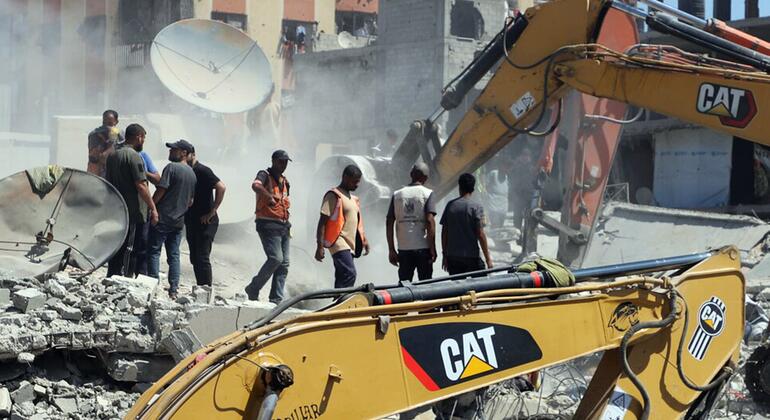
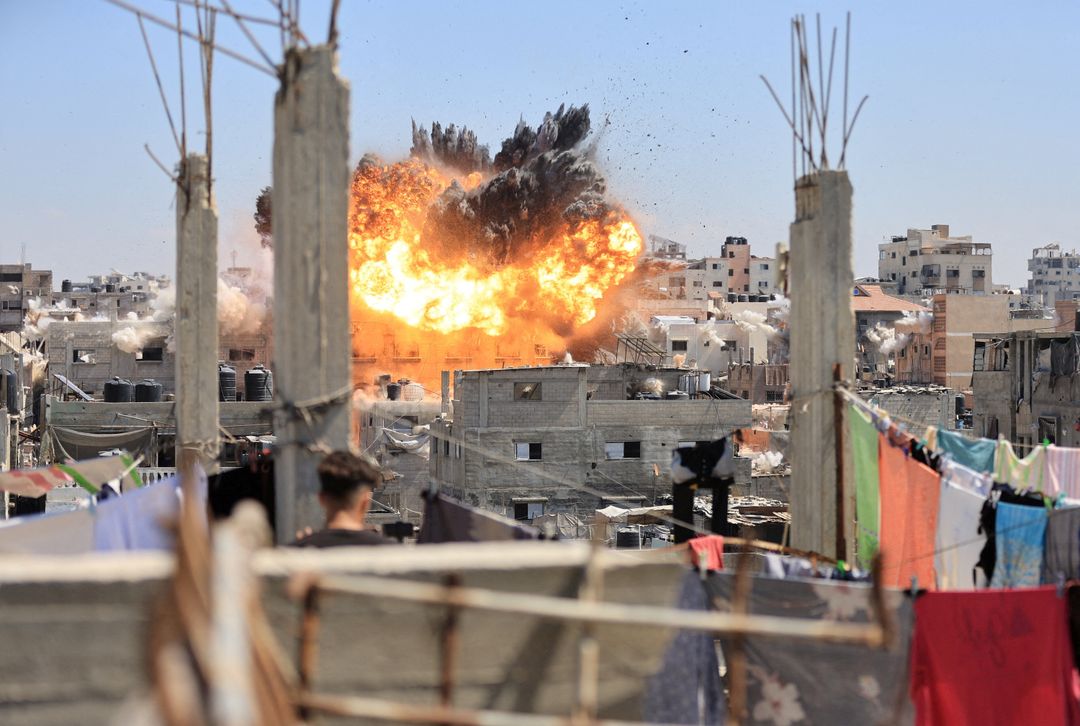
Between 14 and 21 September 2026, reporting indicated continued Israeli drone, air, artillery, ground and naval fire across Gaza, including Gaza City, Jabalia, Deir al Balah, Al Maghazi and Khan Younis. A building collapse in Gaza City on 16 September killed at least 20 people, while the UN reported that nearly 84 per cent of Gaza's population, more than 1.76 million people, was living in overcrowded displacement sites or damaged shelters. In Lebanon, the IDF reported new strikes after an attempted Hezbollah drone attack and the discovery of Hezbollah rockets and a launcher near Mount Dov; Lebanon's Health Ministry reported four people killed and 20 wounded in Israeli strikes. Hamas representatives travelled to Cairo for talks on disarmament and Israeli withdrawal, while Burundi and the European Commission announced support for Gaza stabilisation and recovery efforts.
Change from previous assessment
Since the 20 September brief, the assessment has changed in three respects. The humanitarian judgement is more immediate because new UN reporting documents a Gaza City building collapse, a population of more than 1.76 million people in overcrowded or damaged shelters, and renewed concern ahead of the rainy season. The Lebanon judgement is unchanged in direction but now includes a reported total of four killed and 20 wounded in Israeli strikes, while attribution of the attempted Hezbollah drone attack remains uncertain. The diplomatic assessment now gives greater weight to the Cairo talks, Burundi's planned participation in the International Stabilisation Force and the European Commission's $1 billion recovery fund as limited implementation channels. The Gaza ceasefire, Lebanon persistence and humanitarian judgements are retained, with no prior judgement retired.
Key judgments
- Very likely Israeli military operations will continue to render the October 2025 Gaza ceasefire operationally ineffective over the next 0-14 days. On 15 September, reports described an Israeli drone strike in Sheikh Ajleen, an air strike in Gaza City, artillery near northeastern Gaza City and east of Jabalia, heavy fire east of Deir al Balah, Al Maghazi and eastern Khan Younis, and shelling off Gaza City and Khan Younis. The IDF also reported killing Ahmad Batash, commander of Hamas's Jabaliya Battalion, while the IDF and Shin Bet reported eliminating the Hamas Rafah Brigade commander. Gaza's Health Ministry attributed 1,372 deaths and 4,659 injuries since October 2025 to Israeli ceasefire violations. Reporting from major media and Israeli sources converges on continued violence, although the casualty attribution and the identity of the Rafah commander require caution. (Confidence: high · ASSESSED)
- I&W: Confirm if UN, medical or major-media reporting records another Israeli air, drone, artillery, naval-fire or ground-fire incident in Gaza City, Jabalia, central Gaza or Khan Younis. (0-14 days)
- I&W: Break if monitoring reports record 14 consecutive days without an Israeli strike or shelling incident and Cairo talks announce an implemented halt in operations. (0-14 days)
- Likely Israeli-Hezbollah exchanges will persist in southern Lebanon over the next 0-14 days, keeping local de-escalation fragile. The IDF reported new strikes after an attempted Hezbollah drone attack and located Hezbollah rockets and a launcher in the Mount Dov area. Lebanon's Health Ministry reported that Israeli strikes killed four people and wounded 20. Confidence is medium because the operational claims rely mainly on interested parties, the source does not independently establish the attempted drone attack, and the Lebanese casualty report has limited source detail. (Confidence: medium · ASSESSED)
- I&W: Confirm if reporting records a Hezbollah drone or rocket launch, or an Israeli strike, in Mount Dov or elsewhere in southern Lebanon with independently reported damage or casualties. (0-14 days)
- I&W: Break if 14 consecutive days pass without a reported Israeli strike in Lebanon or Hezbollah launch, and security talks produce a publicly announced local de-escalation arrangement. (0-14 days)
- Very likely humanitarian pressure in Gaza will worsen over the next 1-3 months despite current relief measures. The UN reported that nearly 84 per cent of Gaza's population, more than 1.76 million people, lived in overcrowded displacement sites or damaged shelters and remained exposed to freezing temperatures, heavy rain and flooding. At least 11 children reportedly died from hypothermia last winter. In Gaza City, a bomb-damaged building collapsed on 16 September, killing at least 20 people, while roughly 100 people, including 50 children, were reportedly sheltering there. Egypt provided heavy machinery, the UN Development Programme deployed machinery and workers, OCHA allocated $2 million to power health facilities for four months, and the United Arab Emirates and Qatar planned further relief deliveries. These measures are unlikely to match the scale of exposure and structural damage. Confidence is high because UN reporting provides corroborated humanitarian indicators, although the coverage and timing of relief deliveries remain uncertain. (Confidence: high · ASSESSED)
- I&W: Confirm if UN or aid reporting records the displaced population in damaged or overcrowded shelters rising above 84 per cent or 1.76 million people, or records another fatal building collapse or exposure-related death in Gaza. (1-3 months)
- I&W: Break if UN reporting records a measurable fall in people living in damaged or unsafe shelters after Egypt, the UN Development Programme, OCHA, the United Arab Emirates and Qatar deliver the announced support. (1-3 months)
- Likely implementation of the Gaza roadmap will remain limited and uneven over the next 1-3 months rather than produce a durable settlement. A Hamas chief arrived in Cairo for talks ahead of a visit by the US envoy, with disarmament and the conditions for Israeli withdrawal on the agenda. Burundi plans to join the International Stabilisation Force, and the European Commission launched a $1 billion early-recovery fund. These channels are counterbalanced by the upcoming Israeli general election, Netanyahu's earlier reference to a 'forever wars' scenario, and Israel Katz's warning that Gaza balloon and kite launches would be treated as acts of terrorism. Confidence is medium because the election-related constraint is an analytic inference, while the talks, force planning and funding announcements provide evidence for limited progress. (Confidence: medium · ASSESSED)
- I&W: Confirm if Cairo talks publish a sequenced agreement on Hamas disarmament and Israeli withdrawal, accompanied by an announced deployment timetable for Burundi or other International Stabilisation Force participants. (1-3 months)
- I&W: Break if Cairo talks lapse without a written framework while Israeli officials announce no withdrawal and Gaza operations continue after renewed balloon or kite incidents. (1-3 months)
Outlook & scenarios
Persistent Gaza violence with a contained Lebanon front (50%)
Likely over the next 1-3 months, the IDF maintains intermittent strikes and fire across Gaza while humanitarian conditions deteriorate. Israeli-Hezbollah exchanges remain concentrated in southern Lebanon and around Mount Dov, without developing into a sustained wider campaign.
Partial and reversible roadmap implementation (25%)
Cairo talks secure limited arrangements on aid access, balloon and kite launches, and preparations for an International Stabilisation Force. Hamas disarmament and Israeli withdrawal remain unresolved, leaving the arrangement vulnerable to renewed violence.
Expansion of the Lebanon front (15%)
A further Hezbollah drone or rocket incident prompts repeated Israeli strikes in southern Lebanon. Casualties increase, local de-escalation fails and diplomatic efforts on Lebanon's security become more urgent.
Cross-theatre regional shock (10%)
A renewed US strike on Iran triggers Iranian retaliation against American interests or regional states. The resulting pressure on Israel, Lebanon and Gaza diplomacy produces a wider escalation that overwhelms the existing mediation and humanitarian tracks.
Recommendations
- Maintain a 0-14 day incident tracker for Gaza City, Sheikh Ajleen, Jabalia, Deir al Balah, Al Maghazi and eastern Khan Younis. Record the platform used, location, reported casualties and whether the incident is attributed to the IDF, Hamas or an unidentified actor.
- Keep IDF statements, Gaza Health Ministry figures and Lebanese Health Ministry casualty reports as separate reporting streams. Do not merge the Rafah Brigade commander claim with the Jabaliya Battalion commander claim or treat competing casualty figures as a single confirmed total without additional corroboration.
- Prioritise reporting on approvals and deliveries of heavy machinery, specialised rescue equipment, engine oil, fuel, shelter materials and the OCHA power allocation. Use changes in the number of people living in damaged or unsafe shelters as the principal measure of humanitarian improvement.
- Track the Cairo process against concrete milestones: the arrival of the US envoy, a written Hamas disarmament framework, conditions for Israeli withdrawal, and a deployment timetable for Burundi and other International Stabilisation Force participants.
- Treat any new Hezbollah drone or rocket incident near Mount Dov, followed by an Israeli strike causing casualties in Lebanon, as an escalation trigger for immediate reassessment of the 0-14 day Lebanon outlook.
- Maintain a separate regional-warning line for renewed US-Iran strikes and Iranian retaliation. Escalate the assessment if such activity is accompanied by new US embassy alerts or attacks affecting Israel, Lebanon or other regional partners.
Confidence & uncertainty
Overall confidence is high because UN reporting and multiple major-media accounts corroborate the broad picture of continuing violence in Gaza and worsening humanitarian exposure. The Lebanon assessment is less certain because several operational claims come from interested parties and casualty reporting is limited. Confidence in the political implementation judgement is also lower because it rests on inference from election timing and competing diplomatic signals. The headline confidence applies to the direction of the situation, not to every tactical detail or disputed attribution.
Intelligence gaps
- [EEI 1.1 · UNCOVERED] Number, type and geolocated coordinates of projectiles (rockets, mortars, anti-tank guided missiles) fired from Lebanon into Israel in the last 24/72 hours, including time-stamped launch and impact locations. Recommended collection: signals/intel
- [EEI 1.2 · UNCOVERED] Satellite or aerial imagery showing movement, concentration, or forward displacement of Hezbollah-associated military assets (armored vehicles, artillery pieces, mobile rocket launchers, logistics convoys) to positions within 0-10 km of the Israel-Lebanon border. Recommended collection: satellite/imagery
- [EEI 1.3 · UNCOVERED] Intercepted or captured Hezbollah command-and-control communications or orders explicitly directing cross-border operations or coordinated strikes with Palestinian groups (time-stamped messages, unit identifiers, orders to fire/move). Recommended collection: signals/intel
- [EEI 1.4 · UNCOVERED] Observable changes in Israeli northern-front posture within Israel (numbers and types of reinforcements deployed to northern brigades, activation of reserves, air defense redeployments, evacuation orders or shelter alerts in northern towns), including timestamps and unit IDs where available. Recommended collection: human/intel
- [EEI 2.1 · UNCOVERED] Official or corroborated reports of IDF reservist mobilization and unit-level deployment orders (number of reservists called, named brigades/units ordered to deploy, deployment timelines). Recommended collection: open-source/media
- [EEI 2.2 · PARTIAL] Satellite or ground imagery showing concentrations of IDF heavy equipment (tanks, infantry fighting vehicles, engineering vehicles), staging areas, field hospitals or forward supply dumps within X km of the Gaza border and at known crossing points. Recommended collection: satellite/imagery
- [EEI 2.3 · PARTIAL] Change in strike patterns consistent with pre-ground-attack shaping: sustained high-frequency airstrikes on tunnel networks, command nodes, coastal launch sites, and known insurgent concentrations (strike counts, munition types, locations, times). Recommended collection: open-source/media
- [EEI 2.4 · UNCOVERED] Logistics indicators: verified convoys of fuel/ammunition entering staging areas, establishment of forward logistics or medical bases, or documented requisitioning orders for bulk combat supplies with timestamps and quantities. Recommended collection: human/intel
- [EEI 3.1 · PARTIAL] Number, participants and content of diplomatic contacts or negotiation sessions in the last 48 hours involving mediators (Egypt, Qatar, US, UN), including any proposed ceasefire text, prisoner/exchange lists, timelines or verification mechanisms. Recommended collection: diplomatic
- [EEI 3.2 · UNCOVERED] Public statements, press releases or verified communiqués from Hamas and other Gaza armed groups specifying acceptance, rejection, or conditions for a ceasefire (explicit conditions such as prisoner release lists, withdrawal terms, lifting of blockades), with timestamps and speaker attribution. Recommended collection: open-source/media
- [EEI 3.3 · PARTIAL] Humanitarian indicators relevant to ceasefire: establishment and operation of agreed humanitarian corridors/checkpoints, number of aid deliveries admitted, civilian evacuations completed, and NGO/hospital reports of access denials or safe-passage violations. Recommended collection: humanitarian/NGO reports
- [EEI 3.4 · UNCOVERED] Operational evidence of a de facto pause: verified sustained reduction (e.g., ≥12 hours) in strikes or launches from either side in specific sectors, supported by strike/impact logs, radar tracks and incident reports. Recommended collection: open-source/media
Cited sources
[1] TRT World · Israeli strike kills Palestinian, wounds 2 in latest Gaza ceasefire agreement violation (B) · Tue Sep 15 2026 08:28:16 GMT+0000 (Coordinated Universal Time) · sha256:345d83d0b20c [2] The Jerusalem Post · Live Updates: Latest from Israel, Iran, and the Middle East | The Jerusalem Post (B) · Tue Sep 15 2026 05:36:42 GMT+0000 (Coordinated Universal Time) · sha256:204593ad24e5 [3] haaretz.com · Middle East News (F) · Sun Sep 20 2026 18:50:00 GMT+0000 (Coordinated Universal Time) · sha256:fc630d0368e8 [4] United Nations News · World News in Brief: Winter aid for Gaza, West Bank; Haiti food production; migrant deaths at sea; human rights funding (A) · Thu Sep 17 2026 19:58:51 GMT+0000 (Coordinated Universal Time) · sha256:c7a558703a33 [5] UN News (United Nations) · Gaza: At least 20 killed in deadly building collapse, search for survivors continues (A) · Wed Sep 16 2026 12:17:55 GMT+0000 (Coordinated Universal Time) · sha256:7ec40c96bdeb [6] i24NEWS · 2023 Israel Hamas war: Live Updates From war Israel today - I24NEWS - i24NEWS (B) · Fri Sep 18 2026 10:54:58 GMT+0000 (Coordinated Universal Time) · sha256:3d7f684dbfea [7] Al Jazeera · Do Israelis feel any safer now than they did on October 6, 2023? (B) · Mon Sep 21 2026 09:54:05 GMT+0000 (Coordinated Universal Time) · sha256:3f6339781f1b
Source content hashes were computed at collection time; the cited text is preserved unmodified for the life of this product.
TLP:CLEAR