TLP:CLEAR · Disclosure is not limited.
Gaza Ceasefire Strain and Regional Fronts Widen
Time window: Last 7 days · Audience: General analyst · Type: Situation report · DTG: 2026-08-31 23:25Z · Overall confidence: HIGH
BLUF
Very likely Israeli strikes will continue across Gaza, leaving the October 2025 Israel-Hamas ceasefire operationally unstable and humanitarian conditions severe. Likely Israel-Hezbollah exchanges and US-Iran military and maritime incidents will continue, with southern Lebanon, the Strait of Hormuz, US bases in Jordan and UAE territorial waters as the principal near-term flashpoints.
Executive summary
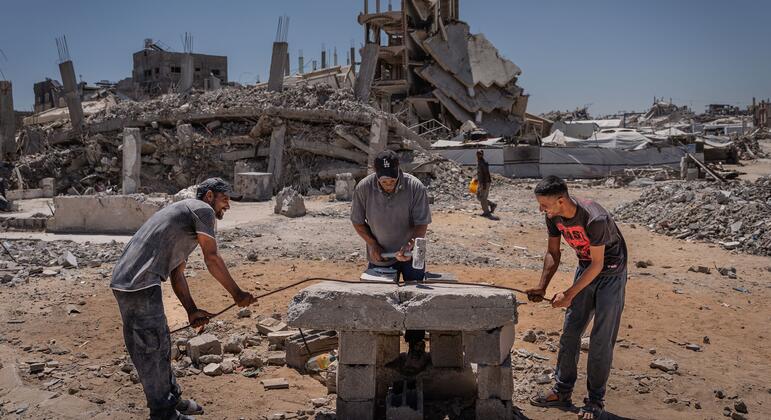
Israeli airstrikes killed at least five Palestinians in Gaza City on 31 August, while UN reporting continues to describe attacks, civilian casualties and damage across Gaza. Food insecurity, displacement, water insecurity and damage to civilian infrastructure remain acute despite aid movements through Kerem Shalom and medical evacuations through Rafah and Kerem Shalom. In southern Lebanon, Hezbollah drone attacks and Israeli strikes continue alongside contested US-mediated arrangements. The regional risk picture has worsened since the prior brief because the US and Iran exchanged strikes around Larak Island and US bases in Jordan, while Iran and the UAE issued conflicting accounts of an alleged strike on Al Minhad air base.
Change from previous assessment
Since the prior brief, the assessment retains very high likelihood for continuing Israeli strikes and severe humanitarian conditions in Gaza, and likely Israel-Hezbollah exchanges in southern Lebanon. New reporting on 31 August adds at least five deaths from Israeli strikes in Gaza City, Itamar Ben-Gvir's incursion into Al-Aqsa, 1,418 reported settler attacks across the West Bank through July, Hezbollah's rejection of the Lebanon-Israel framework, and a scheduled September round of talks. US-Iran escalation has also moved from reported preparation to direct exchanges involving Larak Island, US bases in Jordan, UAE territorial waters and shipping around the Strait of Hormuz. Confidence has not increased for the Iran and Lebanon forward judgements because conflicting accounts remain unresolved. Initial assessment added on Al-Aqsa and West Bank escalation pressure.
Key judgments
- Very likely Israeli military strikes and other hostilities will continue across Gaza over the next 1-3 months, leaving the October 2025 Israel-Hamas ceasefire operationally unstable. OCHA reported ongoing air strikes and attacks on 28 August. Hospital officials reported at least five Palestinians killed in Gaza City on 31 August, including two people killed near the municipal park and three in Tal al-Hawa. OCHA and UNICEF also reported four children aged two to 16 killed in separate attacks during the preceding week. The assessment has medium confidence because OCHA and major-media reporting corroborate the wider pattern, while the causes and responsibility for some incidents involving nearby strikes remain unestablished. (Confidence: medium · ASSESSED)
- I&W: Confirm: OCHA or hospital officials report another Israeli airstrike causing deaths or damage in Gaza City, Rafah or Deir al Balah. (0-14 days)
- I&W: Break: OCHA reports no airstrikes or other attacks across Gaza and no new civilian casualties for 14 consecutive days. (0-14 days)
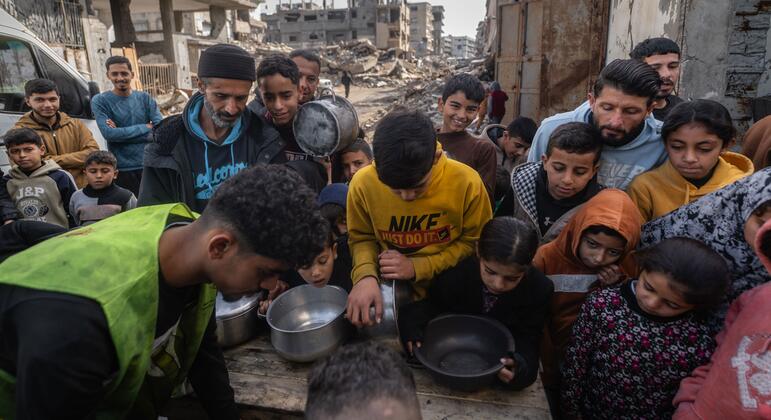
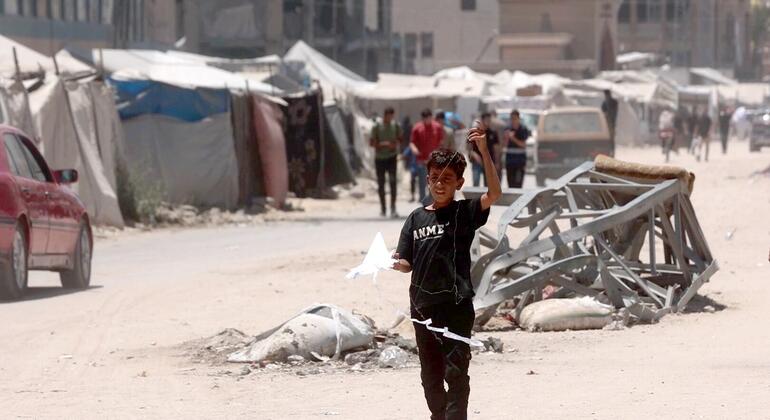
- Very likely severe humanitarian conditions will persist in Gaza over the next 1-3 months despite continued deliveries through Kerem Shalom and medical evacuations through Rafah and Kerem Shalom. UN figures report that 50 per cent of families ran out of food at least once in the previous month, about one in five families ate only one meal a day, and three-quarters of households faced difficulty accessing markets in August. Around 90 per cent of civilian infrastructure is heavily damaged or destroyed, 90 per cent of people experienced moderate-to-high water insecurity in July, and more than two million people remain displaced. UN partners collected hundreds of pallets at Kerem Shalom on 26 August, delivered food parcels and wheat flour to more than 600,000 people, and WHO supported the evacuation of 106 patients and 132 companions during the previous week. The assessment has high confidence because UN reporting from OCHA, WFP, WHO, UNICEF and other multilateral bodies corroborates the main food, water, infrastructure, displacement and access indicators. (Confidence: high · ASSESSED)
- I&W: Confirm: WFP or UN reporting shows households continuing to run out of food, eat one meal a day or lose access to markets, while water and infrastructure damage remain at current levels. (1-3 months)
- I&W: Break: UN partners report sustained access through Kerem Shalom and Rafah, a clear fall in food insecurity below the current 50 per cent and one-in-five indicators, and a sustained increase in medical evacuations. (1-3 months)
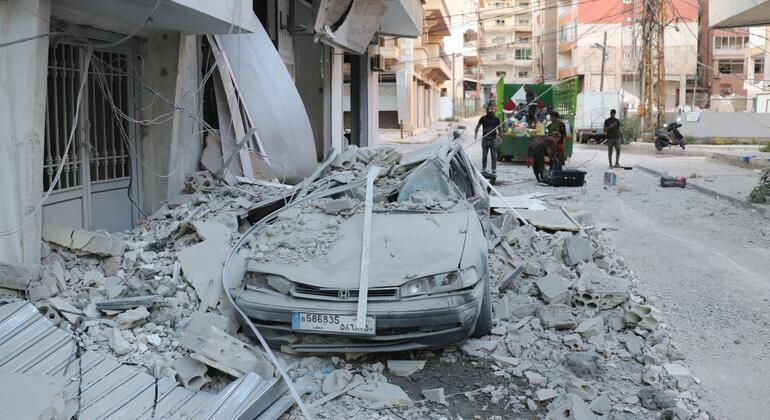
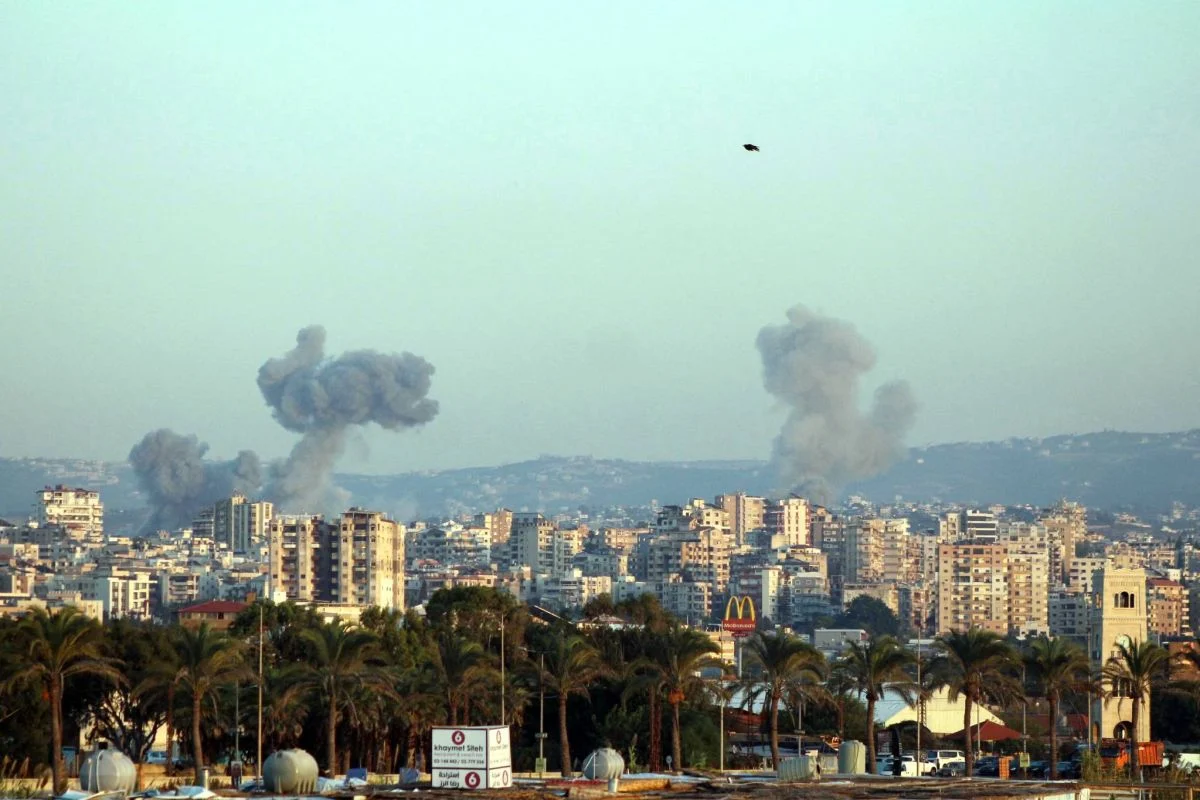
- Likely Israel-Hezbollah armed exchanges will continue in southern Lebanon over the next 1-3 months, while the late-June Lebanon-Israel framework remains contested. Hezbollah deployed explosive drones towards Israeli military positions on 27 August, and the Israeli Air Force struck multiple locations in southern Lebanon. UNIFIL observed increased logistical movements, demolitions and projectile launches inside its area of operations. Hezbollah rejected the framework unless Israel first withdraws from Lebanese territory, while the next round of Israel-Lebanon talks is scheduled for September. The assessment has medium confidence because UNIFIL and local-media reporting corroborate the broader exchange pattern, but accounts differ over the dates and precise location of the recent drone incident, and some force assessments rely on think-tank reporting. (Confidence: medium · ASSESSED)
- I&W: Confirm: UNIFIL records new projectile launches, demolitions or logistical movements in southern Lebanon, or Hezbollah and the Israeli Air Force report another drone and strike exchange along the Blue Line. (0-14 days)
- I&W: Break: September Israel-Lebanon talks produce an announced arrangement covering Israeli withdrawal, Hezbollah disarmament and Lebanese army deployment, followed by 14 days without reported drone or airstrike exchanges. (1-3 months)
- Likely US-Iran military and maritime incidents will continue over the next 0-14 days, with Larak Island, the Strait of Hormuz, US bases in Jordan and UAE territorial waters as immediate flashpoints. US forces struck two Iranian launchers on Larak Island on 30 August. Iran launched missiles at two US bases in Jordan, while Jordan reported intercepting eight missiles. The UAE reported intercepting an Iranian drone over its territorial waters but denied that Al Minhad air base had been hit. Iran condemned the Larak strike, the IRGC reported two deaths while Tasnim reported three, and Donald Trump vowed a response. The Strait of Hormuz remains effectively blocked in reporting, and the US continues maritime action against Iranian shipping. The assessment has medium confidence because US, Jordanian, UAE and major-media accounts corroborate the main strike and interception sequence, but the Al Minhad strike claim, Larak casualty total and attack dates remain disputed. (Confidence: medium · ASSESSED)
- I&W: Confirm: CENTCOM reports another strike on Iranian launchers, Jordan's army reports another missile or drone interception at King Hussein or al-Azraq, or the UAE reports another Iranian drone over its territorial waters. (0-14 days)
- I&W: Break: US, Iranian, Jordanian and UAE authorities report no further strikes, missile launches or drone interceptions for 14 consecutive days, while maritime reporting records reopened tanker traffic through the Strait of Hormuz. (0-14 days)
- Likely Israeli-Palestinian tensions will remain elevated around Al-Aqsa in East Jerusalem and across the West Bank over the next 1-3 months, adding pressure to Gaza ceasefire stability. Israeli National Security Minister Itamar Ben-Gvir entered the Al-Aqsa Mosque compound on 31 August under Israeli protection, performed prayers and called for a temple at the site. The Jerusalem governorate condemned the incursion. OCHA recorded 1,418 settler attacks causing casualties or property damage across the West Bank through July, while UN reporting recorded 38 such attacks in one week. The assessment has medium confidence because multilateral and major-media reporting corroborates the reported incidents, but the link between individual West Bank actions and future Gaza ceasefire behaviour is inferential. (Confidence: medium · ASSESSED)
- I&W: Confirm: another Ben-Gvir or settler-led entry into Al-Aqsa is accompanied by calls to alter the site's status quo, or OCHA records another weekly cluster of settler attacks causing casualties or property damage in the West Bank. (0-14 days)
- I&W: Break: Israeli authorities rescind reported changes or restrictions at Al-Aqsa and OCHA records no settler attacks causing casualties or property damage for 30 consecutive days. (1-3 months)
Outlook & scenarios
Violent but bounded multi-front status quo (55%)
Over the next 1-3 months, Israeli military strikes continue in Gaza, humanitarian access remains partial, Israel-Hezbollah exchanges stay concentrated in southern Lebanon, and September talks proceed without enforcing the late-June framework. US-Iran incidents remain episodic around Larak Island, the Strait of Hormuz, Jordan and UAE territorial waters. This path preserves existing diplomatic channels without ending hostilities.
Lebanon framework failure and front widening (25%)
Hezbollah's rejection of the framework and its demand for Israeli withdrawal prevent implementation. Further Hezbollah drone attacks prompt Israeli strikes across southern Lebanon, with rising pressure on UNIFIL movement and humanitarian access. September talks continue formally but fail to halt exchanges.
Hormuz and Gulf escalation (25%)
US strikes on Iranian launchers and Iranian attacks on US bases or regional airspace continue. A verified strike affecting Al Minhad, another Iranian drone interception by the UAE, or further attacks on shipping produces additional US-Iran exchanges around the Strait of Hormuz. Maritime disruption and pressure on regional energy revenues deepen.
Wildcard: simultaneous multi-front escalation (8%)
A successful strike on a US facility in Jordan, a verified attack on Al Minhad air base, or a mass-casualty incident involving a UN convoy triggers coordinated retaliation. Israeli strikes in Gaza, Israel-Hezbollah exchanges in southern Lebanon and US-Iran action around Hormuz intensify within the same reporting period. This is low probability but high impact because it would overwhelm existing deconfliction and diplomatic channels.
Recommendations
- Maintain a daily 0-14 day watchlist covering Gaza City, Rafah, Deir al Balah, the Blue Line and southern Lebanon, Larak Island and the Strait of Hormuz, the King Hussein and al-Azraq bases in Jordan, UAE territorial waters and Al-Aqsa in East Jerusalem. Record each incident by actor, location, platform, casualty count and source type.
- Separate confirmed events from attributed claims in all reporting. Treat the alleged Iranian strike on Al Minhad as unverified pending corroboration, present the IRGC and Tasnim Larak casualty figures separately, and do not use a definitive casualty total.
- Use humanitarian access as a leading escalation measure. Track weekly changes in Gaza food shortages, market access, water insecurity and displacement, alongside Kerem Shalom supply collections, Rafah and Kerem Shalom medical evacuations, and authorisation for explosive ordnance removal.
- Prioritise September Israel-Lebanon talks for evidence of implementation rather than statements alone. Check for concrete movement on Israeli withdrawal, Hezbollah disarmament, Lebanese army deployment, UNIFIL freedom of movement and the continuation of deconfliction mechanisms.
- Maintain two near-term planning baselines: a bounded multi-front status quo and a Lebanon or Hormuz escalation path. Trigger senior review after any new strike on a US facility, any confirmed impact on Al Minhad, any Hezbollah drone attack followed by Israeli strikes, or any attack affecting a UN convoy or civilian infrastructure.
- Verify visual and social-media claims before incorporating them into assessments. Give priority to CENTCOM, Jordanian and UAE defence reporting, UN reporting, hospital accounts, wire services and satellite data, while retaining NASA FIRMS' warning that thermal signatures record heat but not cause.
Confidence & uncertainty
Overall confidence is high because the principal developments are corroborated by multiple reliable sources, including UN News, UNIFIL, WHO, WFP, UNICEF, official US, Jordanian and UAE statements, major media and wire services. Confidence is lower for forward-looking judgements and for disputed details, particularly the Al Minhad strike, the Larak casualty count, the timing of the Jordan missile attack and the geographic framing of the Kalandia facility. These uncertainties do not materially alter the assessment of continuing violence and humanitarian pressure across Gaza and southern Lebanon.
Intelligence gaps
- [EEI 1.1 · UNCOVERED] Number, type and geolocated coordinates of projectiles (rockets, mortars, anti-tank guided missiles) fired from Lebanon into Israel in the last 24/72 hours, including time-stamped launch and impact locations. Recommended collection: signals/intel
- [EEI 1.2 · UNCOVERED] Satellite or aerial imagery showing movement, concentration, or forward displacement of Hezbollah-associated military assets (armored vehicles, artillery pieces, mobile rocket launchers, logistics convoys) to positions within 0-10 km of the Israel-Lebanon border. Recommended collection: satellite/imagery
- [EEI 1.3 · UNCOVERED] Intercepted or captured Hezbollah command-and-control communications or orders explicitly directing cross-border operations or coordinated strikes with Palestinian groups (time-stamped messages, unit identifiers, orders to fire/move). Recommended collection: signals/intel
- [EEI 1.4 · UNCOVERED] Observable changes in Israeli northern-front posture within Israel (numbers and types of reinforcements deployed to northern brigades, activation of reserves, air defense redeployments, evacuation orders or shelter alerts in northern towns), including timestamps and unit IDs where available. Recommended collection: human/intel
- [EEI 2.1 · UNCOVERED] Official or corroborated reports of IDF reservist mobilization and unit-level deployment orders (number of reservists called, named brigades/units ordered to deploy, deployment timelines). Recommended collection: open-source/media
- [EEI 2.2 · UNCOVERED] Satellite or ground imagery showing concentrations of IDF heavy equipment (tanks, infantry fighting vehicles, engineering vehicles), staging areas, field hospitals or forward supply dumps within X km of the Gaza border and at known crossing points. Recommended collection: satellite/imagery
- [EEI 2.3 · UNCOVERED] Change in strike patterns consistent with pre-ground-attack shaping: sustained high-frequency airstrikes on tunnel networks, command nodes, coastal launch sites, and known insurgent concentrations (strike counts, munition types, locations, times). Recommended collection: open-source/media
- [EEI 2.4 · UNCOVERED] Logistics indicators: verified convoys of fuel/ammunition entering staging areas, establishment of forward logistics or medical bases, or documented requisitioning orders for bulk combat supplies with timestamps and quantities. Recommended collection: human/intel
- [EEI 3.1 · UNCOVERED] Number, participants and content of diplomatic contacts or negotiation sessions in the last 48 hours involving mediators (Egypt, Qatar, US, UN), including any proposed ceasefire text, prisoner/exchange lists, timelines or verification mechanisms. Recommended collection: diplomatic
- [EEI 3.2 · UNCOVERED] Public statements, press releases or verified communiqués from Hamas and other Gaza armed groups specifying acceptance, rejection, or conditions for a ceasefire (explicit conditions such as prisoner release lists, withdrawal terms, lifting of blockades), with timestamps and speaker attribution. Recommended collection: open-source/media
- [EEI 3.3 · PARTIAL] Humanitarian indicators relevant to ceasefire: establishment and operation of agreed humanitarian corridors/checkpoints, number of aid deliveries admitted, civilian evacuations completed, and NGO/hospital reports of access denials or safe-passage violations. Recommended collection: humanitarian/NGO reports
- [EEI 3.4 · PARTIAL] Operational evidence of a de facto pause: verified sustained reduction (e.g., ≥12 hours) in strikes or launches from either side in specific sectors, supported by strike/impact logs, radar tracks and incident reports. Recommended collection: open-source/media
Cited sources
[1] United Nations News · Four children killed as separate attacks in Gaza destroy aid supplies (A) · Fri Aug 28 2026 20:52:29 GMT+0000 (Coordinated Universal Time) · sha256:1bd2e2b4aa14 [2] United Nations News · Aid reaches hundreds of thousands in Gaza amid severe food insecurity (A) · Thu Aug 27 2026 21:51:45 GMT+0000 (Coordinated Universal Time) · sha256:3c21ae1c3dab [3] India Today · UAE intercepts Iranian drone as US-Iran tensions flare across Middle East (A) · Mon Aug 31 2026 13:40:40 GMT+0000 (Coordinated Universal Time) · sha256:1273791bc59a [4] United Nations (UN News) · Security Council LIVE: Rising tensions in Gaza, West Bank (A) · Wed Aug 26 2026 13:50:47 GMT+0000 (Coordinated Universal Time) · sha256:ca198abc6ace [5] United Nations (UN News) · Lebanon: Civilian risks grow as military activity continues, UN says (A) · Thu Aug 27 2026 16:02:36 GMT+0000 (Coordinated Universal Time) · sha256:25b5e1e14bb7 [6] Voice of Emirates · Israeli Air Force Strikes South Lebanon Following Hezbollah Drone Attacks (D) · Thu Aug 27 2026 13:34:27 GMT+0000 (Coordinated Universal Time) · sha256:40dce9011d5f [7] Al Jazeera · Lebanon asks Greece to help enforce agreement with Israel (A) · Mon Aug 31 2026 20:24:41 GMT+0000 (Coordinated Universal Time) · sha256:6206cdc1e310 [8] BBC News · US and Iran trade strikes after first known US attack in weeks (A) · Sun Aug 30 2026 21:15:42 GMT+0000 (Coordinated Universal Time) · sha256:390f54d4fe3f [9] Reuters (republished by gCaptain) · Trump Vows to Hit Iran Hard After First Exchanges of Fire in a Month (A) · Mon Aug 31 2026 19:33:43 GMT+0000 (Coordinated Universal Time) · sha256:c084af0954c7 [10] Al Jazeera · Israel’s Ben-Gvir storms Al-Aqsa mosque in occupied East Jerusalem (A) · Mon Aug 31 2026 19:25:45 GMT+0000 (Coordinated Universal Time) · sha256:3aa595c4e0f4 [11] Al Jazeera · Palestinian farmers rebuild what Israeli settlers destroy in West Bank (A) · Mon Aug 31 2026 18:17:20 GMT+0000 (Coordinated Universal Time) · sha256:ceacf75f8e3b
Source content hashes were computed at collection time; the cited text is preserved unmodified for the life of this product.
TLP:CLEAR