TLP:CLEAR · Disclosure is not limited.
Gaza Ceasefire Strains and Lebanon Escalation Risks
Time window: Last 7 days · Audience: General analyst · Type: Situation report · DTG: 2026-08-30 22:24Z · Overall confidence: MEDIUM
BLUF
Very likely Israeli attacks will continue across Gaza over the next 1-3 months, keeping the October 2025 ceasefire operationally unstable and humanitarian conditions severe. Likely Hezbollah-Israel exchanges will continue in southern Lebanon, while there is a roughly even chance that the confrontation widens into direct Iran-linked action.
Executive summary
Between 23 and 30 August 2026, OCHA and UNICEF reported continued Israeli attacks across Gaza, including the deaths of four children, damage to a UNICEF-supported water facility in Deir al Balah serving more than 4,000 people, and the destruction of more than $770,000 in nutrition supplies intended for more than 45,000 people. WFP and WHO reporting shows persistent food insecurity and restricted medical access despite aid deliveries. In southern Lebanon, UNIFIL observed increased logistical movements, demolitions and projectile launches, while reports described Hezbollah drone attacks and Israeli retaliation. The evidence supports continued contained but unstable regional escalation. Confidence is lower on sustained Israeli operations in Beirut's southern suburbs, direct Iranian operational involvement and the scale of maritime spillover around the Strait of Hormuz.
Change from previous assessment
Compared with the 30 August 2026 prior brief, the core assessment is unchanged: Gaza attacks and severe humanitarian conditions remain very likely, Hezbollah-Israel friction remains likely, sustained Israeli operations in Beirut's southern suburbs remain unlikely, and direct Iran-linked widening retains a roughly even chance with low confidence. This update adds a low-confidence judgment on maritime pressure around the Strait of Hormuz and gives greater weight to the disputed Larak Island incident. It also records the 24 August seizure of the Kalandia Vocational Training Centre and recent West Bank violence as contextual indicators, without changing the Gaza-Lebanon escalation outlook.
Key judgments
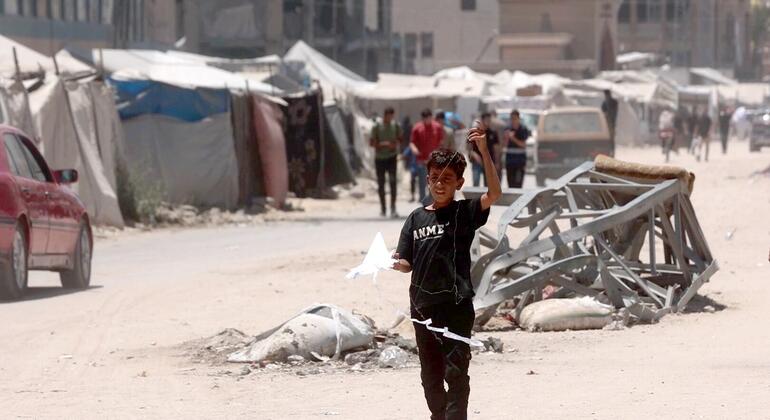
- Very likely Israeli strikes and other attacks will continue across Gaza over the next 1-3 months, keeping the October 2025 ceasefire operationally unstable. OCHA reported ongoing air strikes, civilian casualties and damage on 28 August, while reporting attributed frequent strikes across Gaza to the Israeli military. OCHA and UNICEF also reported that Israeli attacks killed four children during the week of 28 August, severely damaged a UNICEF-supported water well and desalination facility in Deir al Balah on 24 August, and destroyed more than $770,000 in nutrition supplies. The IDF and Shin Bet separately said Israel struck five weapons storage facilities and a Hamas launch site. Confidence is medium because multiple multilateral sources corroborate the current pattern, but the forward assessment is inferential and responsibility for some individual incidents remains contested. (Confidence: medium · ASSESSED)
- I&W: Confirmation: OCHA, UNICEF or another multilateral source reports additional Israeli strikes causing civilian casualties or damage to water, medical or humanitarian facilities in Gaza. (0-14 days)
- I&W: Break: OCHA reports no Israeli air strikes or other attacks across Gaza for 14 consecutive days and records improved movement and recovery access. (0-30 days)
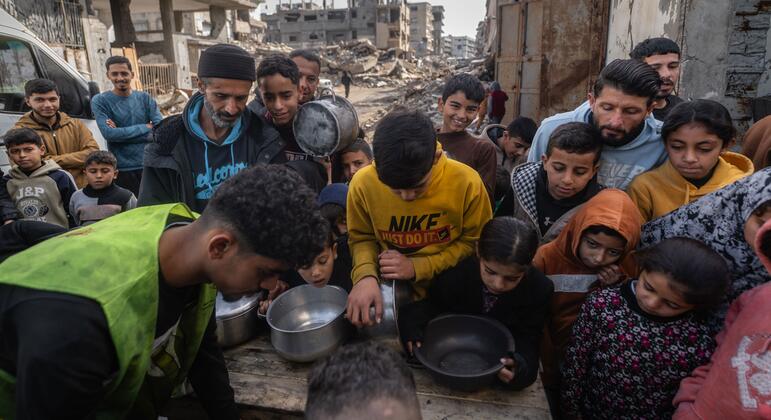
- Very likely severe humanitarian conditions will persist in Gaza over the next 1-3 months despite continuing aid deliveries. United Nations figures report that 50 per cent of families ran out of food at least once in the previous month, about one in five families ate only one meal a day, and three-quarters of households faced difficulty accessing markets. Around 90 per cent of civilian infrastructure is heavily damaged or destroyed, more than two million people have been displaced, and thousands of patients still await medical evacuation. UN partners provided food parcels and wheat flour to more than 600,000 people in August, while WHO supported the evacuation of 106 patients and 132 companions during the previous week. Confidence is high because OCHA, UNICEF, WHO, WFP and other UN reporting corroborate the core food, infrastructure, displacement, aid and medical-access indicators. (Confidence: high · ASSESSED)
- I&W: Confirmation: WFP or United Nations reporting continues to record at least 50 per cent of Gaza families running out of food, or at least three-quarters of households facing difficulty accessing markets. (0-30 days)
- I&W: Break: WHO reports that the backlog of patients awaiting medical evacuation has been cleared and United Nations reporting records sustained access to food markets for most households. (1-3 months)
- Likely Hezbollah-Israel armed exchanges will continue in southern Lebanon over the next 1-3 months. UNIFIL has observed a rise in logistical movements, demolitions and projectile launches in its area of operations, while reporting describes Hezbollah drone attacks and retaliatory Israeli strikes. A separate Israeli Army Radio report described five suicide drones launched towards Israeli forces at Ali Taher hill, but that detail rests on a low-reliability social-media relay. The status of the June Israel-Hezbollah ceasefire remains disputed: one report describes a 1 June agreement, while another records Hezbollah rejecting the deal on 4 June. Confidence is medium because UNIFIL corroborates the wider pattern, but the specific Ali Taher account and the ceasefire timeline remain weak or contradictory. (Confidence: medium · ASSESSED)
- I&W: Confirmation: UNIFIL records further logistical movements, demolitions or projectile launches, or reliable reporting confirms additional Hezbollah drone attacks followed by Israeli strikes in southern Lebanon. (0-14 days)
- I&W: Break: UNIFIL records no projectile launches, demolitions or unusual logistical movements for 14 consecutive days and Israel and Hezbollah issue mutually consistent ceasefire implementation statements. (0-30 days)
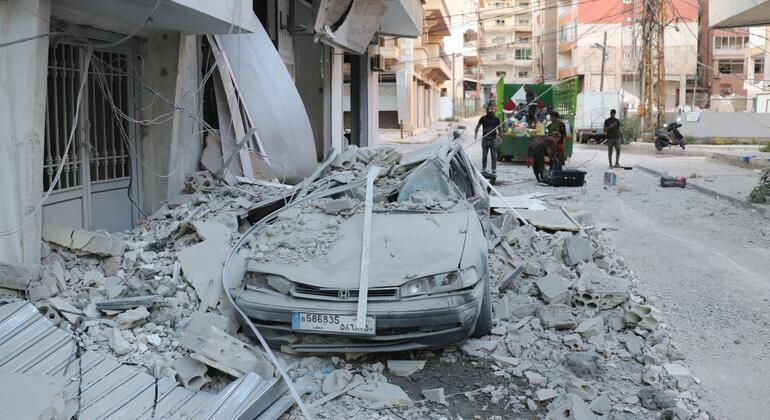
- Unlikely Israel will sustain a new campaign in Beirut's southern suburbs over the next 1-3 months, although likely Israeli operations will remain concentrated in southern Lebanon. A report described explosions in Beirut's southern suburbs after Israeli evacuation warnings for buildings in Burj al-Barajneh and Hadath. This indicates that the geographic boundary has already been breached once, but the available reporting does not establish an Israeli decision to sustain operations in Beirut. The reported 1 June ceasefire terms also stated that Israel would not target the southern suburbs, although Hezbollah's acceptance of that arrangement is disputed. Confidence is low because the Beirut incident rests on a single medium-confidence report and there is no direct reporting on Israeli intent. (Confidence: low · ASSESSED)
- I&W: Confirmation: Israel issues further evacuation warnings for Burj al-Barajneh, Hadath or other Beirut southern suburb locations, followed by confirmed strikes or repeated explosions. (0-14 days)
- I&W: Break: Israel reaffirms the restriction on targeting Beirut's southern suburbs and no further incident is reported there for 30 consecutive days. (0-30 days)
- There is a roughly even chance over the next 1-3 months that Israel-Hezbollah fighting widens into a direct Iran-linked confrontation rather than remaining between Israel, Hezbollah and Lebanon. Recent reporting attributes a US strike on missile launchers on Iran's Larak Island, while Iran's Tasnim news agency said the attack involved drones and killed two people. IRGC spokesman Hossein Mohebbi warned that the consequences would be economic and military. Countervailing reporting says Iran's military prioritises an agreement to end fighting in Gaza and Lebanon over retaliation. Israeli military spokesperson R Adm Daniel Hagari warned of an Israeli response to any new Iranian escalation, while National Security Minister Itamar Ben-Gvir called the attack an opening blow and advocated further strikes. Confidence is low because the Larak incident has disputed attribution and the wider evidence consists mainly of official statements, with no corroborated reporting of direct Iranian operational involvement in the Lebanon fighting. (Confidence: low · ASSESSED)
- I&W: Confirmation: Iran or the IRGC conducts a further strike linked to Israel-Hezbollah hostilities, or Israel confirms another operation against Iranian military infrastructure followed by an Iranian response. (0-30 days)
- I&W: Break: Iran's military and Israel issue mutually consistent de-escalatory statements and no direct Iran-Israel strike is reported for 60 consecutive days. (1-3 months)
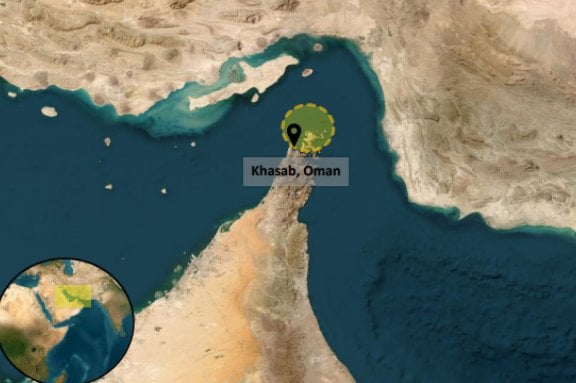
- Likely Iran-linked pressure on commercial shipping around the Strait of Hormuz will continue over the next 0-14 days, but attribution of physical attacks remains uncertain. Reporting says Iran is checking tanker traffic near Larak Island and reportedly demanding $2 million for passage. Iran's Persian Gulf Strait Authority listed 46 vessels accused of violating Iranian transit arrangements, while the IRGC reportedly warned the Marshall Islands-flagged LPG tanker Haana, which turned back towards Qatar. The Liberian-flagged crude tanker Ellie reportedly reversed course and later went dark, while the Kuwaiti product tanker Al Salam II and another inbound tanker off Khasab, Oman, were reported struck by unknown attackers. Confidence is low because several accounts rely on trade publications, vessel behaviour does not by itself establish Iranian responsibility, and the timing of some reports is unclear. (Confidence: low · ASSESSED)
- I&W: Confirmation: Iran or the IRGC issues another named-vessel warning, conducts a further vessel challenge near the Strait of Hormuz, or another named tanker reverses course after an encounter. (0-14 days)
- I&W: Break: Maritime reporting records 14 consecutive days without vessel challenges, turnbacks or new strikes and confirms routine commercial transit through the Strait of Hormuz. (0-30 days)
Outlook & scenarios
Very likely: unstable Gaza ceasefire and contained Lebanon exchanges (65%)
Israeli strikes and other attacks continue across Gaza while aid deliveries proceed below humanitarian requirements. Hezbollah drone activity and Israeli retaliation continue in southern Lebanon, but Israel does not sustain a campaign in Beirut's southern suburbs. Iran-linked maritime pressure persists without a confirmed direct Iranian entry into the Lebanon fighting.
Likely: temporary diplomatic containment (35%)
Egyptian, Qatari and Turkish mediation, the US-led monitoring mechanism and Iran's stated preference for ending fighting in Gaza and Lebanon produce a temporary reduction in attacks. The disagreement over whether Hamas has accepted a disarmament roadmap remains unresolved, and Israeli demands for Hamas disarmament continue to obstruct a durable settlement.
Roughly even chance: Iran-linked widening (25%)
A further Israeli or US strike on Iranian assets, or an Iranian response linked to Hezbollah's fighting, triggers reciprocal action. Hezbollah increases attacks in southern Lebanon, Israel expands its target set, and pressure on shipping around the Strait of Hormuz intensifies.
Unlikely, high-impact: sustained Israeli campaign in Beirut's southern suburbs (10%)
Further evacuation warnings and repeated Israeli strikes in Burj al-Barajneh, Hadath or nearby areas break the current geographic containment. Hezbollah responds with attacks beyond southern Lebanon, creating a wider Lebanon crisis even if Iran does not enter the fighting directly.
Recommendations
- Maintain separate daily status lines for the Gaza ceasefire, the Israel-Hezbollah situation in southern Lebanon and Iran-linked escalation. Do not treat the disputed June Lebanon arrangement as a confirmed, mutually implemented ceasefire.
- Prioritise OCHA, UNICEF, WHO and WFP updates when assessing Gaza conditions. Track Israeli strikes affecting water facilities, medical sites and aid stocks alongside food-market access, medical evacuations and authorisation for explosive ordnance removal.
- Treat Hamas's disarmament position and the transmission channel for Board of Peace messages as unresolved. Seek primary statements from Hamas, Israel, Egypt, Qatar, Türkiye and the US-led monitoring mechanism before using either account as the current position.
- Set immediate warning alerts for new Israeli evacuation orders or strikes in Burj al-Barajneh and Hadath, confirmed Hezbollah drone launches, further Israeli action against Iranian assets and Iranian responses linked to Lebanon.
- Track named maritime incidents involving Haana, Ellie, Al Salam II and other vessels near Larak Island, the Strait of Hormuz and Khasab. Record vessel behaviour separately from attacker attribution.
- Use NASA FIRMS thermal detections only as corroborating evidence. The 26 detections recorded over Gaza on 29-30 August had no high-confidence detections, and thermal data records heat rather than cause.
- Include UNIFIL's mandate expiry and the half-funded Lebanon flash appeal in forward planning. Monitor any change in UNIFIL access, checkpoint delays, logistical movements or humanitarian funding before revising the Lebanon risk assessment.
Confidence & uncertainty
Overall confidence is medium. High-confidence multilateral reporting from OCHA, UNICEF, WHO, WFP and UNIFIL corroborates the core judgments on Gaza attacks, humanitarian conditions and increased military activity in southern Lebanon. Major media provides additional reporting on Israeli operations and diplomatic positions. The main uncertainties are the disputed status of Hamas's disarmament, conflicting accounts of the Lebanon ceasefire timeline and terms, contested attribution of the Larak Island incident, the single-source report concerning Ali Taher hill and uncertain responsibility for maritime attacks.
Intelligence gaps
- [EEI 1.1 · UNCOVERED] Number, type and geolocated coordinates of projectiles (rockets, mortars, anti-tank guided missiles) fired from Lebanon into Israel in the last 24/72 hours, including time-stamped launch and impact locations. Recommended collection: signals/intel
- [EEI 1.2 · UNCOVERED] Satellite or aerial imagery showing movement, concentration, or forward displacement of Hezbollah-associated military assets (armored vehicles, artillery pieces, mobile rocket launchers, logistics convoys) to positions within 0-10 km of the Israel-Lebanon border. Recommended collection: satellite/imagery
- [EEI 1.3 · UNCOVERED] Intercepted or captured Hezbollah command-and-control communications or orders explicitly directing cross-border operations or coordinated strikes with Palestinian groups (time-stamped messages, unit identifiers, orders to fire/move). Recommended collection: signals/intel
- [EEI 1.4 · UNCOVERED] Observable changes in Israeli northern-front posture within Israel (numbers and types of reinforcements deployed to northern brigades, activation of reserves, air defense redeployments, evacuation orders or shelter alerts in northern towns), including timestamps and unit IDs where available. Recommended collection: human/intel
- [EEI 2.1 · PARTIAL] Official or corroborated reports of IDF reservist mobilization and unit-level deployment orders (number of reservists called, named brigades/units ordered to deploy, deployment timelines). Recommended collection: open-source/media
- [EEI 2.2 · UNCOVERED] Satellite or ground imagery showing concentrations of IDF heavy equipment (tanks, infantry fighting vehicles, engineering vehicles), staging areas, field hospitals or forward supply dumps within X km of the Gaza border and at known crossing points. Recommended collection: satellite/imagery
- [EEI 2.3 · PARTIAL] Change in strike patterns consistent with pre-ground-attack shaping: sustained high-frequency airstrikes on tunnel networks, command nodes, coastal launch sites, and known insurgent concentrations (strike counts, munition types, locations, times). Recommended collection: open-source/media
- [EEI 2.4 · UNCOVERED] Logistics indicators: verified convoys of fuel/ammunition entering staging areas, establishment of forward logistics or medical bases, or documented requisitioning orders for bulk combat supplies with timestamps and quantities. Recommended collection: human/intel
- [EEI 3.1 · PARTIAL] Number, participants and content of diplomatic contacts or negotiation sessions in the last 48 hours involving mediators (Egypt, Qatar, US, UN), including any proposed ceasefire text, prisoner/exchange lists, timelines or verification mechanisms. Recommended collection: diplomatic
- [EEI 3.2 · PARTIAL] Public statements, press releases or verified communiqués from Hamas and other Gaza armed groups specifying acceptance, rejection, or conditions for a ceasefire (explicit conditions such as prisoner release lists, withdrawal terms, lifting of blockades), with timestamps and speaker attribution. Recommended collection: open-source/media
- [EEI 3.3 · PARTIAL] Humanitarian indicators relevant to ceasefire: establishment and operation of agreed humanitarian corridors/checkpoints, number of aid deliveries admitted, civilian evacuations completed, and NGO/hospital reports of access denials or safe-passage violations. Recommended collection: humanitarian/NGO reports
- [EEI 3.4 · PARTIAL] Operational evidence of a de facto pause: verified sustained reduction (e.g., ≥12 hours) in strikes or launches from either side in specific sectors, supported by strike/impact logs, radar tracks and incident reports. Recommended collection: open-source/media
Cited sources
[1] United Nations (UN News) · Four children killed as separate attacks in Gaza destroy aid supplies (A) · sha256:1bd2e2b4aa14 [2] United Nations News · Aid reaches hundreds of thousands in Gaza amid severe food insecurity (A) · sha256:3c21ae1c3dab [3] The Jerusalem Post · Board of Peace demands Israel comply with Gaza ceasefire, calls for end to kite attacks (B) · sha256:04b9403a9b13 [4] United Nations (UN News) · Lebanon: Civilian risks grow as military activity continues, UN says (A) · sha256:25b5e1e14bb7 [5] @sawtbeirut (Threads account) · Threads (E) · sha256:769a62b85077 [6] Wikipedia · 2026 Israel–Lebanon ceasefire (C) · sha256:ef8219dfb5a8 [7] Wikipedia · 2026 Lebanon war (C) · sha256:425d44240c6c [8] ng.shotoe.com (aggregator; original outlet not determinable from provided metadata) · Joe Biden says he hopes latest Israeli strike on Iran will end escalation (B) · sha256:ef1ca1660ffa [9] BBC · US strikes launchers on Iran's Larak Island in first known attack in weeks (A) · sha256:e4cf12599e2c [10] Wikipedia · Iran–Israel conflict (C) · sha256:ac24c6343592 [11] The Maritime Executive · Iran Targets Tankers Inbound to the Persian Gulf (C) · sha256:2042b83807ef
Source content hashes were computed at collection time; the cited text is preserved unmodified for the life of this product.
TLP:CLEAR