TLP:CLEAR · Disclosure is not limited.
Gaza ceasefire strains further as strikes continue; Lebanon remains uncertain
Time window: Last 7 days · Audience: General analyst · Type: Situation report · DTG: 2026-11-26 13:14Z · Overall confidence: HIGH
BLUF
Israeli strikes in Gaza from 24 to 26 November killed senior Hamas figures, and reports put the latest overnight toll at eight to nine Palestinians. The ceasefire is very likely to remain under acute strain; a sustained Israel-Hezbollah war remains unlikely over the next 30 days, but confidence in that Lebanon assessment is low.
Executive summary
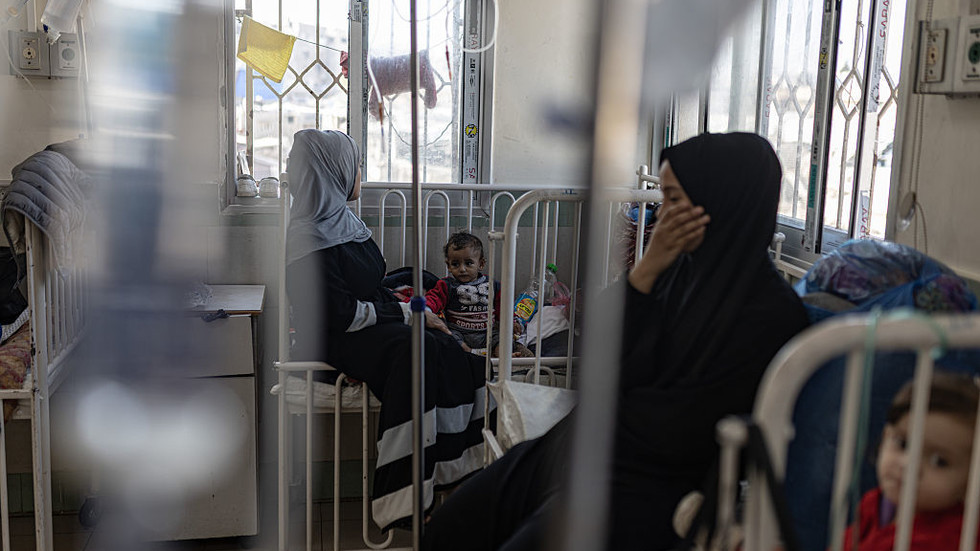
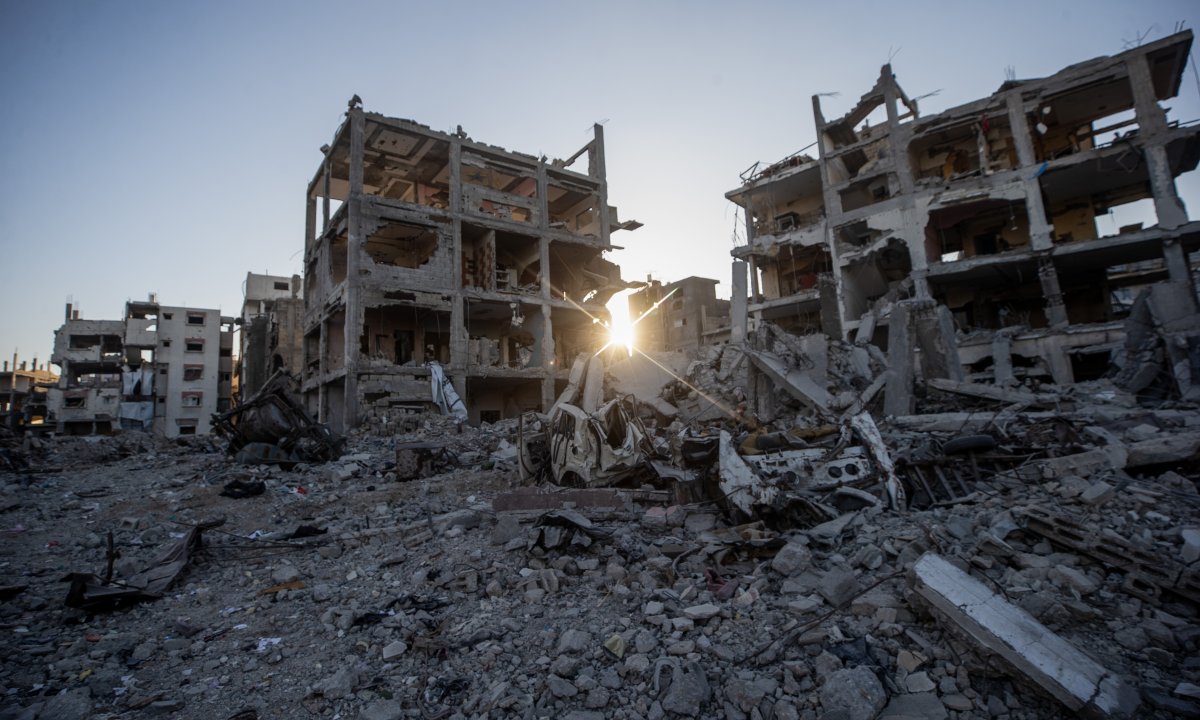
Israeli strikes and gunfire continued in Gaza for a third consecutive night, with reports of at least eight or nine Palestinians killed overnight on 26 November. Israel described its operations as targeted killings of Hamas figures; Hamas said the strikes violated the ceasefire. Gaza’s health emergency also remains acute: the WHO reported more than 533 meningitis cases and four deaths since mid-October, while warning that shortages of diagnostic supplies hinder testing. COGAT, by contrast, said medical and sanitation supplies were entering Gaza daily. In Lebanon, reports of a proposed private-contractor role in the south are contested, and the reported end of UNIFIL’s mandate in December adds uncertainty to the security arrangements.
Change from previous assessment
Since the 25 November brief, reporting adds a third consecutive night of Israeli airstrikes, the killing of Khaled Abu Nada on 26 November and a reported overnight Gaza death toll of at least eight to nine. This strengthens the assessment that ceasefire strain is continuing, without resolving the casualty count. The Lebanon assessment remains that sustained high-intensity fighting is unlikely, with low confidence; new reporting adds a disputed private-contractor proposal and places UNIFIL’s mandate end in December. No settled prior forecast outcomes were provided.
Key judgments
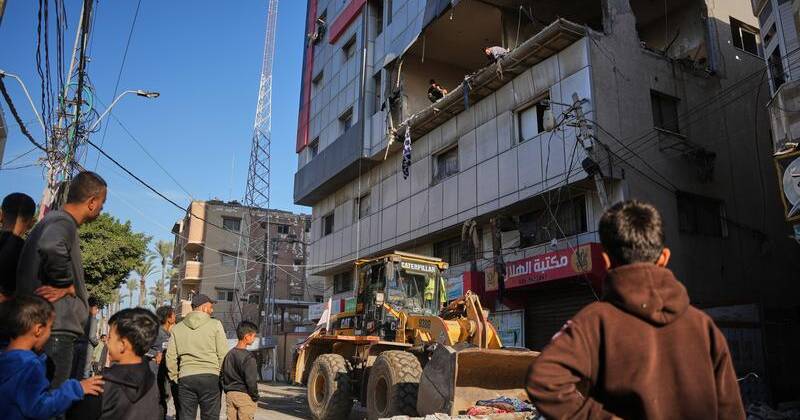
- The Gaza ceasefire is very likely to remain under acute strain through 10 December. Reports describe Israeli strikes and gunfire on three consecutive nights, including the deaths of Hamas figures Naim Abu Nahel on 24 November, Muhammad Majed Abu al-Ouf on 25 November and Khaled Abu Nada on 26 November. Reports of the latest overnight toll differ, at eight or at least nine Palestinians, and the exact role of some targets is not independently established. (Confidence: medium · ASSESSED)
- I&W: Confirms: medics or hospitals report another fatal Israeli strike or gunfire incident in Gaza. (0-14 days)
- I&W: Breaks: no fatal Israeli strike or gunfire incident is reported in Gaza for seven consecutive days. (0-14 days)
- Gaza’s meningitis and diagnostic-supply emergency is likely to remain acute through 10 December. The WHO reported more than 533 cases and four deaths since mid-October, and said shortages of laboratory supplies hamper efforts to distinguish viral from bacterial meningitis. The Gaza Health Ministry reported 272 infections in October, while COGAT said medical and sanitation supplies were entering Gaza daily; the reporting does not establish whether those supplies include the diagnostic materials the WHO says are lacking. (Confidence: medium · ASSESSED)
- I&W: Confirms: a WHO update reports new meningitis deaths or continued difficulty testing whether cases are bacterial or viral. (0-14 days)
- I&W: Breaks: the WHO confirms diagnostic supplies have entered Gaza and reports a decline in new meningitis cases in a subsequent update. (0-14 days)
- A sustained high-intensity Israel-Hezbollah conflict is unlikely through 26 December, but confidence is low. The IDF reported striking a former Hezbollah missile-production and weapons-storage site at Janta in the Bekaa Valley, while Lebanese media reported that the IRGC evacuated facilities from Beirut’s southern suburbs and moved personnel and equipment to the Bekaa Valley. Janes reported no Hezbollah-claimed military operations against the IDF from July through October, but that reporting is not current enough to settle the near-term risk. (Confidence: low · ASSESSED)
- I&W: Confirms: Hezbollah claims an attack on the IDF and Israel reports a retaliatory strike in Lebanon within the same 14-day period. (0-30 days)
- I&W: Breaks: no Hezbollah-claimed attack on the IDF or reported Israeli retaliatory strike occurs in Lebanon through 26 December. (0-30 days)
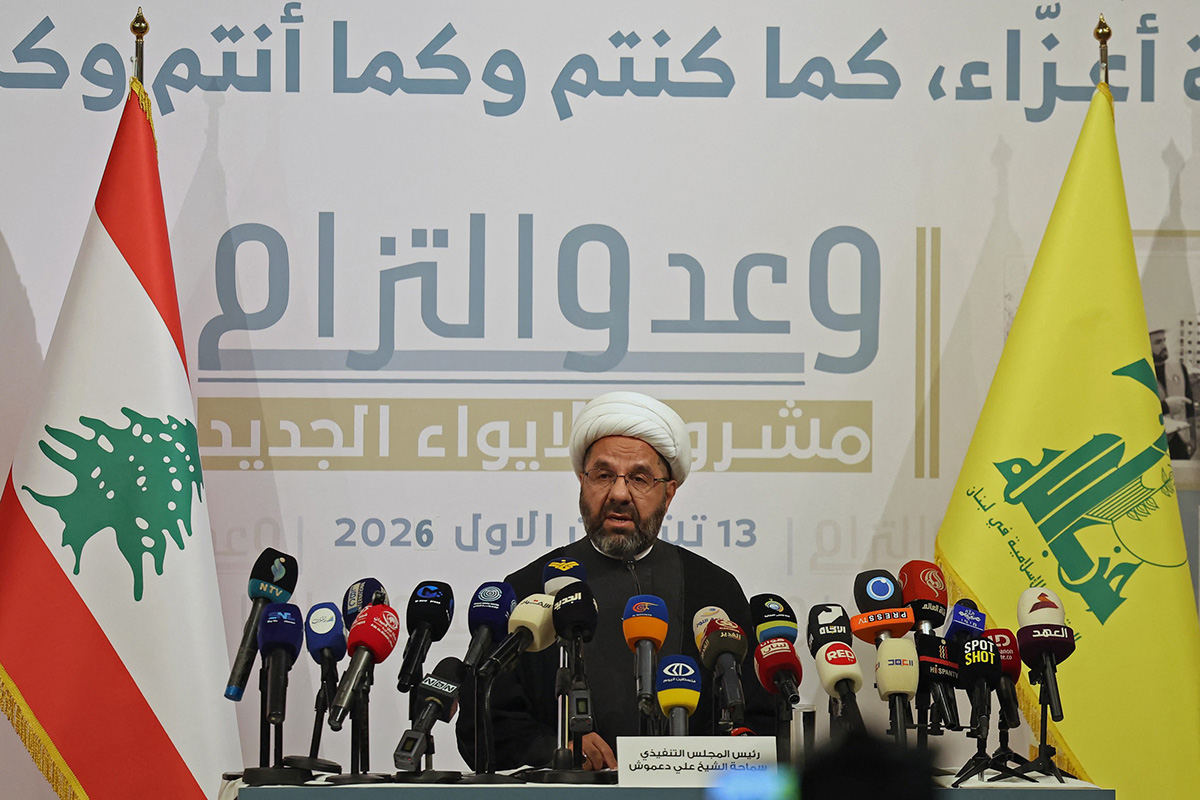
- The proposed private-contractor role in southern Lebanon remains exploratory and contested, not established Lebanese government policy. Reporting says Israel and the US raised the idea of private companies supporting administration and verification of Hezbollah disarmament, and Bilal Maadarani and Blumont pitched a €39 million concept note that included support for the LAF. Lebanon’s presidency and Prime Minister’s office denied that the government was in talks with contractor companies. Reporting places the end of UNIFIL’s mandate in December, but does not establish an agreed successor arrangement. (Confidence: medium · ASSESSED)
- I&W: Confirms: Lebanon’s presidency or Prime Minister’s office publicly acknowledges formal talks, or an agreement or contract for the proposed role is announced. (0-30 days)
- I&W: Breaks: no Lebanese government confirmation, agreement or contract is announced by 31 December. (0-30 days)
Outlook & scenarios
Continued Gaza strikes, limited spillover into Lebanon (55%)
Israeli strikes and gunfire continue intermittently in Gaza, keeping the ceasefire under strain. Israel-Hezbollah activity remains limited, without a sustained exchange of attacks.
Gaza strikes ease and diplomatic engagement gains ground (25%)
A reduction in Israeli strikes lowers immediate pressure on the Gaza ceasefire. Public reporting on disarmament or access arrangements becomes clearer, but the available reporting does not establish that an agreement is close.
Lebanon security arrangements become more contested (15%)
Uncertainty over UNIFIL’s reported mandate end and the proposed contractor role intensifies debate in Lebanon. Israel’s Janta strike and reports of IRGC relocation remain indicators of continued military pressure.
High-impact Israel-Hezbollah escalation (5%)
A sequence of Hezbollah-claimed attacks and Israeli retaliatory strikes develops into sustained high-intensity fighting. This is a low-probability, high-impact outcome; current reporting does not establish that such a cycle has begun.
Recommendations
- Maintain a daily Gaza incident log that records strike location, time, reported deaths and source attribution separately. Do not combine the eight-person and nine-person casualty reports until the overlap and reporting windows are clarified.
- Track WHO updates on meningitis cases, deaths and laboratory access alongside COGAT statements on supplies entering Gaza. Record whether reports identify diagnostic materials specifically, rather than treating all medical supplies as interchangeable.
- For Lebanon, distinguish confirmed Hezbollah-claimed attacks and Israeli strikes from reports of IRGC movement or proposals for future security arrangements. Reassess the 30-day conflict outlook if paired attack-and-retaliation reports emerge.
- Verify the UNIFIL mandate’s end date and withdrawal timetable against the resolution text, and monitor for a formal Lebanese government statement, agreement or contract concerning private contractors.
Confidence & uncertainty
Confidence is high in the core assessment that Israeli strikes continued in Gaza and that senior Hamas figures were killed: reporting from Reuters, BBC, NBC News and Al Jazeera is supported in part by Israeli statements and Hamas’s confirmation of Khaled Abu Nada’s death. Some outlets may rely on the same medical or official accounts, so this corroboration does not resolve the reported toll of eight versus nine or establish every target’s role. Lebanon reporting is thinner, includes a Lebanese government denial of contractor talks, and offers limited evidence about the near-term tempo of Israel-Hezbollah activity.
Alternative analysis (red cell)
The available evidence may be more consistent with an unstable but managed security environment than with a low likelihood of sustained high-intensity Israel-Hezbollah conflict. The Janta strike and reported movement of IRGC personnel and equipment to the Bekaa Valley could reflect preparations or dispersal, while the absence of Hezbollah-claimed operations through October is too dated to constrain the near-term outlook. A renewed escalation therefore remains a materially plausible alternative reading, although the evidence is insufficient for high confidence.
Intelligence gaps
- [EEI 1.1 · UNCOVERED] Number, type and geolocated coordinates of projectiles (rockets, mortars, anti-tank guided missiles) fired from Lebanon into Israel in the last 24/72 hours, including time-stamped launch and impact locations. Recommended collection: signals/intel
- [EEI 1.2 · UNCOVERED] Satellite or aerial imagery showing movement, concentration, or forward displacement of Hezbollah-associated military assets (armored vehicles, artillery pieces, mobile rocket launchers, logistics convoys) to positions within 0-10 km of the Israel-Lebanon border. Recommended collection: satellite/imagery
- [EEI 1.3 · UNCOVERED] Intercepted or captured Hezbollah command-and-control communications or orders explicitly directing cross-border operations or coordinated strikes with Palestinian groups (time-stamped messages, unit identifiers, orders to fire/move). Recommended collection: signals/intel
- [EEI 1.4 · UNCOVERED] Observable changes in Israeli northern-front posture within Israel (numbers and types of reinforcements deployed to northern brigades, activation of reserves, air defense redeployments, evacuation orders or shelter alerts in northern towns), including timestamps and unit IDs where available. Recommended collection: human/intel
- [EEI 2.1 · UNCOVERED] Official or corroborated reports of IDF reservist mobilization and unit-level deployment orders (number of reservists called, named brigades/units ordered to deploy, deployment timelines). Recommended collection: open-source/media
- [EEI 2.2 · UNCOVERED] Satellite or ground imagery showing concentrations of IDF heavy equipment (tanks, infantry fighting vehicles, engineering vehicles), staging areas, field hospitals or forward supply dumps within X km of the Gaza border and at known crossing points. Recommended collection: satellite/imagery
- [EEI 2.3 · PARTIAL] Change in strike patterns consistent with pre-ground-attack shaping: sustained high-frequency airstrikes on tunnel networks, command nodes, coastal launch sites, and known insurgent concentrations (strike counts, munition types, locations, times). Recommended collection: open-source/media
- [EEI 2.4 · UNCOVERED] Logistics indicators: verified convoys of fuel/ammunition entering staging areas, establishment of forward logistics or medical bases, or documented requisitioning orders for bulk combat supplies with timestamps and quantities. Recommended collection: human/intel
- [EEI 3.1 · UNCOVERED] Number, participants and content of diplomatic contacts or negotiation sessions in the last 48 hours involving mediators (Egypt, Qatar, US, UN), including any proposed ceasefire text, prisoner/exchange lists, timelines or verification mechanisms. Recommended collection: diplomatic
- [EEI 3.2 · PARTIAL] Public statements, press releases or verified communiqués from Hamas and other Gaza armed groups specifying acceptance, rejection, or conditions for a ceasefire (explicit conditions such as prisoner release lists, withdrawal terms, lifting of blockades), with timestamps and speaker attribution. Recommended collection: open-source/media
- [EEI 3.3 · PARTIAL] Humanitarian indicators relevant to ceasefire: establishment and operation of agreed humanitarian corridors/checkpoints, number of aid deliveries admitted, civilian evacuations completed, and NGO/hospital reports of access denials or safe-passage violations. Recommended collection: humanitarian/NGO reports
- [EEI 3.4 · PARTIAL] Operational evidence of a de facto pause: verified sustained reduction (e.g., ≥12 hours) in strikes or launches from either side in specific sectors, supported by strike/impact logs, radar tracks and incident reports. Recommended collection: open-source/media
Red cell review: PARTIAL DISSENT
TLP:CLEAR