TLP:CLEAR · Disclosure is not limited.
Gaza ceasefire under strain as US-Iran strikes raise regional risk
Time window: Last 7 days · Audience: General analyst · Type: Situation report · DTG: 2026-11-03 13:12Z · Overall confidence: HIGH
BLUF
Israeli strikes in Gaza are likely to continue, while reporting of US strikes on Iran’s Qeshm Island and an IRGC claim that it downed three US drones raise the risk of another US-Iran exchange. Mediated contacts are active, but no agreement is reported. The chance of a wider Israel-Hezbollah exchange remains roughly even, based on thin reporting from southern Lebanon.
Executive summary
Reporting on 3 November described a fatal Israeli strike west of Khan Younis and further deaths in Gaza over the previous 24 hours. Gaza officials and eyewitnesses gave conflicting accounts of the target in one strike. Separately, US officials said the US carried out limited strikes on Qeshm Island in response to IRGC fire on a US aircraft; Iran’s state news agency reported explosions there, while the IRGC claimed it downed three US drones. Tehran described intensive mediated talks, but reporting conflicts on the Doha meetings’ purpose and no agreement has been reported. Israeli strikes and shelling were reported across named southern Lebanese towns on 31 October, but the current reporting does not establish a Hezbollah decision to enter a wider exchange.
Change from previous assessment
Since the 03:29 3 November prior brief, additional reporting has strengthened the account that US forces struck Qeshm Island. The IRGC claim that it downed three US drones is new but remains uncorroborated. Gaza reporting now includes 3 November strike and casualty accounts from western Khan Younis, with conflicting descriptions of one strike’s target. Araghchi has described intensive mediated talks, while reporting still differs on the Doha agenda. The Lebanon estimate remains low confidence: the current window adds a report naming nine southern Lebanese locations, but does not establish Hezbollah intent or preparations. No prior judgment is retired.
Key judgments
- Israeli strikes in Gaza are likely to continue through 17 November, further straining the ceasefire in effect since 10 October 2025. On 3 November, reporting described a fatal strike west of Khan Younis, while medical sources reported the death of a 39-year-old man from wounds sustained in a strike the previous day. The Gaza Ministry of Interior said an attack targeted security personnel; eyewitnesses said a strike targeted civilians gathered near the University College gate in al-Mawasi. The target attribution remains disputed. Confidence is medium because the current incident reporting comes mainly through one major-media outlet, despite accounts from different local sources. (Confidence: medium · ASSESSED)
- I&W: A further reported fatal Israeli strike in Khan Younis or al-Mawasi by 17 November would confirm continued attacks. (0-14 days)
- I&W: A public announcement by the parties to the ceasefire of a renewed halt to strikes, followed by 14 days without a reported Israeli strike in Gaza, would break this assessment. (0-14 days)
- A further direct US-Iran strike exchange over the next 30 days is roughly even chance. US officials said US forces carried out limited strikes on Qeshm Island in response to IRGC fire on a US aircraft, and Iran’s state news agency reported explosions there. The IRGC separately claimed it downed two US MQM-170 drones south of Qeshm and a US MQ-9 east of the Strait of Hormuz; that claim is not independently corroborated in the available reporting. Netanyahu reportedly pressed Trump for another wave of strikes after the US midterm elections, while Trump said he was in no rush to escalate and also raised the prospect of striking Pickaxe Mountain. Mediated talks are an offset to these conflicting signals. Confidence is medium: multiple major-media reports support the Qeshm strike account, but several rely on US official sourcing, and the drone claim remains unverified. (Confidence: medium · ASSESSED)
- I&W: A further publicly acknowledged US strike on Iranian territory or independently verified IRGC attack on a US aircraft would confirm the assessment. (0-30 days)
- I&W: A publicly announced US-Iran stand-down agreement followed by 14 days without reported strikes or attacks would break the assessment. (0-30 days)
- Iranian-Qatari and other mediated contacts with Washington are likely to continue through 17 November, but a rapid agreement to reopen the Strait of Hormuz is unlikely. Abbas Araghchi described intensive talks through Qatari and Pakistani mediators and said no final conclusion had been reached on a two-day proposal. Reporting also described Iranian negotiators meeting Qatari mediators in Doha. Tasnim, however, reported that US negotiations were not on the delegation’s agenda, and an earlier account said no direct US-Iran meeting was scheduled. The accounts are consistent with indirect contacts but leave the purpose and level of engagement unsettled. Confidence is medium because major-media reporting describes active mediation, while accounts differ on the Doha agenda and proposed terms. (Confidence: medium · ASSESSED)
- I&W: A public statement by Araghchi or a mediator confirming another round of indirect talks without agreed terms would confirm continued contact without a rapid settlement. (0-14 days)
- I&W: A published agreement setting out US-Iran terms and a verified reopening of the Strait of Hormuz within two days would break the assessment. (0-14 days)
- Israeli military activity in southern Lebanon is likely to recur over the next 30 days, while a wider Israel-Hezbollah exchange remains roughly even chance. A single Al Mayadeen reporting stream described Israeli airstrikes, artillery fire and detonations on 31 October in Kfar Tebnit, Baraachit, Adshit al-Qusayr, Haddatha, Al-Mansouri, Nabatieh al-Fawqa, Tallousa, Bani Haiyyan and Wadi al-Hujeir. The report does not establish a Hezbollah decision or operational preparation for a wider exchange. Confidence is low because the current account is single-source and there is no corroborated report of a new Hezbollah attack in the claims reviewed. (Confidence: low · ASSESSED)
- I&W: A further reported Israeli strike or artillery attack in one of the named southern Lebanese towns would confirm recurring Israeli activity. (0-30 days)
- I&W: A verified Hezbollah attack on Israel followed by acknowledged Israeli retaliation in Lebanon would confirm a wider exchange; a public stand-down accompanied by 14 days without reported fire would break it. (0-30 days)
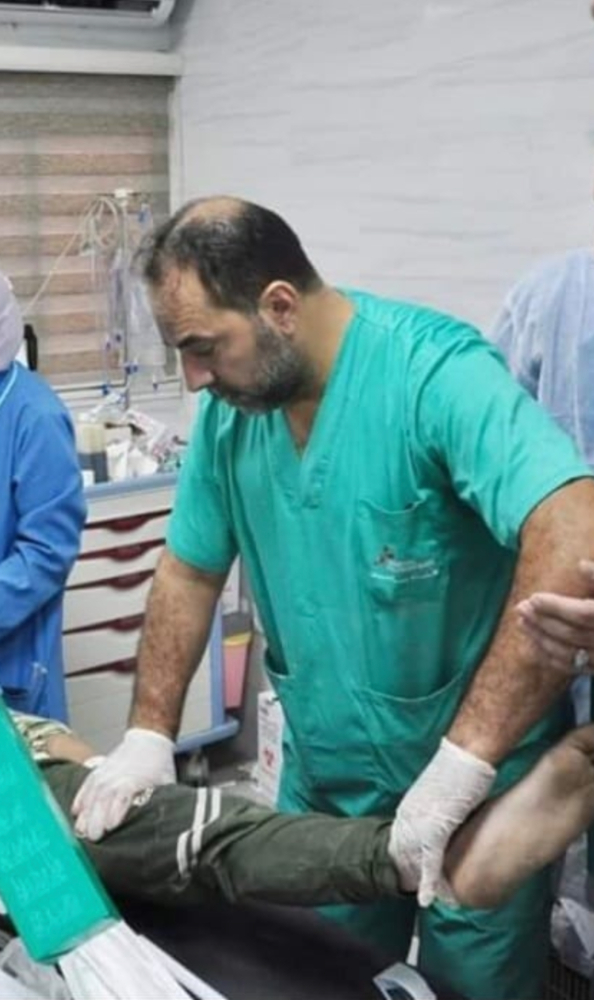
- Gaza’s rehabilitation and education needs remain acute. Médecins Sans Frontières reported that about 6,000 people who have undergone amputations need urgent long-term rehabilitation. A Gaza Ministry of Education report said 14 students aged 6 to 16 and eight education-sector workers were killed during October, and that 95 per cent of schools in Gaza had been damaged. Confidence is medium: the rehabilitation estimate comes from MSF, while the education figures rely on a Gaza government ministry report. (Confidence: medium · REPORTED)
- I&W: A new MSF caseload update maintaining an estimate near 6,000 people needing long-term rehabilitation would confirm the scale of reported need. (1-3 months)
- I&W: A new Gaza education assessment revising the school-damage estimate materially below 95 per cent, alongside documented reopening of damaged schools, would weaken this judgment. (1-3 months)
Outlook & scenarios
Contained strikes with mediation continuing (50%)
This is the most likely path. Israeli strikes in Gaza continue to strain the ceasefire, while US-Iran activity remains limited and Qatari or Pakistani-mediated contacts continue without a prompt agreement. Israeli activity recurs in southern Lebanon, but Hezbollah does not open a wider front.
Renewed US-Iran strike cycle (35%)
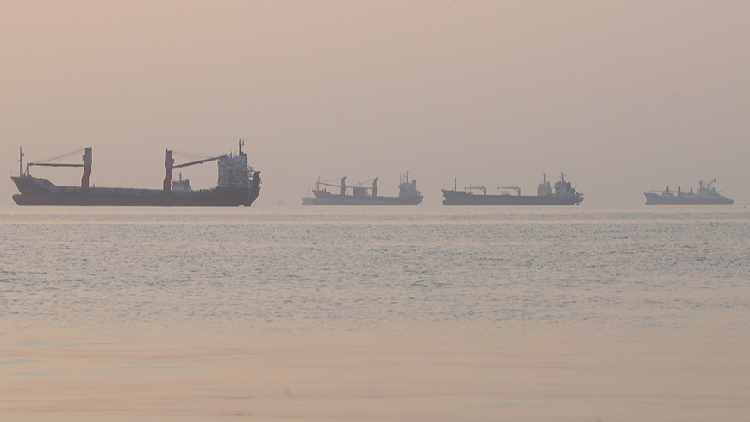
A further US-Iran strike exchange is less likely than a contained track, but remains a credible outcome. Another US strike or a verified IRGC attack on US forces would harden positions and stall mediation. Disruption in the Strait of Hormuz would add pressure to the regional crisis.
Multi-front escalation (15%)
This is an unlikely, high-impact wildcard. Further US or Israeli strikes on Iran are followed by Hezbollah attacks and Israeli retaliation in Lebanon, alongside continued strikes in Gaza. Current reporting does not establish that Hezbollah intends to enter the fighting.
Recommendations
- Track Israeli strike reports in Gaza against statements from the Israeli military, the Gaza Ministry of Interior, medical sources and eyewitnesses. Record casualty figures and target descriptions separately where accounts conflict.
- Treat the IRGC claim about three US drones as unverified until independent reporting or other corroboration supports it. Keep it separate from the better-supported reporting that US strikes occurred on Qeshm Island.
- Maintain a daily watch on official US, Iranian and mediator statements for changes in strike posture, direct or indirect meeting arrangements, and the terms of any Strait of Hormuz proposal.
- For Lebanon, distinguish Israeli activity from evidence of Hezbollah intent. Track verified launches, Israeli strikes in the named southern Lebanese towns and public statements by both parties before revising the wider-exchange estimate.
- Use MSF and Gaza education reporting to monitor rehabilitation and school needs, while identifying the source of each casualty or damage figure in analyst products.
Confidence & uncertainty
Confidence is high in the core reported event picture: multiple major-media accounts citing US officials report strikes on Qeshm Island, and Iran’s state news agency also reported explosions there. Gaza reporting includes accounts attributed to medical sources, the Gaza Ministry of Interior and eyewitnesses, while MSF provides a separate estimate of rehabilitation needs. The main uncertainties concern the intended target of the Khan Younis-area strike, the uncorroborated IRGC drone claim, the purpose and status of mediated talks, and the single-source reporting on southern Lebanon. Confidence in the forward estimates is lower than confidence in the reported events.
Intelligence gaps
- [EEI 1.1 · UNCOVERED] Number, type and geolocated coordinates of projectiles (rockets, mortars, anti-tank guided missiles) fired from Lebanon into Israel in the last 24/72 hours, including time-stamped launch and impact locations. Recommended collection: signals/intel
- [EEI 1.2 · UNCOVERED] Satellite or aerial imagery showing movement, concentration, or forward displacement of Hezbollah-associated military assets (armored vehicles, artillery pieces, mobile rocket launchers, logistics convoys) to positions within 0-10 km of the Israel-Lebanon border. Recommended collection: satellite/imagery
- [EEI 1.3 · UNCOVERED] Intercepted or captured Hezbollah command-and-control communications or orders explicitly directing cross-border operations or coordinated strikes with Palestinian groups (time-stamped messages, unit identifiers, orders to fire/move). Recommended collection: signals/intel
- [EEI 1.4 · UNCOVERED] Observable changes in Israeli northern-front posture within Israel (numbers and types of reinforcements deployed to northern brigades, activation of reserves, air defense redeployments, evacuation orders or shelter alerts in northern towns), including timestamps and unit IDs where available. Recommended collection: human/intel
- [EEI 2.1 · UNCOVERED] Official or corroborated reports of IDF reservist mobilization and unit-level deployment orders (number of reservists called, named brigades/units ordered to deploy, deployment timelines). Recommended collection: open-source/media
- [EEI 2.2 · UNCOVERED] Satellite or ground imagery showing concentrations of IDF heavy equipment (tanks, infantry fighting vehicles, engineering vehicles), staging areas, field hospitals or forward supply dumps within X km of the Gaza border and at known crossing points. Recommended collection: satellite/imagery
- [EEI 2.3 · PARTIAL] Change in strike patterns consistent with pre-ground-attack shaping: sustained high-frequency airstrikes on tunnel networks, command nodes, coastal launch sites, and known insurgent concentrations (strike counts, munition types, locations, times). Recommended collection: open-source/media
- [EEI 2.4 · UNCOVERED] Logistics indicators: verified convoys of fuel/ammunition entering staging areas, establishment of forward logistics or medical bases, or documented requisitioning orders for bulk combat supplies with timestamps and quantities. Recommended collection: human/intel
- [EEI 3.1 · UNCOVERED] Number, participants and content of diplomatic contacts or negotiation sessions in the last 48 hours involving mediators (Egypt, Qatar, US, UN), including any proposed ceasefire text, prisoner/exchange lists, timelines or verification mechanisms. Recommended collection: diplomatic
- [EEI 3.2 · UNCOVERED] Public statements, press releases or verified communiqués from Hamas and other Gaza armed groups specifying acceptance, rejection, or conditions for a ceasefire (explicit conditions such as prisoner release lists, withdrawal terms, lifting of blockades), with timestamps and speaker attribution. Recommended collection: open-source/media
- [EEI 3.3 · UNCOVERED] Humanitarian indicators relevant to ceasefire: establishment and operation of agreed humanitarian corridors/checkpoints, number of aid deliveries admitted, civilian evacuations completed, and NGO/hospital reports of access denials or safe-passage violations. Recommended collection: humanitarian/NGO reports
- [EEI 3.4 · PARTIAL] Operational evidence of a de facto pause: verified sustained reduction (e.g., ≥12 hours) in strikes or launches from either side in specific sectors, supported by strike/impact logs, radar tracks and incident reports. Recommended collection: open-source/media
Red cell review: CONCUR WITH COMMENT
TLP:CLEAR