TLP:CLEAR · Disclosure is not limited.
Gaza operations persist amid acute humanitarian strain; Lebanon truce remains fragile
Time window: Last 7 days · Audience: General analyst · Type: Situation report · DTG: 2026-07-16 13:13Z · Overall confidence: MEDIUM
BLUF
Israeli strikes in Gaza continued through mid July as humanitarian access and water availability remain acutely constrained. The Israel, Lebanon ceasefire framework holds but is fragile, with both Israel and Hezbollah signalling readiness to resume operations.
Executive summary
Through 9-16 July, reporting indicates continuing Israeli strikes across Gaza that killed civilians, including in Khan Younis and the Muwasi area outside Rafah. UNICEF and UN interlocutors describe severe water insecurity and aid access constraints, with relief to the north largely reliant on Kerem Shalom and limited internal routes. Hamas announced on 6 July the resignation of its civil administration under the Gaza peace plan, pointing to administrative uncertainty amid ongoing hostilities. On the northern front, multiple April, June announcements and extensions maintained an Israel, Lebanon ceasefire, yet public signalling from both sides suggests a precarious calm.
Change from previous assessment
Initial assessment of this topic for the current run window. This update adds detail on severe water insecurity and single-crossing aid constraints, documents fresh mid-July civilian fatalities in Gaza, captures Hamas’s 6 July resignation under the Gaza peace plan, and frames the Israel, Lebanon ceasefire as fragile despite multiple spring renewals.
Key judgments
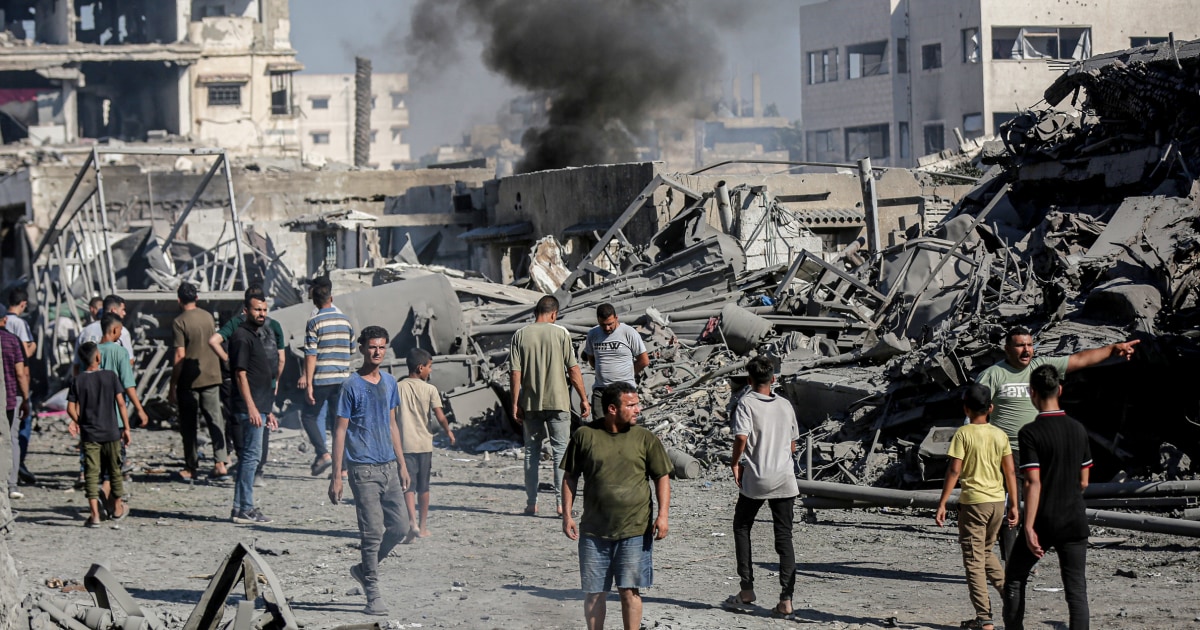
- Very likely Israeli strikes across Gaza continued through mid July, killing at least a dozen people in the past two days, with additional deaths reported in Khan Younis and in the Muwasi area outside Rafah. (Confidence: high · REPORTED)
- I&W: Gaza hospital or health authority updates reporting 10 or more fatalities per day from Israeli strikes (0-14 days)
- I&W: An IDF announcement of a 72-hour pause in airstrikes across Gaza (0-14 days)
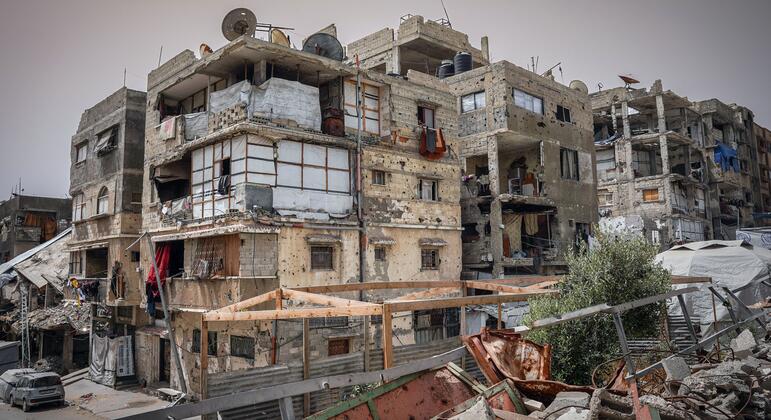
- Almost certainly Gaza’s humanitarian conditions are acute: up to 70 percent of residents cannot collect six litres of water per day, 82 percent of households are water insecure, and 1.1 million children face uncertain daily access to water; aid to northern Gaza remains restricted because Kerem Shalom is the only crossing open and internal road access is limited, with UN teams engaging displacement sites after Israeli force movements disrupted services. (Confidence: medium · REPORTED)
- I&W: WFP or OCHA updates continue to cite Kerem Shalom as the sole effective entry point for aid deliveries to northern Gaza (0-14 days)
- I&W: Official opening of additional crossings or permanent humanitarian corridors to northern Gaza (0-14 days)
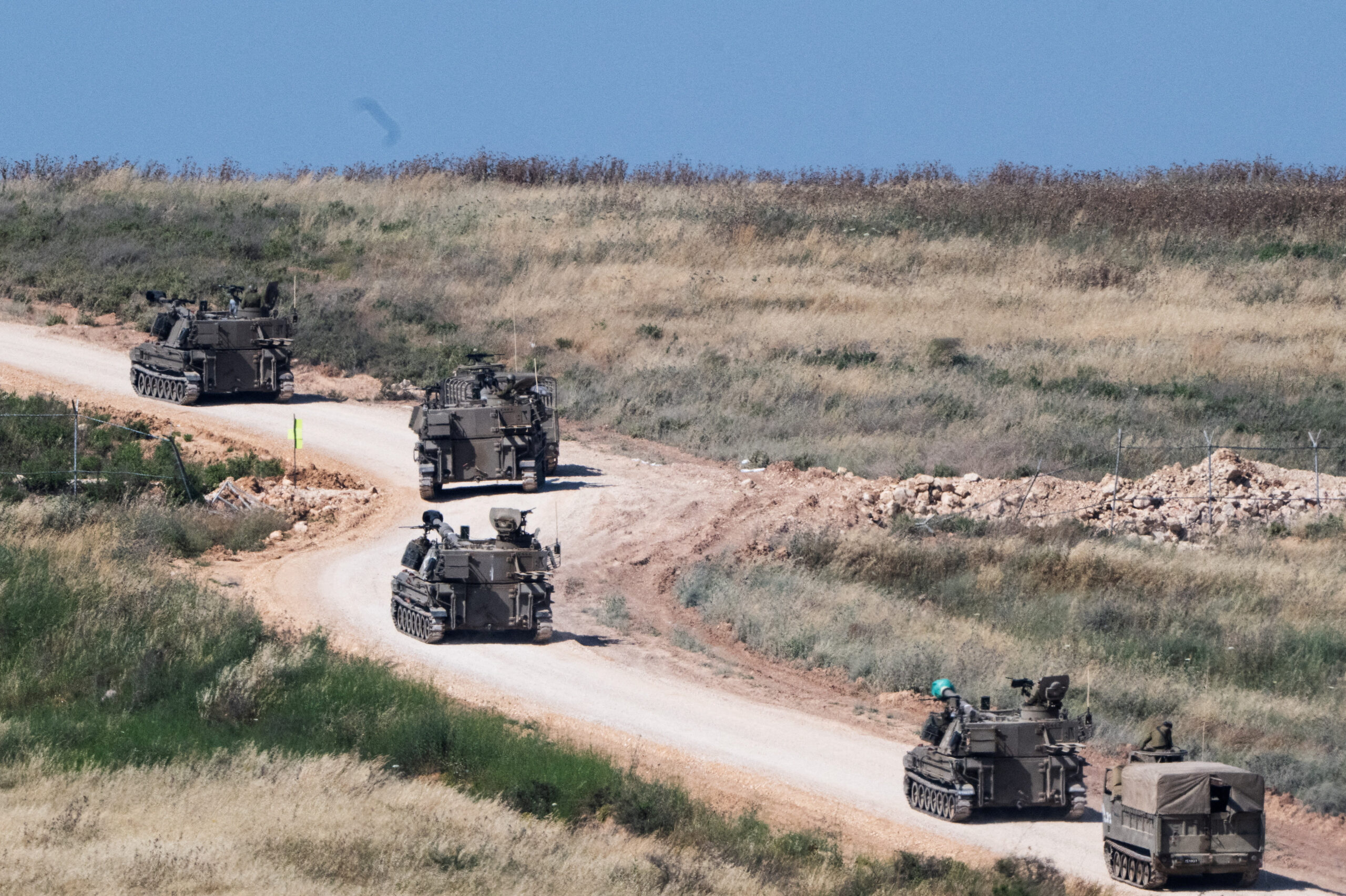
- There is a roughly even chance the Israel, Lebanon front remains in a tenuous truce through late July: multiple April, June ceasefire announcements and extensions remain in effect, while Israeli forces publicly signal preparations to resume operations if Hezbollah breaches the terms and Hezbollah leaders reject a return to prior deployments. (Confidence: medium · ASSESSED)
- I&W: Official Israeli or Lebanese statements announce another ceasefire renewal (0-14 days)
- I&W: IDF reports resumption of air or artillery strikes into southern Lebanon or Hezbollah claims new guided-rocket salvos at IDF positions (0-14 days)
- Reportedly, Hamas announced on 6 July the resignation of its civil administration under the Gaza peace plan, very likely compounding administrative and service-delivery gaps amid ongoing hostilities. (Confidence: medium · REPORTED)
- I&W: Announcement of interim governance arrangements under the Gaza peace plan (1-3 months)
- I&W: A formal Hamas statement rescinding the resignation (0-14 days)
- Likely Israeli efforts to entrench a buffer along the Gaza perimeter continue, as evidenced by the established post-October 2025 buffer zone, reports of boundary markers moving northwards, and treatment of areas east of the line as closed military space, which together constrain civilian movement and complicate aid delivery north. (Confidence: medium · ASSESSED)
- I&W: Imagery or field reporting shows new barrier segments or further northward relocation of boundary markers (1-3 months)
- I&W: IDF announces removal of barriers or opens new civilian corridors toward northern Gaza (0-14 days)
- At least 1,080 Palestinians have been killed in Gaza since the 10 October 2025 ceasefire took effect and the toll is likely at least 1,123, reflecting continued attrition amid renewed mid July strikes. (Confidence: medium · ASSESSED)
- I&W: Gaza health authority updates raise the cumulative post-October 2025 death toll to 1,120 or higher (0-14 days)
- I&W: Independent compilations reconcile to a substantially lower cumulative toll (1-3 months)
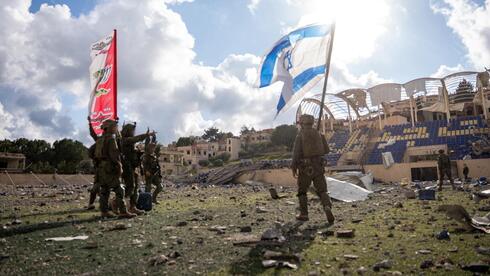
- Reported fighting in Bint Jbeil included close-quarters engagements, demolition of alleged Hezbollah infrastructure and extensive urban damage, with Israeli officers estimating about 40 percent of the town demolished, indicating high humanitarian and reconstruction costs if hostilities resume. (Confidence: medium · REPORTED)
- I&W: Fresh IDF engineering operations or precision strikes reported in Bint Jbeil (0-14 days)
- I&W: Public commitments by Israel and Lebanon to demilitarise areas in and around Bint Jbeil (1-3 months)
Outlook & scenarios
Gaza fighting grinds on with constrained aid access (60%)
IDF maintains a steady tempo of strikes and raids across central and southern Gaza, while access to the north remains channelled through Kerem Shalom and a limited road network. Civilian casualties and water insecurity increase incrementally, and administrative uncertainty persists after Hamas’s resignation under the Gaza peace plan.
Northern truce frays into renewed cross-border fire (35%)
The Israel, Lebanon ceasefire breaks down. Israel resumes air and artillery strikes into southern Lebanon and Hezbollah fires guided rockets and artillery at IDF positions. Urban damage around Bint Jbeil expands and displacement on both sides of the border rises.
Managed calm on the northern front, limited operational pauses in Gaza (25%)
Diplomacy secures another short truce extension between Israel and Lebanon. In Gaza, short, localised pauses enable intermittent aid surges to the north, but perimeter restrictions and water scarcity persist.
Governance pivot in Gaza creates a volatile vacuum (20%)
Following Hamas’s civil administration resignation, interim arrangements lag. Local service delivery degrades further, complicating aid deconfliction and raising risks of opportunistic violence and looting.
Recommendations
- Establish a casualty tracking dashboard that carries both lower and upper bounds using Gaza health authority tallies alongside independently verified incidents; flag the discrepancy range for leadership awareness.
- Task collection to monitor Gaza perimeter changes: geolocate yellow boundary markers and new fencing, and cross-reference with IDF notices to identify any northward creep of restricted zones affecting civilian movement.
- Prioritise liaison with WFP and OCHA logistics clusters to validate crossing status and internal road usability to northern Gaza; update operational planning if any new entry points open.
- Maintain standing indicators on the Israel, Lebanon truce: track official statements on renewals, IDF and Hezbollah readiness postures, and any reported guided-rocket or artillery fire to enable rapid posture shifts.
- Map governance changes in Gaza since 6 July: catalogue announced administrative roles under the Gaza peace plan, points of contact for civil services, and gaps affecting aid coordination.
- Prepare contingency humanitarian access courses of action assuming continued single-crossing reliance, including pre-clearance bundling, night convoy windows, and last-mile security deconfliction.
Confidence & uncertainty
Overall confidence is medium. Humanitarian conditions and aid-access constraints rest on multiple, high-reliability multilateral sources and are well corroborated. Reporting on continuing Gaza strikes and specific fatal incidents is also strong, though some incident dates are less explicit. The Israel, Lebanon ceasefire picture relies on several announcements and extensions from April to June alongside public signalling from both sides, but timelines and terms vary across sources. Gaza casualty totals since October 2025 are credible but carry a documented discrepancy between figures, which lowers confidence for precise numbers.
Alternative analysis (red cell)
The dataset contains several unresolved contradictions (notably casualty tallies and ceasefire timelines) and relies in places on single-source or lower-admiralty posture claims, so alternate, defensible readings exist for multiple judgments. For the Israel–Lebanon front and Gaza administrative and territorial assertions, the evidence can plausibly be interpreted as localized or symbolic actions rather than broad, systemic shifts; resolving this requires systematic operational, geospatial, and casualty-reconciliation collection. Until those gaps are closed, the original medium- and high-confidence assessments should be treated with caution.
Intelligence gaps
- [EEI 1.1 · PARTIAL] Number, type and geolocated coordinates of projectiles (rockets, mortars, anti-tank guided missiles) fired from Lebanon into Israel in the last 24/72 hours, including time-stamped launch and impact locations. Recommended collection: signals/intel
- [EEI 1.2 · PARTIAL] Satellite or aerial imagery showing movement, concentration, or forward displacement of Hezbollah-associated military assets (armored vehicles, artillery pieces, mobile rocket launchers, logistics convoys) to positions within 0–10 km of the Israel-Lebanon border. Recommended collection: satellite/imagery
- [EEI 1.3 · UNCOVERED] Intercepted or captured Hezbollah command-and-control communications or orders explicitly directing cross-border operations or coordinated strikes with Palestinian groups (time-stamped messages, unit identifiers, orders to fire/move). Recommended collection: signals/intel
- [EEI 1.4 · PARTIAL] Observable changes in Israeli northern-front posture within Israel (numbers and types of reinforcements deployed to northern brigades, activation of reserves, air defense redeployments, evacuation orders or shelter alerts in northern towns), including timestamps and unit IDs where available. Recommended collection: human/intel
- [EEI 2.1 · UNCOVERED] Official or corroborated reports of IDF reservist mobilization and unit-level deployment orders (number of reservists called, named brigades/units ordered to deploy, deployment timelines). Recommended collection: open-source/media
- [EEI 2.2 · UNCOVERED] Satellite or ground imagery showing concentrations of IDF heavy equipment (tanks, infantry fighting vehicles, engineering vehicles), staging areas, field hospitals or forward supply dumps within X km of the Gaza border and at known crossing points. Recommended collection: satellite/imagery
- [EEI 2.3 · PARTIAL] Change in strike patterns consistent with pre-ground-attack shaping: sustained high-frequency airstrikes on tunnel networks, command nodes, coastal launch sites, and known insurgent concentrations (strike counts, munition types, locations, times). Recommended collection: open-source/media
- [EEI 2.4 · UNCOVERED] Logistics indicators: verified convoys of fuel/ammunition entering staging areas, establishment of forward logistics or medical bases, or documented requisitioning orders for bulk combat supplies with timestamps and quantities. Recommended collection: human/intel
- [EEI 3.1 · PARTIAL] Number, participants and content of diplomatic contacts or negotiation sessions in the last 48 hours involving mediators (Egypt, Qatar, US, UN), including any proposed ceasefire text, prisoner/exchange lists, timelines or verification mechanisms. Recommended collection: diplomatic
- [EEI 3.2 · UNCOVERED] Public statements, press releases or verified communiqués from Hamas and other Gaza armed groups specifying acceptance, rejection, or conditions for a ceasefire (explicit conditions such as prisoner release lists, withdrawal terms, lifting of blockades), with timestamps and speaker attribution. Recommended collection: open-source/media
- [EEI 3.3 · PARTIAL] Humanitarian indicators relevant to ceasefire: establishment and operation of agreed humanitarian corridors/checkpoints, number of aid deliveries admitted, civilian evacuations completed, and NGO/hospital reports of access denials or safe-passage violations. Recommended collection: humanitarian/NGO reports
- [EEI 3.4 · PARTIAL] Operational evidence of a de facto pause: verified sustained reduction (e.g., ≥12 hours) in strikes or launches from either side in specific sectors, supported by strike/impact logs, radar tracks and incident reports. Recommended collection: open-source/media
Cited sources
[1] NBC News · Israel’s latest strikes kill a dozen people in Gaza, including police officers (A) · sha256:d699eee1b20d [2] United Nations · World News in Brief: Gaza aid challenges persist, renewed push for clean energy, Sudan cholera update (A) · sha256:bdd423cccfa6 [3] United Nations · World News in Brief: Aid deliveries to Gaza restricted, UN prepares El Nino response, El Salvador eliminates disease (A) · sha256:814f15558088 [4] Wikipedia · 2026 Israel–Lebanon ceasefire (B) · sha256:d4a932891b08 [5] ynetnews.com · IDF destroys Hezbollah stronghold where Nasrallah declared Israel ‘weaker than a spider’s web’ (B) · sha256:aeef3654e375 [6] Wikipedia · Gaza peace plan (A) · sha256:7cdffebf203f [7] Atlantic Council · Israel and the new reality of buffer zones (C) · sha256:b7b2ed6cdbb3
Source content hashes were computed at collection time; the cited text is preserved unmodified for the life of this product.
Red cell review: PARTIAL DISSENT — KJ-2 downgraded HIGH→MEDIUM (estimative_mismatch)
TLP:CLEAR