TLP:CLEAR · Disclosure is not limited.
Gulf flashpoint: U.S. operations, fragile truce, and contested Hormuz
Time window: Last 7 days · Audience: General analyst · Type: Situation report · DTG: 2026-06-25 06:15Z · Overall confidence: MEDIUM
BLUF
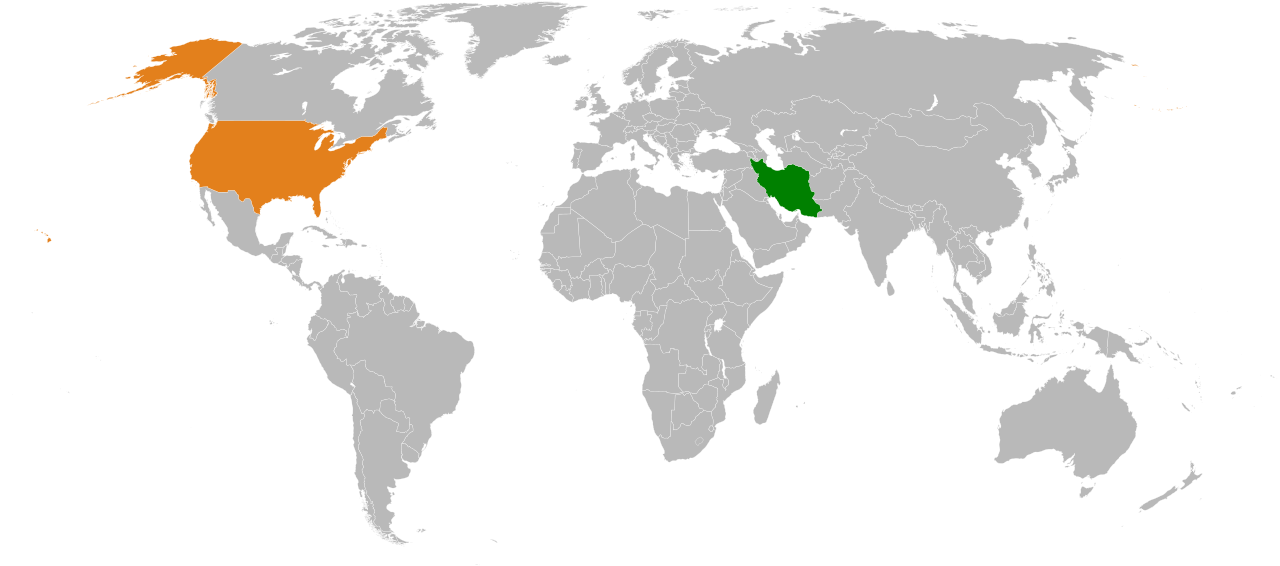
U.S. and Israeli strikes against Iran since 28 February ignited a regional war, and despite a 14-17 June halt-to-hostilities framework the Strait of Hormuz remains contested and hazardous. Tehran’s proxy posture, especially via new IRGC cells in Iraq, keeps Gulf hosts of U.S. forces at risk, with the UAE the most exposed.
Executive summary
U.S. and Israeli forces launched joint strikes on Iran on 28 February 2026, triggering Iranian missile and drone attacks on Israel, U.S. bases and Arab states, and a major U.S. force build-up that has incurred 13 U.S. dead and about 400 wounded. Washington and Tehran announced a halt to hostilities on 14 June and remotely signed the Islamabad Memorandum on 17 June, with Oman designating temporary Hormuz routes. Yet the IRGC Navy has rejected the IMO/Omani safe-passage lane, mines still constrain the traditional traffic scheme, and the IMO is directing ships to await contact while beginning to evacuate seafarers, even as some tankers exit and freight rates spike amid a ship shortage. Parallel reporting indicates the IRGC has established covert cells in Iraq to target Gulf states that host U.S. forces; Abu Dhabi remains a high-payoff target given prior UAV incidents, explicit island disputes with Tehran, and U.S. ordered departure from the UAE in March.
Key judgments
- U.S. and Israeli operations since 28 February very likely ignited and sustained a regional war with Iran, provoking Iranian strikes on Israel, U.S. bases and Arab partners, and driving the largest recent U.S. military build-up in the Middle East with 13 U.S. killed and about 400 wounded as of 22 June. (Confidence: high · REPORTED)
- I&W: Public release of additional U.S. or Israeli strike packages against targets inside Iran or IRGC assets in the Gulf (0-14 days)
- I&W: Formal U.S. orders to draw down at least one carrier strike group from the Gulf region (0-14 days)
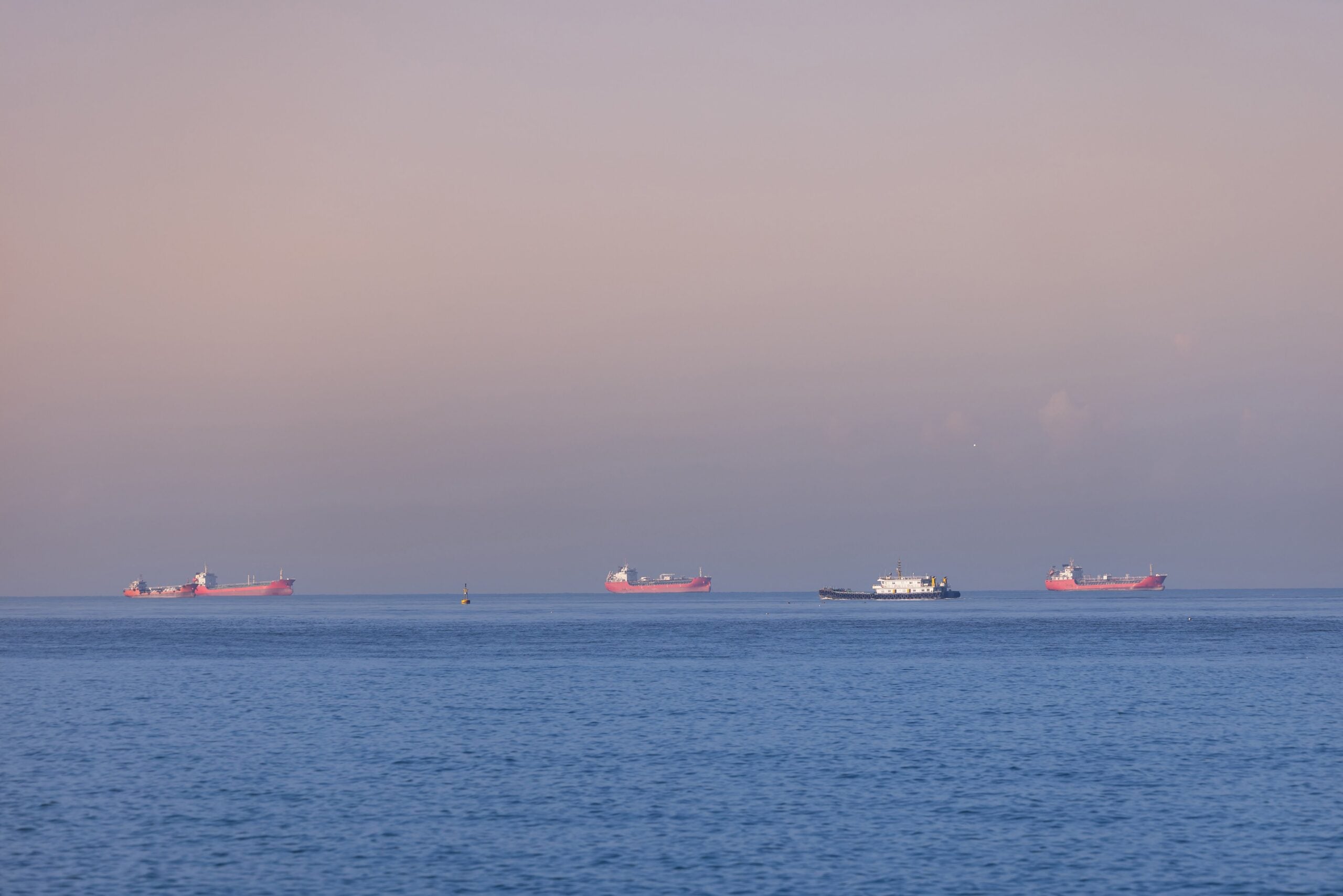
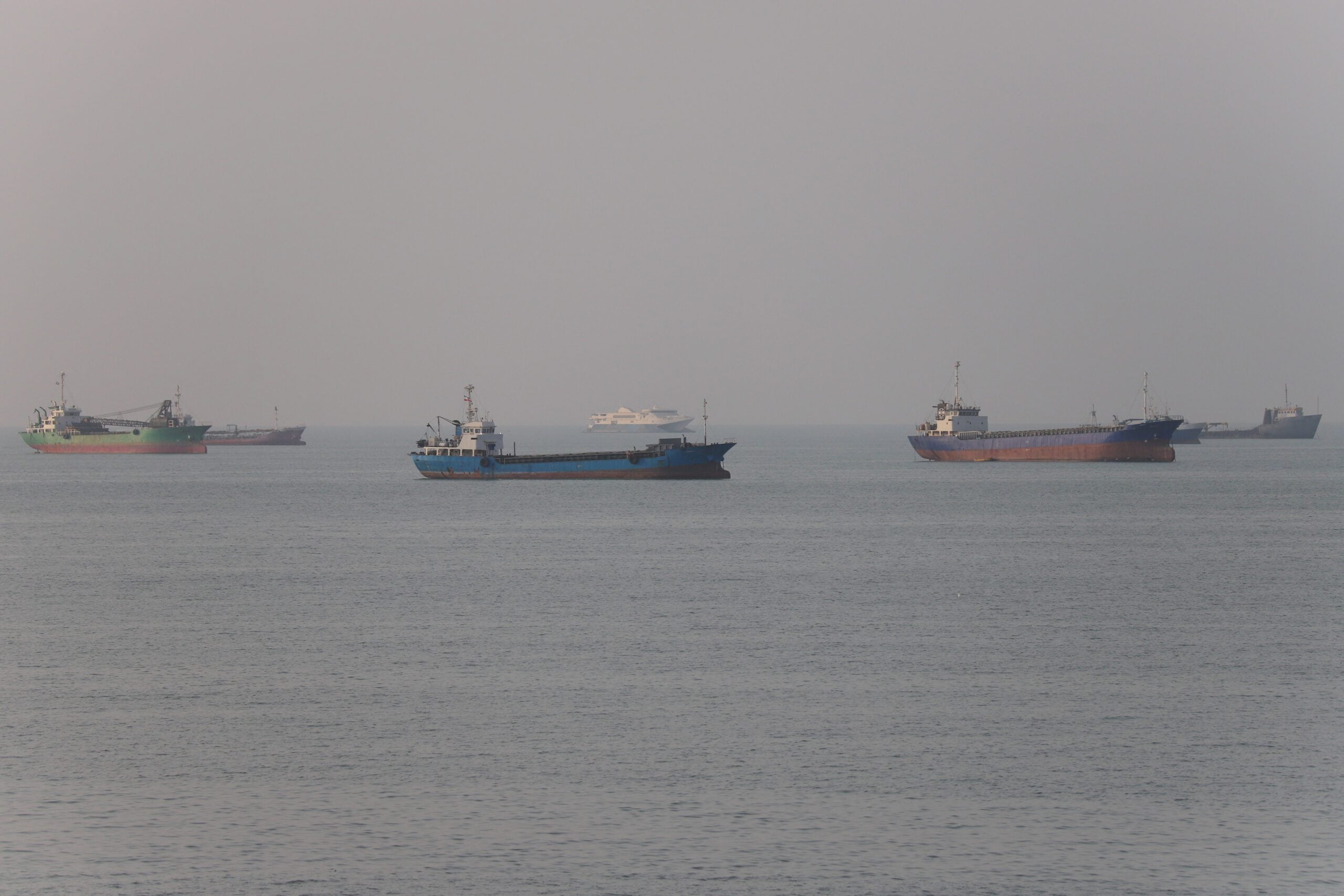
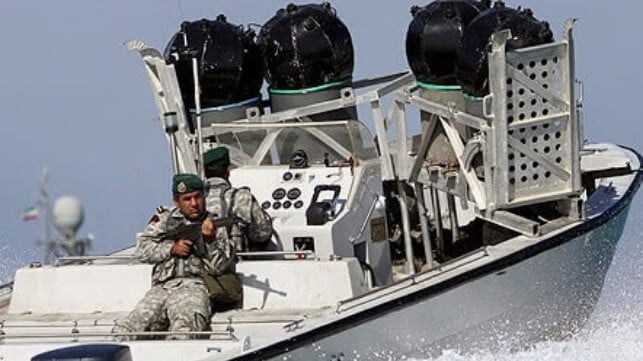
- Despite a 14-17 June political framework, maritime risk in the Strait of Hormuz remains high and contested: the IRGC Navy has rejected the IMO/Omani safe-passage lane, mines continue to constrain routing, and the IMO is directing ships to await contact even as selected tankers transit and Oman keeps temporary routes open. (Confidence: medium · ASSESSED)
- I&W: Verified IRGC Navy interference or warnings to merchant vessels transiting the IMO/Omani waypoints (0-14 days)
- I&W: Sustained daily transits above 30 vessels on the IMO/Omani route without reported incidents for two consecutive weeks (1-3 months)
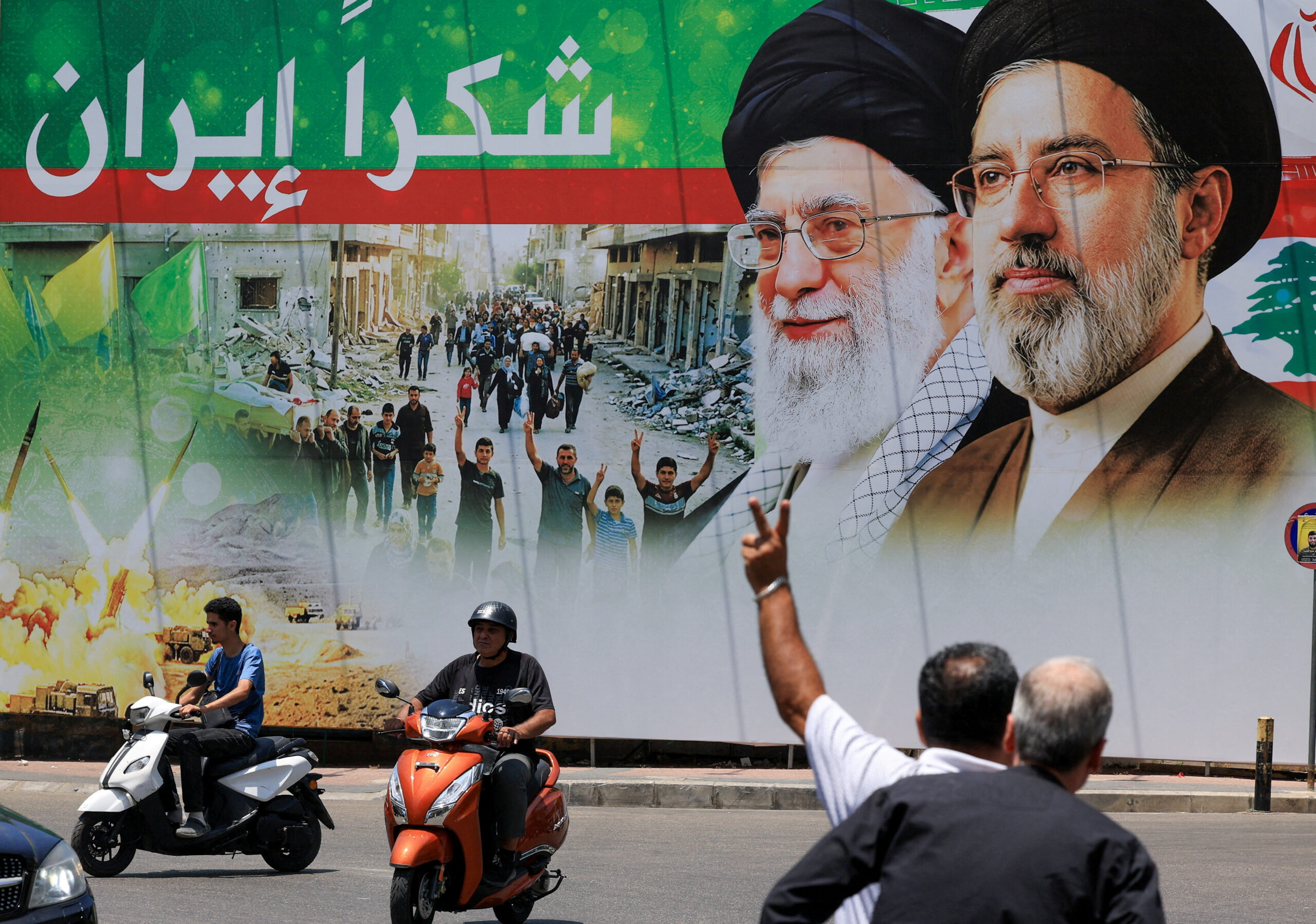
- Iran is likely to sustain pressure via clandestine cells and proxies against Gulf states that host U.S. forces, with the UAE at particular risk of further UAV or missile incidents and coercive signalling. (Confidence: medium · ASSESSED)
- I&W: Iraqi or regional security services announce arrests or identify new IRGC-directed cells targeting UAE, Bahrain or Saudi facilities hosting U.S. forces (0-30 days)
- I&W: Renewed UAV or missile attacks on UAE infrastructure with public attribution linking perpetrators to Tehran or IRGC affiliates (0-30 days)
- Large-scale U.S., Iran combat is likely to de-escalate in the near term under the halt-to-hostilities framework, though limited strikes and special operations remain likely and Lebanon remains a flashpoint. (Confidence: medium · ASSESSED)
- I&W: Tehran and Washington operationalise the contact centre and four working groups and publish modalities for Hormuz traffic management (1-3 months)
- I&W: Resumption of regular Hezbollah cross-border attacks to pre-pause tempo or Israeli escalation into deeper strikes in Lebanon (0-30 days)
Outlook & scenarios
Managed reopening under watch (50%)
Oman’s temporary routes facilitate steady but cautious transits while UK-led mine countermeasures reduce hazards near the Musandam Peninsula. Marine insurers continue to provide cover and shipping volumes gradually rise, but the IRGC Navy maintains rhetorical opposition and episodic interference. Freight rates remain elevated but trend down as more VLCCs re-enter the Gulf.
Proxy flare-up and maritime friction (35%)
IRGC-linked Iraqi cells enable attacks on UAE or Bahrain facilities tied to U.S. forces, prompting U.S. limited strikes. Tehran intensifies harassment of ships on the IMO/Omani route without formally closing Hormuz. The IMO sustains evacuation operations for seafarers and advises wider delays and reroutings.
Breakdown of the truce and renewed closure attempts (25%)
The halt-to-hostilities framework erodes, Iran attempts to re-close Hormuz, and multinational naval forces expand presence to protect freedom of navigation. Mine risk increases, daily transits fall, and freight benchmarks spike as ship availability tightens.
Recommendations
- Prioritise maritime domain awareness over Hormuz: fuse AIS, satellite and open-source ship-tracking with IMO guidance to map daily flows and choke-point congestion, and flag deviations along the IMO/Omani waypoints.
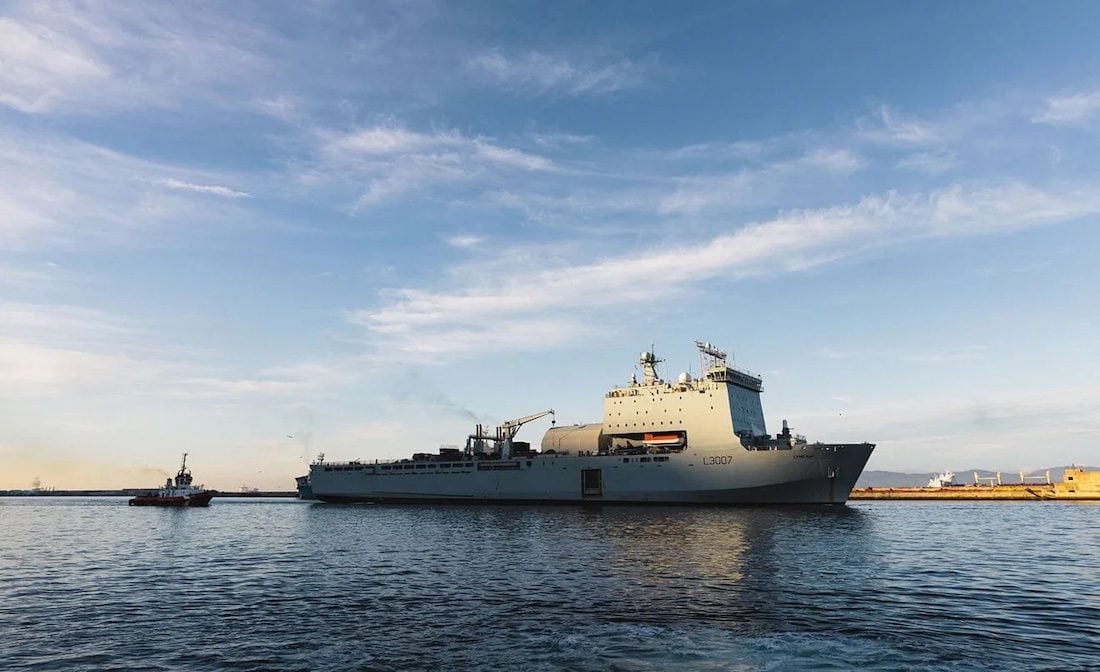
- Establish a standing liaison channel with the UK mine countermeasures contingent and track RFA Lyme Bay tasking to anticipate when segments of the traditional traffic scheme can safely reopen.
- Task collection on IRGC Navy public statements and radio hails near the southern corridor, and catalogue incidents of warnings, diversions or boardings for trend analysis.
- Expand HUMINT and liaison coverage on Iraqi networks tied to the IRGC to surface indicators of planned operations against UAE, Bahrain or Saudi facilities hosting U.S. forces.
- Coordinate with U.S. Embassy country teams in the UAE on the ordered departure posture and with FAA on Middle East NOTAMs, ensuring analysts have the latest civil aviation risk picture.
- Track tanker chartering and freight benchmarks, using outlier fixtures like 897 Worldscale for Persian Gulf liftings as a leading indicator of ship scarcity and risk premia.
- Maintain a running register of transits on the IMO/Omani route and correlate with any mine clearance reports to quantify risk reduction over time.
- Engage with marine insurers and IUMI to obtain real-time updates on cover terms for Hormuz transits and insurer-triggered routing constraints.
Confidence & uncertainty
Overall confidence is medium. Core developments are corroborated across multiple reliable sources, including major media and official statements, on the outbreak of hostilities, Iranian retaliatory strikes, U.S. deployments and casualties, and the 14-17 June framework. Maritime conditions are documented by IMO guidance, shipping data and insurer positions, but contradictions persist on Hormuz status and routing, and some elements rely on single-actor statements or analytical assessments. Reporting on covert IRGC activity and attribution for prior UAE incidents is credible but partly contested or anonymised, which tempers confidence.
Alternative analysis (red cell)
The reporting supports a mixed, contested environment with episodic strikes, provisional political frameworks, and maritime hazard pockets rather than an incontrovertible, sustained regional war. Key high-impact claims rely on limited or single-source reporting clusters and medium-admiralty items; without independent forensic, SIGINT, and multi-origin corroboration, a sober estimate is that we face managed escalation with persistent flashpoints, not a resolved, theater-wide conflagration.
Cited sources
[1] Wikipedia · Iran–United States relations (B) · sha256:a8319a3ebe51 [2] Wikipedia · Reactions to the 2026 Iran war (B) · sha256:44a3532ec705 [3] Wikipedia · Iran (B) · sha256:70132aff606c [4] CNN · Trump’s Gulf allies fear his Iran agreement is a ‘disastrous turning point’ | CNN (A) · sha256:9345b3ba5bde [5] Wikipedia · 2026 United States military buildup in the Middle East (B) · sha256:88c727704b22 [6] time.com · The U.S.-Iran War: By the Numbers (A) · sha256:805bc067f82d [7] Wikipedia · 2025–2026 Iran–United States negotiations (B) · sha256:90584cd3fcd2 [8] gcaptain.com · More Stranded Oil Tankers Exit Hormuz, Adding to Global Supply (A) · sha256:444c0e839db0 [9] maritime-executive.com · IRGC Navy Rejects IMO's Safe-Passage Plan for Strait of Hormuz (B) · sha256:5b015abb1741 [10] gcaptain.com · UK Minehunting Force Arrives in Middle East as Multinational Hormuz Mission Takes Shape (A) · sha256:c3e2cea96ee4 [11] gcaptain.com · IMO Tells Ships to Stay Put, Await Instructions as Hormuz Evacuation Begins (B) · sha256:2eaa3088e4a6 [12] gcaptain.com · Oil Tanker Booked in Persian Gulf at 897% of Benchmark Rate (B) · sha256:892e1c064a6b [13] haaretz.com · Iran set up covert Iraqi cells to attack Gulf neighbors, sources say (B) · sha256:f63471c0084a [14] Atlantic Council · What the US-Iran deal means for the rest of the Middle East (and beyond) (C) · sha256:5f93318fe142 [15] newsweek.com · Iran turned the Saudi-UAE rift into its most effective weapon | Opinion (B) · sha256:6d152803d805 [16] U.S. Department of State · United Arab Emirates Travel Advisory (A) · sha256:7a0c71f2991b [17] vietnam.vn · Госсекретарь США занят попытками снизить напряженность в регионе Персидского залива, охваченном беспорядками из-за Ирана. (B) · sha256:0b4a1c7bf521 [18] lenta.ru · Устойчивость мира между США и Ираном оценили (B) · sha256:c81d12a10af4
Source content hashes were computed at collection time; the cited text is preserved unmodified for the life of this product.
Red cell review: PARTIAL DISSENT
TLP:CLEAR