TLP:CLEAR · Disclosure is not limited.
Gulf Shipping Risk and Regional Escalation, 11 October 2026
Time window: Last 1 day · Audience: General analyst · Type: Situation report · DTG: 2026-10-11 13:38Z · Overall confidence: MEDIUM
BLUF
Very likely, commercial shipping in the Strait of Hormuz and adjacent Gulf waters will remain exposed to attacks or coercive route restrictions over the next 14 days. The US disabling of M/V Ocean Molica and the Houthi attack on Riyadh airport add separate escalation pathways, but the reporting does not establish that Washington has decided on direct combat with Iran or the Houthis.
Executive summary
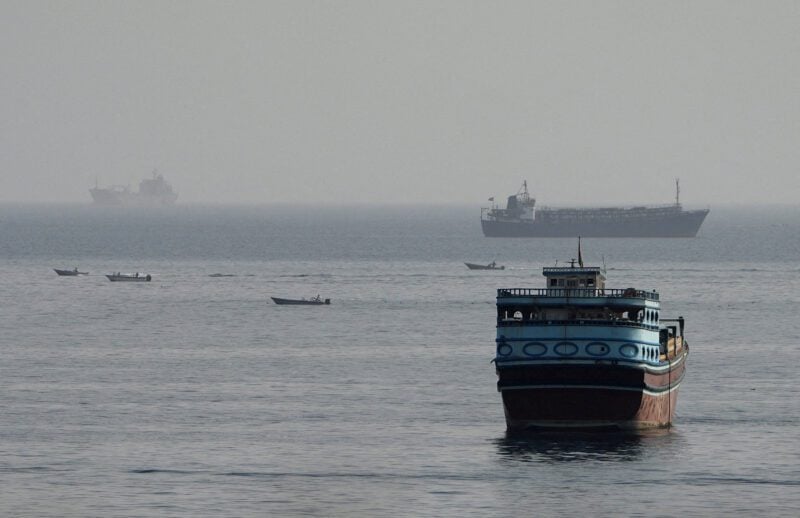
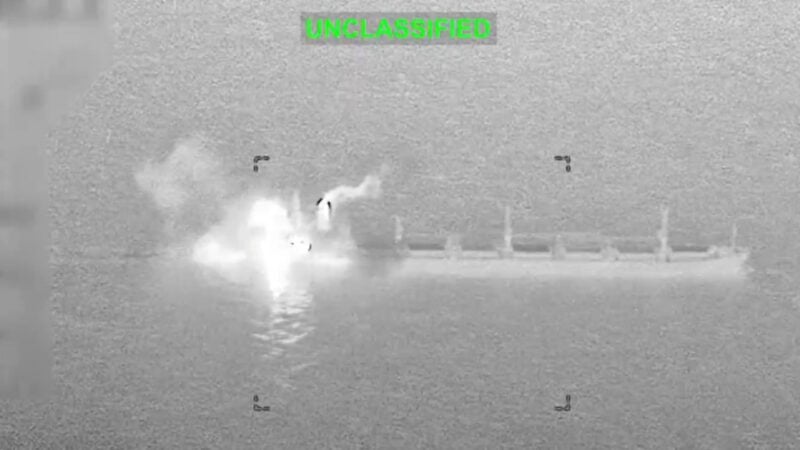
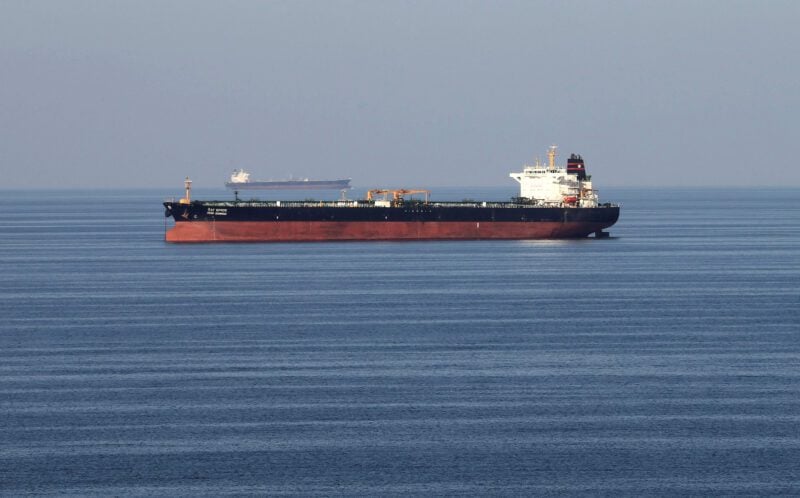
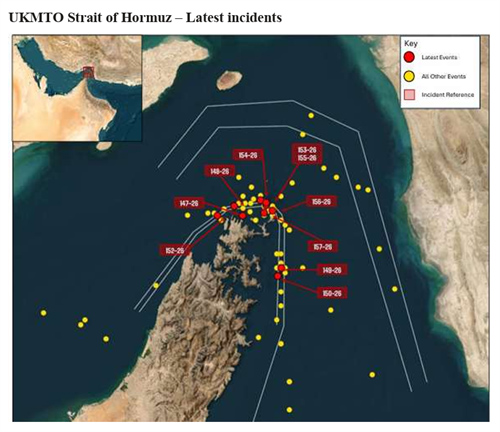
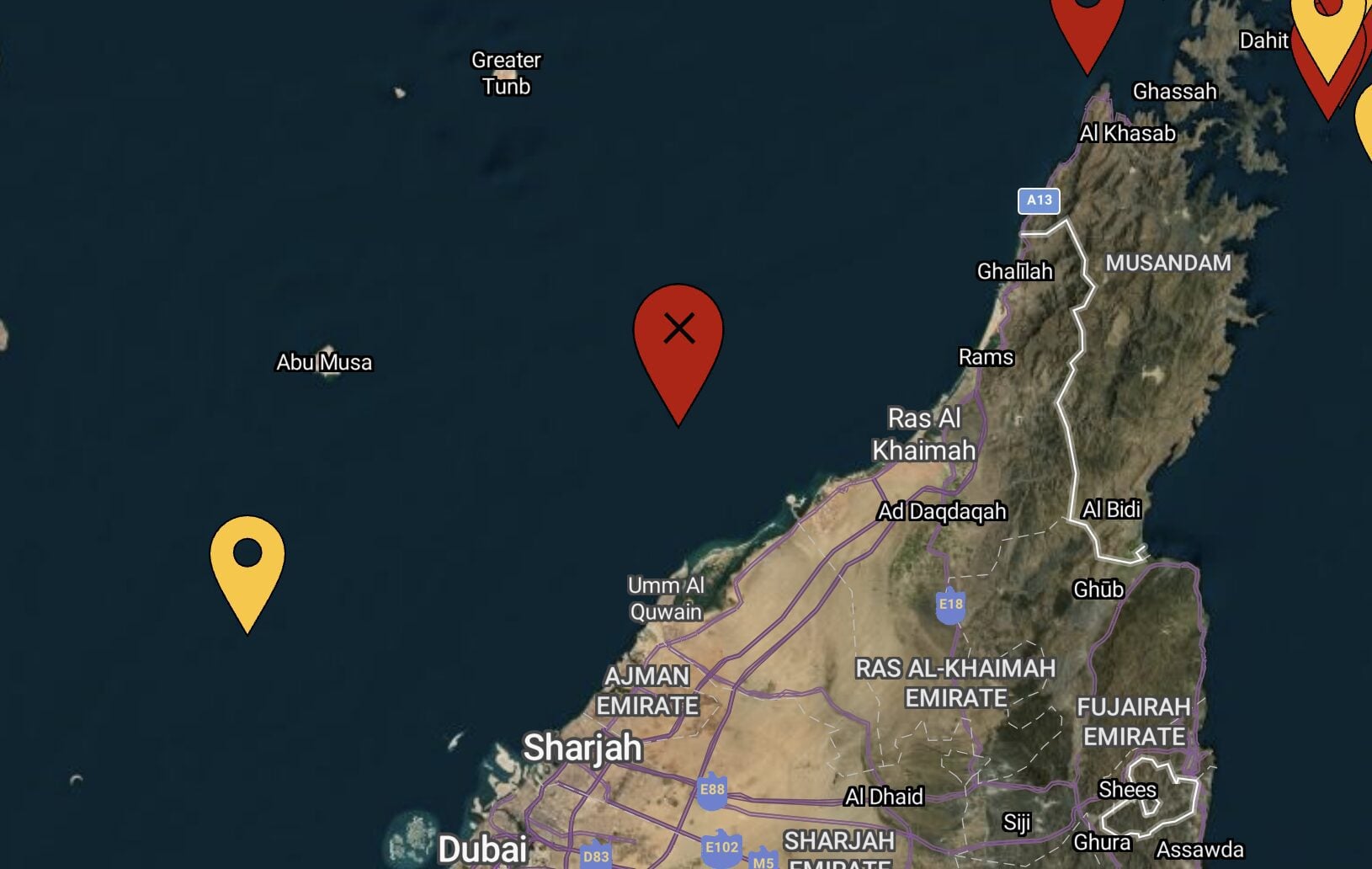
This reporting window’s clearest developments concern maritime security and conflict spillover. UKMTO recorded 11 attacks on commercial shipping in the seven days ending 7 October, while JMIC rated the threat in the Strait of Hormuz as severe. On 9 October, an unknown projectile struck the Panama-flagged tanker GEM NO.2 off the UAE; responsibility remains unverified. CENTCOM said US forces disabled the Panama-flagged M/V Ocean Molica in the Gulf of Oman on 10 October after it attempted to pass through a blockade. Separately, Saudi Arabia’s General Authority of Civil Aviation attributed an attack on King Khalid International Airport in Riyadh to the Houthis and reported 12 deaths and 309 injuries. Traffic measures give different pictures: UKMTO counted 275 transits in the latest seven-day period, still about 75% below pre-conflict levels, while industry executives estimated oil shipments at about 80% of pre-war levels. Those figures measure different things and do not establish a consistent rate of recovery.
Change from previous assessment
Since the 10 October brief, the assessment adds CENTCOM’s report that US forces disabled M/V Ocean Molica in the Gulf of Oman on 10 October, and the IRGC Navy’s wider warning against unauthorised passages beyond Hormuz. The 9 October strike on GEM NO.2 off the UAE adds a reported incident outside the Hormuz area, without resolving responsibility. The Riyadh airport attack and Trump’s intervention signal add a separate risk of US involvement in Yemen; confidence in direct US combat involvement remains low. The judgement that shipping remains exposed is retained at high confidence, while the traffic picture remains unsettled because UKMTO transit counts and industry shipment estimates differ. The prior assessment that a direct US strike on Iran before 3 November was unlikely is not revised by this reporting, which adds maritime enforcement activity but no evidence of an approved strike on Iran.
Key judgments
- Very likely, commercial shipping will remain exposed to attacks or coercive route restrictions in the Strait of Hormuz and nearby Gulf waters over the next 14 days. UKMTO recorded 11 attacks in the week ending 7 October, including 10 in Hormuz, and 41 of 59 reported incidents involving commercial shipping since July occurred along Hormuz’s southern route. JMIC rated the Hormuz threat as severe. The 9 October strike on GEM NO.2 occurred off the UAE, but its attacker is unknown. The IRGC Navy claimed a series of tanker attacks and threatened to pursue vessels using unauthorised passages beyond Hormuz. Confidence is high for continued exposure, supported by UKMTO and JMIC reporting and multiple reports of vessel incidents; attribution for specific attacks remains unresolved. Transit recovery is also uncertain: UKMTO reported 275 weekly transits, up from 247, while reporting put traffic about 75% below pre-conflict levels and industry executives estimated oil shipments at about 80% of pre-war levels. (Confidence: medium · ASSESSED)
- I&W: Confirm: UKMTO records another attack on a commercial vessel in Hormuz or the Gulf, or JMIC retains a severe threat rating for Hormuz. (0-14 days)
- I&W: Break: UKMTO reports no further attacks and weekly transits rise materially above 275, with an accompanying easing of JMIC’s Hormuz threat rating. (0-14 days)
- Likely, the risk of a direct maritime confrontation between US forces and Iran will remain elevated over the next 14 days. CENTCOM said US forces disabled the Panama-flagged M/V Ocean Molica in the Gulf of Oman on 10 October after it left an Iranian port and attempted to pass through a naval blockade. The IRGC Navy has threatened to pursue vessels using unauthorised passages anywhere in the region. The vessel incident is reported principally through CENTCOM’s account, and the provided reporting does not independently establish Iran’s response or the circumstances beyond that account. Confidence is medium. (Confidence: medium · ASSESSED)
- I&W: Confirm: CENTCOM reports another vessel disabled or detained after a blockade warning, or the IRGC Navy reports an enforcement action against a vessel. (0-14 days)
- I&W: Break: no further reported interdictions or IRGC Navy enforcement actions occur, and CENTCOM reports that the blockade warning regime has eased. (0-14 days)
- Unlikely, the United States will conduct direct combat operations against the Houthis in Yemen within the next 14 days. Trump signalled possible military intervention after the attack on King Khalid International Airport in Riyadh, while the United States has confirmed intelligence support and the deployment of military experts to Saudi Arabia. The White House had previously said it would not directly intervene in Yemen. Saudi Arabia’s General Authority of Civil Aviation reported 12 deaths and 309 injuries; another account specifically reported a US citizen killed, without clarifying whether that person was included in the total. Confidence is low because the intervention signal is not an announced operation and the reporting does not resolve the US response or casualty detail. (Confidence: low · ASSESSED)
- I&W: Confirm: the White House or CENTCOM announces US strikes or a direct combat mission against the Houthis in Yemen. (0-14 days)
- I&W: Break: US officials reaffirm that support to Saudi Arabia remains limited to intelligence and military experts, with no direct combat operation announced. (0-14 days)
- Likely, lower traffic through Bab al-Mandeb and the Suez Canal will keep energy shipments and other commercial cargo on longer routes over the next 1-3 months. Reporting describes reduced traffic through both routes and some vessels adding thousands of miles by sailing around Africa. A recent US-origin tanker booking was reported at a transport cost of $41 per barrel, compared with $4.50 for the same route last year; Suezmax daily earnings were reported above $680,000. The route disruption is reported by major media, while the freight figures rely on industry reporting. Confidence is medium. (Confidence: medium · ASSESSED)
- I&W: Confirm: shipping companies continue to announce Cape of Good Hope diversions and published reporting continues to describe reduced Bab al-Mandeb or Suez traffic. (1-3 months)
- I&W: Break: shipping companies resume direct Red Sea and Suez routings and published traffic reporting shows a sustained recovery on those routes. (1-3 months)
Outlook & scenarios
Continued maritime pressure with limited additional escalation (55%)
Likely, attacks or coercive restrictions keep commercial shipping exposed in Hormuz and adjacent Gulf waters over the next 14 days. The US maintains its reported blockade enforcement, while the IRGC Navy continues to warn vessels against unauthorised routes. Transit activity remains disrupted, but the reporting does not establish a new direct US-Iran exchange.
Partial shipping recovery (25%)
Unlikely, attack reports decline and weekly Hormuz transits continue to recover from the 275 recorded in the latest reporting period. Industry shipment estimates and UKMTO transit counts remain difficult to compare, so a rise in one measure alone would not establish a return to pre-conflict conditions.
Wider US involvement following Houthi attacks on Saudi Arabia (15%)
Unlikely, another Houthi attack on a Saudi target prompts Washington to move beyond intelligence support and deploy US forces in direct combat operations in Yemen. Trump’s intervention signal and the confirmed US support to Saudi Arabia provide a pathway, but no direct US operation has been announced in the reporting.
Hormuz blockade crisis and direct US-Iran confrontation (5%)
Very unlikely, Iran attempts to enforce its threat against vessels using unauthorised passages while US forces continue blockade enforcement, producing a direct confrontation and a sharp interruption to Hormuz traffic. The potential impact on shipping would be high, given the reported threat level and the waterway’s role in global oil and liquefied natural gas trade.
Recommendations
- Track UKMTO incident reports, weekly transits and JMIC threat ratings together. Keep transit counts separate from estimates of oil shipment volumes, and flag the current difference between the 275 weekly transits, the estimate of traffic 75% below pre-conflict levels and the industry estimate of shipments at 80% of pre-war levels.
- Seek authoritative follow-up on the 9 October strike off Al Jazeera, including confirmation of GEM NO.2’s crew condition, vessel damage and environmental impact. Keep responsibility unassigned unless supported by corroborated evidence.
- Monitor CENTCOM updates on M/V Ocean Molica and subsequent blockade enforcement, alongside IRGC Navy statements or reported actions against vessels. Treat further interdictions or enforcement actions as indicators of increased direct US-Iran maritime risk.
- Reconcile Saudi General Authority of Civil Aviation casualty reporting on the Riyadh airport attack with reporting on the US citizen killed. Separately monitor for an explicit US announcement of combat operations in Yemen rather than treating Trump’s intervention signal as an operational decision.
- Maintain a route and freight cost watch for Bab al-Mandeb, the Suez Canal and Cape of Good Hope diversions. Distinguish observed route changes from industry freight estimates when assessing the effect on energy and other cargo.
Confidence & uncertainty
Overall confidence is medium. UKMTO and JMIC reporting, CENTCOM statements and major-media accounts provide a useful base for the incident and threat picture. Confidence is lower on responsibility for individual vessel strikes, the circumstances and likely follow-on effects of the Ocean Molica incident, and the US response to the Riyadh attack. Hormuz traffic estimates also differ: UKMTO counts transits, while industry executives estimate oil shipments, and the measures do not align.
Intelligence gaps
- [EEI 1.1 · UNCOVERED] Unusual long-range missile/rocket transporter-launcher (TEL) movements, storage activation, or assembly activity at known IRGC missile sites or forward staging areas. Recommended collection: satellite/imagery
- [EEI 1.2 · PARTIAL] Orders, threat-alert messages, or changes in posture from IRGC, Quds Force, or senior Iranian military leadership indicating attack timelines or rules of engagement changes. Recommended collection: signals/ELINT and HUMINT
- [EEI 1.3 · UNCOVERED] Large-scale transfers, deliveries, or convoy movements of armed UAVs/drones, guided munitions, or spare parts from Iran into Lebanon (Hezbollah), Iraq, Syria, or Gaza. Recommended collection: air/aviation track and HUMINT
- [EEI 1.4 · UNCOVERED] Sustained changes in Israeli air-defense usage (SAM launches, radar activations), wide-area alerts, or NOTAMs indicating elevated imminent strike response. Recommended collection: air/aviation/NOTAMs and signals
- [EEI 2.1 · UNCOVERED] Concentration, repositioning, or sortie patterns of Iranian naval/IRGC patrol boats and fast-attack craft near shipping chokepoints or commercial lanes. Recommended collection: maritime/AIS and satellite/imagery
- [EEI 2.3 · PARTIAL] Insurance market indicators: sudden spikes in war-risk or hull insurance premiums for routes through the Red Sea, Suez corridor, or Persian Gulf, and major carriers announcing route changes. Recommended collection: financial/market and commercial shipping notices
- [EEI 2.4 · PARTIAL] Port closures, naval escorts requested by commercial operators, or formal rerouting advisories issued by major shippers (e.g., Maersk, Hapag-Lloyd) for regional transits. Recommended collection: commercial/OSINT
- [EEI 3.1 · PARTIAL] Deployment of foreign military assets to the region (carrier strike groups, amphibious ships, combat aircraft deployments, or additional bases activated) from the US, UK, France, Russia, or GCC states. Recommended collection: maritime/AIS and air/aviation and satellite/imagery
- [EEI 3.2 · UNCOVERED] Formal diplomatic actions: emergency UNSC votes, sanctions announcements, high-level ministerial visits, or public mediation offers by external powers or regional actors. Recommended collection: diplomatic/OSINT
- [EEI 3.3 · UNCOVERED] Confirmed arms transfers, expedited weapons shipments, or transfer authorizations to Israel, Iran, or their proxies (aircraft parts, munitions, air defenses). Recommended collection: customs/INTEL and HUMINT
- [EEI 3.4 · UNCOVERED] Issuance of travel warnings, embassy evacuations or reductions, and closure of diplomatic missions by major capitals indicating escalation risk or shifted threat assessments. Recommended collection: OSINT/diplomatic
Cited sources
[1] gCaptain · Second Ship Struck Inside Persian Gulf in Three Days (C) · 9 October 2026 · sha256:cc2ef31c3c06 [2] Thomson Reuters (republished by gCaptain) · Vessel Struck by Unknown Projectile Off UAE Coast Amid Surge in Attacks, UKMTO Says (A) · 9 October 2026 · sha256:ab2b01667e5f [3] The Maritime Executive · More Tankers Struck as IRGC Expands Threat Against Non-Compliant Vessels (C) · sha256:24ae654e496a [4] gCaptain · US Says It Disabled Cargo Vessel Trying To Run Iran Blockade (C) · 11 October 2026 · sha256:20a9593f1e7c [5] gCaptain (republishing Bloomberg) · Global Oil Tanker Shortage is Getting Worse By the Day (A) · 9 October 2026 · sha256:2372a2e696f4 [6] Al Jazeera · What the Iran war has done to the world’s energy supply, in charts (A) · 11 October 2026 · sha256:038dcaea05f7 [7] BBC · Riyadh airport attack another dangerous moment in already tense conflict (A) · 11 October 2026 · sha256:4f5df4fa4610
Source content hashes were computed at collection time; the cited text is preserved unmodified for the life of this product.
Red cell review: PARTIAL DISSENT, KJ-1 downgraded HIGH→MEDIUM (estimative_mismatch)
TLP:CLEAR