TLP:CLEAR · Disclosure is not limited.
Hormuz and Bab el-Mandeb: shipping risks persist, $108 Brent claim unsupported
Time window: Last 1 day · Audience: General analyst · Type: Situation report · DTG: 2026-11-16 18:15Z · Overall confidence: HIGH
BLUF
The reporting supports shipping risk in the Strait of Hormuz and increased Houthi leverage near Bab el-Mandeb, but does not establish a Bab el-Mandeb blockade, disruption at four of five key straits, or Brent at $108 per barrel. Hormuz oil flows and tanker freight rates were also reported recovering or falling, although Iranian restrictions, unverified mine-strike reports and Yemen’s contested front line sustain material downside risk.
Executive summary
Between 15 and 16 November, the Southern Armed Forces and other Yemeni government-aligned forces reported withdrawing from positions near Dhubab and Bab el-Mandeb to reinforce Aden. Reports place Houthi forces at Khor Omairh and Tor al-Baha, but give differing distances from Aden and competing accounts of control near the strait. Iran’s Revolutionary Guards reported mine strikes on tankers in Hormuz; Reuters could not immediately verify the latest report, and Iranian accounts differ on the number of vessels and whether any sank. Other reporting describes US Navy escorts and Gulf oil flows increasing towards pre-war levels. Brent was reported near $94 on 16 November in article summaries, while official EIA data show $92.14 on 11 November; the supplied record does not support $108. Maersk and Hapag-Lloyd have announced planned Suez Canal routing for three Gemini services from December 2026 to January 2027, conditional on Red Sea stability. The record contains no comparable evidence establishing disruption at four of five key straits.
Change from previous assessment
Since the 15 November brief, reporting has strengthened the assessment that government-aligned forces withdrew from Dhubab and the Bab al-Mandab area to defend Aden, and added reports of Houthi advances towards Khor Omairh and Tor al-Baha. Control of the strait approaches remains disputed, so the assessment is increased Houthi leverage, not a confirmed blockade. New reporting describes Gulf oil flows recovering and VLCC freight rates falling, which weakens the prior concern that current energy and tanker costs are uniformly worsening. Monday Brent reports remain near $94 in article summaries, not $108. The claim of disruption at four of five key straits remains unsupported.
Key judgments
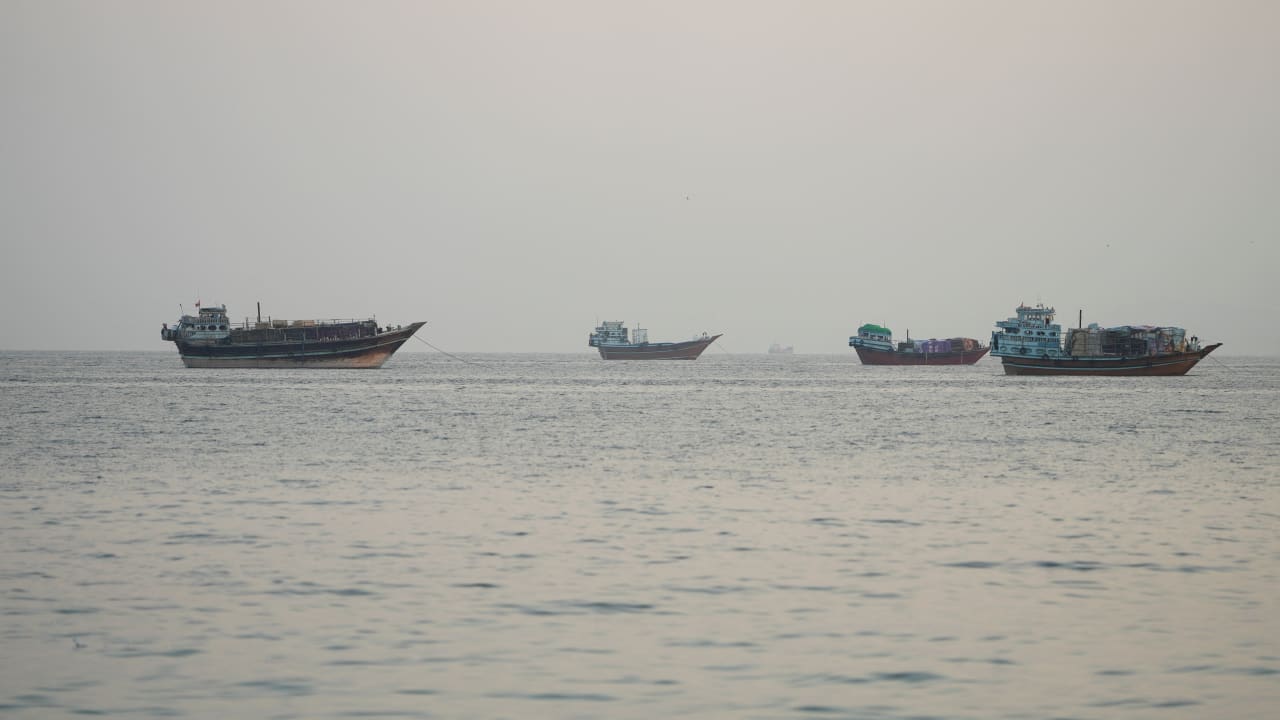
- Likely, commercial passage through the Strait of Hormuz remains restricted and hazardous, but a complete closure is not established. Iran says it restricts vessels and has attacked ships it says violated its rules. Reporting also describes US Navy escorts, October crude flows of 10.3 million barrels per day, and Gulf exporters increasing flows towards pre-war levels. The competing claim that transits were below one-tenth of pre-crisis counts came from an unidentified tracker. Reuters could not immediately verify the latest IRGC mine-strike report, and Iranian accounts differ on the number of vessels affected and whether any sank. Current vessel throughput and incident scale therefore remain uncertain. (Confidence: medium · ASSESSED)
- I&W: Confirm: independent vessel tracking and port records show repeated denials, diversions or escort-only transits through Hormuz. Break: independently reconciled transit counts and oil flows recover without recurring restrictions or attacks. (0-14 days)
- I&W: Confirm: an independently identified vessel, its operator or a port authority verifies a mine strike and resulting damage. Break: vessel and port records show no corresponding casualty or disruption. (0-14 days)
- Likely, the withdrawal of Southern Armed Forces and other Yemeni government-aligned forces from the Dhubab and Bab al-Mandab area to reinforce Aden has increased Houthi tactical leverage near the strait. Yemeni military sources place Houthi fighters at Khor Omairh, about 100 kilometres west of Aden and 25 kilometres from government lines at Qawah; another report places Houthi forces at Tor al-Baha, about 80 kilometres from Aden. These reports do not establish a single reconciled front line. Houthi-run media claim the movement took evacuated territory, while Brigadier General Nidal al-Zahwi says Yemeni Armed Forces expanded their gains from the Bab al-Mandab area. The conflicting control claims do not establish a blockade. (Confidence: medium · ASSESSED)
- I&W: Confirm: independently verified imagery or field reporting shows Houthi forces holding Perim Island or positions overlooking the Bab al-Mandab approaches. Break: verified reporting shows government-aligned forces reoccupying those positions. (0-14 days)
- I&W: Confirm: commercial operators report suspended or diverted Bab al-Mandab transits. Break: verified transit records show regular commercial passage despite the force withdrawal. (0-14 days)
- Unlikely, the supplied reporting establishes disruption at four of five key maritime straits. It contains current material on Hormuz and military developments near Bab el-Mandeb, but no comparable contemporaneous transit evidence for the other three straits. This is an assessment of the reporting available, not proof that disruptions elsewhere are absent. (Confidence: low · ASSESSED)
- I&W: Confirm: comparable, independently checked transit data show sustained disruption at three additional straits named in the five-strait framing. Break: the same data show regular passage at those straits. (0-14 days)
- Unlikely, Brent was $108 per barrel on 16 November. Monday market summaries place Brent at $93.90 or near $94, while official EIA data give $92.14 on 11 November and full wire-service reporting says Brent fell 20 per cent during November. The exact Monday price reports were read only in summary; the wider decline is supported by reporting beyond those summaries. (Confidence: medium · ASSESSED)
- I&W: Confirm the $108 figure only if a dated benchmark or exchange record shows Brent at or above $108 on 16 November. Break: the final benchmark record confirms a price near $94. (0-2 days)
- Unlikely, the supplied evidence supports the combined claim that war-risk premiums are currently spiking while tanker availability is tightening. One unidentified source gives a VLCC war-risk quote increase from about $250,000 to $10 million. By contrast, Reuters-derived reporting cites Baltic Exchange data showing Gulf of Oman to China VLCC freight rates fell 64 per cent from their 8 October peak by 13 November, and a Vortexa analyst said vessel availability was building as ships discharged in East Asia. The insurance estimate remains single-source and uncorroborated. (Confidence: low · ASSESSED)
- I&W: Confirm: dated quotes from multiple identified insurers show rising war-risk costs alongside declining vessel availability. Break: insurer quotes fall and independently reported vessel availability continues to build. (0-14 days)
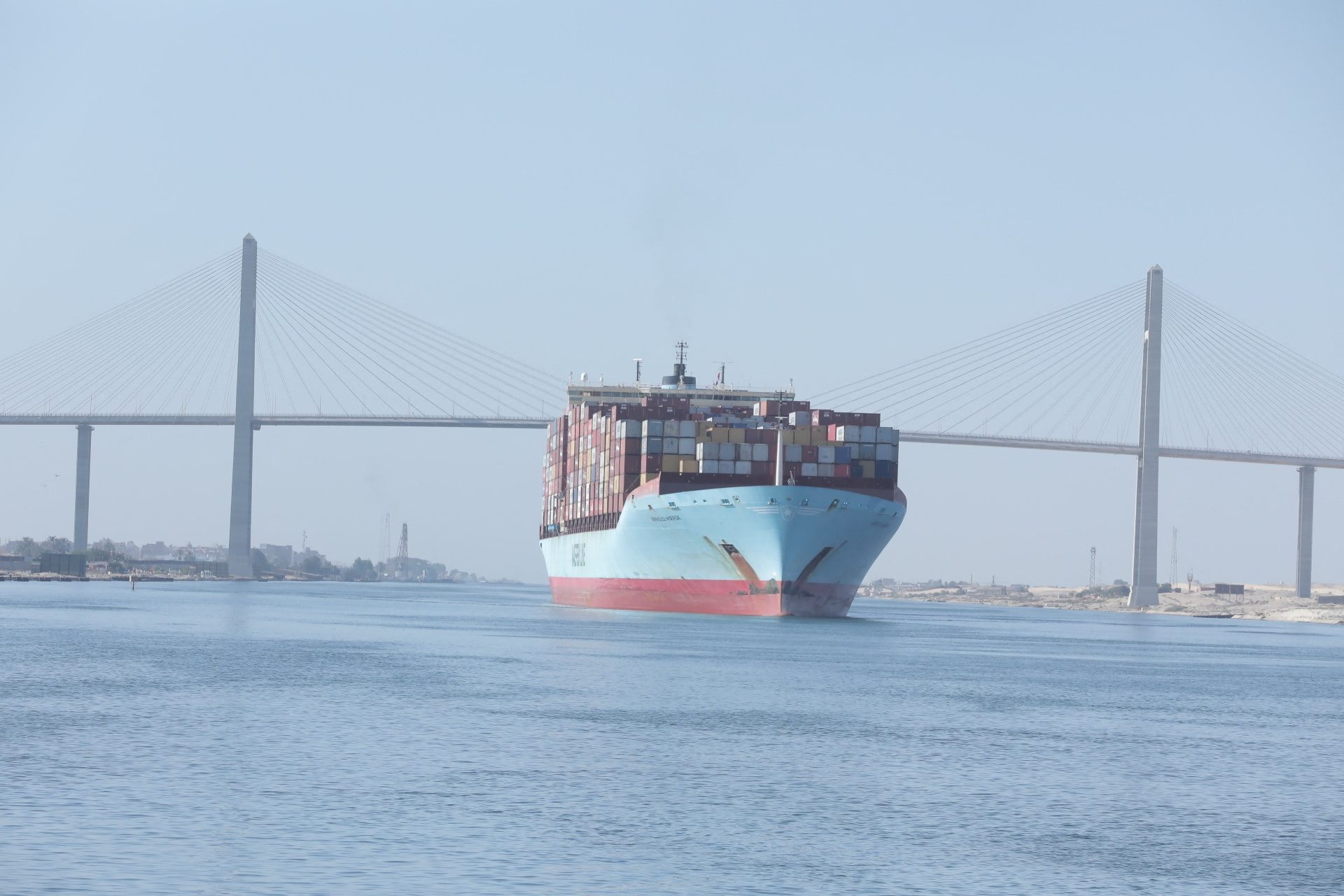
- Very likely, Maersk and Hapag-Lloyd have announced a staged return of Gemini AE2, AE3 and AE1 services to Suez Canal routing, beginning on 4 December, 20 December and 14 January 2027 respectively. The companies say further routing changes depend on continued Red Sea stability, so the announcements show planned routing rather than verified safe passage. (Confidence: medium · REPORTED)
- I&W: Confirm: the AE2 and AE3 services begin their announced Suez transits on 4 and 20 December. Break: either carrier cancels the changes or returns the services to Cape of Good Hope routing. (0-1 month)
- I&W: Confirm: AE1 begins its announced Suez transit on 14 January 2027. Break: the carrier delays or cancels that transition, citing Red Sea security. (1-3 months)
Outlook & scenarios
Managed but uneven passage (55%)
Likely, Gulf exporters continue using escorts and workarounds to sustain oil flows through Hormuz while Iranian restrictions and shipping risk persist. The Bab al-Mandab front remains contested, but Houthi statements against general international shipping hold. Maersk and Hapag-Lloyd proceed with their announced Suez transitions if Red Sea conditions remain stable.
Renewed Hormuz disruption (25%)
Unlikely, independently verified tanker casualties or further attacks lead operators to reduce Hormuz transits and Gulf exporters to rely more heavily on workarounds. Crude flows and freight costs reverse their reported recovery and decline.
Houthi pressure expands near Bab el-Mandeb (15%)
Unlikely, Houthi forces consolidate positions overlooking the Bab al-Mandab approaches as government-aligned forces concentrate on Aden and Lahj. Actual commercial transit suspensions or carrier reversals would turn increased tactical leverage into a broader shipping disruption.
Simultaneous Hormuz and Bab el-Mandeb shock (5%)
Very unlikely, independently verified attacks or restrictions disrupt passage at both Hormuz and Bab el-Mandeb while carriers reverse planned Suez returns. This is the low-probability, high-impact wildcard: it would compound route risk and pressure oil and supply-chain movements, but the supplied reporting does not establish that this scenario is unfolding.
Recommendations
- Do not repeat the four-of-five disruption count or the $108 Brent figure as established. Use a dated price benchmark and label the strait count unverified until comparable transit data are available.
- Reconcile Hormuz incident reporting by identifying the vessels, operators, flags, routes and port calls associated with the alleged mine strikes. Keep reported fires, confirmed damage and verified sinkings as separate categories.
- Track Hormuz vessel counts separately from oil volumes. Compare transit records with crude-flow reporting and note whether escorts, ship-to-ship transfers or dark crossings affect each measure.
- Prioritise verification of control around Dhubab, Perim Island, Ras Menhali, Khor Omairh and Qawah. Treat Houthi and government-aligned claims as contested until independently corroborated.
- Monitor whether Maersk and Hapag-Lloyd begin the AE2, AE3 and AE1 Suez transits on their announced dates. A cancellation or return to Cape routing would be a checkable signal of deteriorating Red Sea confidence.
- Update the market assessment with identified insurer quotes, dated VLCC freight data and reported vessel availability. Do not use the single unidentified war-risk estimate as a measure of the whole market.
Confidence & uncertainty
Overall confidence is high in the evidence-bounded conclusion: the record documents serious shipping risk and a contested Yemeni front, but does not substantiate the brief’s headline claims of $108 Brent or disruption at four of five key straits. Established media, wire-service reporting, official EIA data and carrier announcements support the main reported developments. Confidence is lower on Hormuz mine-strike counts, Bab al-Mandab territorial control, the exact Monday Brent price and the single-source insurance estimate.
Intelligence gaps
- [EEI 1.4 · PARTIAL] Public or private warnings from the US Fifth Fleet, regional naval forces, port authorities, or shipping companies identifying specific routes or vessel categories as unsafe. Recommended collection: official-statements/shipping-notices
- [EEI 2.3 · PARTIAL] War-risk insurance premium, deductible, coverage-exclusion, and voyage-approval changes for Hormuz, Bab-el-Mandeb, Red Sea, Gulf of Aden, and adjacent waters. Recommended collection: insurance-market
- [EEI 2.4 · PARTIAL] Operational status and export-loading changes at Saudi, UAE, Omani, Iranian, Djiboutian, and Red Sea ports, terminals, pipelines, and storage facilities. Recommended collection: port-operator/energy-infrastructure
- [EEI 3.1 · PARTIAL] Brent and Dubai crude price movements, futures-curve shifts, volatility, and the spread between regional and global crude benchmarks. Recommended collection: commodity-markets
- [EEI 3.3 · UNCOVERED] Fertilizer shipment delays, canceled or redirected cargoes, regional price increases for urea and ammonia, and reported inventory levels in import-dependent markets. Recommended collection: commodity-trade/port-data
- [EEI 3.4 · UNCOVERED] Container freight rates, vessel charter rates, bunker costs, port congestion, and manufacturing or retail supply disruptions attributable to the chokepoint crisis. Recommended collection: shipping-and-logistics-markets
- [EEI 4.2 · UNCOVERED] Diplomatic commitments, deconfliction arrangements, prisoner or vessel releases, and publicly announced conditions for reopening commercial transit. Recommended collection: diplomatic-reporting
- [EEI 4.4 · UNCOVERED] New incidents, military alerts, vessel diversions, or port restrictions at other critical chokepoints indicating geographic spread beyond Hormuz and Bab-el-Mandeb. Recommended collection: maritime/AIS-official-notices
Red cell review: CONCUR WITH COMMENT
TLP:CLEAR