TLP:CLEAR · Disclosure is not limited.
Hormuz Attacks and US-Iran Strikes Raise Regional Escalation Risk
Time window: Last 1 day · Audience: General analyst · Type: Situation report · DTG: 2026-09-01 18:41Z · Overall confidence: HIGH
BLUF
The conflict has entered a more dangerous phase. US forces reported new strikes on IRGC targets in Iran on 1 September, while two Saudi-oil tankers were struck near Khasab, Oman, increasing the risk of further US-Iran exchanges and prolonged disruption in the Strait of Hormuz.
Executive summary
US-Iran military activity has expanded from the 30 August Larak Island strike and Iranian missile launches at US bases in Jordan to a reported 1 September US campaign against IRGC targets in Iran. Commercial shipping is under direct attack: the tankers Sidr and Senegal Prosperity were reportedly struck by three projectiles each near Khasab, Oman, although accounts differ over whether UKMTO initially recorded one or two incidents. JMIC and INTERTANKO continue to warn of mine and interference risks despite US claims of mine clearance. Diplomatic channels remain open through Masoud Pezeshkian, Oman and Qatar, but Donald Trump's threats and the IRGC's warning of severe punishment point to continued escalation pressure. Israeli operations in Gaza City and tensions around Al-Aqsa Mosque provide a separate regional flashpoint.
Change from previous assessment
Since the 31 August brief, the assessment has shifted from an active but geographically distributed exchange to a higher-risk phase. New reporting adds a 1 September CENTCOM announcement of strikes on IRGC targets in Iran and reports that two Saudi-oil tankers were struck near Khasab, Oman. The shipping judgement remains medium-confidence, but the evidence of direct attacks on commercial vessels is now stronger. The prior assessment of conditional diplomacy remains, with Pezeshkian's offer and the Saudi-Omani meeting adding diplomatic activity without evidence of implementation. A separate Gaza City and Al-Aqsa escalation judgement has been added because the reported Israeli operation is directly contradicted and requires continued tracking.
Key judgments
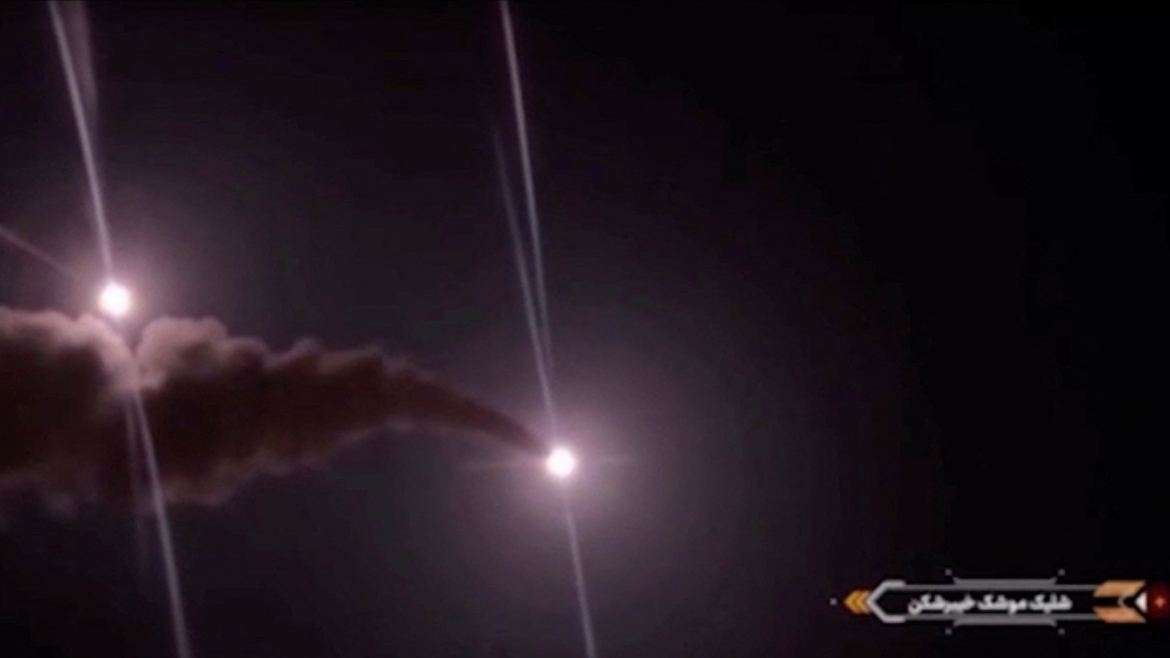
- Very likely US-Iran military exchanges will continue during the next 14 days and remain centred on the Strait of Hormuz, Larak Island and US bases in Jordan, with a roughly even chance of additional US strikes on Iranian territory. US forces struck two Iranian launchers on Larak Island on 30 August, Iran launched missiles at two US bases in Jordan, and US Central Command reported on 1 September that US forces began striking IRGC targets in Iran at 12 p.m. ET. Donald Trump threatened further strikes, while the IRGC warned that severe punishment awaited the aggressors. This is an assessed judgement. Confidence is medium because the Larak and Jordan exchanges have multiple high-reliability reports, but the 1 September CENTCOM announcement is medium-confidence local-media reporting and its strike scope lacks independent corroboration. (Confidence: medium · ASSESSED)
- I&W: Confirm: Within 0-14 days, CENTCOM or independent major-media reporting records additional US strikes on IRGC targets in Iran or additional Iranian missile launches at US bases in Jordan. (0-14 days)
- I&W: Break: Masoud Pezeshkian and Donald Trump announce compliance with the June accord and no further Iranian launches or US strikes are reported for 14 consecutive days. (0-14 days)
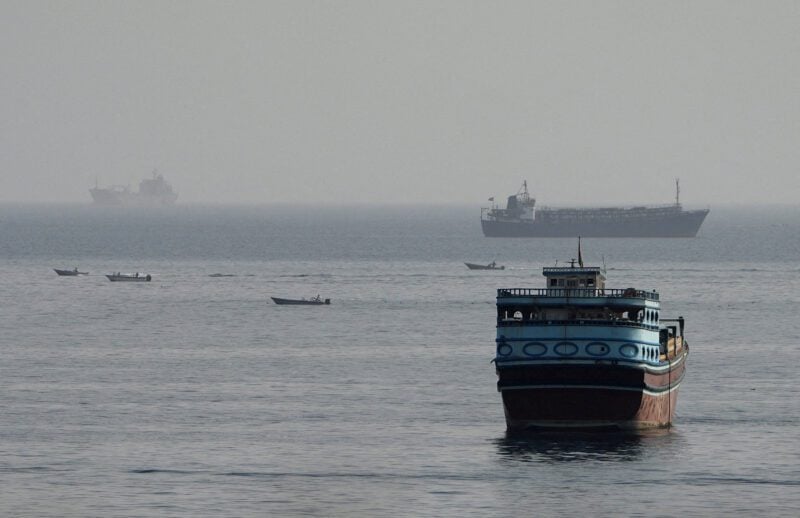
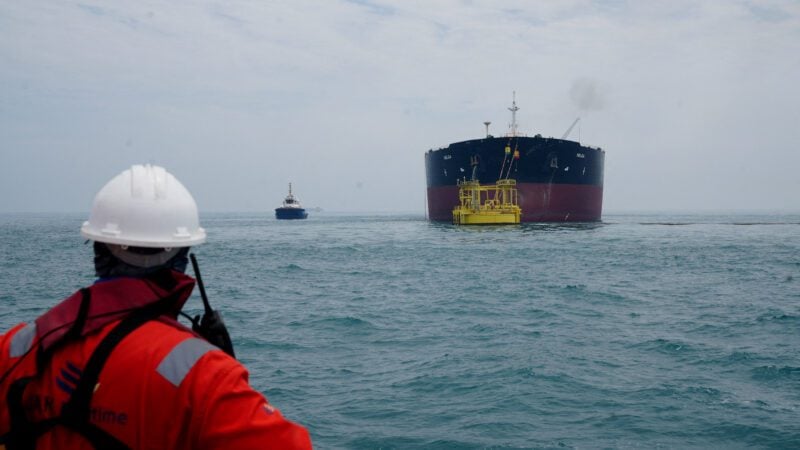
- Very likely commercial shipping through the Strait of Hormuz will remain severely disrupted over the next 14 days, while a complete closure remains unlikely. UKMTO, Marisks and Kpler reporting indicates that the Saudi-flagged Sidr and Liberian-flagged Senegal Prosperity were struck by three projectiles near Khasab, Oman, within minutes of each other on 31 August. INTERTANKO says vessels using the Traffic Separation Scheme cannot be assumed to transit without interference, and JMIC continues to warn of drifting or uncharted mines. The identity of the attackers and the full extent of the mine threat remain unconfirmed. Confidence is medium because the tanker attacks are reported by multiple maritime and major-media sources, but accounts differ over the number of incidents and the scope of US mine clearance. (Confidence: medium · ASSESSED)
- I&W: Confirm: Within 0-14 days, UKMTO reports another tanker attack or JMIC records a new mine incident in or around the Traffic Separation Scheme. (0-14 days)
- I&W: Break: Saudi Aramco and shipping operators report sustained routine loadings and transits through the Traffic Separation Scheme, while JMIC withdraws its mine warning. (0-14 days)
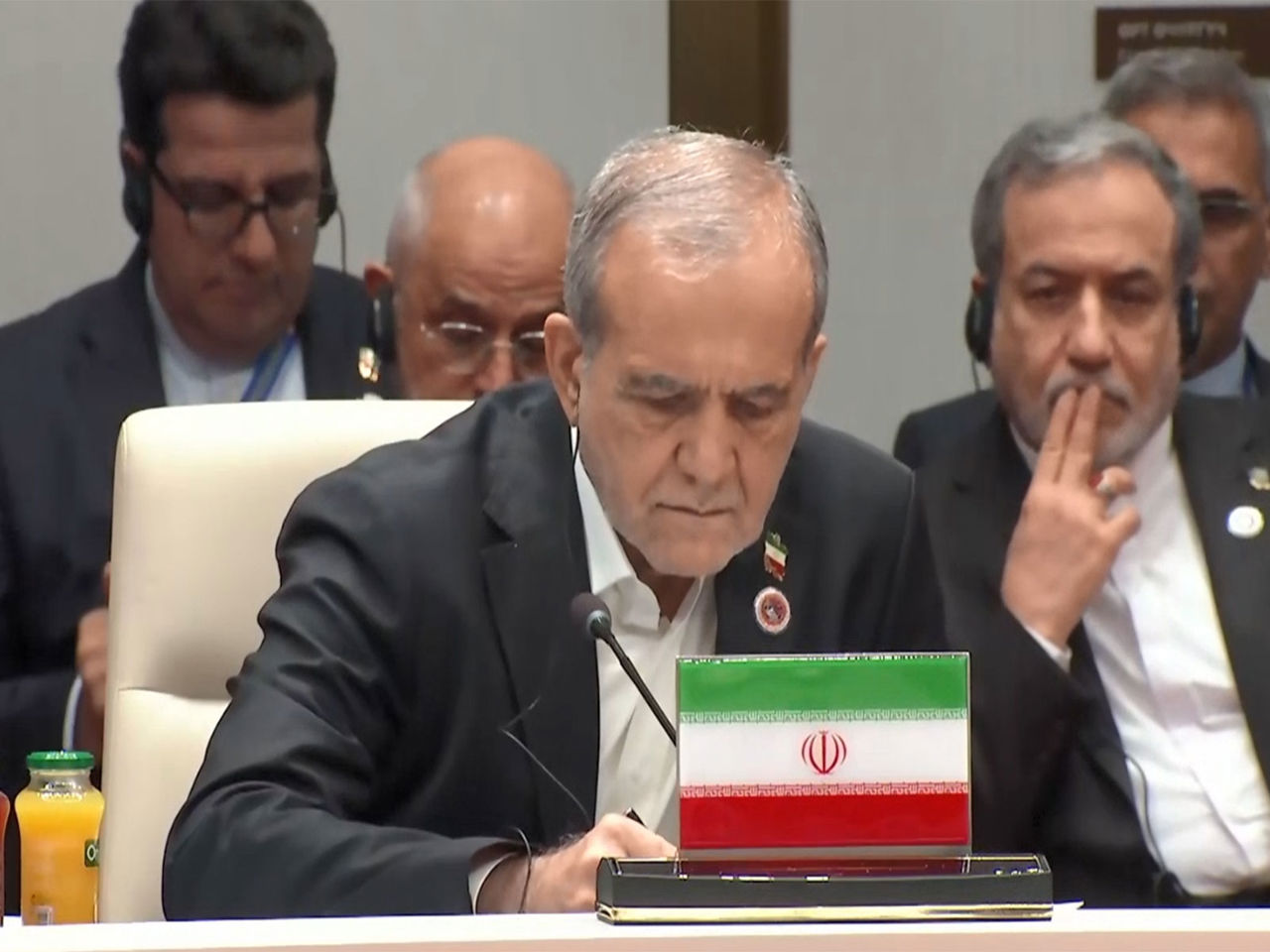
- Likely Iran will keep a conditional diplomatic channel open while maintaining a retaliatory posture, but an immediate durable US-Iran settlement is unlikely during the next 14 days. Masoud Pezeshkian said Iran would immediately reciprocate if the United States returned to its commitments under the June accord or 14-point Memorandum of Understanding, and Esmaeil Baghaei said the diplomatic window was far from closed. Oman and Qatar are mediating over Hormuz, but their efforts have been inconclusive. Donald Trump's threats of further strikes and the IRGC's warning of severe punishment point in the opposite direction. Confidence is medium because the diplomatic offers are repeatedly reported, but the identity and terms of the June accord remain ambiguous and there is no reported implementation. (Confidence: medium · ASSESSED)
- I&W: Confirm: Within 0-14 days, Oman or Qatar announces new ceasefire talks and US and Iranian officials issue matching commitments linked to the June accord. (0-14 days)
- I&W: Break: Washington formally rejects Pezeshkian's conditional offer, or Tehran withdraws its offer while US and Iranian military activity continues. (0-14 days)
- Very likely Iran-US activity will keep placing Jordan, the United Arab Emirates and Oman under heightened security pressure over the next 14 days, but an Iranian strike on Al Minhad airbase is unlikely to be treated as confirmed. Iran is reported to have launched missiles at US bases in Jordan, while the UAE Defence Ministry reported intercepting an Iranian drone over its territorial waters. Iran's army and Iranian media separately claimed that Al Minhad airbase was struck, but the UAE Defence Ministry rejected that claim. Confidence is medium because the Jordan exchange and UAE drone interception have substantial reporting support, while the status of Al Minhad is directly disputed by the two parties. (Confidence: medium · ASSESSED)
- I&W: Confirm: Within 0-14 days, Jordan reports another Iranian missile launch or interception near either US base, or the UAE Defence Ministry reports another Iranian drone interception. (0-14 days)
- I&W: Break: Iran and the United States announce a ceasefire and Jordan and the UAE report no further missile or drone alerts for 14 consecutive days. (0-14 days)
- Likely Brent crude will remain elevated over the next 1-3 months as attacks on commercial tankers and sharply reduced Gulf exports sustain market pressure. Brent crude was close to $92 a barrel on 1 September, and two tankers carrying Saudi oil were struck while transiting the Strait of Hormuz. The scale of the supply effect remains uncertain because Saudi Aramco resumed oil loadings and sales from inside the strait in August, and Sidr and Senegal Prosperity each loaded 2 million barrels of Saudi crude in the week before the attacks. Confidence is medium because the price and tanker reporting are corroborated, while the duration of export disruption remains unresolved. (Confidence: medium · ASSESSED)
- I&W: Confirm: Over 1-3 months, Brent crude remains near or above $92 a barrel and Saudi Aramco reports continued disruption to loadings from inside the Strait of Hormuz. (1-3 months)
- I&W: Break: Brent crude falls below $90 a barrel while Saudi Aramco reports sustained loadings and no further tanker attacks are reported for 30 days. (0-30 days)
- Likely Israeli operations in Gaza City and tensions around Al-Aqsa Mosque will add a separate escalation channel over the next 1-3 months, but the outcome of the 1 September Gaza City operation remains unresolved. Israeli Defence Minister Israel Katz announced the capture of an important Hamas figure, while Palestinian sources said the operation was compromised and Israeli-backed forces retreated under air-force cover. The Palestinian Authority presidency separately warned that developments around Al-Aqsa Mosque and other holy sites could ignite a wider religious conflict. Confidence is low because the operational outcome is directly contradicted and the warning about wider religious conflict rests largely on Palestinian statements. (Confidence: low · ASSESSED)
- I&W: Confirm: Within 1-3 months, Israel announces further Gaza City operations or Palestinian Authority reporting records new violence linked to Al-Aqsa Mosque or other holy sites. (1-3 months)
- I&W: Break: Israeli and Palestinian reporting converges on an ended Gaza City operation and no new Al-Aqsa-related security incidents are reported for 30 days. (0-30 days)
Outlook & scenarios
Contained but active US-Iran exchanges (45%)
The most likely path is continued limited US strikes on IRGC targets in Iran, further Iranian pressure against US positions in Jordan, and persistent threats against shipping without a sustained campaign against additional regional states. Donald Trump's threats and the IRGC's warnings keep escalation pressure high, while Pezeshkian's conditional offer preserves a narrow diplomatic channel.
Prolonged Hormuz disruption with partial traffic (25%)
Tanker attacks, mine warnings and uncertainty over safe routes keep commercial traffic well below normal. Saudi Aramco maintains selected loadings, but operators avoid or limit transits through the Traffic Separation Scheme. Brent crude remains near current levels or rises as Oman and Qatar fail to secure a workable reopening arrangement.
Diplomatic pause and gradual maritime reopening (15%)
Oman and Qatar convert Pezeshkian's conditional offer into talks involving Washington and Tehran. The United States and Iran halt attacks, the UAE and Jordan report no further strikes, and shipping resumes in stages after JMIC and INTERTANKO reduce their warnings. The June accord remains the central point of dispute.
Very unlikely, high-impact wider regional conflict (15%)
Additional US strikes and Iranian retaliation spread beyond Larak Island, Iran and Jordan to the UAE and commercial shipping, while Houthi threats in the Red Sea and violence around Gaza City or Al-Aqsa Mosque add separate pressure points. The disputed Al Minhad account becomes a confirmed strike, or another attack causes casualties, driving Saudi Arabia and Oman towards more direct security measures.
Recommendations
- For the next 72 hours, prioritise verification of the 1 September CENTCOM announcement that US forces began striking IRGC targets in Iran. Separate confirmed strike locations, target types and casualties from Iranian, US and media claims before revising the escalation estimate.
- Use JMIC and INTERTANKO warnings as the baseline maritime risk assessment. Treat CENTCOM and Donald Trump's mine-clearance statements as narrower or contested claims, and track separate reporting on the Sidr and Senegal Prosperity incidents.
- Maintain a dedicated watch on Jordan and the UAE. Record each Iranian launch, interception and official damage assessment, and do not treat the Al Minhad airbase strike as established while the UAE denial remains unresolved.
- Track Oman and Qatar mediation for concrete outputs rather than statements of intent. The key changes will be matching US-Iran commitments, a named or published June accord, and verified reductions in strikes or shipping interference.
- Keep Gaza City and Al-Aqsa Mosque on a separate escalation track. Report the Israeli capture claim and Palestinian retreat account separately until independent confirmation resolves the contradiction.
- Update economic monitoring at least daily for Brent crude, Saudi Aramco loadings and tanker movements. Use $92 a barrel as the current reference point and distinguish temporary price reaction from sustained export disruption.
Confidence & uncertainty
Overall confidence is high because the core developments are supported by multiple independent wire, major-media, trade-publication and multilateral sources. The Larak Island strike, Iranian missile launches at US bases in Jordan, tanker attacks near Khasab and continuing mine warnings have stronger corroboration than the newer CENTCOM strike announcement or the disputed Al Minhad account. The main uncertainties concern the scope of US strikes in Iran, the identity and number of tanker attackers, the actual mine threat, and the terms of the June accord.
Intelligence gaps
- [EEI 1.1 · PARTIAL] Unusual long-range missile/rocket transporter-launcher (TEL) movements, storage activation, or assembly activity at known IRGC missile sites or forward staging areas. Recommended collection: satellite/imagery
- [EEI 1.2 · PARTIAL] Orders, threat-alert messages, or changes in posture from IRGC, Quds Force, or senior Iranian military leadership indicating attack timelines or rules of engagement changes. Recommended collection: signals/ELINT and HUMINT
- [EEI 1.3 · UNCOVERED] Large-scale transfers, deliveries, or convoy movements of armed UAVs/drones, guided munitions, or spare parts from Iran into Lebanon (Hezbollah), Iraq, Syria, or Gaza. Recommended collection: air/aviation track and HUMINT
- [EEI 1.4 · UNCOVERED] Sustained changes in Israeli air-defense usage (SAM launches, radar activations), wide-area alerts, or NOTAMs indicating elevated imminent strike response. Recommended collection: air/aviation/NOTAMs and signals
- [EEI 2.1 · UNCOVERED] Concentration, repositioning, or sortie patterns of Iranian naval/IRGC patrol boats and fast-attack craft near shipping chokepoints or commercial lanes. Recommended collection: maritime/AIS and satellite/imagery
- [EEI 2.3 · UNCOVERED] Insurance market indicators: sudden spikes in war-risk or hull insurance premiums for routes through the Red Sea, Suez corridor, or Persian Gulf, and major carriers announcing route changes. Recommended collection: financial/market and commercial shipping notices
- [EEI 2.4 · PARTIAL] Port closures, naval escorts requested by commercial operators, or formal rerouting advisories issued by major shippers (e.g., Maersk, Hapag-Lloyd) for regional transits. Recommended collection: commercial/OSINT
- [EEI 3.1 · UNCOVERED] Deployment of foreign military assets to the region (carrier strike groups, amphibious ships, combat aircraft deployments, or additional bases activated) from the US, UK, France, Russia, or GCC states. Recommended collection: maritime/AIS and air/aviation and satellite/imagery
- [EEI 3.3 · UNCOVERED] Confirmed arms transfers, expedited weapons shipments, or transfer authorizations to Israel, Iran, or their proxies (aircraft parts, munitions, air defenses). Recommended collection: customs/INTEL and HUMINT
- [EEI 3.4 · UNCOVERED] Issuance of travel warnings, embassy evacuations or reductions, and closure of diplomatic missions by major capitals indicating escalation risk or shifted threat assessments. Recommended collection: OSINT/diplomatic
Cited sources
[1] Roya News · Day 186 | Trump threatens to ‘smack’ Iran ‘to see what happens’ (D) · sha256:bb99a26446ef [2] anewz.tv · U.S., Iran exchange attacks in latest escalation (B) · Mon Aug 31 2026 20:57:00 GMT+0000 (Coordinated Universal Time) · sha256:bffc1b2171ba [3] Newswav (aggregator; original outlet not specified) · Iran-US war latest: Trump vows to ‘hit Iran hard’ after two sides exchange fresh strikes (B) · Tue Sep 01 2026 04:38:31 GMT+0000 (Coordinated Universal Time) · sha256:d3b46b3d3e36 [4] Reuters (republished by gCaptain) · Trump Vows to Hit Iran Hard After First Exchanges of Fire in a Month (A) · Mon Aug 31 2026 19:33:43 GMT+0000 (Coordinated Universal Time) · sha256:f3f408ca06e9 [5] The National · Saudi and Omani leaders discuss regional security as Iran war escalates (A) · Tue Sep 01 2026 13:41:45 GMT+0000 (Coordinated Universal Time) · sha256:ed43c01c33f1 [6] gCaptain (reporting by Reuters) · Two Tankers Carrying Saudi Oil Attacked in Strait of Hormuz (B) · Tue Sep 01 2026 12:25:45 GMT+0000 (Coordinated Universal Time) · sha256:98154e0dbe40 [7] gCaptain · INTERTANKO: Hormuz Mine Clearance ‘Not Sufficient’ to Restore Normal Shipping (C) · Tue Sep 01 2026 16:16:59 GMT+0000 (Coordinated Universal Time) · sha256:99ffd46808c1 [8] Asian News International (ANI) · "If US returns to its commitments, Iran will immediately reciprocate": Iranian President Pezeshkian at SCO Summit (B) · Tue Sep 01 2026 07:29:35 GMT+0000 (Coordinated Universal Time) · sha256:780e7fd5c62b [9] ANI (syndicated via Devdiscourse) · "If US returns to its commitments, Iran will immediately reciprocate": Iranian President Pezeshkian at SCO Summit (B) · sha256:430c546700ca [10] Winn Media (winnmediaskn.com) · Qatar warns Israel seeking to ‘exploit’ Middle East turmoil (D) · Tue Sep 01 2026 13:30:41 GMT+0000 (Coordinated Universal Time) · sha256:e768bf34915e [11] Sunday Guardian Live · US-Israel-Iran War Latest Live News: 'We Appreciate Your Support,' Iran’s President Thanks Putin For Russia's Backing as Saudi Crown Prince, Oman’s Sultan Discuss Regional Security (B) · Tue Sep 01 2026 13:34:45 GMT+0000 (Coordinated Universal Time) · sha256:6bca708682bb
Source content hashes were computed at collection time; the cited text is preserved unmodified for the life of this product.
TLP:CLEAR