TLP:CLEAR · Disclosure is not limited.
Hormuz Attacks Persist as US-Iran Escalation Risk Holds
Time window: Last 1 day · Audience: General analyst · Type: Situation report · DTG: 2026-11-25 13:45Z · Overall confidence: MEDIUM
BLUF
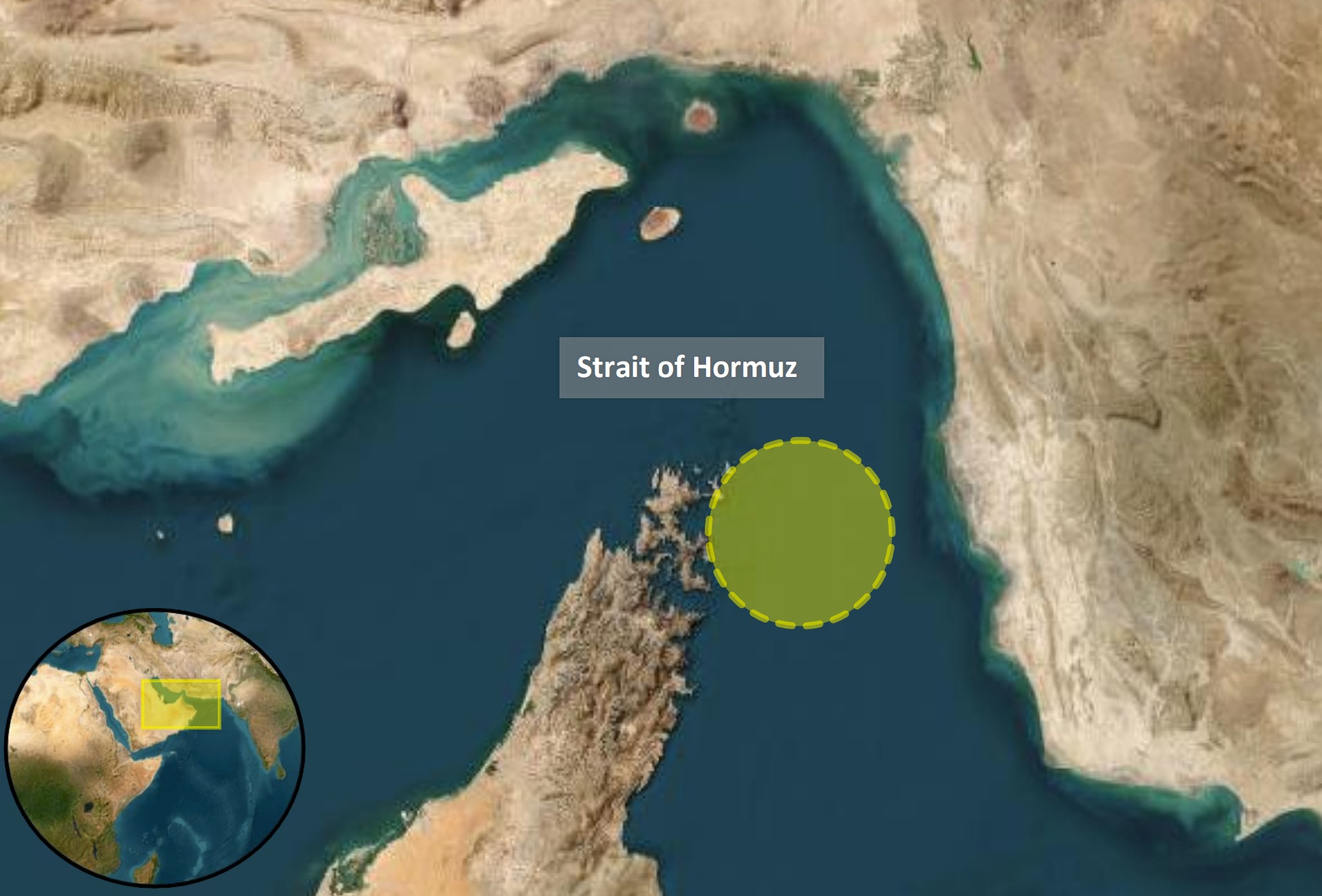
At least 10 tanker strikes have been reported in the Strait of Hormuz since 16 November, including three identified Sinokor VLCCs; attribution remains unverified, and reports of mine explosions conflict. Further attacks on shipping are likely in the next 14 days. A further direct US-Iran strike exchange remains roughly even chance as Washington reports both a focus on maritime and land-route pressure and discussion of renewed strikes on Iranian leadership.
Executive summary
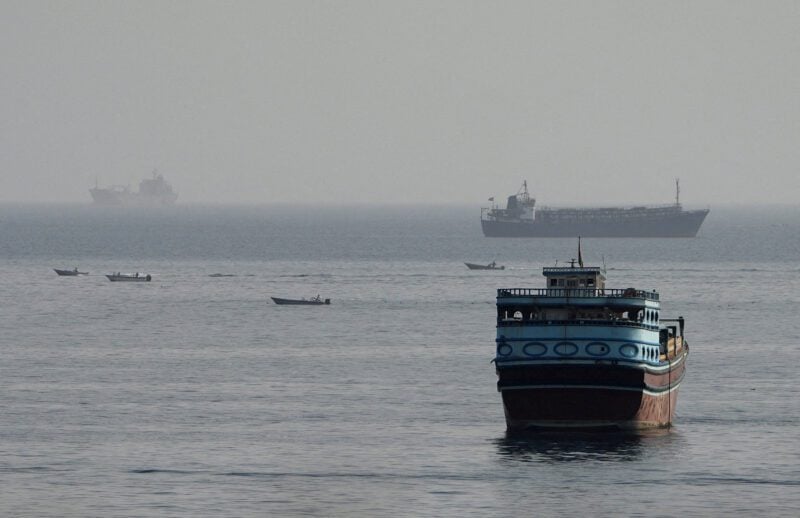
Maritime attacks continue to disrupt traffic in and around the Strait of Hormuz. UKMTO and private security reporting describe three eastbound Sinokor tankers hit by unidentified projectiles; the crews were accounted for and the vessels continued their voyages. JMIC's incident count and subsequent reports put tanker strikes at 10 or more since 16 November, but Iranian accounts of mine strikes vary and attribution remains unresolved. The US has launched Task Force Iron Gate to constrain routes into Iran, while reports of US-facilitated transits complicate claims that Hormuz is under a blanket naval blockade. Iranian officials warn of winter gas shortages and planned electricity rationing. A reported Iranian tanker convoy and US discussions about renewed strikes on Iranian leadership add escalation risks, but neither report establishes an imminent operation.
Change from previous assessment
Since the 24 November brief, reporting has added CENTCOM's Task Force Iron Gate, US discussion of renewed strikes on Iranian leadership, Iranian claims of drone shootdowns, a reported tanker-convoy plan and specific warnings of winter energy shortages. Confidence that commercial vessels have been struck remains high, while the mine count and attribution remain unresolved. The prior forecast of likely further shipping incidents is reinforced by additional reporting, although the latest mine claims are not independently verified. The prior roughly even chance estimate for a direct US-Iran exchange remains unchanged; only one day of its 14-day horizon has elapsed, so it has no settled outcome. The prior forecast that an agreement was unlikely within 14 days remains untested; Iran has again stated conditions for talks. This brief adds judgments on the US pressure campaign, convoy risk and Iranian winter energy strain.
Key judgments
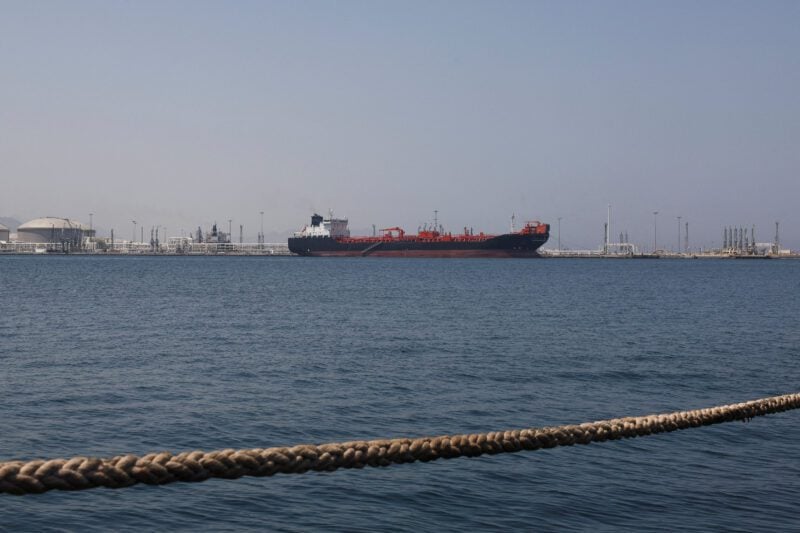
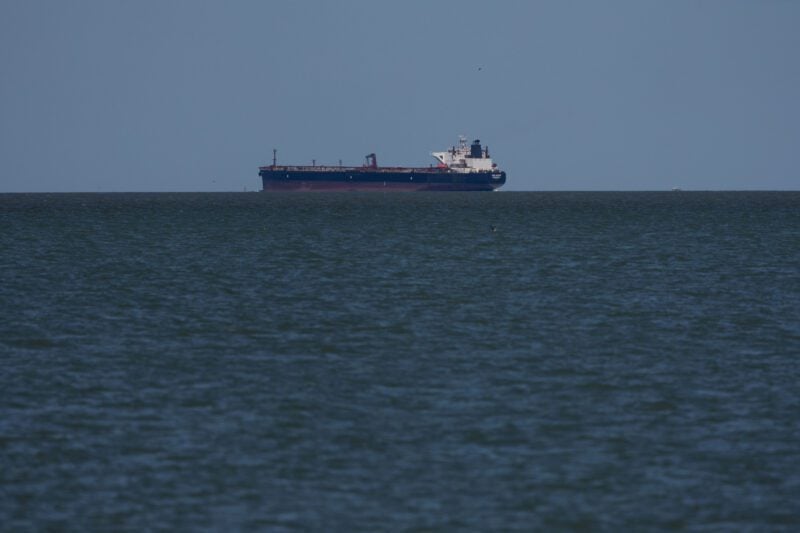
- At least 10 oil tankers have been reported struck in the Strait of Hormuz since 16 November, including three eastbound Sinokor VLCCs, Bahrain Prosperity, Cameroon Prosperity and Romania Prosperity. UKMTO reporting says all three crews were accounted for and the vessels continued their transits. Multiple maritime reports support the occurrence of attacks, but identify no perpetrator. Iran's mine-related accounts conflict: reports describe one unnamed tanker, three tankers, and a separate fourth-tanker explosion. (Confidence: high · REPORTED)
- I&W: Confirm: UKMTO or JMIC records another named commercial vessel struck in or near the Strait of Hormuz. (0-14 days)
- I&W: Break: UKMTO or the affected ship operators retract the reports that the three Sinokor tankers were struck. (0-14 days)
- Further deliberate attacks on commercial shipping in the Strait of Hormuz are likely within 14 days. JMIC assesses the maritime threat as severe and further deliberate attacks as highly likely; its assessment follows a week in which reporting counted at least 10 tanker strikes. The forecast is less certain than the incident count because attackers remain unidentified and the reported causes differ. (Confidence: medium · ASSESSED)
- I&W: Confirm: UKMTO or JMIC reports another attack on a named merchant vessel in the Strait or off Oman's Musandam Peninsula. (0-14 days)
- I&W: Break: No new vessel attack is reported by 9 December and JMIC downgrades its severe threat assessment. (0-14 days)
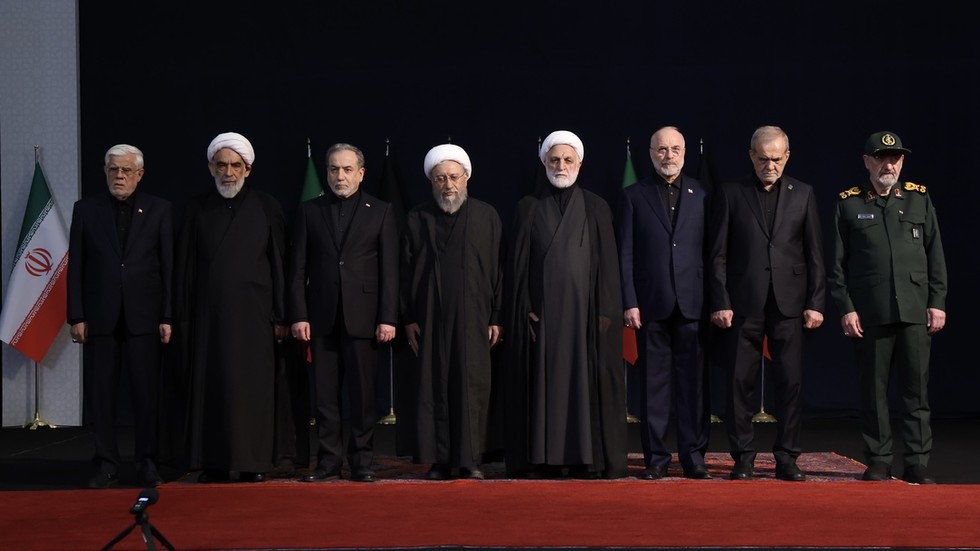
- A further direct US-Iran strike exchange within 14 days remains roughly even chance. The Trump administration is reported to be discussing renewed strikes on Iranian leadership, while a White House official says Washington's current focus is maintaining pressure on Iranian ports and land routes. Iranian officials have rejected talks before Tehran's conditions are met. Iranian claims that air defences destroyed US MQ-9 and LUCAS drones lack independent confirmation in the available reporting, and accounts differ on whether the engagements occurred over the Persian Gulf or the western and eastern Strait of Hormuz. Confidence is low because the leadership-strike report is relayed through a source with low reliability and the drone claims rely on Iranian or social-media reporting. (Confidence: low · ASSESSED)
- I&W: Confirm: The US announces or carries out a new strike on Iran, or Iran carries out an attack on US forces that is independently verified. (0-14 days)
- I&W: Break: By 9 December, no direct strike has occurred and Washington publicly reaffirms that its near-term focus remains enforcement rather than renewed attacks. (0-14 days)
- US pressure on Iran now includes port restrictions and efforts to constrain land-border and Caspian routes, but the reporting does not establish a blanket closure of the Strait of Hormuz. CENTCOM has launched Task Force Iron Gate, while reports also describe US-facilitated transits through the waterway. The competing descriptions of a strict blockade and continued transits leave the scope of the maritime restrictions unresolved. (Confidence: medium · ASSESSED)
- I&W: Confirm: CENTCOM reports a specific interdiction or inspection under Task Force Iron Gate at an Iranian land border or Caspian port. (0-30 days)
- I&W: Break: Washington announces an end to Iran-specific restrictions and transit reporting shows unrestricted commercial access through Hormuz. (0-30 days)
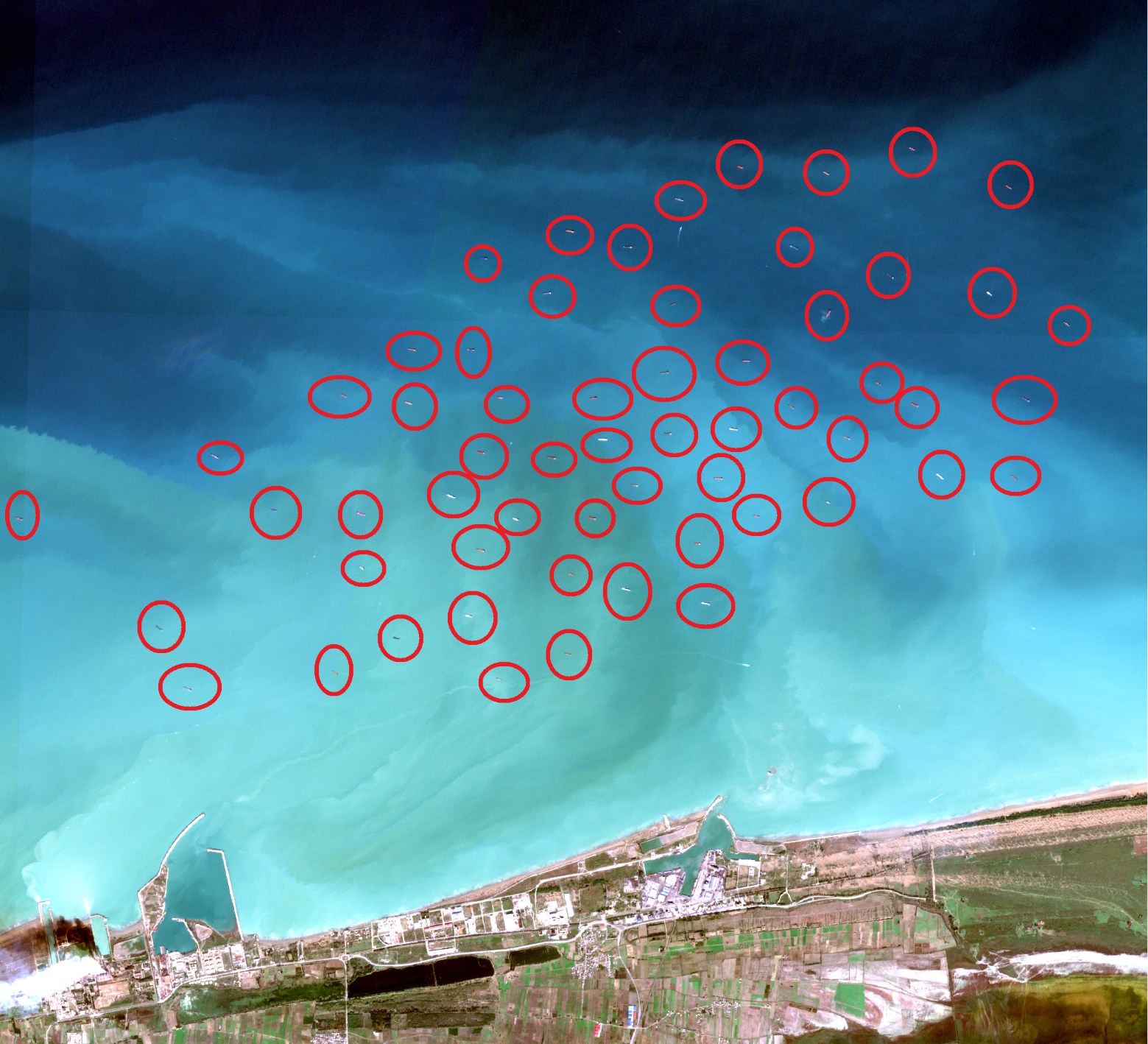
- An Iranian loaded-tanker convoy attempting to challenge the US restrictions is unlikely within 14 days, but a confrontation would carry a high-impact risk to energy infrastructure in the UAE, Saudi Arabia and Qatar. The convoy plan and Iran's reported warning of retaliation rest on one report carried in a republished transcript. Satellite imagery reporting more than 14 tankers near Kharg Island does not establish that they form a convoy. Confidence is low because the plan and threat lack independent corroboration. (Confidence: low · ASSESSED)
- I&W: Confirm: Independent satellite or vessel-tracking reporting shows a group of loaded Iranian tankers departing together and approaching the Strait. (0-14 days)
- I&W: Break: Independent imagery or tracking shows the Kharg Island tankers remain in port or depart separately, with no coordinated passage attempt by 9 December. (0-14 days)
- Iran's winter energy squeeze is likely to worsen from 29 November into winter. Iranian officials report damage to four gas-processing plants, warn of a gas shortfall of up to 430 million cubic metres per day, and identify 11 provinces at risk of supply difficulties; authorities have announced daily rolling power cuts from 29 November. These official reports provide consistent indicators of strain, but do not isolate the share caused by the war, sanctions or blockade. (Confidence: medium · ASSESSED)
- I&W: Confirm: Iranian authorities implement the announced daily power cuts and the National Iranian Gas Company reports supply problems in any of the 11 named provinces. (0-3 months)
- I&W: Break: The National Iranian Gas Company reports that winter supply difficulties have eased and the announced power cuts are cancelled. (0-3 months)
Outlook & scenarios
Recurring maritime attacks without a direct exchange (45%)
Commercial shipping faces further incidents in or near the Strait of Hormuz while the US maintains pressure on Iranian routes. US and Iranian forces avoid a confirmed direct strike exchange.
Direct US-Iran strike exchange (40%)
A US strike on Iranian leadership or a verified Iranian attack on US forces prompts reciprocal action. Public warnings and reported US strike discussions raise this risk, but the near-term US focus on restrictions remains a counterweight.
Operational pause without a negotiated settlement (10%)
Neither side conducts a confirmed direct strike during the next 14 days. US restrictions and Iran's conditions for talks remain in place, leaving maritime risks and diplomatic deadlock unresolved.
Tanker convoy confrontation spreads to Gulf energy sites (5%)
Iran dispatches a loaded tanker convoy through the Strait. US interference triggers Iranian attacks on oil or gas infrastructure in the UAE, Saudi Arabia or Qatar, the low-probability, high-impact wildcard.
Recommendations
- Maintain separate incident records for unidentified projectile strikes, Iranian mine claims and any independently verified mine damage. Do not attribute the attacks to Iran without corroborating evidence.
- Check UKMTO and JMIC alerts daily against vessel names, positions and operator updates. Use satellite or vessel-tracking evidence to verify reported damage and whether ships near Kharg Island are moving as a group.
- Treat Iranian claims of US drone shootdowns as unverified until independent evidence or a US acknowledgement becomes available. Record the Persian Gulf and Strait of Hormuz location discrepancy rather than merging the accounts.
- Track CENTCOM announcements on Task Force Iron Gate alongside transit figures through Hormuz. Distinguish restrictions on Iranian-linked trade from any claim that all commercial traffic through the Strait is closed.
- Monitor the announced 29 November power cuts and National Iranian Gas Company updates on provincial supply. Separate reported winter shortages from claims about the specific contribution of sanctions, the blockade or war damage.
Confidence & uncertainty
Overall confidence is medium because multiple maritime reports, including UKMTO and JMIC reporting, support the occurrence of vessel strikes, while official Iranian statements provide consistent indicators of energy strain. The attackers and causes of the strikes remain unresolved; mine counts conflict, drone shootdown claims lack independent confirmation, and accounts of the blockade's scope diverge. Reports of leadership-strike discussions and convoy preparations have limited independent corroboration.
Alternative analysis (red cell)
The available evidence does not justify treating a direct US-Iran exchange as an even-chance outcome: it more clearly indicates a conditional and politically contested escalation pathway, with current pressure measures emphasized in 85f4ca6b-b7ed-4a8d-8104-4dc36bab465a and 357498ae-7b3d-4199-8c39-1cd28cdb61c2. Likewise, the tanker-convoy evidence supports uncertainty about whether a coordinated operation exists, not a defensible 14-day likelihood estimate; 2b6abc37-2363-4ab4-a3a4-76fcdbc3dc97 shows tanker presence but not convoy organization. The reported retaliation warning in 84fc5690-b758-412e-9401-155d9dd0cd39 indicates potential consequence, but not demonstrated capability or intent to strike regional energy infrastructure.
Intelligence gaps
- [EEI 1.1 · UNCOVERED] Concentrations or unusual movements of IRGC-Navy fast attack craft, small boat swarms, or escort vessels within 200 km of US/allied ships, including approach distances and formation changes. Recommended collection: maritime/AIS
- [EEI 1.2 · UNCOVERED] Detected pre-launch activity at coastal missile or rocket batteries (vehicle dispersal, fuel/warhead handling, radars powering up, transport erector launchers moving to firing positions). Recommended collection: imagery/signals
- [EEI 1.3 · UNCOVERED] Increased launch/arming/positioning of armed UAVs (MALE/loitering munitions) or tactical aircraft at Iranian coastal bases with sortie generation rates and munitions loadouts. Recommended collection: air/ADS-B/imagery
- [EEI 1.4 · UNCOVERED] Command-and-control indications of attack orders or elevated rules-of-engagement from IRGC/General Staff (intercepted communications, internal order messages, force-wide alert messages). Recommended collection: signals/human
- [EEI 2.2 · UNCOVERED] Issuance of formal orders, mobilization directives, travel restrictions, or official internal communications within IRGC/Armed Forces indicating escalation posture or stand-down. Recommended collection: human/diplomatic
- [EEI 2.3 · UNCOVERED] Directives, logistics movements, or communications from Iranian commanders to regional proxy militias (Houthis, Iraqi Shia militias, Lebanese groups) that change their threat posture or task them with specific operations. Recommended collection: signals/human
- [EEI 2.4 · PARTIAL] Changes in Iran's diplomatic exchanges with key states (offers of negotiation, warnings, or coordination with Russia/China) or requests for deconfliction with maritime/naval actors. Recommended collection: diplomatic
- [EEI 3.2 · PARTIAL] Discovery or reporting of naval mines, unexploded ordnance, or damage to fixed maritime infrastructure (oil platforms, terminals, pipelines) with geolocated imagery or on-scene assessments. Recommended collection: imagery/open-source
- [EEI 3.3 · PARTIAL] Commercial indicators of disruption: sudden increases in war-risk insurance premiums for Gulf transits, vessel re-routing decisions, port throughput reductions, or charter cancellations for Gulf shipments. Recommended collection: financial/commercial
- [EEI 3.4 · UNCOVERED] Movements or posture changes of regional state navies/air forces (Saudi, UAE, Kuwait, Bahrain, UK) such as task group departures, airbase dispersals, or announced maritime patrols near choke points. Recommended collection: open-source/imagery
Red cell review: PARTIAL DISSENT
TLP:CLEAR