TLP:CLEAR · Disclosure is not limited.
Hormuz Attacks Persist as US-Iran Tensions Rise
Time window: Last 1 day · Audience: General analyst · Type: Situation report · DTG: 2026-10-13 12:38Z · Overall confidence: HIGH
BLUF
Further attacks on commercial ships in and around the Strait of Hormuz are likely over the next 14 days. A US strike on Iran before 3 November is unlikely, but if Washington resumes strikes, Iranian retaliation against US personnel or regional targets is likely.
Executive summary
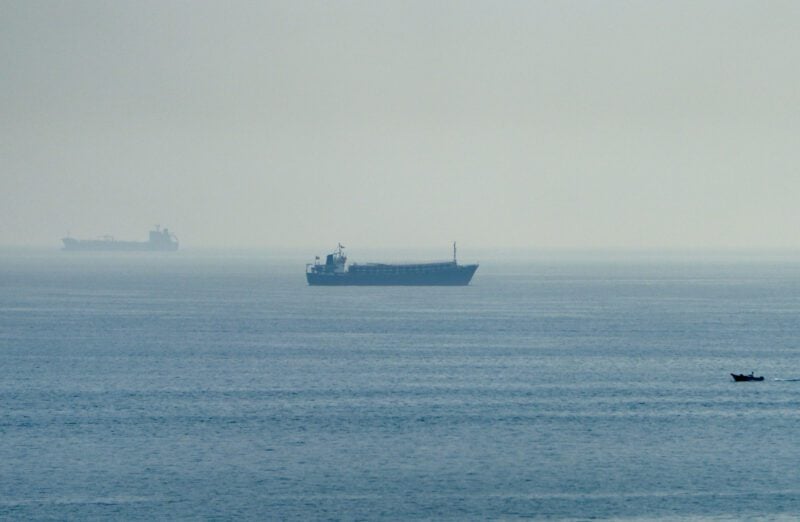
UKMTO reported at least three commercial ships attacked in and around the Strait of Hormuz during the weekend, while another report counted six vessels struck on 11 October. JMIC recorded three confirmed attacks in the preceding 72 hours and about 29 vessel transits per day, compared with a historical average of roughly 138. The exact incident count and the attackers’ identities remain unresolved. The US is sending a third aircraft carrier strike group and another Marine unit towards the Middle East. President Donald Trump has ruled out a strike before 3 November while publicly mentioning the Iranian nuclear site known as Pickaxe Mountain or Kuh-e Axe. Iran has reinforced defences at Kuh-e Axe and Natanz and issued warnings about retaliation if US attacks resume. Tehran says it is still studying Washington’s response to its seven conditions for reopening the Strait.
Change from previous assessment
Since the 12 October brief, reporting adds the movement of a third US carrier strike group and another Marine unit, Trump's statement ruling out a strike before 3 November alongside his reference to Pickaxe Mountain, and satellite-reported Iranian fortification at Kuh-e Axe and Natanz. JMIC's reported transit figure of about 29 vessels per day, against a historical average of roughly 138, sharpens the assessment of shipping disruption. Iran's statement that it is still studying the US response means its formal position remains unsettled, rather than clearly rejected. The number of vessels attacked and the identity of the attackers remain unresolved.
Key judgments
- Further attacks on commercial shipping in and around the Strait of Hormuz are likely over the next 14 days. UKMTO issued five additional warnings covering vessels struck by unidentified projectiles, and JMIC recorded three confirmed attacks in the preceding 72 hours. A separate trade report counted six vessels struck on 11 October, while UKMTO reporting described at least three weekend attacks; the total remains uncertain. JMIC recorded about 29 daily vessel transits against a historical average of roughly 138. (Confidence: medium · ASSESSED)
- I&W: Confirm: UKMTO issues another warning identifying projectile or UAV damage to a named vessel in the Strait of Hormuz or Gulf of Oman. (0-14 days)
- I&W: Break: JMIC reports no new attacks and lowers its Strait of Hormuz threat rating, while daily transits rise towards the historical average of 138. (0-14 days)
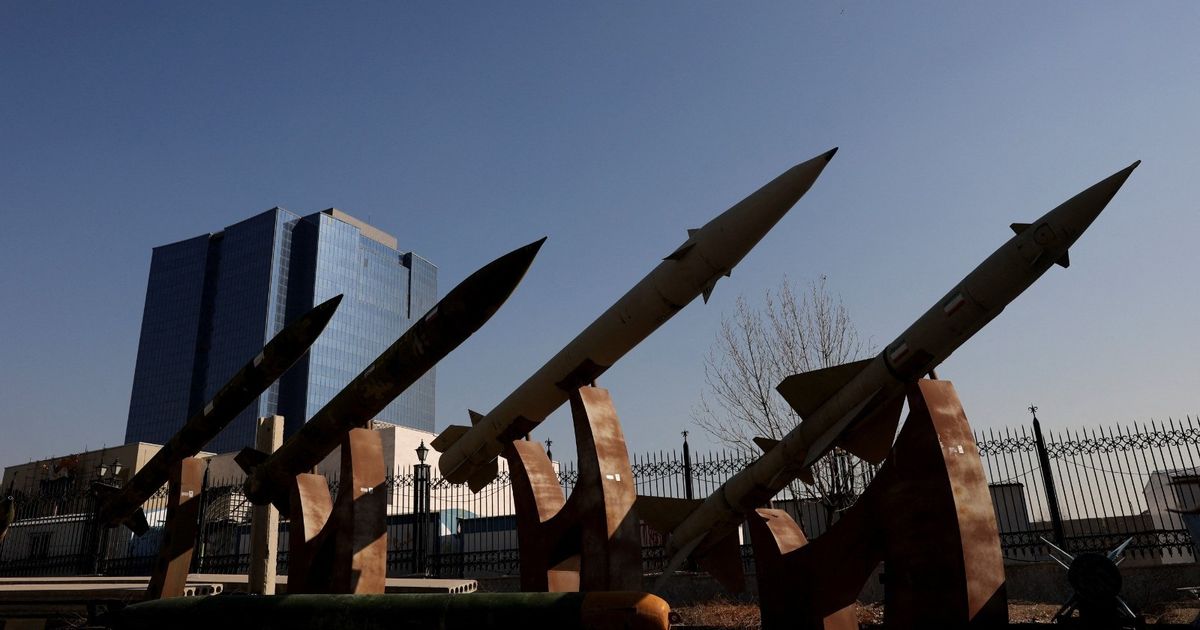
- A US strike on Iran before 3 November is unlikely, despite the deployment of additional US forces to the Middle East. Trump has ruled out an attack before the midterm elections, while publicly raising the prospect of targeting Pickaxe Mountain, also called Kuh-e Axe. A third US carrier strike group and another Marine unit are heading to the region, and the Pentagon is considering additional air defences and munitions. (Confidence: medium · ASSESSED)
- I&W: Confirm: Trump or the White House repeats the no-strike position, and no US strike on Iranian territory occurs before 3 November. (0-21 days)
- I&W: Break: Trump or the White House publicly reverses that position, or US forces announce or conduct a strike on Iranian territory before 3 November. (0-21 days)
- If the United States launches new strikes on Iran, Iranian retaliation against US personnel or regional targets is likely. Iranian officials have warned of wider operations and have named US warships, Saudi oil facilities, the UAE, data centres and internet cables among potential targets. These are reported threats, not evidence of operational orders; some details rely on people familiar with private warnings. (Confidence: low · ASSESSED)
- I&W: Confirm: after a US strike, Iranian officials repeat through named state channels that US personnel, warships or regional infrastructure are targets for retaliation. (0-14 days after any US strike)
- I&W: Break: Tehran tells regional mediators it will not widen retaliation after a US strike, and no attack is reported against the named targets in the following 14 days. (0-14 days after any US strike)
- Iran's recent fortification work is consistent with preparation for renewed US attacks, but does not establish that either side is preparing to strike imminently. Satellite-image reporting describes new earthen defences around the Kuh-e Axe and Natanz nuclear sites, alongside wider reinforcement at sensitive sites and border areas. (Confidence: medium · ASSESSED)
- I&W: Confirm: new satellite imagery shows additional earthworks, protected access points or other defensive construction at Kuh-e Axe or Natanz. (0-30 days)
- I&W: Break: new imagery shows the reported barriers removed, with no further defensive construction at either site. (0-30 days)
- A Strait of Hormuz reopening agreement within the next 14 days is unlikely. Mohsen Rezaei said the US response did not adequately address Iran's seven conditions, while a separate report says Tehran is still studying that response and will convey its position through mediators. The difference leaves Iran's formal position unsettled. (Confidence: low · ASSESSED)
- I&W: Confirm: Iran sends a response through mediators rejecting the US position or restating conditions that Washington has not accepted. (0-14 days)
- I&W: Break: Iran and the United States announce an agreed reopening process or publicly confirm acceptance of reciprocal terms. (0-14 days)
Outlook & scenarios
Armed restraint continues through the midterm elections (50%)
Through 3 November, Washington maintains its stated restraint and the carrier strike group and Marine unit continue towards the Middle East. Iran continues fortification work and mediator contacts. No direct US strike occurs, while attacks on commercial shipping are likely to continue.
Maritime pressure persists without direct US strikes (30%)
Unidentified attackers continue to strike merchant vessels in or near the Strait of Hormuz. Low transit levels persist, prompting further caution from UKMTO and shipping operators. Washington and Tehran avoid direct strikes, but the maritime confrontation remains active.
US strike triggers wider Iranian retaliation (15%)
The United States strikes an Iranian target, reversing the stated restraint before 3 November or acting after that date. Iran retaliates against US personnel or warships, or targets regional infrastructure in Saudi Arabia or the UAE. This is a low-probability, high-impact scenario.
Mediated agreement reopens the Strait (5%)
Iran delivers its position through mediators and reaches terms with the United States on reopening the Strait of Hormuz. An agreed process reduces attacks and allows vessel transits to recover from the recent reported level.
Recommendations
- Prepare a daily maritime incident table that reconciles UKMTO warnings with JMIC reporting. Separate confirmed attacks from broader vessel counts, record vessel names and locations where available, and track daily transits against the reported historical average of about 138.
- Track the third carrier strike group, the Marine unit and any Pentagon decision on additional air defences or munitions. Record changes in deployment reporting alongside any change to Trump's stated position on strikes before 3 November.
- Maintain a separate watchlist for the targets named in Iranian warnings: US personnel and warships, Saudi oil facilities, the UAE, data centres and internet cables. Distinguish public threats from verified operational activity.
- Ask analysts tracking mediation to report when Iran formally responds to the US position on its seven conditions, and to distinguish Rezaei's remarks from any decision communicated through mediators.
- Flag any new imagery showing construction at Kuh-e Axe or Natanz and report whether it indicates continued hardening, rather than treating defensive works alone as evidence of an imminent strike.
Confidence & uncertainty
Confidence in the broad escalation picture is high because UKMTO and JMIC reporting both describe recent attacks and elevated danger in the Strait of Hormuz, while major-media reporting describes the US deployments and satellite-observed Iranian fortifications. Confidence is lower on exact vessel totals, attacker attribution, Iranian retaliation plans and the status of negotiations: reported counts conflict, perpetrators remain unidentified, and some warnings and diplomatic details rely on single-source or indirect reporting.
Alternative analysis (red cell)
Iran's formal position appears unresolved rather than clearly opposed to reopening. Rezaei's criticism indicates dissatisfaction with the US response, but the report that Tehran is still studying it and will respond through mediators leaves room for further bargaining. On the available evidence, reopening within 14 days cannot be assessed confidently as unlikely; the better-supported reading is that the outcome remains uncertain.
Intelligence gaps
- [EEI 1.1 · UNCOVERED] Concentrations or unusual movements of IRGC-Navy fast attack craft, small boat swarms, or escort vessels within 200 km of US/allied ships, including approach distances and formation changes. Recommended collection: maritime/AIS
- [EEI 1.2 · UNCOVERED] Detected pre-launch activity at coastal missile or rocket batteries (vehicle dispersal, fuel/warhead handling, radars powering up, transport erector launchers moving to firing positions). Recommended collection: imagery/signals
- [EEI 1.3 · UNCOVERED] Increased launch/arming/positioning of armed UAVs (MALE/loitering munitions) or tactical aircraft at Iranian coastal bases with sortie generation rates and munitions loadouts. Recommended collection: air/ADS-B/imagery
- [EEI 1.4 · UNCOVERED] Command-and-control indications of attack orders or elevated rules-of-engagement from IRGC/General Staff (intercepted communications, internal order messages, force-wide alert messages). Recommended collection: signals/human
- [EEI 2.2 · UNCOVERED] Issuance of formal orders, mobilization directives, travel restrictions, or official internal communications within IRGC/Armed Forces indicating escalation posture or stand-down. Recommended collection: human/diplomatic
- [EEI 3.2 · UNCOVERED] Discovery or reporting of naval mines, unexploded ordnance, or damage to fixed maritime infrastructure (oil platforms, terminals, pipelines) with geolocated imagery or on-scene assessments. Recommended collection: imagery/open-source
- [EEI 3.3 · UNCOVERED] Commercial indicators of disruption: sudden increases in war-risk insurance premiums for Gulf transits, vessel re-routing decisions, port throughput reductions, or charter cancellations for Gulf shipments. Recommended collection: financial/commercial
- [EEI 3.4 · PARTIAL] Movements or posture changes of regional state navies/air forces (Saudi, UAE, Kuwait, Bahrain, UK) such as task group departures, airbase dispersals, or announced maritime patrols near choke points. Recommended collection: open-source/imagery
Cited sources
[1] gCaptain · Six Ships Struck in Single Day as Hormuz Attacks Accelerate (C) · 12 October 2026 · sha256:36b2ee2a6581 [2] The Wall Street Journal (via X post by Zaid Benjamin) · ZaidBenjamin زيد بنيامين (@ZaidBenjamin5) on X (A) · 13 October 2026 · sha256:c725dd8667ed [3] Asharq Al-Awsat (asharq.com) · تحصينات إيرانية وحشد أميركي. واشنطن وطهران تتحسبان لاستئناف الحرب (A) · 13 October 2026 · sha256:16ee8f20987d
Source content hashes were computed at collection time; the cited text is preserved unmodified for the life of this product.
Red cell review: PARTIAL DISSENT
TLP:CLEAR