TLP:CLEAR · Disclosure is not limited.
Hormuz Disruption, Bab al-Mandeb Fighting and Oil Market Pressure
Time window: Last 1 day · Audience: General analyst · Type: Situation report · DTG: 2026-10-21 08:26Z · Overall confidence: HIGH
BLUF
Hormuz shipping is disrupted, but the scale remains contested: JMIC reported traffic 70% below pre-war levels, while US and Kpler reporting points to substantially higher flows. Fighting near Bab al-Mandeb is active, but the supplied claims do not establish a commercial blockade there or support the assertion that four of five key straits are disrupted. Brent reached $108.44 during trading on 20 October, while reports of tanker attacks and freight pressure sustain market risk.
Executive summary
Iran says Hormuz will remain closed until Washington accepts Tehran's conditions and has proposed a conditional reopening through Qatar. JMIC reported 254 weekly transits, about 70% below pre-war levels, while US Energy Secretary Chris Wright put shipments at about 80% of normal and US and Kpler statements described transit or regional oil exports as near or above pre-war levels. Those measures may cover different flows, but the supplied reporting does not reconcile them. The IRGC's claims of tanker mine strikes remain disputed: JMIC found no substantiation for an earlier claim, CENTCOM denied that ships had hit mines, and the IMO warned that mines remain a navigational hazard. In Yemen, government forces and the Giants Brigades report operations near Dhu Bab and Bab al-Mandab, alongside continuing clashes with the Houthis; no claim verifies a blockade of commercial traffic. Brent futures traded at $108.44 on 20 October after reaching $111.99, and reports describe rising freight costs and limited availability of commercially usable tankers. The exact price level and the degree of shipping disruption remain uncertain.
Change from previous assessment
The prior brief assessed severe Hormuz constraints and elevated Bab al-Mandeb threat, but did not verify four disrupted straits or Brent at $108. New reporting gives a Brent futures observation of $108.44 on 20 October and records competing estimates of Hormuz traffic, including JMIC's 70% reduction, Chris Wright's 80% of normal and US and Kpler claims of near or above pre-war flows. Reporting now describes Yemeni government and Giants Brigades operations near Bab al-Mandab, including a reported recovery of coastal territory, but still does not verify a commercial blockade. Iran's conditional seven-day reopening proposal and the UK's announced Typhoon defensive missions over Saudi Arabia are new developments. The four-of-five framing remains unsupported.
Key judgments
- Hormuz shipping is likely to remain materially constrained over the next 14 days, but the scale of the restriction is unresolved. JMIC's 18 October advisory reported 254 transits in the week ending 14 October, about 70% below pre-war levels; US Energy Secretary Chris Wright said shipments were at about 80% of normal. Washington has also claimed transit was restored and Kpler data put regional oil exports above pre-war levels, which does not by itself establish that Hormuz transits have normalised. UKMTO reported a tanker incident involving military forces about 121 nautical miles east of Duqm, Oman. (Confidence: medium · ASSESSED)
- I&W: Confirm if JMIC's next weekly advisory reports 254 or fewer Hormuz transits, or traffic at least 50% below its pre-war baseline. (0-14 days)
- I&W: Break if JMIC or Kpler reports Hormuz transits at or above 80% of the pre-war baseline for two consecutive weeks, with no new UKMTO tanker incident in the area. (0-1 month)
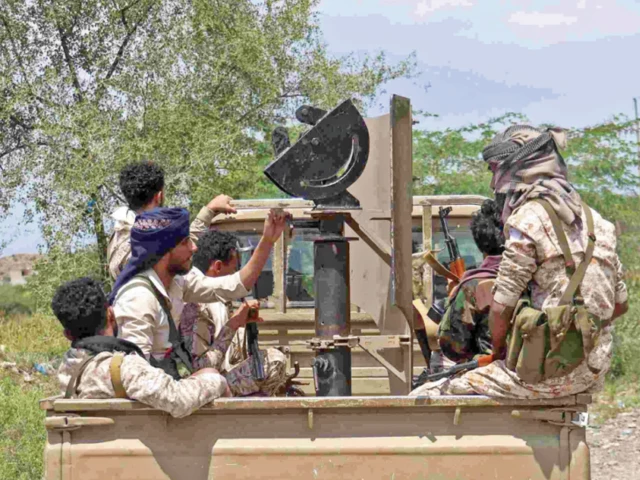
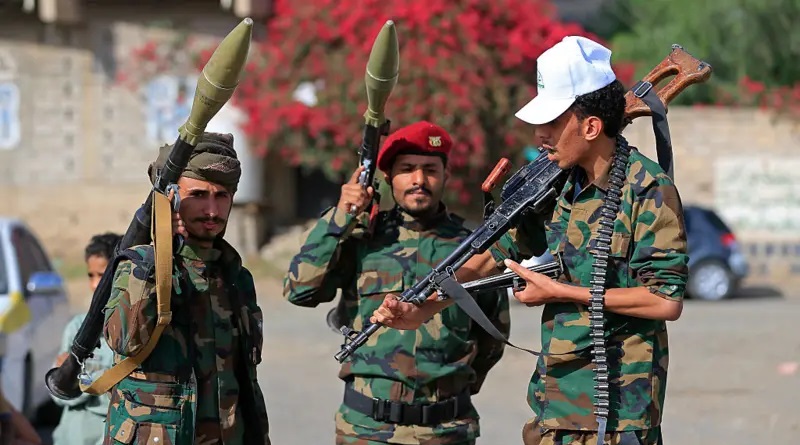
- Fighting near Bab al-Mandeb is likely to remain active over the next month, but the supplied reporting does not establish a commercial blockade there or disruption at three other key straits. The four-of-five straits claim is therefore not substantiated by the available claims. Yemeni government forces and the Giants Brigades report operations near Dhu Bab and clashes with the Houthis; earlier reporting says the Houthis held coastal positions near Mokha and Bab al-Mandab, while pro-government forces later reported retaking territory overlooking the strait. (Confidence: low · ASSESSED)
- I&W: Confirm if new reporting or imagery shows clashes or a change of control around Dhu Bab, Tabet al-Khazan or the coast overlooking Bab al-Mandab. (0-1 month)
- I&W: Break if the parties report no clashes or territorial changes for 30 days and maritime advisories record no commercial diversions at Bab al-Mandeb. (0-1 month)
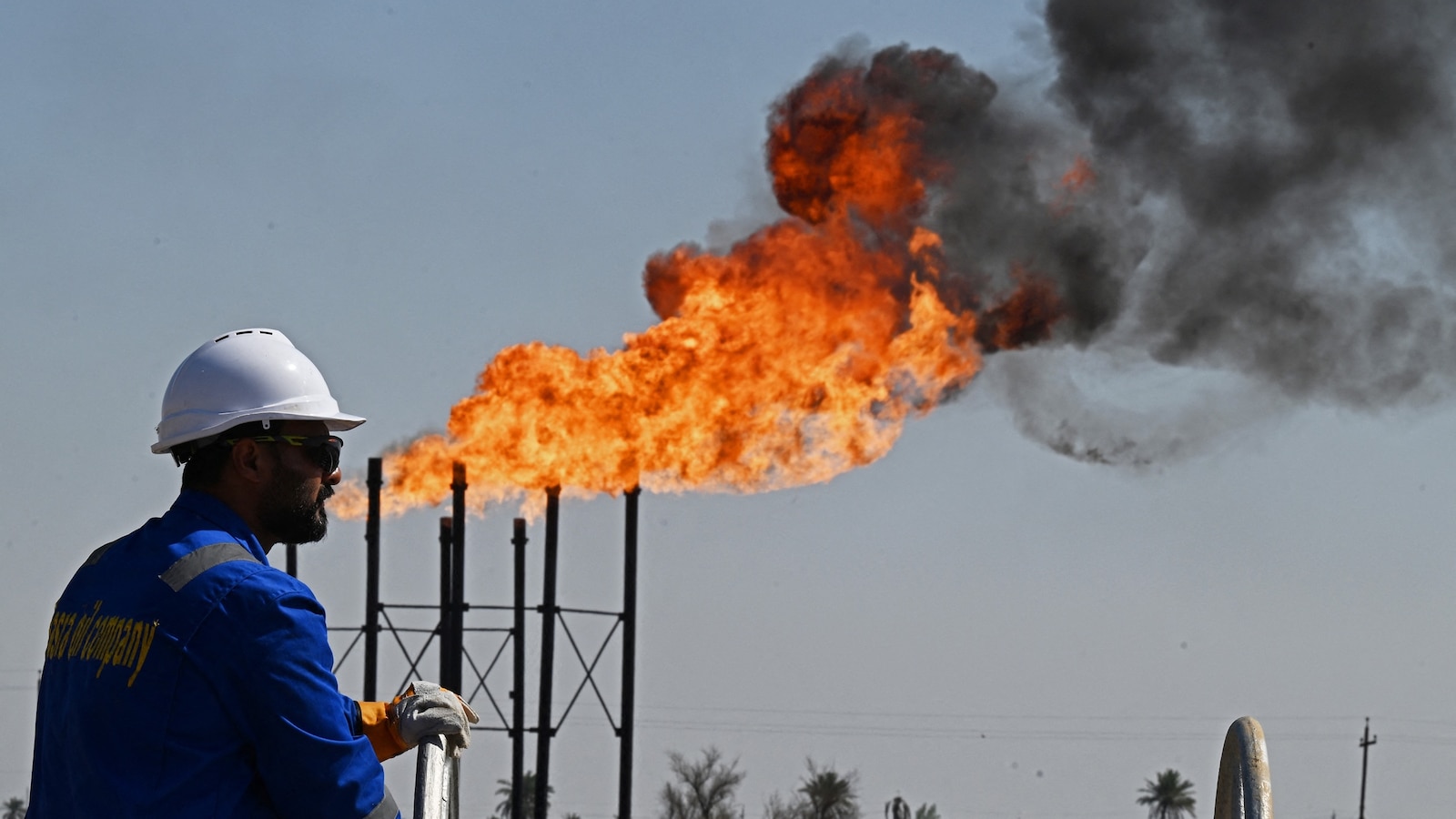
- Brent and tanker freight costs are likely to remain under upward pressure in the near term, although the precise Brent level and the size of the tanker shortfall are uncertain. Brent futures traded at $108.44 on 20 October after reaching $111.99; separate reporting also described a five-month high above $111 and a rising freight market. Oil Brokerage estimated that only 75 of 294 sanctioned tankers were commercially available, including 50 supertankers. An EIA Brent spot figure of $126.55 for 14 October conflicts with later reports of a five-month high near $111, so it should not be used as a settled price without reconciliation. The supplied claims do not quantify current war-risk insurance premiums. (Confidence: medium · ASSESSED)
- I&W: Confirm if Brent front-month futures settle above $108 on at least three of the next five trading sessions. (0-14 days)
- I&W: Break if Brent settles below $100 for five consecutive trading sessions and JMIC reports Hormuz traffic at or above 80% of its pre-war baseline. (0-1 month)
- An agreed reopening of Hormuz within 14 days is unlikely. Abbas Araghchi said Iran had sent Washington conditions through Qatar for normal traffic to resume within seven days, but reporting says Washington and Tehran remain far apart. Araghchi also said indirect talks continue through Pakistan and Qatar, while Mohsen Rezaei said Tehran was no longer responding to Washington and would not negotiate without trust-building steps. Those statements may distinguish mediated contacts from direct engagement, but the supplied reporting does not establish an agreement. (Confidence: low · ASSESSED)
- I&W: Confirm if Iran and the US continue to state that sanctions, maritime restrictions or other conditions remain unresolved, with no joint reopening timetable. (0-14 days)
- I&W: Break if both governments confirm an accepted reopening timetable and JMIC or UKMTO reports commercial transits resuming under that arrangement. (0-14 days)
- The UK has announced RAF Typhoon defensive counter-air missions over Saudi Arabia, while the Saudi-led coalition reported intercepting four drones on 21 October and Saudi forces reported intercepting a Houthi ballistic missile aimed at Riyadh on 20 October. The UK announcement is supported by official government reporting and major media; the supplied claims confirm the commitment, not that RAF sorties have already flown. (Confidence: high · REPORTED)
- I&W: Confirm if the UK Ministry of Defence or RAF reports Typhoon sorties over Saudi Arabia or operational support to Saudi air defences. (0-14 days)
- I&W: Break if the UK Government cancels or materially narrows the announced defensive mission. (0-14 days)
Outlook & scenarios
Continued Hormuz constraints, no verified Bab al-Mandeb blockade (55%)
Hormuz transits remain below normal as Iran maintains conditional reopening demands and the US continues economic pressure. Fighting persists near Dhu Bab and Bab al-Mandab, but shipping reports do not confirm a commercial blockade there. Brent and freight costs remain exposed to security headlines.
Conditional Hormuz reopening (25%)
Qatar or Pakistan carries an agreed set of terms between Tehran and Washington. Iran begins a staged reopening within the seven-day period described by Araghchi, and JMIC records a sustained rise in transits. The unresolved differences reported between the two governments make this outcome less likely than continued constraints.
Wider maritime disruption (15%)
Clashes between the Houthis and pro-government forces intensify around Dhu Bab and Bab al-Mandab. A verified attack on commercial shipping or a confirmed closure would extend disruption beyond Hormuz and add pressure to freight and oil markets.
Wildcard: renewed Israeli strike on Iran (5%)
Israel launches a renewed strike on Iran despite reported US opposition before the 3 November US midterm elections. This low-probability, high-impact outcome would risk widening the conflict and further disrupting Hormuz traffic. Reporting on the strike plan and the reason it was halted comes from a limited set of major-media claims.
Recommendations
- For daily reporting, separate Hormuz vessel transits from total Middle East oil exports. Compare JMIC traffic counts with Kpler export estimates and label the measure and reporting period each time.
- Keep the IRGC tanker mine claims at allegation status unless JMIC, the IMO or independently attributable vessel evidence confirms the incidents. Seek vessel names, positions, damage reports and crew information before attributing a strike.
- Do not describe Bab al-Mandeb as blockaded or repeat the four-of-five straits framing without verified commercial transit data for the named straits. Track control and clashes around Dhu Bab and Tabet al-Khazan separately from shipping incidents.
- Use timestamped Brent futures data for market updates. Flag the conflicting EIA spot figure for 14 October pending reconciliation, and do not state that war-risk premiums have spiked without a sourced premium measure.
- Track whether Qatar or Pakistan conveys agreed terms, and require confirmation from both Washington and Tehran before assessing that a reopening arrangement is in force.
- Distinguish the UK Government's announced RAF defensive mission from confirmed operational sorties in reporting on Saudi air defence.
Confidence & uncertainty
Overall confidence is high in the broad assessment because official UK reporting confirms the announced Saudi defensive support, while JMIC, Kpler, market reporting and maritime security reporting independently document Hormuz risk and shipping pressure. Separate reporting also describes active fighting near Bab al-Mand al-Mandab. Confidence is lower on the exact degree of Hormuz disruption, the reported mine strikes, the status of any Bab al-Mandeb blockade and near-term diplomatic progress. Traffic estimates conflict, and the supplied claims do not establish disruption at four of five straits.
Intelligence gaps
- [EEI 1.1 · PARTIAL] Changes in IRGC Navy, Houthi, and affiliated maritime unit deployments, patrol patterns, missile-drone activity, mine-laying indicators, or boarding attempts near the two straits. Recommended collection: maritime/ISR-AIS
- [EEI 1.3 · PARTIAL] Daily vessel-transit volume, AIS dark activity, anchorage buildup, and rerouting rates at Hormuz and Bab-el-Mandeb compared with pre-crisis levels. Recommended collection: maritime/AIS
- [EEI 2.1 · PARTIAL] US, coalition, Iranian, Saudi, Omani, and other naval force posture changes, including escorts, convoy schedules, mine-countermeasure deployments, air patrols, and rules-of-engagement announcements. Recommended collection: maritime/defense-reporting
- [EEI 2.2 · UNCOVERED] Tanker and container-ship rerouting through the Cape of Good Hope or other alternatives, including added sailing days, fuel consumption, and available vessel capacity. Recommended collection: shipping-industry/AIS
- [EEI 2.3 · PARTIAL] War-risk insurance premium, deductible, coverage-exclusion, and voyage-approval changes for Hormuz, Bab-el-Mandeb, Red Sea, Gulf of Aden, and adjacent waters. Recommended collection: insurance-market
- [EEI 2.4 · UNCOVERED] Operational status and export-loading changes at Saudi, UAE, Omani, Iranian, Djiboutian, and Red Sea ports, terminals, pipelines, and storage facilities. Recommended collection: port-operator/energy-infrastructure
- [EEI 3.2 · PARTIAL] Changes in crude, refined-product, LNG, and LPG volumes transiting the straits and in announced production cuts, strategic-stock releases, or emergency cargo substitutions. Recommended collection: energy-trade/AIS
- [EEI 3.3 · UNCOVERED] Fertilizer shipment delays, canceled or redirected cargoes, regional price increases for urea and ammonia, and reported inventory levels in import-dependent markets. Recommended collection: commodity-trade/port-data
- [EEI 3.4 · PARTIAL] Container freight rates, vessel charter rates, bunker costs, port congestion, and manufacturing or retail supply disruptions attributable to the chokepoint crisis. Recommended collection: shipping-and-logistics-markets
- [EEI 4.2 · PARTIAL] Diplomatic commitments, deconfliction arrangements, prisoner or vessel releases, and publicly announced conditions for reopening commercial transit. Recommended collection: diplomatic-reporting
- [EEI 4.3 · UNCOVERED] Shipping-company decisions to resume, suspend, or expand transits and corresponding changes in insurer voyage approvals and war-risk premiums. Recommended collection: shipping-and-insurance-industry
- [EEI 4.4 · PARTIAL] New incidents, military alerts, vessel diversions, or port restrictions at other critical chokepoints indicating geographic spread beyond Hormuz and Bab-el-Mandeb. Recommended collection: maritime/AIS-official-notices
Red cell review: CONCUR WITH COMMENT
TLP:CLEAR